

DIY Concrete Projects for Homeowners
Concrete is one of the most rewarding weekend materials a homeowner can work with. These guides are written for first-timers — no contractor experience required, just the right steps in the right order. Pick a project and get started this weekend.
New to concrete? Start with Concrete 101 →
Start Here
Concrete 101: Everything You Need to Know
Before you calculate quantities or plan your pour, you need to understand what concrete actually is and how it works. This foundation knowledge prevents expensive mistakes—like adding too much water (permanently weakens concrete) or driving on a driveway too soon (causes surface damage).
Read Guide →Complete Guide to Concrete for DIY Projects
Concrete work is absolutely achievable for homeowners willing to plan carefully and respect the material's demands. This guide covers everything you need to successfully complete a concrete project—from understanding what concrete actually is, to calculating quantities, to finishing techniques that produce professional results.
Read Guide →First Concrete Pour: Complete Beginner's Guide (Plan to Finish)
Your first concrete pour feels overwhelming because there's no redo button. Once concrete starts flowing, you're committed. But here's the truth: thousands of homeowners pour concrete successfully every weekend. The key is preparation—knowing exactly what to buy, what to rent, and what order to do things before you mix the first bag.
Read Guide →Weekend Projects
DIY Concrete Stepping Stones: How to Make a Garden Path
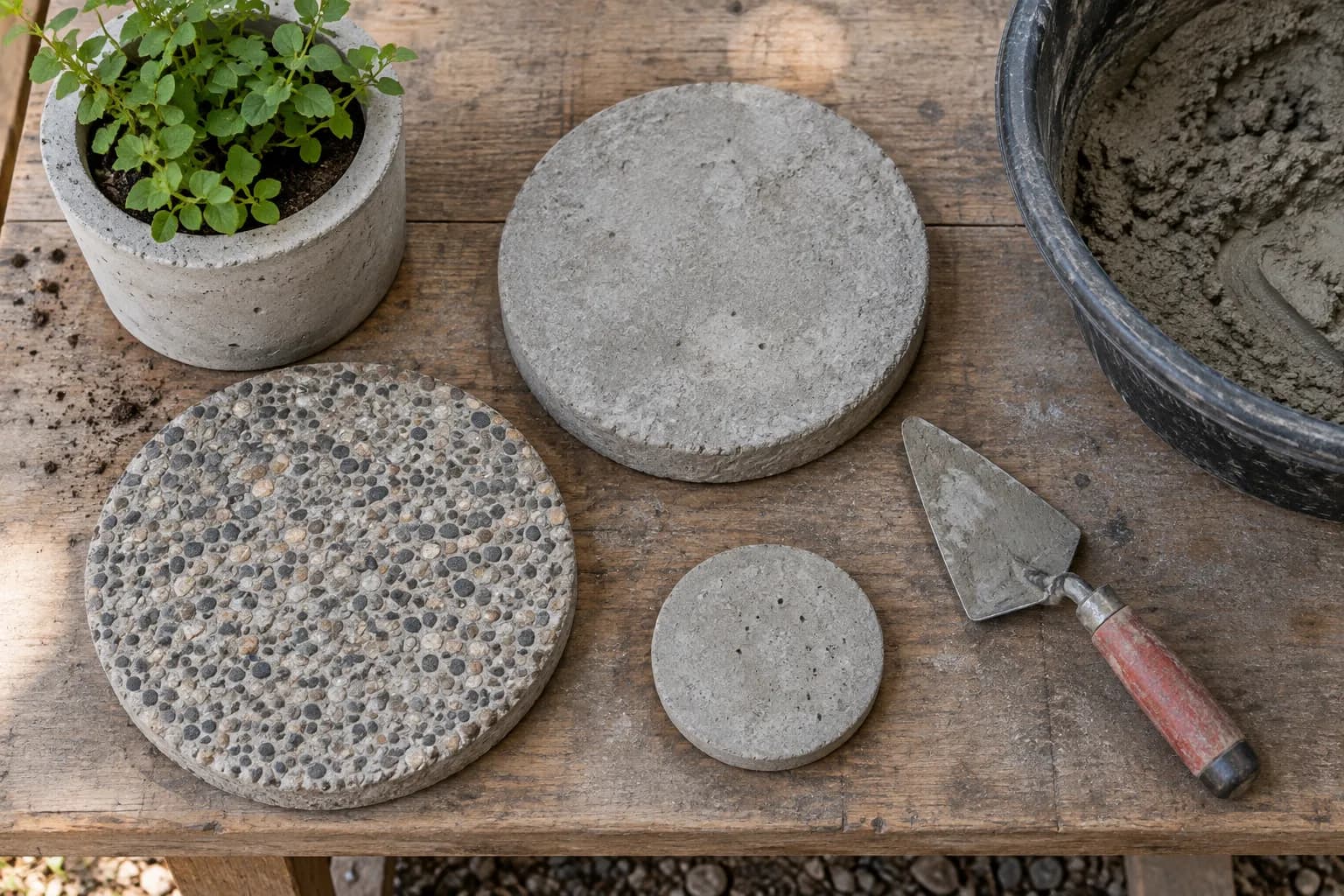
Concrete stepping stones are one of the best beginner DIY projects — low cost, low stakes, and genuinely impressive results. You can make a full garden path in a single weekend with a few bags of concrete and some plastic molds.
DIY Concrete Planters: How to Make Your Own (No Molds Needed)
Concrete planters are one of the most popular Pinterest DIY projects for good reason — they look expensive, cost almost nothing to make, and you can customize the size and finish to match any garden style. The technique is simpler than it looks.
DIY Concrete Bird Bath: Simple Weekend Project
A concrete bird bath is one of the most satisfying weekend casting projects — it looks like something from a garden center, costs under $20 to make, and uses the same inner/outer mold technique as DIY concrete planters.
How to Make Concrete Pavers: DIY Molds & the Best Concrete Mix
To make concrete pavers, coat a plastic or wood mold with release oil, fill it 2 inches deep with a stiff 4,000-5,000 PSI bagged concrete (or sand/topping mix for detailed molds), cover it for 24 hours, demold, and cure the pavers 7 days before setting them on 1 inch of sand over a compacted gravel base. One 80-lb bag casts 3-4 pavers of 12x12 inches, so a 10x10 patio takes about 28 bags.
DIY Concrete Garden Edging: Install It in an Afternoon
Concrete garden edging is one of the most practical weekend projects a homeowner can tackle. It creates a clean, permanent border between lawn and beds that won't shift, rot, or need replacing every few years like plastic or wood edging.
How to Pour a Small Concrete Slab (Shed Base, AC Pad, or Utility Pad)
A small concrete slab — anything 10×10 feet or under — is an ideal first project. It's manageable as a solo pour, forgiving of beginner mistakes, and produces something genuinely useful: a level base for a shed, air conditioner pad, generator pad, or utility area.
DIY Concrete Fire Pit Pad: How to Build a Safe, Level Base
A concrete pad under a fire pit is safer than bare ground or pavers, more durable than patio blocks, and straightforward to pour. The key differences from a standard slab are size (larger perimeter clearance), heat considerations, and often a circular shape.
How to Set a Mailbox Post in Concrete (The Right Way)
A mailbox post set incorrectly is a weekend project that becomes a recurring headache — leaning within the first year, wobbling in wind, or rotting at the base. Done right, a concrete-set post lasts 15–20 years with no maintenance.
DIY Concrete Steps: Pour Your Own Entry or Garden Steps
Pouring your own concrete steps is more involved than a flat slab, but entirely within reach for a prepared DIYer. The key is building solid forms, placing rebar correctly, and finishing each tread before moving to the next — one step at a time.
Concrete Pool Deck: What Every Homeowner Needs to Know
A concrete pool deck is one of the most significant hardscape investments around a home — and one of the most frequently done wrong. The decisions you make about finish, color, joints, and drainage have a direct impact on safety, durability, and long-term maintenance cost.
Precast vs Poured Concrete: Which Is Right for Your Project?
Precast and poured-in-place concrete are made from the same materials but produced in completely different ways. Choosing the right approach for your project affects cost, timeline, finish quality, and long-term performance — so it's worth understanding the tradeoffs before you start.
How to Clean Concrete: Driveways, Patios, and Garage Floors
Concrete is low maintenance but not no maintenance. A dirty, oil-stained driveway or faded patio looks neglected even when the concrete itself is structurally sound. The right cleaning approach depends on what's on the concrete — oil, mold, mineral deposits, and general grime each need a different solution.
Home Improvement
Complete Guide to Concrete Driveways (Planning to Pouring)
A concrete driveway done right lasts 25-30 years with minimal maintenance. Done wrong—with inadequate thickness, poor base preparation, or premature use—it cracks within 5-10 years and costs thousands to replace.
Complete Guide to Concrete Patios (Design to Finish)
A concrete patio is one of the most achievable DIY concrete projects—and one of the best returns on your outdoor investment. Unlike driveways, patios don't bear vehicle weight, which means 4 inches of concrete is genuinely sufficient. Unlike large slabs, a typical patio is small enough for a motivated DIYer to complete in a weekend.
Garage Floor Epoxy Coating: Prep, Application and Failure Prevention
Garage floor epoxy promises a showroom finish for a few hundred dollars. The reality: about half of DIY epoxy jobs fail within two years--peeling, hot tire pickup, yellowing, or bubbling. The product isn't the problem. The prep is. A properly prepared and coated garage floor lasts 10-15 years and transforms the space. A rushed job peels in the first summer. Here's how to get it right.
Concrete Driveway Drainage: Slope, Grading and Water Management
Water pooling on your driveway isn't just annoying--it accelerates surface damage, creates ice hazards in winter, and can direct water toward your foundation. Proper drainage starts with the right slope during construction, but there are fixes for existing driveways too. Whether you're planning a new pour or solving pooling on an existing slab, this guide covers the slope requirements, drain options, and grading solutions that keep water moving off your concrete.
Repair & Fix-It
How to Repair Concrete Cracks (DIY Guide)
Most concrete crack repairs are straightforward DIY projects. The key is matching the repair method to the crack size and type. Hairline cracks need simple sealers, wider cracks need flexible fillers, and structural cracks need professional assessment before any repair.
Concrete Spalling: What It Is and How to Fix It
Spalling is when the concrete surface flakes, peels, or chips away, leaving a rough, pitted appearance. It's primarily a cold-climate problem caused by freeze-thaw cycles and deicing salt, though poor finishing techniques can cause it anywhere. The damage is usually cosmetic but worsens over time if untreated.
Concrete Settling: Causes, Signs, and How to Fix It
Concrete settling happens when the soil beneath a slab compacts, erodes, or shifts, causing sections to sink. A well-installed slab on properly prepared soil shouldn't settle—but shortcuts in base preparation, poor drainage, or natural soil changes can undermine even good concrete.
DIY Concrete Gone Wrong: When to Repair vs. Tear Out and Start Over
The pour is done and something went wrong. Maybe the surface is rough and ugly. Maybe cracks appeared before the forms came off. Maybe the whole slab looks like a disaster. Before you panic or start swinging a sledgehammer, take a breath and assess what actually happened—because most concrete failures are fixable, and the ones that aren't need a clear-headed evaluation, not an emotional reaction.
Concrete Maintenance: How to Make Your Concrete Last
Concrete is low maintenance, not no maintenance. A few hours of care each year can extend your concrete's lifespan by 10-15 years and keep it looking good throughout. The essentials are simple: keep it clean, keep it sealed, and fix small problems before they become big ones.
Figure Out How Much Concrete You Need
Before you buy a single bag, use our free concrete calculator to get exact quantities, bag counts, and cost estimates for your project.
Open Concrete Calculator →