

DIY Concrete Garden Edging: Install It in an Afternoon
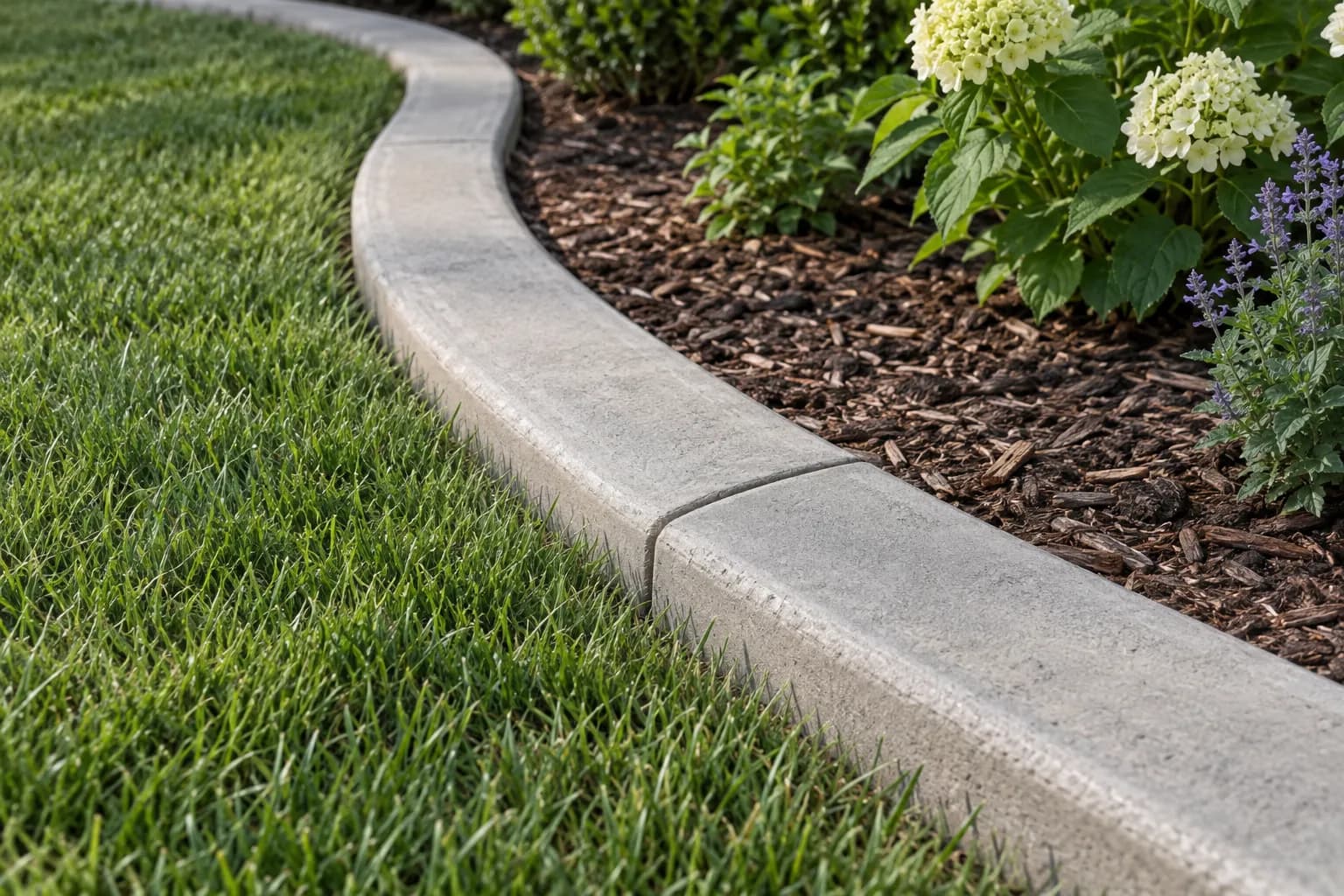
Concrete garden edging is one of the most practical weekend projects a homeowner can tackle. It creates a clean, permanent border between lawn and beds that won't shift, rot, or need replacing every few years like plastic or wood edging.
You can complete 20–30 linear feet of edging in a single afternoon. The key is a well-dug trench, stiff concrete mix, and patience during curing.
What You Need
Materials
| Item | Qty for 20 linear feet | Notes |
|---|---|---|
| 80-lb bagged concrete or sand mix | 3–4 bags | Stiff mix stays in place |
| Fiber reinforcement | 1 small bag | Prevents micro-cracks |
| Form stakes (1×2, 18") | 6–8 | Only if using formed edging |
| 1×4 or 1×6 lumber | As needed | For formed method (optional) |
| Bender board (plastic or wood) | Optional | For curved edging paths |
Tools
- Flat spade or edging spade
- String line and stakes
- Wheelbarrow or mixing tub
- Trowel and margin trowel
- Edging tool (concrete edger)
- Level (4-foot)
- Garden hose
Two Installation Methods
Method 1: Formed-in-Place (Most Control)
Set up wooden forms on both sides of the trench to define the edging width and height. Fill the trench with concrete, screed level, and remove forms after 24 hours. Best for straight runs and precise height control.
Method 2: Trench-Direct (Faster)
Dig the trench, pour concrete directly into it, and shape the top with a trowel. Faster and less material needed, but requires careful shaping. Works best for curved beds and freeform edges.
For a related project that uses similar forming techniques, see the concrete fence post guide.
Step-by-Step: Trench-Direct Method
Step 1: Mark and Dig the Trench
Run a string line along the edge you want to define. Dig a trench 4–5 inches deep and 3–4 inches wide using a flat spade. The inside wall of the trench should be vertical and clean — this is the form face.
Remove all loose soil, roots, and organic material. Compact the trench bottom by tamping with the flat of the spade handle.
Step 2: Mix the Concrete
Mix bagged concrete to a stiff consistency — stiffer than normal. Garden edging in a trench needs to hold its shape without slumping. If you add too much water, the mix slides down the trench walls and you lose height.
For the right water-cement ratio for a stiff, workable mix, see our concrete water ratio guide.
If using fiber reinforcement, add it to the dry ingredients before water. Blend until fibers are evenly distributed.
Step 3: Fill the Trench
Pack concrete into the trench in sections. Work in 3–4 foot runs so you can finish each section before it starts to stiffen. Press the mix firmly against the lawn-side wall to create a clean edge.
Overfill slightly — about 1/4 inch above where you want the finished top.
Step 4: Screed and Level
Drag a short board (or the handle of your trowel) along the top to level the surface. Check with a 4-foot level every few feet. The top of the edging should be slightly above grade on the lawn side to shed water toward the bed.
Step 5: Finish the Top
For a simple flat top: smooth with a steel trowel once bleed water disappears — typically 20–40 minutes.
For a rounded top: use a concrete edging tool along both edges to create a radius. This reduces chipping and gives a more finished look. See our concrete finishing guide for technique.
For a textured top: drag a damp brush across the surface in a single direction after the surface stiffens slightly.
Step 6: Cut Control Joints
Score the top of the edging every 4–6 feet with a groover or the edge of a margin trowel pushed straight down 1 inch. These control joints tell the concrete where to crack — along your planned seams rather than at random visible points.
Step 7: Cure
Cover the edging with plastic sheeting immediately after finishing. Keep it in place for at least 3 days. For the first 24 hours, the edging is vulnerable — protect it from rain, foot traffic, and direct sun.
After 3–5 days, backfill the bed side with soil. Avoid heavy pressure on the edging for 7 days.
Key Specs
| Spec | Value |
|---|---|
| Width | 3–4 inches |
| Depth below grade | 4–5 inches |
| Height above grade | 1–2 inches |
| Total depth | 5–7 inches |
| Control joints | Every 4–6 linear feet |
| Cure before backfilling | 3 days minimum |
Curved Edging
For curved beds, use bender board (thin flexible wood or plastic) as a temporary form to hold the concrete in shape on the curved side. Stake it every 12 inches and fill the inside of the curve. Remove the form after 24–48 hours.
The curve side will be rough — smooth with a trowel before the concrete stiffens fully (within 30 minutes of filling that section).
Common Mistakes
Trenching too shallow. Edging less than 4 inches deep is prone to heaving and tipping from freeze-thaw cycles and soil movement. Dig deeper than you think you need.
Over-watering the mix. Wet concrete slumps out of a trench. Start stiffer than seems workable — add water in small amounts only if the mix won't fill the trench evenly.
Skipping control joints. Without them, edging develops random cracks that split sections apart over time. Score joints every 4–6 feet.
Related Guides
- How to Mix Concrete — Mix ratios and workability explained
- How to Finish Concrete — Trowel technique and surface texture options
- DIY Concrete Stepping Stones — Another simple afternoon concrete project