

DIY Concrete Stepping Stones: How to Make a Garden Path
Concrete stepping stones are one of the best beginner DIY projects — low cost, low stakes, and genuinely impressive results. You can make a full garden path in a single weekend with a few bags of concrete and some plastic molds.
This guide covers everything: mold options, the right concrete mix, step-by-step pouring instructions, curing, and how to set your stones in the ground for a path that lasts.
What You Need
Materials
| Item | Qty for 10 stones | Notes |
|---|---|---|
| 80-lb bagged concrete mix | 5 bags | Buy 1 extra as buffer |
| Stepping stone molds (18" round) | 2–3 | Reusable; rotate between pours |
| Cooking spray or form release | 1 can | Prevents sticking |
| Plastic sheeting (6-mil) | 1 small roll | For curing |
| Sand or gravel (optional) | 1 bag | For leveling bed |
| Concrete colorant (optional) | 1 packet | Mix in before pouring |
Tools
- Wheelbarrow or large bucket
- Concrete hoe or stiff paddle mixer
- Trowel (margin or pointing trowel)
- Garden hose
- Rubber mallet
- Level
Mold Options
Plastic pre-formed molds are the easiest starting point. They cost $5–15 each and come in round, square, and decorative shapes. Most are reusable 20–30 times if cleaned and stored properly.
DIY wood molds give you more size flexibility. Cut a shape from 3/4-inch plywood and screw 2×2 lumber around the perimeter as a border. A 16×16-inch square form is easy to build in 20 minutes and works perfectly.
Freeform method: Place plastic sheeting on a flat surface. Pour a mound of concrete and shape it by hand into a rough circle or organic shape. This is the most forgiving option for beginners — no mold to fill precisely.
For the exact water-to-cement ratio and why it affects durability, see our concrete water ratio guide.
Step-by-Step: Pouring Stepping Stones
Step 1: Set Up Your Work Area
Work on a flat surface — a driveway, patio, or piece of plywood on the ground. Lay out your molds. Spray the inside of each mold generously with cooking spray or brush on form release oil. Don't skip this — concrete bonds to plastic aggressively.
Step 2: Mix the Concrete
Add water to your wheelbarrow first (about 3/4 of the recommended amount on the bag), then add the dry mix. Mix with a concrete hoe until uniform. The goal is a consistency like thick peanut butter — it should hold its shape when you pick up a handful, not slump or run. See our concrete mixing guide for technique detail.
Don't over-water. A wetter mix pours more easily but produces a weaker stone that chips and flakes faster.
Step 3: Fill the Molds
Scoop concrete into each mold in two layers, pressing firmly into corners after each layer. Overfill slightly — about 1/4 inch above the rim. Tap the sides of the mold with a rubber mallet to release air bubbles.
Step 4: Screed and Smooth the Top
Drag a straight piece of scrap wood across the top of the mold to level the surface. The bottom of the mold (facing down) will become the top of your finished stone. For a smoother presentation surface, you don't need to perfect the top — it becomes the underside.
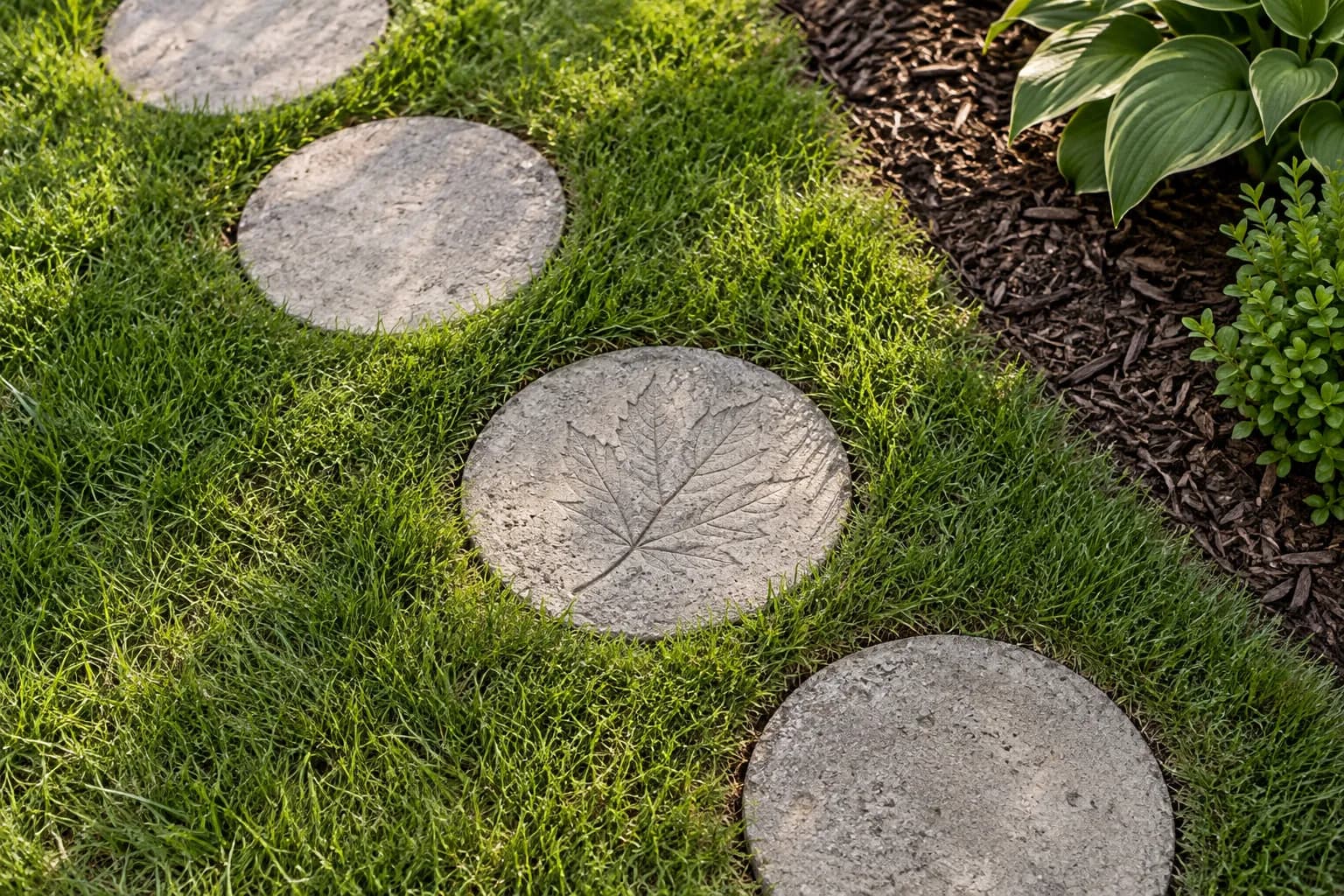
If adding embeds (glass pebbles, leaves for impressions, or a mosaic tile pattern), press them gently into the surface now before it stiffens.
Step 5: Calculate How Many Bags You Need
Use this quick reference — or plug your stone dimensions into our calculator:
Bags per stone (80-lb mix):
- 12" round × 1.5" thick: ~0.5 bags
- 18" round × 2" thick: ~1 bag
- 24" square × 2" thick: ~1.5 bags
Includes 10% waste factor
Open the full Concrete Slab Calculator →
Step 6: Cure the Stones
Cover molds with plastic sheeting immediately after pouring. Leave them undisturbed for 24 hours minimum. After 24 hours, carefully flip the mold and tap the back to release the stone. If it doesn't release, wait another 12 hours.
Once released, lay the stones on a flat surface and cover loosely with plastic for 5 more days. Mist with water once a day if the weather is hot or dry. Full strength is reached at 28 days, but stones are ready to place after 7 days.
Placing Stepping Stones in Your Garden
Spacing
Set stones 18–24 inches apart (center to center) for a natural walking stride. Line up stones and walk the path before committing — adjust spacing to match your step length.
Setting in Soil
Dig a shallow depression for each stone — about 2–3 inches deep. Add a 1-inch layer of sand or fine gravel at the bottom for leveling. Set the stone and check with a level. Adjust sand until the stone sits flat and slightly above grade (1/4 inch) to prevent pooling.
For paths in garden beds, adding gravel under concrete is not needed for stepping stones, but a sand leveling bed prevents rocking and heaving.
Secure in High-Traffic Areas
For stones that get heavy use, dig 4 inches deep and compact the base before adding sand. This prevents stones from sinking or tipping over time.
Key Specs at a Glance
| Spec | Recommendation |
|---|---|
| Thickness | 1.5–2 inches minimum |
| Diameter / size | 12–24 inches (16–18" most common) |
| Concrete mix | Standard 80-lb bag or sand mix |
| Water ratio | Per bag instructions; do not exceed |
| Cure time before placing | 7 days |
| Spacing (center to center) | 18–24 inches |
Common Mistakes
Mixing too wet. Soupy concrete is the #1 stepping stone failure. It causes surface flaking within the first winter. Keep the mix stiff — if it runs off your trowel, add more dry mix.
Pulling the mold too early. Concrete feels hard at 12 hours but is still fragile. Releasing before 24 hours often cracks the stone at thin points. Be patient.
Skipping the release agent. Even if the mold is labeled "non-stick," concrete bonds to plastic over time. Always coat before every pour.
Related Guides
- How to Mix Concrete — Mix ratios, technique, and bag vs. ready-mix
- How Long Does Concrete Take to Cure? — Full curing timeline and weather adjustments
- DIY Concrete Planters — Another beginner casting project using the same mold technique