

DIY Concrete Planters: How to Make Your Own (No Molds Needed)
Concrete planters are one of the most popular Pinterest DIY projects for good reason — they look expensive, cost almost nothing to make, and you can customize the size and finish to match any garden style. The technique is simpler than it looks.
You don't need specialized molds or equipment. Two household containers (one slightly smaller than the other), a bag of sand mix, and an afternoon are all it takes. This guide covers both the standard inner/outer bowl method and the hypertufa approach for extra-lightweight planters.
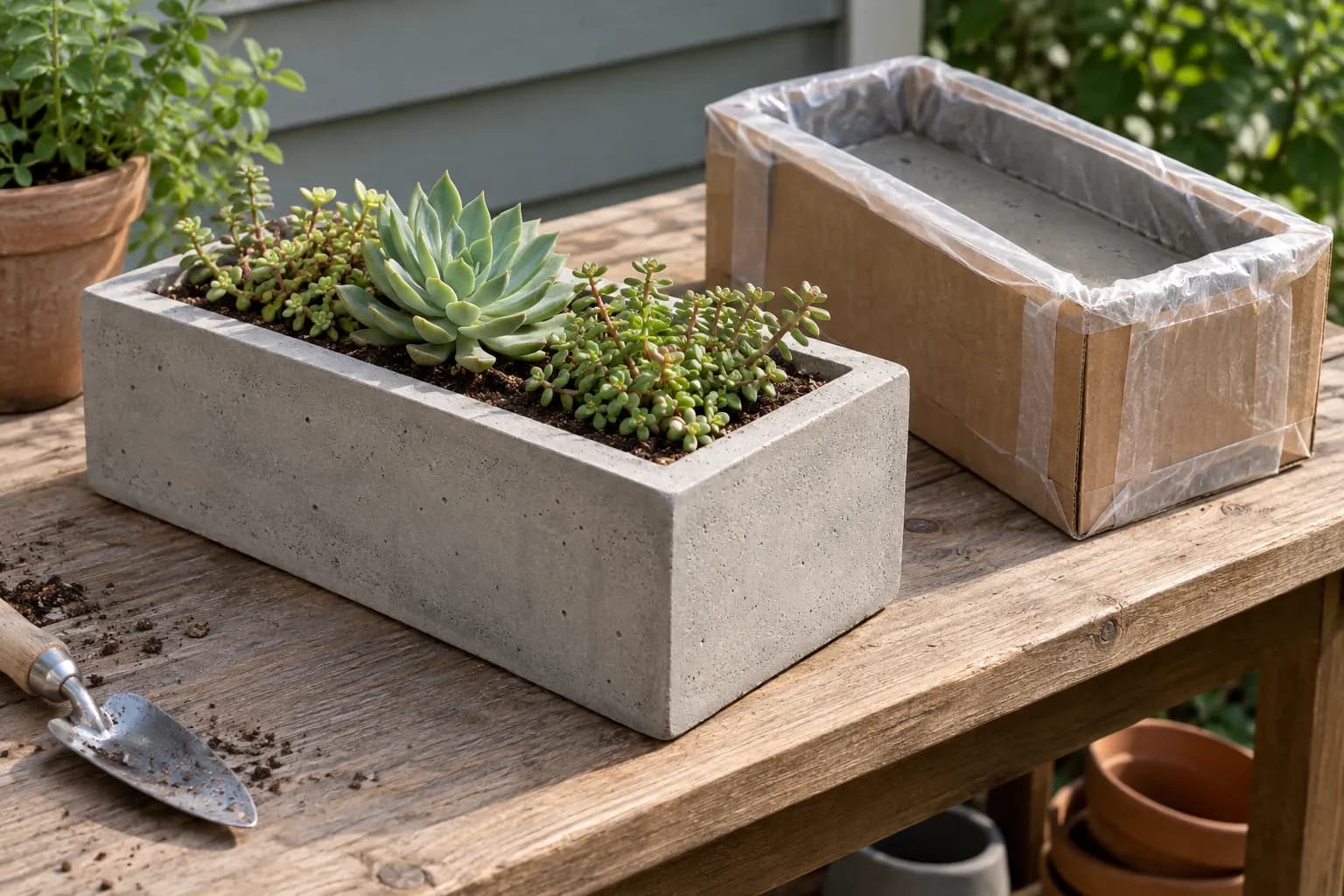
What You Need
Materials
| Item | Notes |
|---|---|
| Quikrete Sand Mix or similar sand mix | One 60-lb bag makes 2–3 medium planters |
| Inner container (mold) | Plastic bowl, bucket, or box |
| Outer container (mold) | 2–3 inches larger on each side |
| Cooking spray or petroleum jelly | Release agent — coat all surfaces |
| Wooden skewer or dowel | For drainage holes |
| Plastic sheeting | Curing cover |
| Optional: concrete pigment | Mix in dry before adding water |
| Optional: perlite (2 parts) | For hypertufa / lightweight mix |
Tools
- Rubber gloves (concrete causes skin burns — see concrete burn treatment)
- Bucket for mixing
- Margin trowel or old spoon
- Wire brush (for distressed finish)
Two Methods: Standard vs. Hypertufa
Standard Concrete Planter
Use a sand mix (not gravel concrete) for smoother walls and better workability in thin sections. The finished planter is dense and heavy but extremely durable outdoors.
Hypertufa Mix (Lightweight)
Combine equal parts Portland cement, peat moss, and perlite by volume. Add water until the mix holds shape when squeezed. Hypertufa is 30–50% lighter than concrete and has a rough, stone-like texture that looks naturally aged. It's more fragile than concrete but well-suited to decorative garden use.
For background on Portland cement and what makes it the binding agent in both mixes, see our glossary.
Step-by-Step: Inner/Outer Bowl Method
Step 1: Prepare Your Molds
Choose two containers where the inner one is 2–3 inches smaller on all sides than the outer one. This gap is your wall thickness.
Spray the inside of the outer container and the outside of the inner container thoroughly with cooking spray or coat with petroleum jelly. The release agent is critical — don't be stingy.
Tape the drainage hole location on the bottom of the outer container with duct tape. Push a wooden skewer through the tape from outside to mark the drainage hole position. You'll place the skewer in the concrete to form the hole.
Step 2: Mix the Concrete
Add water to your bucket first, then slowly add the dry sand mix. Mix until you get a thick, uniform consistency — like cold oatmeal. It should hold its shape on a trowel without flowing off.
For the correct water-cement ratio and why under-mixing causes weak walls, see our concrete mixing guide.
Step 3: Fill the Bottom Layer
Add 1.5 to 2 inches of concrete mix to the bottom of the outer container. Insert the wooden skewer vertically for the drainage hole. Press it down so it contacts the bottom.
Step 4: Place the Inner Container
Set the inner container on top of the concrete bottom layer, centered. Press down gently so it sinks slightly into the wet concrete — this seals the bottom.
Add rocks or fill the inner container with water to weigh it down and hold it in place. Make sure there's a consistent gap around all sides.
Step 5: Fill the Walls
Pack concrete into the gap between the two containers. Work in layers, pressing the mix down firmly to eliminate air pockets. Tap the outer container against the table to settle the mix. Fill all the way to the top rim.
Step 6: Cure and Demold
Cover with plastic and let cure 24–48 hours. Carefully remove the outer mold first (flex plastic molds to release). Then remove the inner mold. Remove the skewer to open the drainage hole.
Examine the walls — minor air pockets are normal. Fill them with a cement slurry (water + cement) if desired. Let the planter cure for 7 days total before handling heavily, and 4 weeks before planting.
Adding Color and Texture
Concrete pigment: Add dry pigment to the dry mix before adding water. Use 1–2% of the cement weight as a starting quantity and adjust. Colors fade over time outdoors — this is expected and often adds to the aged look.
Broom or brush texture: Before the concrete fully hardens (about 4 hours after demolding), scrub the outer surface with a stiff wire brush or coarse sandpaper to expose aggregate and create a rough, natural texture.
Mosaic finish: Press decorative tiles, glass beads, or shells into the outer surface while the concrete is still green (within the first few hours after casting). See our colored concrete guide for more surface finish ideas.
Key Specs
| Spec | Recommendation |
|---|---|
| Wall thickness | 1.5–2 inches minimum |
| Bottom thickness | 1.5–2 inches |
| Drainage holes | At least 1 per 6 inches of base diameter |
| Cure before planting | 28 days (or leach with water flushes) |
| Weight (concrete, 12" planter) | ~15–20 lbs empty |
| Weight (hypertufa, same size) | ~8–12 lbs empty |
Common Mistakes
Walls too thin. Anything under 1 inch thick is fragile and will crack under outdoor temperature swings. Stay at 1.5 inches minimum, especially at the top rim.
Skipping the release agent. Without it, you'll struggle to remove the inner mold — and often break the planter trying. Coat every surface thoroughly.
Planting too soon. Fresh concrete is highly alkaline. Plants (especially seedlings) can suffer in new, unleached concrete. Flush with water for 2–3 days before planting, or wait a full month.
Related Guides
- How to Mix Concrete — Mix ratios and consistency guide
- DIY Concrete Bird Bath — Uses the same mold-casting technique
- How Much Does Concrete Weigh? — Weight calculations for planters on decks and shelves
- Colored Concrete Guide — Pigments, stains, and surface finishes