

DIY Concrete Bird Bath: Simple Weekend Project
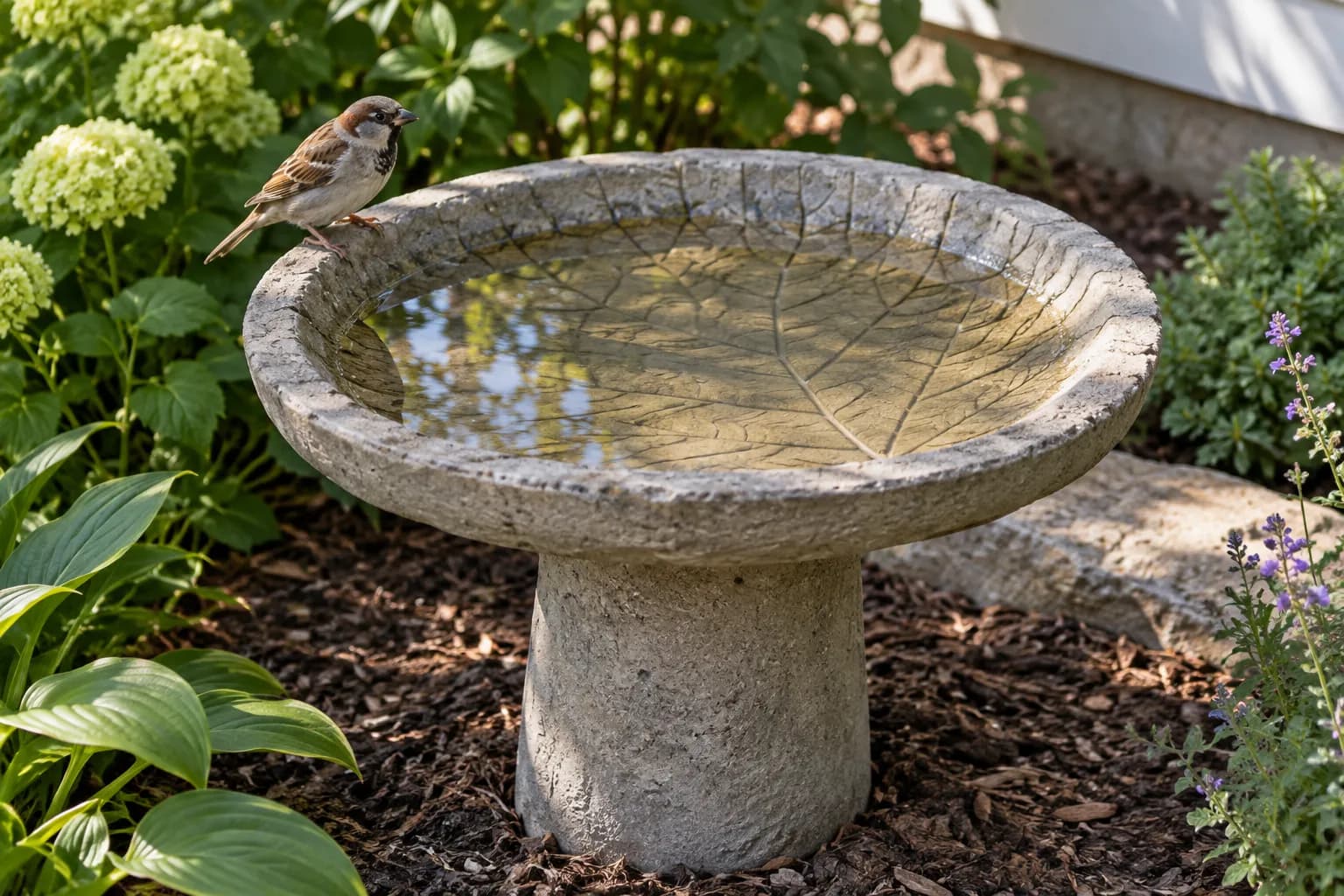
A concrete bird bath is one of the most satisfying weekend casting projects — it looks like something from a garden center, costs under $20 to make, and uses the same inner/outer mold technique as DIY concrete planters.
The key difference from a planter: the basin needs to be watertight, and the finished piece should be bird-safe (no toxic sealers in the water zone). This guide covers both the basin and a simple pedestal option.
What You Need
Materials
| Item | Qty | Notes |
|---|---|---|
| Quikrete Sand Mix (60-lb) | 2 bags | One bag for basin, one for pedestal |
| Large plastic bowl (14–16" diameter) | 1 | Outer mold for basin |
| Smaller plastic bowl (10–12" diameter) | 1 | Inner mold — sets the water depth |
| Cooking spray | 1 can | Coat all mold surfaces |
| Fiber reinforcement (optional) | 1 small bag | Adds crack resistance |
| Concrete pigment (optional) | 1 packet | Natural gray looks great as-is |
| Non-toxic concrete sealer | 1 qt | Bird-safe waterproofing |
| Sonotube (6" × 24") or large plastic pot | 1 | Pedestal mold |
| Rebar (1/2" × 24") | 1 piece | Pedestal reinforcement |
Tools
- Rubber gloves and eye protection
- Mixing bucket
- Trowel
- Plastic sheeting (curing)
- Wire brush (for texture)
Step-by-Step: Casting the Basin
Step 1: Prepare Molds
Spray the inside of the large bowl and the outside of the small bowl generously with cooking spray. The inner bowl will sit on top of the poured concrete layer to create the water basin hollow — you need it to release cleanly.
Mark the center of the large bowl's bottom. You won't add a drainage hole here (unlike planters) — the basin needs to hold water.
Step 2: Mix the Concrete
Mix sand mix according to bag instructions, but keep the mix on the stiffer side. A looser mix works against you in a cast piece — it produces more shrinkage cracks and a weaker surface. See our concrete mixing guide for the right slump to target.
If using fiber reinforcement, add it to the dry mix before adding water and blend thoroughly.
Step 3: Pour the Base Layer
Add 1.5 inches of concrete to the bottom of the large bowl. Work it into the edges and tap the bowl to settle air bubbles.
Step 4: Place the Inner Bowl
Set the smaller bowl in the center, pressing down gently. The gap between the two bowls forms the basin walls. Fill the inner bowl with water or rocks to weight it down and keep it centered.
Pack concrete into the space between the bowls, pressing firmly to eliminate voids. Fill to the rim of the outer bowl.
Step 5: Cure the Basin
Cover with plastic sheeting and leave undisturbed for 48 hours. Remove the outer bowl first — flex the sides and pull away. Then remove the inner bowl. If it sticks, wait another 12 hours.
The curing surface should be smooth where it contacted the plastic. The exposed top surface will be rougher — this becomes the underside of the basin when flipped.
Cure for a full 7 days under plastic before proceeding.
Step 6: Flip and Finish
After 7 days, flip the basin so the smooth surface faces up (this is the water bowl interior). The rough underside now faces down and will be hidden.
Lightly sand the rim with 80-grit sandpaper to soften sharp edges. If you want a textured exterior, scrub with a wire brush before the concrete reaches full hardness.
Building the Pedestal
Sonotube Method (Easiest)
Stand a 6-inch Sonotube (concrete tube form) upright on a flat surface. Seal the bottom with duct tape. Mix concrete to a slightly wetter consistency so it flows around the rebar.
Pour 2 inches of concrete, insert the rebar centrally, then continue filling. Tap the tube to release bubbles. Cure for 48 hours, then peel back the cardboard tube.
Set the pedestal in a location where it will be permanent (or place it on a patio stone for movability). Once fully cured (7 days), set the basin on top. Use a small amount of fresh mortar to bond them, or simply set the basin in place — its weight holds it.
Alternative: Stack Flower Pots
For a simpler solution with no casting, flip a large terracotta pot upside down as a pedestal and set the concrete basin on top. The rough concrete surface grips the pot without bonding.
Sealing for Water Safety
Sealing is important for two reasons: waterproofing and bird safety. Use a penetrating, non-toxic sealer — never an epoxy or polyurethane film sealer, which can peel and contaminate the water.
Recommended: Concrete waterproofing sealers labeled "non-toxic when cured" or "safe for aquatic use." Apply with a brush inside the basin. Let cure fully (24–48 hours) before filling with water.
See our concrete sealing guide for sealer types and application technique.
Finishing Options
Mosaic tile: Press small tiles or glass pieces into the basin surface before the concrete fully hardens (within 2–3 hours of demolding). Use the colored concrete guide for color-coordinating options.
Leaf impression: Press large leaves into the wet concrete surface before pouring the inner mold. Remove after 24 hours — the veining pattern imprints beautifully.
Pigment: Add brown, tan, or charcoal pigment to the mix for a natural stone look. Stir into dry ingredients before adding water.
Key Specs
| Spec | Value |
|---|---|
| Basin thickness (walls and floor) | 1.5–2 inches |
| Basin diameter | 14–18 inches typical |
| Pedestal height | 18–24 inches (standard bird bath height) |
| Cure before use | 28 days (or seal and leach first) |
| Recommended sealer | Penetrating, non-toxic waterproofing sealer |
Common Mistakes
Casting the basin too thin. Walls under 1 inch will crack from the water weight and outdoor temperature changes. Stay at 1.5 inches minimum.
Using epoxy sealer. Film-forming sealers peel in standing water and contaminate the bath. Use a penetrating sealer only.
Placing without leveling. A bird bath that's slightly off-level will overflow on one side and stress the basin. Use a level on the pedestal before setting the basin.
Related Guides
- DIY Concrete Planters — Same mold-casting technique, more shape variety
- How to Mix Concrete — Mix ratios and workability
- How to Seal Concrete — Sealer types, application, and maintenance