

Concrete Chemical Burns: First Aid, Treatment and When to See a Doctor
Concrete burns are chemical burns caused by the high alkalinity (pH 12-13) of wet cement. They're deceptive—you might not feel pain for hours while the cement slowly destroys skin tissue. By the time it hurts, the damage can be severe. Knowing what to do immediately and when to seek medical help can prevent permanent scarring.
Concrete burns are chemical burns caused by the high alkalinity (pH 12-13) of wet cement. They are deceptive. You might not feel pain for hours while the cement slowly destroys skin tissue. By the time it hurts, the damage can be severe. Knowing what to do immediately and when to seek medical help can prevent permanent scarring.
Anyone working with wet concrete should understand this risk before starting a project. If you are planning a pour, use our concrete calculator to estimate materials and review our how to pour concrete guide for full safety preparation.
What Causes Concrete Burns?
Portland cement, the binding agent in all concrete, is highly alkaline. When mixed with water, it produces calcium hydroxide with a pH of 12-13. For context, household bleach has a pH of about 12. That means wet concrete is chemically comparable to having bleach pressed against bare skin.
Three factors make concrete burns especially dangerous:
- Delayed pain response. Alkaline burns destroy nerve endings gradually. Most people feel nothing for the first 2-8 hours of skin contact, allowing the chemical to penetrate deeper before they react.
- Prolonged contact through clothing. Wet concrete soaks into fabric, leather boots, and cotton gloves. The material holds the alkaline paste directly against skin, often in tight-contact areas like ankles, knees, and wrists.
- Abrasive damage. Concrete's gritty texture creates micro-abrasions that allow the alkaline solution to bypass the skin's outer protective layer and reach deeper tissue faster.
The combination of these factors is why concrete burns frequently result in second- and third-degree injuries, particularly on the lower legs and hands. Understanding the concrete water ratio matters here too: wetter mixes produce more free calcium hydroxide at the surface, increasing burn risk.
First Aid Steps: What to Do Immediately
If wet concrete has been in contact with skin, act now. Do not wait for symptoms.
Step 1: Remove All Contaminated Clothing
Strip off any clothing, boots, gloves, or gear that has wet concrete on it or has soaked through. Concrete trapped inside a boot or under a glove is the most common cause of severe burns. Cut clothing off if necessary rather than pulling it over unaffected skin.
Step 2: Flush With Clean Water for 20 Minutes
Irrigate the affected skin with large amounts of clean, cool running water for at least 20 minutes. This is not optional and the time matters. Alkaline chemicals continue to react with skin tissue until they are fully diluted and rinsed away. Use a hose, shower, or any clean water source with steady flow. Do not use high-pressure spray directly on damaged skin.
Step 3: Neutralize With Diluted Vinegar (Optional)
After thorough water flushing, a rinse with a diluted vinegar solution (equal parts white vinegar and water) can help neutralize remaining alkalinity. This is a supplementary step, not a replacement for water flushing. Do not apply vinegar to open blisters or broken skin.
Step 4: Cover and Protect the Burn
After flushing, loosely cover the burn with a sterile, non-stick bandage or clean cloth. Do not apply butter, oils, toothpaste, or other home remedies. Do not pop blisters. Keep the area clean and elevated if possible.
This information is not a substitute for professional medical advice. If you suspect a chemical burn, contact a healthcare provider.
When to See a Doctor
Not every concrete skin exposure requires emergency care, but concrete burns escalate quickly. Seek medical attention based on these indicators.
Go to the Emergency Room If:
- Blisters are larger than 2 inches in diameter
- The burn covers an area larger than your palm
- You see deep purple, dark red, or black tissue
- The burn is on your face, eyes, or genitals
- Pain is severe and unresponsive to over-the-counter pain relief
- You experience signs of infection (increasing redness, swelling, warmth, pus, or fever)
Eye Exposure: Treat as an Emergency
Concrete dust or splashed cement in the eyes is a medical emergency. Flush the eyes continuously with clean water for at least 20 minutes. Hold the eyelids open during flushing. Head to the emergency room immediately, continuing to flush while in transit if possible. Cement in the eyes can cause permanent vision damage or blindness.
See a Doctor Within 24 Hours If:
- Any blistering develops, even small blisters
- Redness and pain are increasing rather than improving
- The burn is on hands, feet, or joints where movement may worsen damage
- You are unsure about the severity
Chemical burns can worsen for 24-48 hours after exposure because the alkaline reaction continues in deeper tissue layers even after the surface is cleaned. When in doubt, get it checked.
PPE Prevention Guide
Prevention is straightforward and inexpensive compared to treating a chemical burn. Every person on a pour site needs proper protection. Review this list before your next project, especially if it is your first concrete pour.
| Body Area | Required PPE | Specification | Common Mistake |
|---|---|---|---|
| Hands | Chemical-resistant gloves | Nitrile or PVC rubber; elbow-length for finishing work | Using cotton or leather gloves that absorb concrete |
| Feet/ankles | Waterproof rubber boots | Full-height rubber or PVC; tape pants over boot tops | Wearing leather work boots that soak through |
| Knees | Waterproof knee pads | Rubber or PVC exterior; sealed seams | Kneeling in concrete with fabric knee pads or bare knees |
| Arms/torso | Long sleeves | Tuck into gloves; wear a disposable coverall for large pours | Rolling up sleeves during hot weather |
| Eyes | Safety glasses or goggles | Chemical splash rated (ANSI Z87.1) | Skipping eye protection during mixing |
| Lungs | Dust mask or respirator | N95 minimum when mixing dry cement | No mask during bag cutting and dry mixing |
Additional Prevention Practices
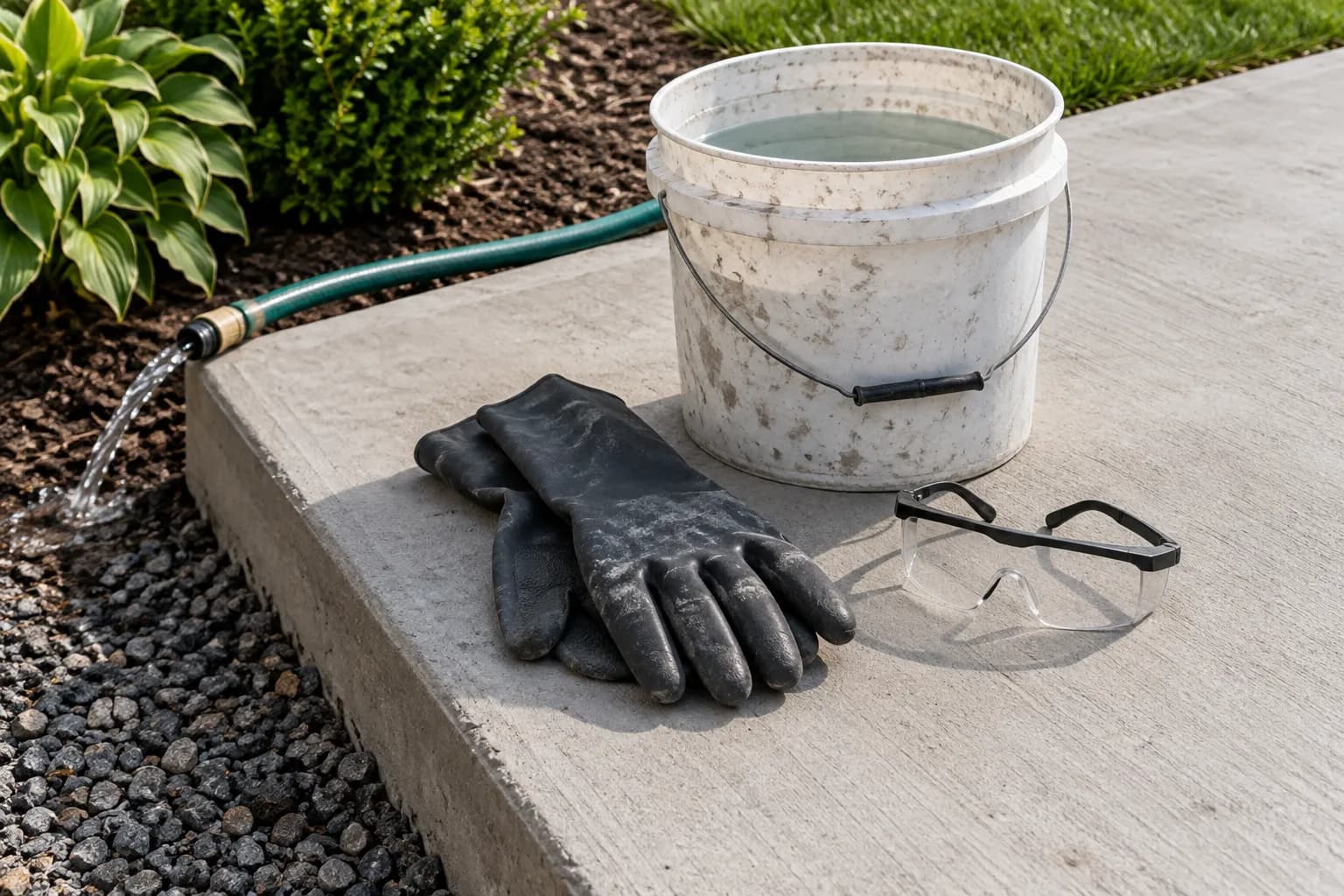
- Keep a clean water source within 20 feet of the work area at all times. A running hose or multiple 5-gallon buckets of clean water. This is your first line of defense.
- Wash splashes immediately. Do not wait until the pour is finished. Rinse any skin contact with water within minutes.
- Change wet clothing right away. If concrete soaks through your pants or shirt, stop and change. The few minutes lost are nothing compared to a burn.
- Never reach into wet concrete barehanded. Use tools or gloves for adjustments, even quick ones.
For safe mixing technique and proper equipment setup, see our how to mix concrete guide. If you are building forms before your pour, our how to build forms guide covers the full preparation process.
Burn Severity Reference
Use this table to quickly assess severity and determine the right response. When in doubt, treat as the higher category.
| Severity | Visible Signs | Timeframe | Action |
|---|---|---|---|
| Mild (1st degree) | Redness, mild stinging, no blisters | Within 1–2 hours of contact | Flush 20 min, cover, monitor |
| Moderate (2nd degree) | Blistering, swelling, intense pain | 2–24 hours after contact | Flush 20 min, cover, see doctor within 24 hours |
| Severe (3rd degree) | Purple, dark red, or black tissue; numbness | Hours to days post-contact | Flush immediately, go to ER |
| Eye exposure | Redness, tearing, pain, blurred vision | Immediate | Flush 20 min continuously, go to ER |
Note that first- and second-degree burns can progress to higher severity if the alkaline reaction continues untreated. The delayed pain response means damage is often worse than it initially appears.
Recovery Timeline
Recovery depends on the depth of alkaline penetration at the time treatment began.
Mild burns (redness, no blistering): Typically resolve in 3–7 days with daily cleaning and non-stick dressing changes. Most workers can return to full duty once redness subsides.
Second-degree burns (blistering): Healing takes 2–6 weeks. Blisters should not be popped. Expect hyperpigmentation at the burn site that may persist for months. Keep the area covered when returning to concrete work.
Severe burns: Require professional wound care and may involve skin grafting. Return-to-work timelines should be determined by a healthcare provider. Always confirm healed skin can tolerate the specific physical demands of concrete work before resuming.
One important note: alkaline tissue damage continues for 24–48 hours after surface contact ends, even after proper flushing. Reassess the burn area the following day regardless of how mild it appeared initially.
If you are returning to a pour site after a burn incident, review your PPE checklist and ensure a clean water source (running hose or 5-gallon buckets) is positioned within 20 feet before work begins. Reviewing our how to mix concrete guide covers safe handling steps from bag opening through final placement.
Use the concrete slab calculator to estimate materials before your next pour so planning doesn't get rushed on the day of work.
Key Takeaways
- Concrete burns are chemical burns caused by calcium hydroxide (pH 12-13) in wet cement, not heat
- You will not feel it right away. Damage can occur for 2-8 hours before pain begins, making prevention and immediate washing critical
- Flush with water for 20 minutes minimum if wet concrete contacts skin. Do not wait for pain or redness
- Seek emergency care for large blisters, burns bigger than your palm, eye exposure, or deep tissue discoloration
- Wear proper PPE: waterproof rubber boots, chemical-resistant gloves, long sleeves, eye protection, and dust masks
- Keep clean water within arm's reach at every pour site. Seconds matter with chemical burns
For more safety and project planning guidance, browse our complete guides library or use the concrete calculator to plan your next project.