

How to Clean Concrete: Driveways, Patios, and Garage Floors
Concrete is low maintenance but not no maintenance. A dirty, oil-stained driveway or faded patio looks neglected even when the concrete itself is structurally sound. The right cleaning approach depends on what's on the concrete — oil, mold, mineral deposits, and general grime each need a different solution.
This guide covers the full cleaning toolkit: what to use, what to avoid, and how to restore concrete that's been neglected for years.
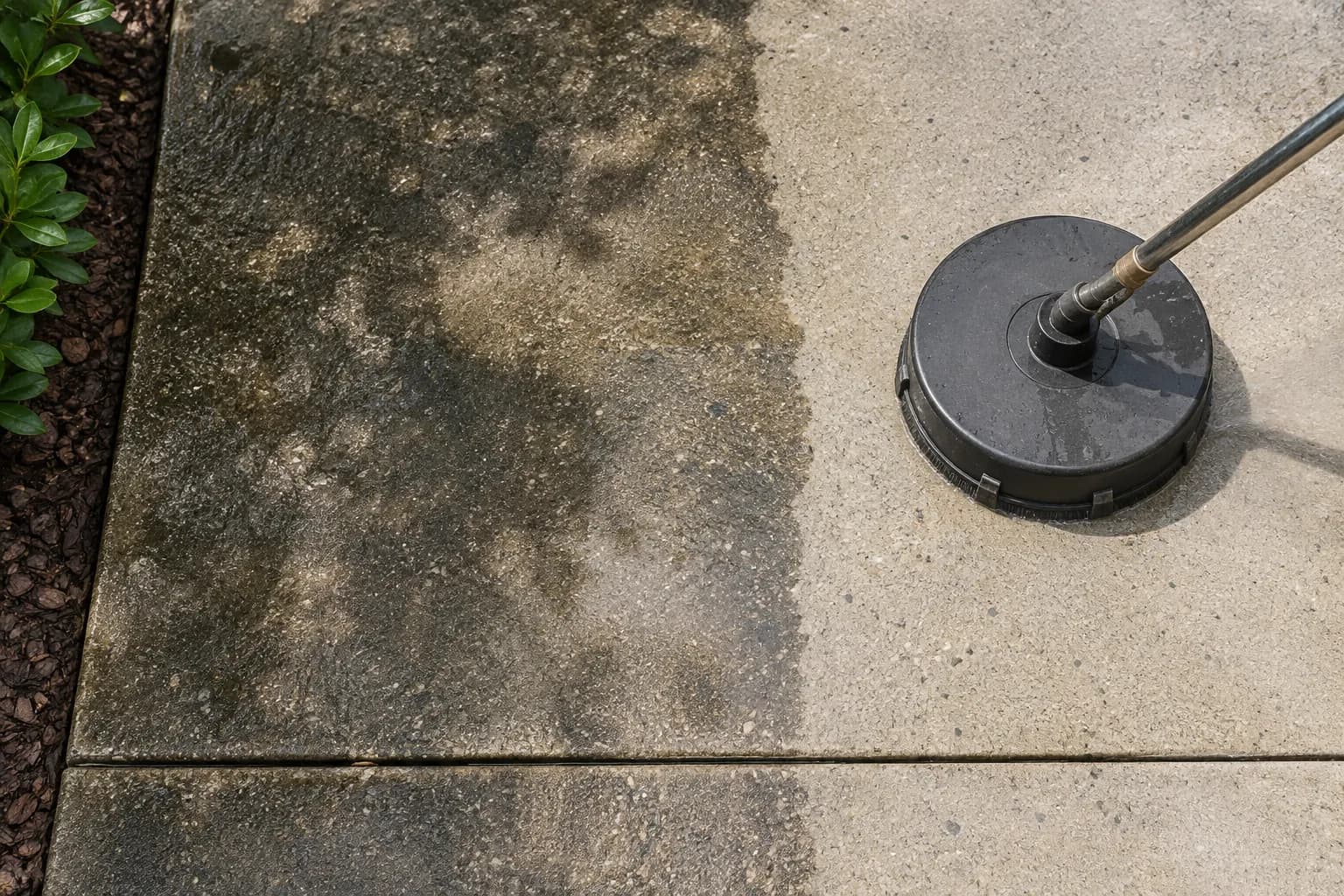
What You Need
For Basic Cleaning (Dirt, Mold, Algae)
| Item | Notes |
|---|---|
| Pressure washer (2,500–3,500 PSI) | Rent if you don't own one ($50–75/day) |
| 25-degree spray nozzle | General cleaning |
| TSP (trisodium phosphate) or concrete cleaner | Pre-treatment for general grime |
| Stiff-bristle push broom | Pre-scrubbing |
| Garden hose | Rinsing |
For Oil Stains
| Item | Notes |
|---|---|
| Cat litter or sawdust | Absorbs fresh spills |
| Heavy-duty degreaser (Purple Power, Zep) | Undiluted for old stains |
| Stiff deck brush | Scrubbing application |
| Kneeling pad | Comfort for scrubbing work |
For Mineral Deposits and Efflorescence
| Item | Notes |
|---|---|
| Diluted muriatic acid (1:10) | Last resort; use with caution |
| Concrete etching solution | Safer alternative to muriatic acid |
| Eye protection and rubber gloves | Mandatory for acid use |
| Sodium bicarbonate (baking soda) | Neutralize acid after application |
Pressure Washer Settings for Concrete
| Surface | PSI | Nozzle | Distance |
|---|---|---|---|
| Patio/light residential | 2,500–3,000 | 25° | 6–8 inches |
| Driveway | 3,000–3,500 | 15°–25° | 4–6 inches |
| Garage floor | 2,500–3,000 | 25° | 6–8 inches |
| Stamped/colored concrete | 1,500–2,000 | 40° | 8–12 inches |
Always work in overlapping passes (50% overlap) from one end to the other. Moving too slowly in one spot or holding too close can etch the surface. Keep the wand moving.
Never use a 0-degree (red) nozzle on concrete. It concentrates pressure into a pinpoint stream that strips the cement paste and permanently damages the surface.
General Cleaning: Step-by-Step
Step 1: Clear the Surface
Sweep debris, leaves, and loose material. Move vehicles and furniture. Wet the surrounding area (lawn, plants, pavers) before applying cleaners — dilution protects landscaping from runoff.
Step 2: Pre-Treat with Cleaner
For a dirty patio or driveway with general grime and light mold: dissolve 1/2 cup TSP per gallon of water and scrub onto the surface with a push broom. Let dwell 5–10 minutes.
For sensitive surfaces (sealed or colored concrete), use a pH-neutral concrete cleaner instead of TSP. See our concrete stain removal guide for stain-specific cleaners.
Step 3: Pressure Wash
Work systematically in one direction. Keep the wand moving at a consistent pace. Rinse thoroughly — cleaner residue left on concrete can leave white haze (especially TSP).
Step 4: Rinse and Inspect
After washing, let the surface dry completely and inspect for remaining stains. Stubborn spots may require a second round with targeted treatment.
Oil Stain Removal
Oil stains on driveways are the most common concrete cleaning challenge. Success depends on age:
Fresh oil (same day or within 24 hours):
- Cover with cat litter, sawdust, or commercial oil absorbent
- Let sit 30–60 minutes
- Sweep up and dispose
- Scrub remaining discoloration with dish soap and hot water
- Rinse
Old oil stains (weeks to years old):
- Apply undiluted heavy-duty degreaser (Purple Power, Zep Concrete Degreaser, or Krud Kutter)
- Dwell time: 15–30 minutes
- Scrub vigorously with a stiff brush
- Pressure wash
- Repeat 2–3 times for deeply set stains
- For stains that won't respond to degreasers: apply a poultice (mix degreaser with cat litter or dry portland cement into a paste, apply 1/4-inch thick, cover with plastic, let dry 24 hours, scrape and rinse)
For detailed stain-specific techniques, see our concrete stain removal guide.
Mold and Mildew
Black or green discoloration on patios and north-facing concrete is usually mold or algae. It's more surface contamination than damage — but it is slippery and looks bad.
Clean with a diluted bleach solution (1 part bleach to 3 parts water) or a commercial mold/mildew cleaner. Apply, dwell 10 minutes, scrub, and rinse. Protect surrounding plants from bleach runoff.
Long-term: Improve drainage and airflow. Mold returns quickly on shaded, persistently damp surfaces. Applying a sealer after cleaning reduces future mold growth by reducing moisture absorption.
Efflorescence (White Mineral Deposits)
The white chalky deposits that appear on concrete are efflorescence — mineral salts carried to the surface by water migration. They're cosmetic, not structural.
Remove with:
- Dry brushing first to remove loose deposits
- A diluted concrete etching solution (or 1 part muriatic acid to 10 parts water) applied carefully with a stiff brush
- Dwell 5 minutes, then neutralize with baking soda solution and rinse thoroughly
- Wear eye protection, rubber gloves, and old clothing — muriatic acid is caustic
Efflorescence often returns if the underlying moisture source isn't addressed. See our concrete discoloration guide for diagnosing the cause.
After Cleaning: Should You Seal?
Cleaning is the ideal time to apply or reapply a concrete sealer. Clean concrete absorbs sealer evenly; dirty concrete produces blotchy, uneven results.
Wait for the surface to fully dry after cleaning — typically 24–48 hours in warm weather, longer in humid conditions. Then apply a penetrating sealer or film sealer per our concrete sealing guide.
Sealing after cleaning:
- Reduces future stain penetration (oil repels easier)
- Slows future mold and algae growth
- Reduces efflorescence recurrence by blocking moisture migration
- Enriches color on decorative surfaces
What to Avoid
Acid on colored, stained, or sealed concrete. Muriatic acid strips sealers and fades integral color. Use it only on plain gray concrete where surface etching is acceptable, and always neutralize thoroughly.
0-degree pressure nozzle. Permanently damages the surface — avoid.
Bleach on stamped concrete sealer. Bleach degrades common acrylic sealers and causes uneven appearance. Use a cleaner formulated for sealed surfaces.
Hot water pressure washers on cold concrete. Rapid temperature shock can stress the surface. Warm water is fine; avoid steam cleaning on outdoor slabs in cold weather.
Related Guides
- Concrete Stain Removal Guide — Stain-specific removal techniques
- How to Seal Concrete — Sealer types and when to seal
- Concrete Maintenance Guide — Annual maintenance schedule
- Concrete Discoloration — Why concrete changes color and how to address it