

Concrete Stain Removal: Oil, Rust, Efflorescence and How to Clean Each
Concrete stains don't all respond to the same treatment. Pouring bleach on a rust stain makes it worse. Pressure washing efflorescence just pushes it deeper. Each stain type has a specific removal method, and using the wrong one wastes time and can permanently damage the surface. This guide covers the most common concrete stains and exactly how to remove each one.
Before you start scrubbing, identify what you're dealing with. The wrong product on the wrong stain can etch the surface or set the stain permanently. If you're planning a new concrete project and want to avoid stain-prone surfaces, use our concrete calculator to plan the right mix and finish for your application.
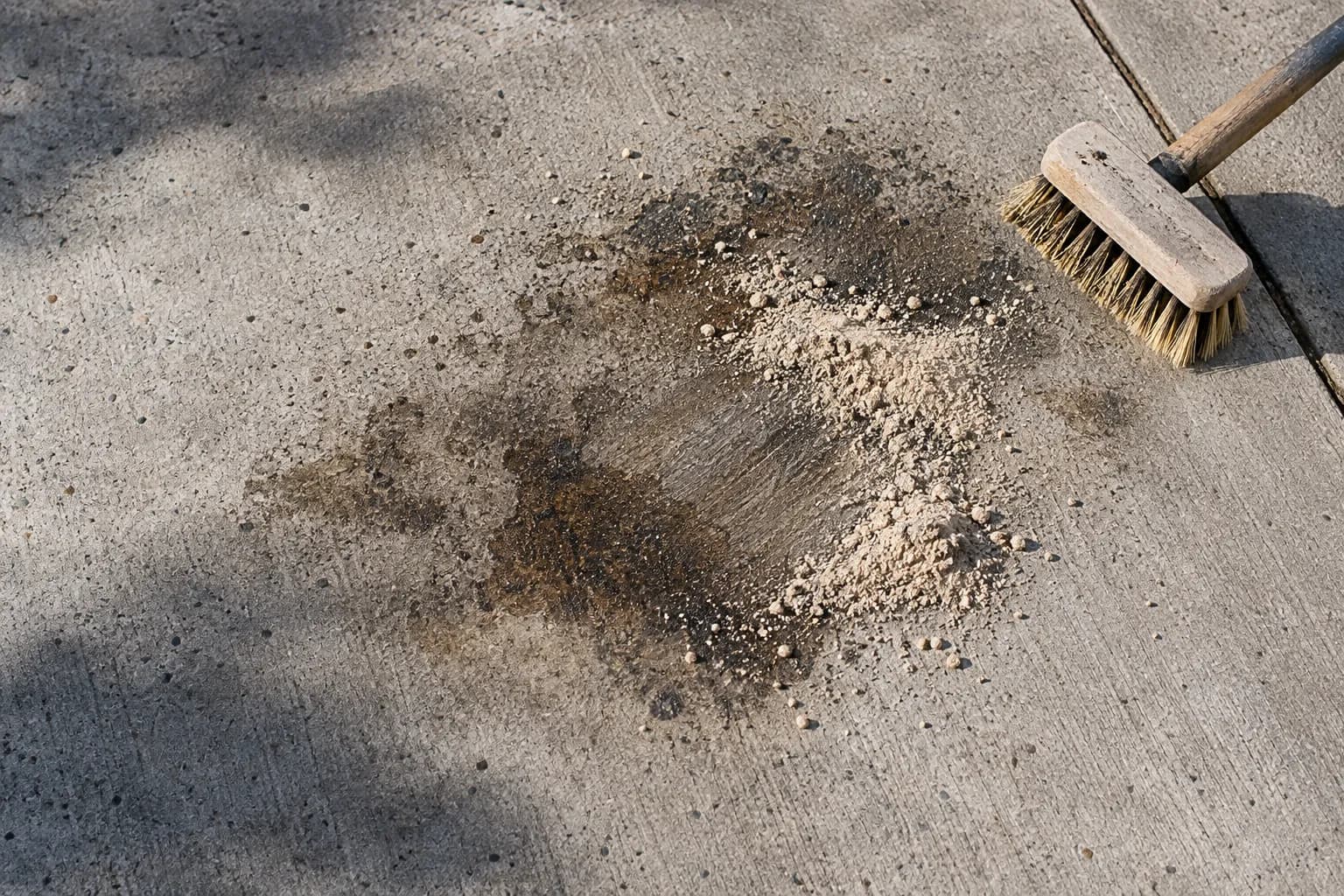
Oil and Grease Stains
Oil stains are the most common concrete complaint, especially on driveways and garage floors. The key factor is how long the oil has been there.
Fresh Spills (Under 24 Hours)
- Cover the spill with cat litter, sawdust, or cornstarch to absorb standing oil
- Let it sit 30-60 minutes, then sweep up
- Apply a commercial concrete degreaser (Purple Power, Zep, or Simple Green Concrete & Driveway) per label directions
- Scrub with a stiff bristle brush
- Rinse with a garden hose or pressure washer
Set-In Stains (Older Than 24 Hours)
Old oil stains require a poultice method to draw oil out of the pores:
- Mix an absorbent material (diatomaceous earth or cat litter ground to powder) with a solvent (acetone or mineral spirits) to form a paste
- Spread 1/4-inch thick over the stain, extending 1 inch beyond the edges
- Cover with plastic wrap and tape edges to slow evaporation
- Leave 24-48 hours--the solvent dissolves the oil while the absorbent pulls it upward
- Scrape off the dried poultice and scrub with degreaser
- Repeat if needed--deep stains may take 2-3 applications
Cost: Commercial degreasers run $8-15 per gallon. A poultice treatment costs about $10-20 in materials.
Rust Stains
Rust stains come from metal furniture legs, rebar bleed-through, fertilizer, or irrigation water with high iron content. Never use bleach--it oxidizes iron further and makes rust stains permanent.
Removal Method
- Apply a commercial rust remover containing oxalic acid or phosphoric acid (Iron OUT, Whink Rust Remover, or CLR)
- Let it dwell 10-15 minutes (don't let it dry)
- Scrub with a stiff brush
- Rinse thoroughly with clean water
For stubborn rust, apply a paste of lemon juice and cream of tartar. The citric acid works more slowly but is less harsh on decorative finishes.
Prevention: Place plastic caps or pads under metal furniture legs. Fix irrigation systems that spray iron-rich water onto concrete. If rust keeps recurring from below the surface, the rebar may be too close to the surface--a structural issue best assessed by a professional. See our concrete damage assessment guide for help evaluating what's happening below the surface.
Efflorescence (White Mineral Deposits)
Efflorescence looks alarming but is purely cosmetic. It's caused by water moving through concrete, dissolving mineral salts, and depositing them on the surface as it evaporates. It's especially common on new concrete and after wet seasons.
When to Act vs. When to Wait
Wait: If the concrete is less than one year old, efflorescence often resolves on its own as the concrete dries out and the available salts deplete. Normal weathering and foot traffic wear it away.
Act: If efflorescence persists beyond a year or returns repeatedly, there's likely an ongoing moisture source--poor drainage, missing vapor barrier, or water pressure from below.
Removal Method
- Try dry brushing first with a stiff bristle brush--this works for light deposits
- For heavier deposits, apply a dilute muriatic acid solution (1 part acid to 12 parts water)
- Wet the concrete first to prevent acid from soaking in too deep
- Apply the acid solution and scrub for 2-3 minutes
- Rinse thoroughly and neutralize with a baking soda solution
Important: Wear rubber gloves, eye protection, and work in a ventilated area when using muriatic acid. Keep it off plants and metal.
For persistent efflorescence, sealing the concrete with a quality penetrating sealer blocks the moisture pathway that carries salts to the surface.
Tire Marks and Rubber Scuffs
Hot tires deposit plasticizers and carbon black onto concrete driveways. These stains look dramatic but come off fairly easily.
- Apply a concrete degreaser or a dedicated tire mark remover
- Let it dwell 5-10 minutes
- Scrub with a stiff brush or use a pressure washer at 2,500-3,000 PSI
- For persistent marks, try a paste of baking soda and water as a mild abrasive
Prevention: Sealing your driveway reduces tire marking significantly. Hot-tire-resistant sealers are available specifically for this issue.
Paint Spills and Splatters
Treatment depends on the paint type and how long it's been there.
| Paint Type | Fresh (Under 24 hrs) | Dried |
|---|---|---|
| Latex/water-based | Scrub with soapy water and a stiff brush | Apply paint stripper, let sit 30 min, scrape and scrub |
| Oil-based | Blot (don't spread), then apply mineral spirits | Apply paint stripper designed for oil-based paint, multiple applications |
| Spray paint | Wipe with acetone or lacquer thinner immediately | Graffiti remover or paint stripper, may need multiple rounds |
For large paint spills on older concrete, sometimes the most practical option is to resurface the entire area rather than fight a losing battle with strippers.
Leaf and Tannin Stains
Leaves left on wet concrete release tannins that create brown or dark outlines. These are common on patios and sidewalks in fall.
- Mix a solution of 1 cup oxygen bleach (OxiClean) per gallon of hot water
- Pour onto stains and let sit 15-30 minutes
- Scrub with a brush and rinse
Unlike chlorine bleach, oxygen bleach won't harm plants or discolor the concrete. For prevention, keep leaves swept up during wet seasons, and maintain your concrete joints where debris tends to accumulate.
General Stain Prevention
The best stain removal is stain prevention. Three steps protect most residential concrete:
- Seal the concrete within the first year after pouring, then every 2-5 years. A penetrating sealer fills the pores where stains take hold.
- Clean spills quickly. Most stains are easy to remove within the first few hours and progressively harder after that.
- Maintain regularly. Annual pressure washing at 2,500-3,000 PSI removes surface contamination before it sets. Read our concrete maintenance guide for a complete seasonal schedule.
If your concrete has persistent discoloration issues beyond simple staining, the problem may be in the concrete itself rather than on the surface.
Key Takeaways
- Identify the stain type before treating--wrong products can make stains permanent
- Oil stains need degreasers and poultices, not just pressure washing
- Never use bleach on rust stains--it makes them worse
- Efflorescence is cosmetic and often resolves on its own within the first year
- Sealing concrete is the single best stain prevention measure
- Most stains are easy to remove within 24 hours and exponentially harder after that
For more project guidance, browse our complete library of concrete guides and tutorials.