

How to Set a Mailbox Post in Concrete (The Right Way)
A mailbox post set incorrectly is a weekend project that becomes a recurring headache — leaning within the first year, wobbling in wind, or rotting at the base. Done right, a concrete-set post lasts 15–20 years with no maintenance.
This guide covers the right hole depth, diameter, concrete type, bracing technique, and the drainage dome trick that prevents rot at the post base.
What You Need
Materials
| Item | Qty | Notes |
|---|---|---|
| 4×4 or 4×6 treated lumber post | 1 | Use pressure-treated (ground contact rated) |
| Fast-setting concrete (Quikrete Fast-Set) | 1–2 bags | 80-lb bags; 1 bag fills most standard holes |
| Gravel (pea gravel or crushed stone) | 1 small bag | 2-inch drainage layer at hole bottom |
| Post level or regular level | 1 | For plumb verification |
| Bracing lumber (2×2 stakes, 2 pieces) | Optional | Braces post while concrete sets |
| Mailbox hardware (if replacing box) | — | Check USPS-approved mailbox list |
Tools
- Clamshell post hole digger or power auger
- Tape measure
- Garden hose with water
- Shovel
- Level (4-foot)
Post Depth and Hole Size
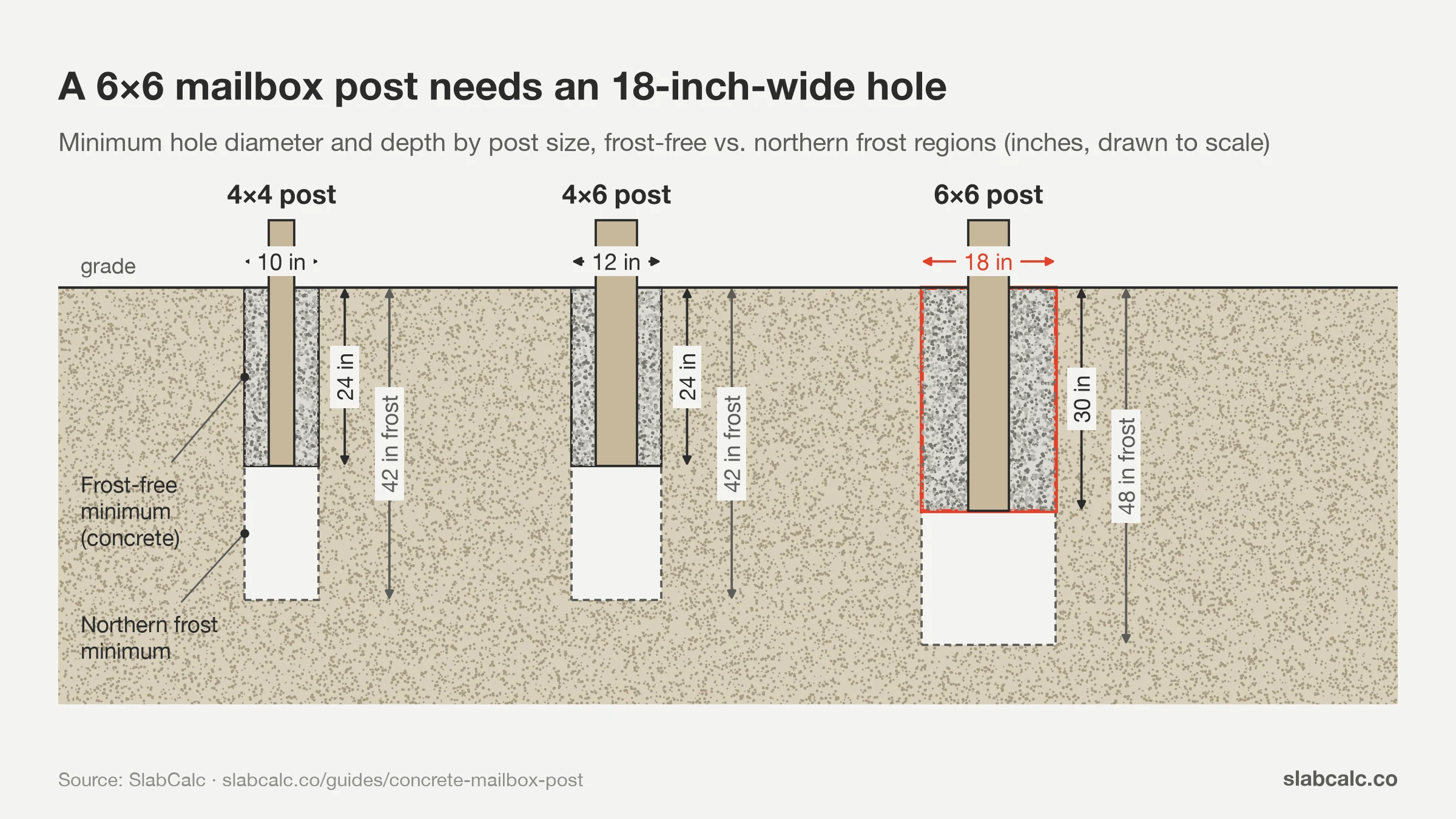
Hole depth: Set the post to 1/3 of the total post length, plus 6 inches. For frost-prone regions, the hole must reach below the local frost line (42 inches in much of the northern US). Shallow posts heave.
Hole diameter: Dig the hole 3 times the post width. For a 4×4 post (3.5 actual inches), dig a 10–12-inch diameter hole. The concrete needs enough mass around the post to anchor it against lateral forces (wind, vehicle wash).
| Post Size | Min. Hole Diameter | Min. Hole Depth (frost-free) | Min. Depth (northern frost) |
|---|---|---|---|
| 4×4 | 10" | 24" | 42" |
| 4×6 | 12" | 24" | 42" |
| 6×6 | 18" | 30" | 48" |
How Much Concrete?
Includes 10% waste factor
Open the full Post Hole Calculator →
For a 10-inch hole, 24 inches deep, with a 4×4 post: approximately 1.0 bags of 80-lb fast-setting mix. Always have an extra bag on hand — slightly overfilling and mounding above grade improves drainage.
Step-by-Step
Step 1: Locate and Dig the Hole
Confirm the correct setback distance from the road per USPS guidelines (6–8 inches from curb edge, 41–45 inches mailbox height above road). Mark the post center with spray paint.
Dig with a clamshell digger or rent a power auger for hard soil. Make the hole clean and vertical. Remove all loose dirt from the bottom — it compresses under load and allows the post to sink.
Step 2: Add Gravel Drainage Base
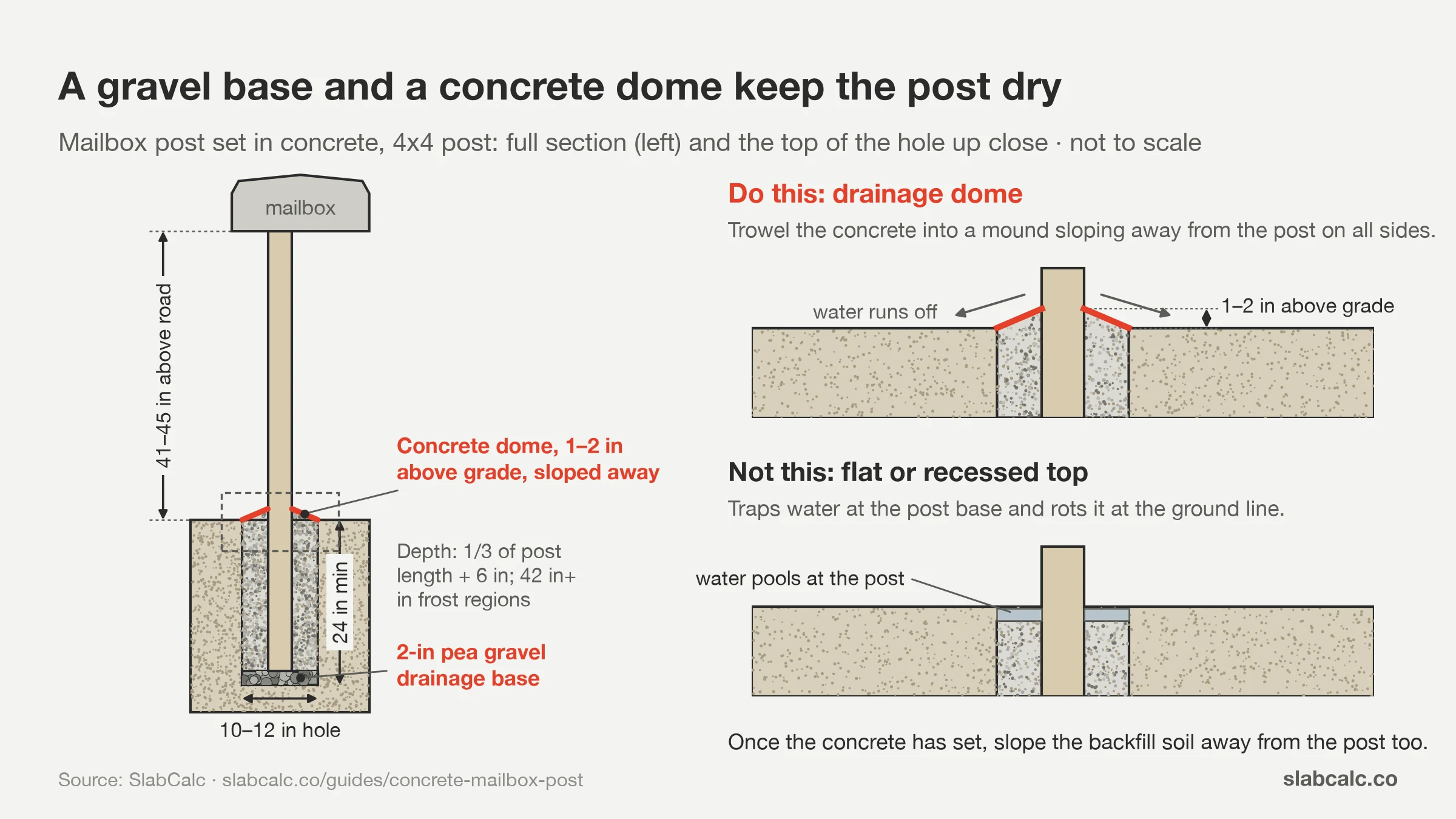
Pour 2 inches of pea gravel at the bottom of the hole. This prevents water from pooling at the post base and accelerating rot — even with pressure-treated wood. This is the single most effective step for extending post life.
Step 3: Set the Post
Lower the post into the hole. Set a post level (bubble level that wraps the post) to monitor plumb while you work. Brace the post with two 2×2 stakes angled from different directions if working alone.
Check that the post is at the correct height for your mailbox (verify that the bottom of the box will land at 41–45 inches above road grade when mounted).
Step 4: Add the Concrete
Fast-setting method (recommended): Pour the dry fast-setting mix directly into the hole — no pre-mixing required. Fill around the post to within 3–4 inches of the surface. Add water per bag instructions (typically 1 gallon per 50 lbs of mix). Do not stir. The water activates the mix in place.
Regular mix method: Mix concrete to a workable consistency in a bucket or wheelbarrow, per our concrete mixing guide. Pour slowly around the post, tapping the side of the hole with a rod to settle the mix.
See our fence post guide for both methods compared in more detail, including in-ground timber posts vs. metal post hardware.
Step 5: Create the Drainage Dome
Top off the hole with concrete, then use a trowel to mound it 1–2 inches above grade, sloping away from the post on all sides. This drainage dome is critical — a flat or recessed concrete top traps water against the post and accelerates rot at the ground line.
Step 6: Check Plumb and Brace
Immediately after placing concrete, check the post with a level on two adjacent faces. Adjust now — once fast-setting mix begins to set (20 minutes), corrections are difficult.
Brace with 2×2 stakes screwed to the post if needed. Leave braces in place for at least 4 hours for fast-set concrete, or 24 hours for regular concrete.
Step 7: Backfill and Mount
Once concrete has set, fill any low spots around the edge of the dome with soil, leaving the dome itself exposed. Tamp lightly and slope away from the post for drainage.
Mount the mailbox per manufacturer instructions. Verify mailbox height above road grade.
For the full curing timeline — when the post reaches full strength and is safe to load — see our guide.
Key Specs
| Spec | Value |
|---|---|
| Post depth | 1/3 post length + 6" (min. 24", frost regions 42"+) |
| Hole diameter | 3× post width |
| Mailbox height (USPS) | 41–45" above road |
| Mailbox setback (USPS) | 6–8" from curb or road edge |
| Concrete type | Fast-setting recommended |
| Setting time (fast-set) | 20–40 minutes |
| Ready to mount mailbox | 24 hours (full strength at 28 days) |
Common Mistakes
Not going deep enough. Posts set less than 24 inches deep are vulnerable to heaving from frost and gradual tipping from wind. Follow the depth formula — don't guess.
Flat or recessed concrete top. Water pooling around the post base causes rot even in pressure-treated lumber over time. Always mound the concrete above grade.
Skipping gravel at the base. A 2-inch gravel layer at the bottom of the hole costs almost nothing and significantly extends post life by improving drainage.
Related Guides
- Concrete Fence Post Guide — Same process for fence posts, longer run
- How Long Does Concrete Take to Cure? — Full strength timeline for post holes
- How Many Bags Do I Need? — Bag count reference for post holes of any size