
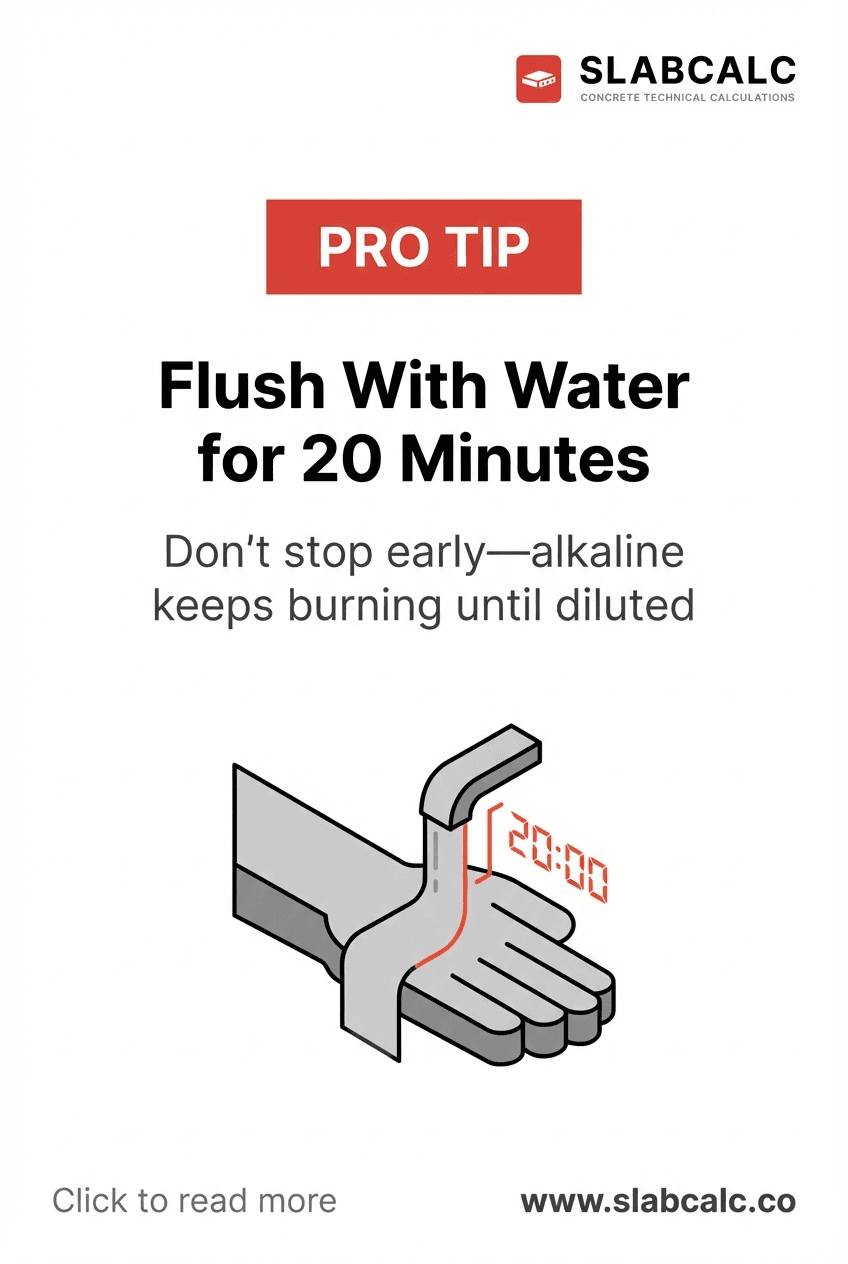
Flush With Water for 20 Minutes
The Mistake Everyone Makes
Most people stop rinsing a concrete burn after 2-3 minutes of water contact. They think the visible cement is gone, so the danger has passed. It hasn't. This is the biggest reason concrete burns turn into serious injuries requiring skin grafts and permanent scarring.
Here's why: wet concrete is chemically active cement with a pH of 12-13—as alkaline as household bleach. That alkalinity doesn't instantly disappear when you splash water on it. The cement particles continue releasing calcium hydroxide deep into the skin layers, destroying tissue for hours after initial contact if you don't stop the chemical reaction completely.
Why 20 Minutes Is the Professional Standard
Concrete contractors and emergency responders use the 20-minute flush rule because this is how long it takes to dilute the alkaline concentration enough to stop chemical burn progression.
Think of it this way: running water doesn't instantly neutralize cement. It requires continuous dilution—fresh water constantly replacing the concentrated alkaline solution that's actively burning skin. After 20 minutes of steady flushing, the calcium hydroxide concentration drops below the level that causes progressive tissue damage.
Studies on alkaline burn treatment show that water flushing duration directly correlates with burn depth and recovery time. A 3-minute rinse leaves residual cement that continues damaging skin for hours. A 20-minute flush removes enough alkaline material to prevent deep-tissue penetration.
Step-by-Step Application
Immediately upon contact:
-
Remove the source. Strip off wet clothing, boots, and gloves. Brush away loose cement particles with a dry cloth—don't add more water yet.
-
Start flushing. Use cool running water (not ice water, which can damage tissue further). Position the affected area under steady stream for the full 20 minutes.
-
Use clean, moving water. Don't soak in a bucket—the water becomes saturated with cement particles and stops being effective. Running tap water continuously replaces contaminated water with fresh dilution.
-
Flush your eyes or mouth for 15+ minutes if cement contacted mucous membranes. These tissues are more vulnerable and require longer treatment.
-
Don't apply vinegar, acids, or neutralizers. These can actually accelerate chemical burns. Water is the only proven effective treatment.
-
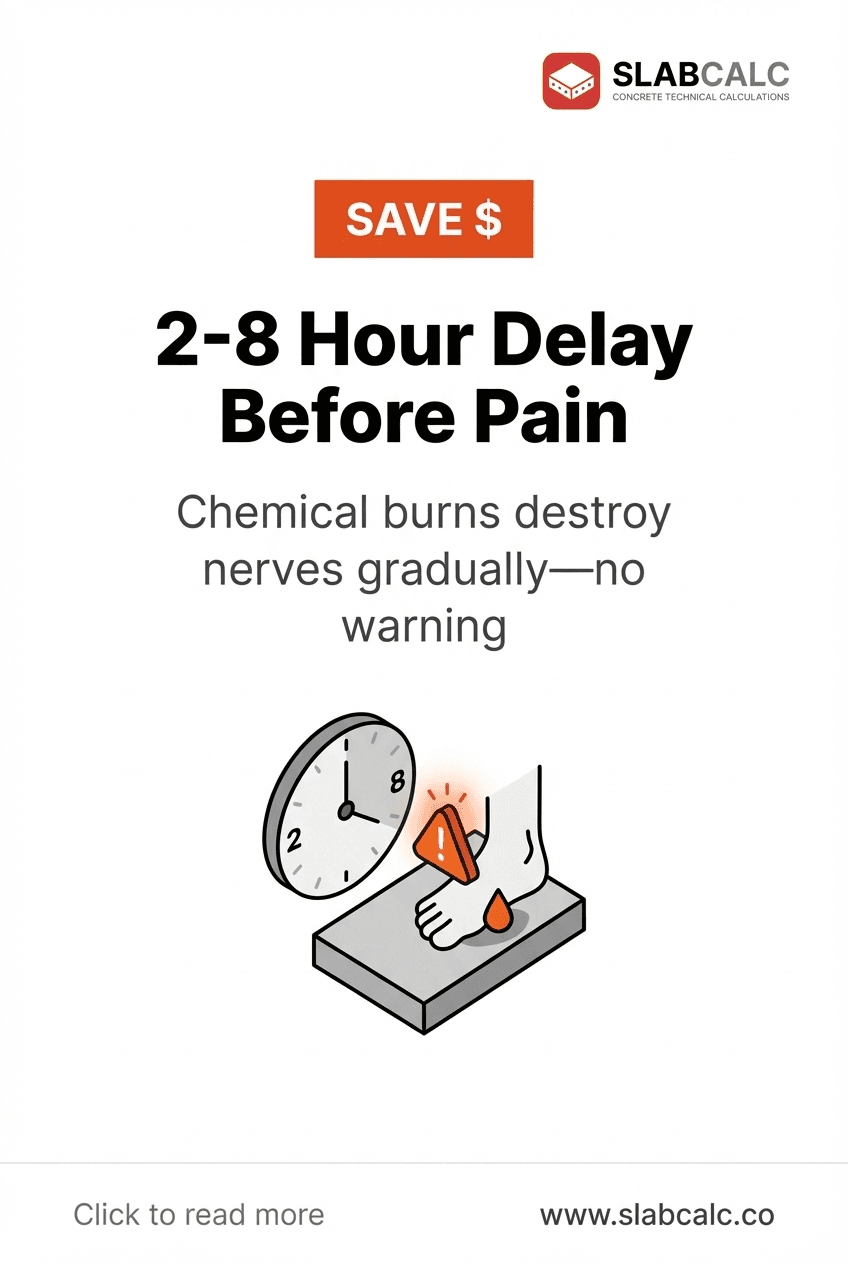
Seek medical attention immediately after the 20-minute flush, even if there's no pain. Alkaline burns are deceptive—damage can be extensive while you feel nothing.
Prevention Is Easier Than Treatment
Before your next concrete project, protect vulnerable areas: wear long sleeves, tall socks that overlap boot tops, and consider nitrile-lined work gloves. Use our concrete calculator to estimate material volume and plan proper equipment before you pour. Understanding concrete safety prevents emergency room visits and weeks of painful recovery.
The 20-minute rule saves skin. Don't skip it.