
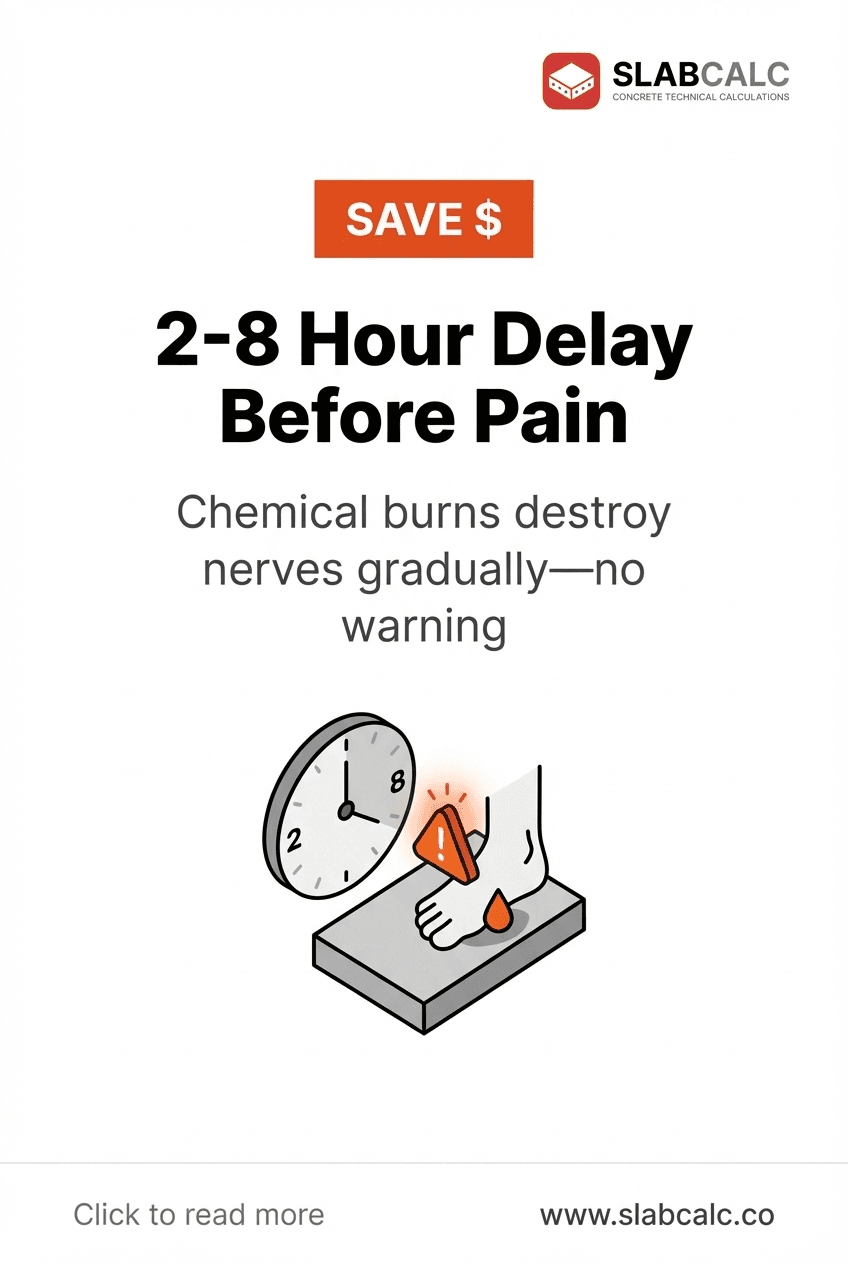
2-8 Hour Delay Before Pain
Concrete burns save you $3,000–$8,000 in medical costs when treated immediately, versus delayed emergency care that often requires skin grafts and long-term wound management. The difference between a $200 preventive response and a $5,500 ER visit comes down to acting in the first 30 minutes—before you even feel pain.
Why Concrete Burns Feel Like a Scam
Wet Portland cement has a pH of 12–13, identical to household bleach. When it contacts skin, calcium hydroxide begins destroying tissue immediately. But here's the trap: you won't feel pain for 2 to 8 hours because the chemical dissolves nerve endings before triggering pain signals. By the time you notice burning, the damage has penetrated into the dermis layer of skin. This is why concrete burns are deceptive—they look minor (mild redness) while causing severe subsurface damage.
A typical DIY concrete project involves 4–6 hours of wet-material handling. Even with gloves, concrete works into seams, pant cuffs, and boot tops. Workers often finish the pour, clean up, and go inside before symptoms appear. By then, the alkaline paste has been in contact with skin for 6–10 hours.
The Dollar Math: Prevention vs. Emergency Care
Cheap approach (prevention): $30–$60
- Nitrile gloves with cuff covers: $12
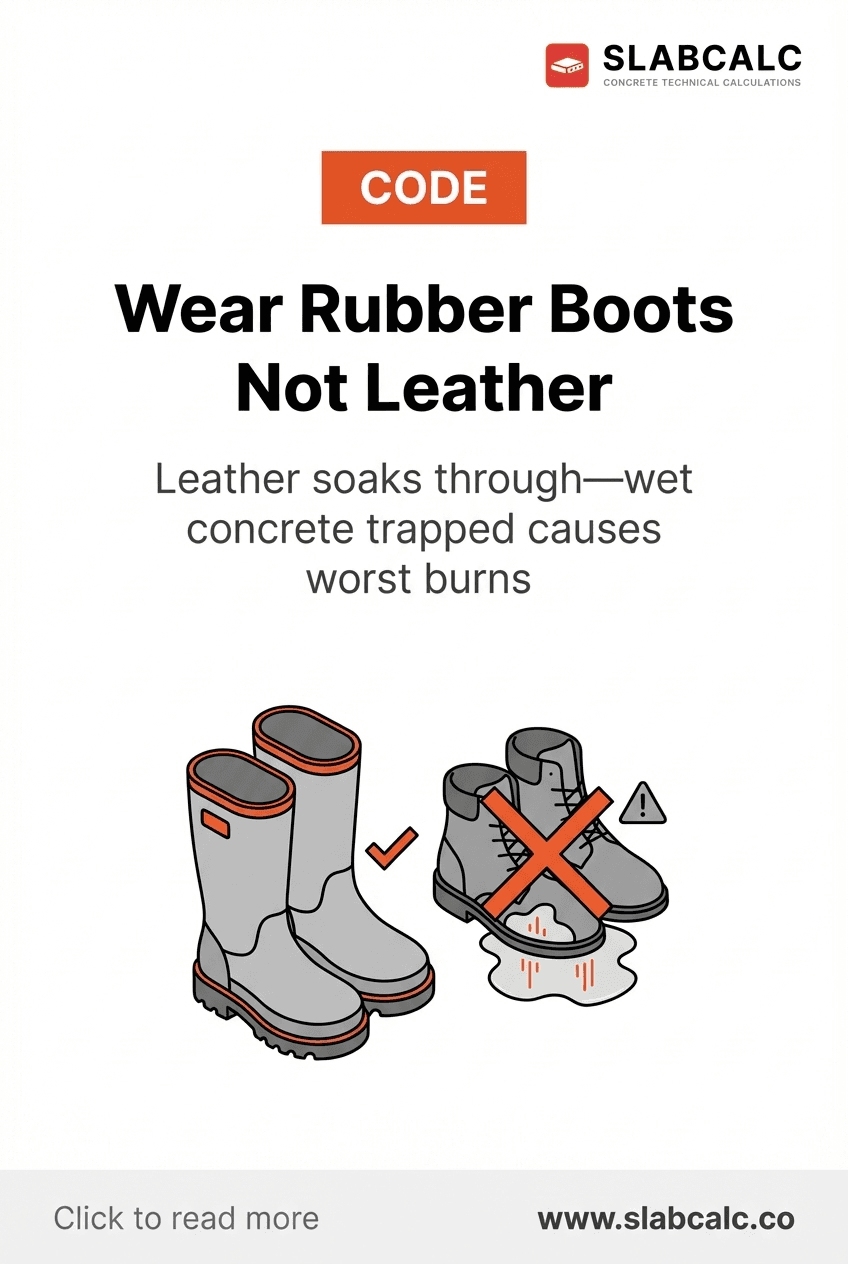
- Waterproof boot covers: $15
- pH-neutral soap and first-aid kit: $25
- Total time invested: 2 minutes between tasks
Expensive approach (emergency response): $3,500–$8,000
- Emergency room visit: $1,200–$2,500
- Burn specialist consultation: $400–$800
- Topical antibiotics and dressings: $200–$400
- Scar revision treatment (6–12 months later): $1,500–$4,000
- Total time invested: 40+ hours across multiple visits
If your concrete project costs $800–$2,000 in materials, medical complications can exceed your total project budget.
Immediate Action Protocol (First 30 Minutes)
Do this right now if concrete contacts skin:
- Brush off dry concrete gently with a cloth—don't rub, as friction increases penetration
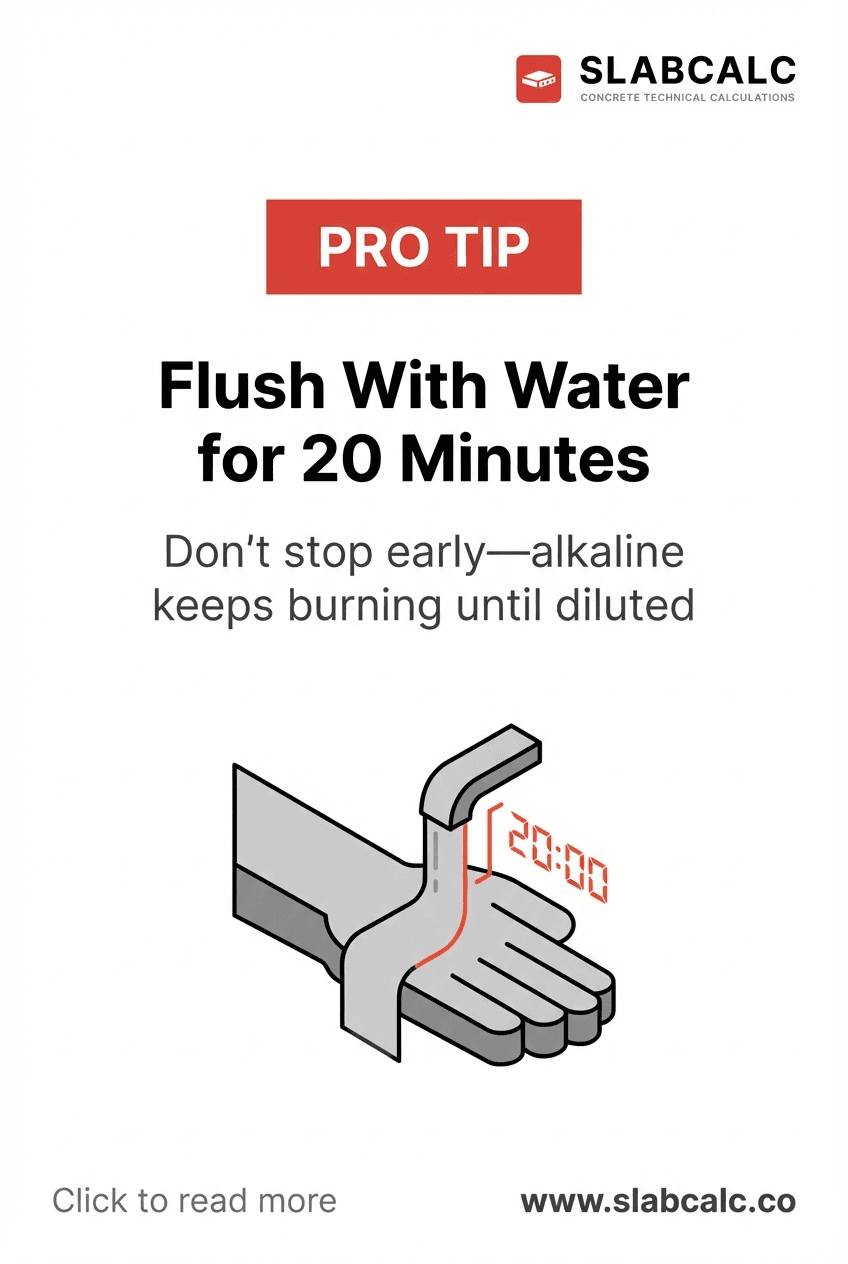
- Rinse with cool water for 10 full minutes (this halts the chemical reaction)
- Wash with pH-neutral soap to remove remaining alkaline residue
- Apply antibiotic ointment and bandage immediately
- Monitor for swelling or worsening redness over the next 24 hours
- Seek medical attention if blistering appears or if pain worsens after 12 hours
The 10-minute rinse is non-negotiable—it physically removes alkaline particles and dilutes the chemical. Skipping this step or using only alcohol-based wipes will cost you thousands in follow-up treatment.
The Decision Framework
Before pouring concrete, ask yourself: Do I have 5 minutes to prevent a potential $5,000 injury? The answer should determine your PPE investment. Wear nitrile gloves rated for wet work, tuck pant legs into socks, and keep a water source within arm's reach of your work area. Budget the $40–$60 for proper equipment as part of your concrete project costs.
The concrete won't warn you. Protection must be automatic, not reactive.