
1/16 INCH
The Magic Threshold: 1/16 Inch
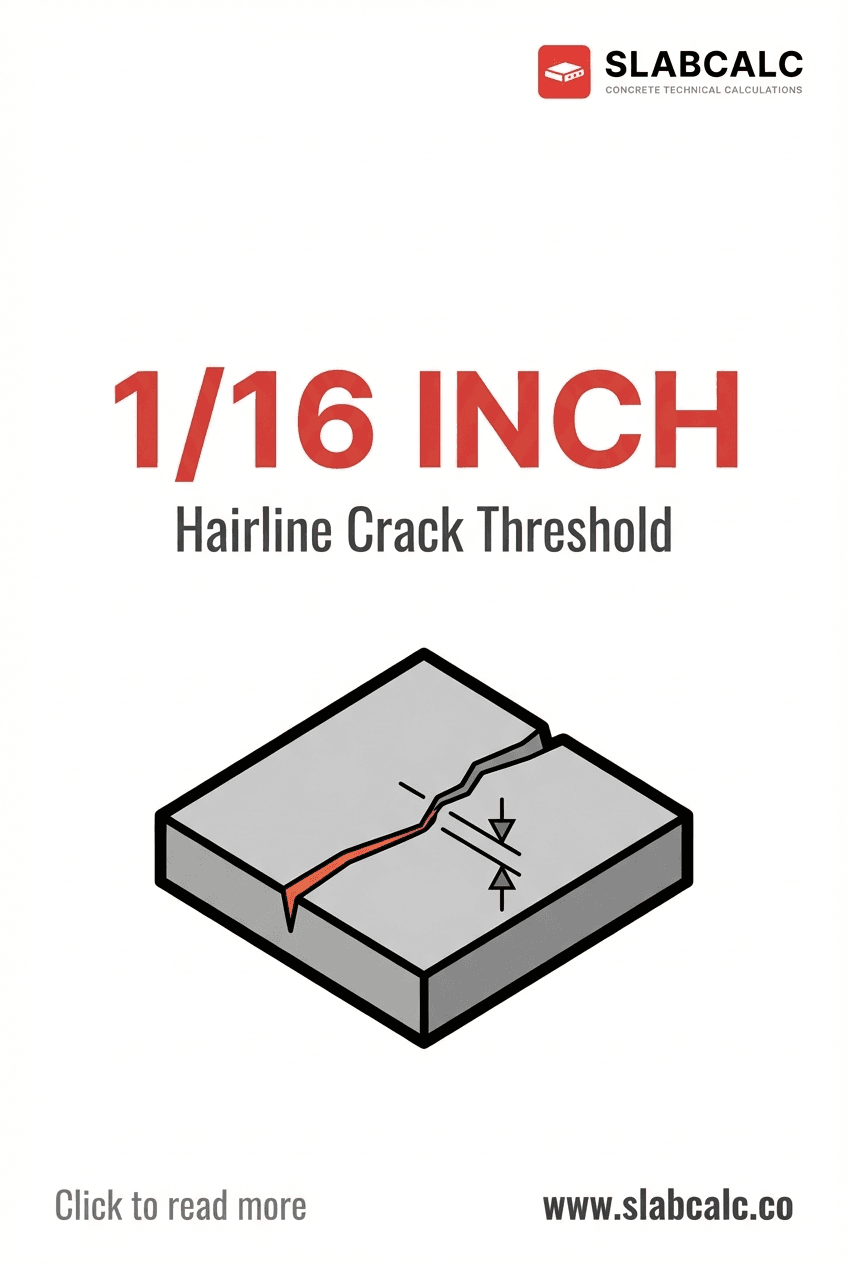
One-sixteenth of an inch—roughly the thickness of a credit card—is the concrete industry's hairline crack threshold. This measurement marks the boundary between cosmetic damage and a repair task worth your time and money. Cracks narrower than 1/16 inch are classified as hairline cracks and fall into the "cosmetic" severity category. Anything wider crosses into the "minor" damage zone, where intervention becomes financially and structurally justified.
Why this specific number? Water penetration. Cracks under 1/16 inch typically remain sealed by surface tension and trapped debris, limiting moisture entry to shallow subsurface layers. Cracks exceeding 1/16 inch allow water to travel deeper, reaching reinforcement or base materials where freeze-thaw cycles and corrosion accelerate damage. This is why contractors and engineers use 1/16 inch as the measurement fork in the road.
When 1/16 Inch Is Your Measuring Stick
Use your tape measure in these scenarios:
- You spot a visible crack and want to know if sealing is necessary
- You're tracking seasonal movement (cracks widen in winter, narrow in summer)
- You're documenting slab condition before selling your home
- You're deciding between DIY crack filler ($15–$40) and professional repair ($300–$800)
For hairline cracks narrower than 1/16 inch, cosmetic sealing is optional. Many homeowners leave them alone for years without progression. However, if you live in a freeze-thaw climate (north of the 40th parallel), sealing even hairline cracks with concrete crack sealant extends slab life by 5–10 years, costing roughly $2–$5 per linear foot.
When 1/16 Inch Doesn't Apply
This threshold doesn't cover all damage types. Wide cracks aren't the only concern:
- Spalling (surface flaking) under 1/4 inch deep is still cosmetic, regardless of coverage area
- Settlement gaps between concrete sections—measured vertically, not horizontally—follow different severity rules
- Pattern cracks (multiple small cracks radiating from one point) indicate different root causes than single straight cracks and may require base repair, not just surface sealing
- Moving cracks (visible change month-to-month) are urgent regardless of width
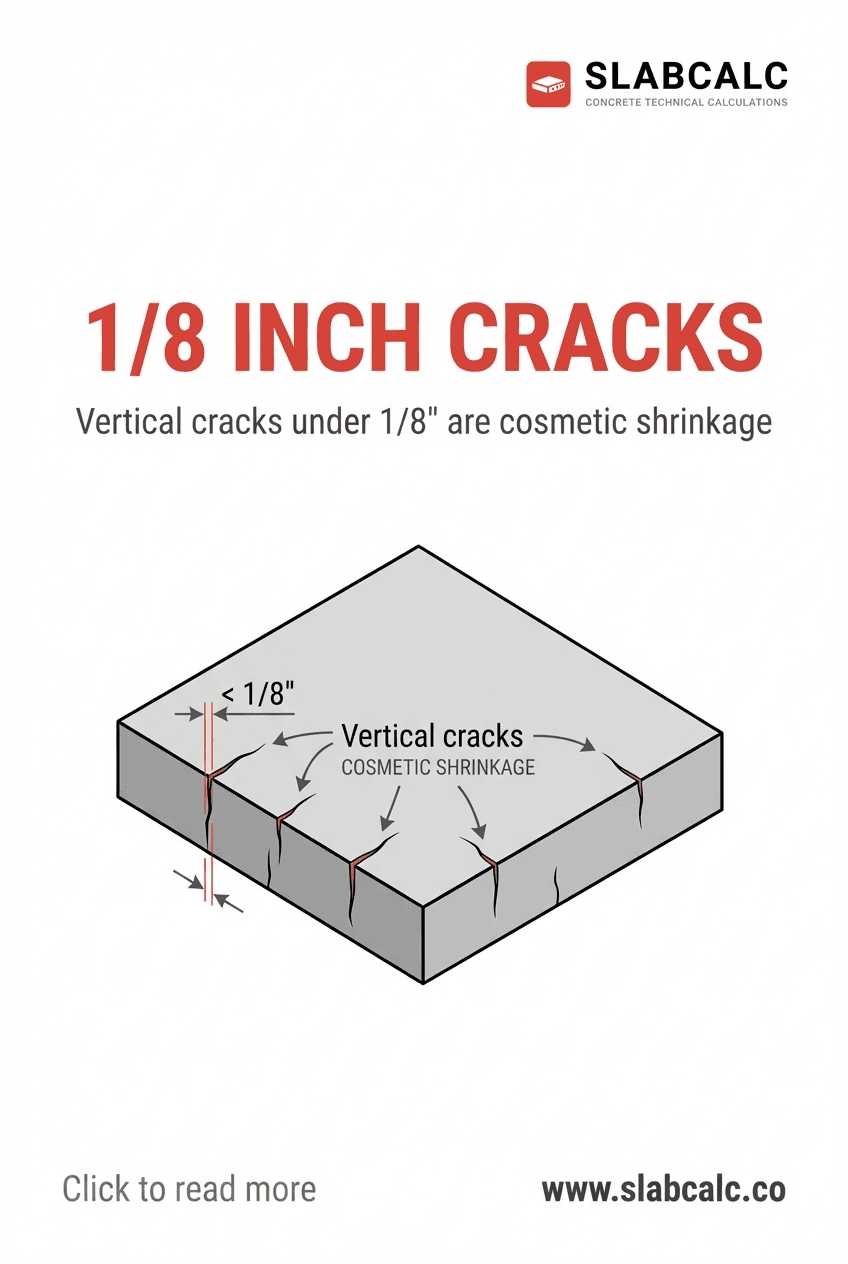
A 1/8-inch crack that closes and reopens seasonally signals foundation movement—a structural concern even though it's under 1/4 inch. Conversely, a stable 1/4-inch crack that hasn't changed in five years is likely cosmetic.
Practical Application: Measure Before Spending
Before calling a contractor or buying repair supplies, grab a ruler or tape measure and document three things: crack width, length, and whether it's growing. Photograph it with a ruler in frame for reference.
If your crack measures less than 1/16 inch, monitor it annually. If it exceeds 1/16 inch or grows noticeably year-to-year, seal it within the next season. The cost difference between sealing a 1/16-inch crack now ($50) versus replacing a spalled section later ($2,000+) makes measurement the cheapest diagnostic tool in your concrete arsenal.