

Winter Concrete Damage: What Happened and Spring Repair Options
Spring reveals what winter did to your concrete. Surfaces that looked fine in November are now flaking, pitting, cracking, or heaving. Freeze-thaw cycles, deicing salt, and frost heave each cause different types of damage--and each requires a different repair approach. This guide helps you identify what happened, assess severity, and plan repairs before the damage gets worse.
Not all winter damage needs immediate repair--some is cosmetic and some is structural. The key is distinguishing between the two before you spend money. If you're budgeting for potential replacement, use our concrete cost calculator to estimate what full replacement would run for your area.
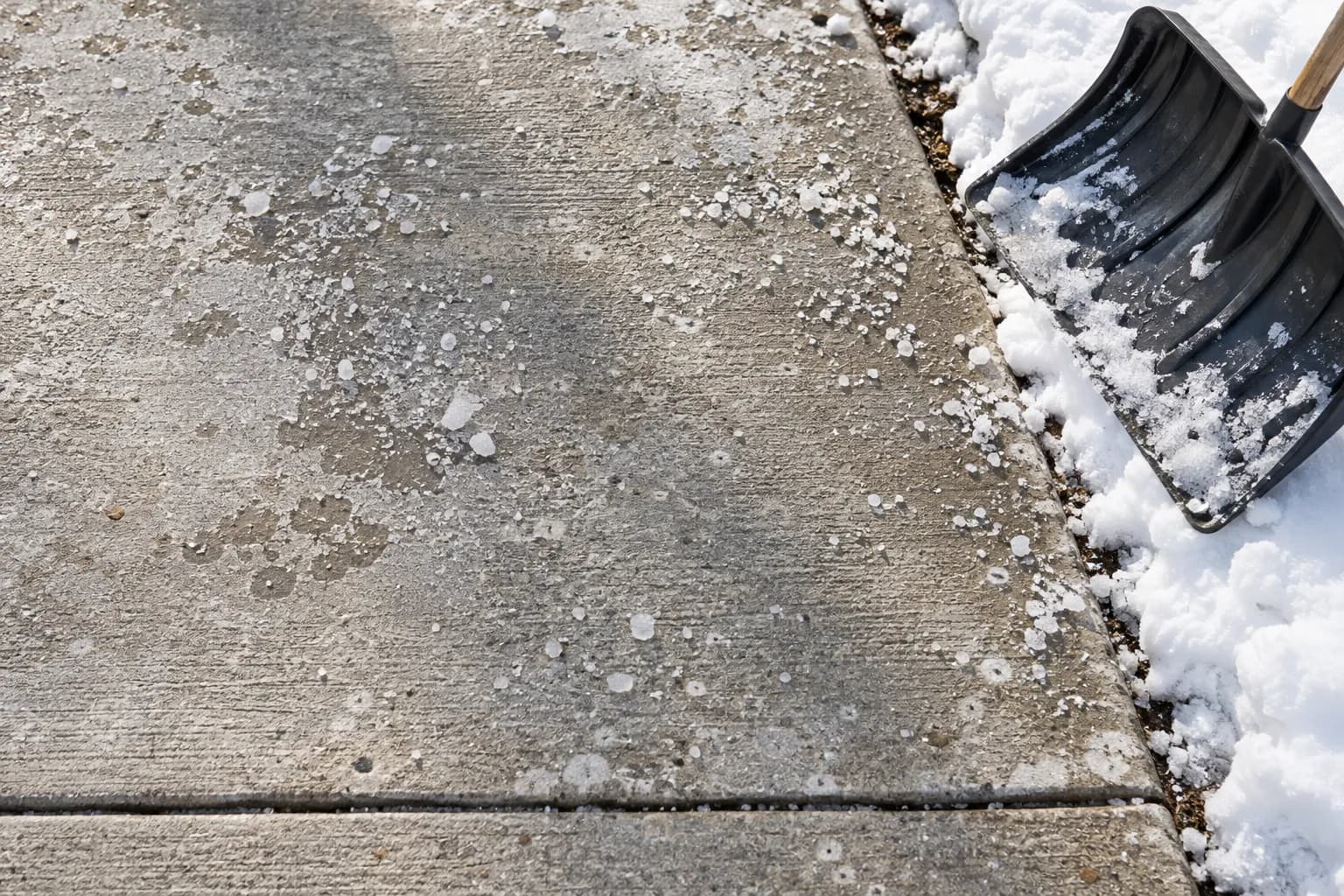
Freeze-Thaw Damage: Surface Deterioration
Freeze-thaw damage is the most common winter concrete problem. Water enters the concrete's pore structure, freezes, expands by 9%, and fractures the surrounding material. Repeat this 50-100 times over a winter and the surface starts falling apart.
What It Looks Like
- Scaling: The top layer peels off in thin flakes, exposing aggregate beneath. Starts in patches, spreads outward.
- Spalling: Deeper than scaling--chunks of concrete break away, leaving craters 1/4 to 1 inch deep. Often starts at edges and joints.
- Pitting: Small holes (1/8 to 1/4 inch) scattered across the surface. Looks like the concrete has been peppered with a nail.
- Pop-outs: Cone-shaped holes where individual aggregate pieces have fractured and popped out. Each pop-out is typically 1/4 to 2 inches across.
For detailed identification of surface failure types, see our spalling and scaling repair guide.
Why It Happened
- No sealer: Unsealed concrete absorbs water readily. Sealed concrete resists moisture penetration.
- Poor air entrainment: Concrete designed for freeze-thaw environments should have 5-7% air content (microscopic air bubbles that give expanding ice room to move). If the original mix lacked this, the concrete is inherently vulnerable.
- Premature finishing: Finishing concrete too early during the pour traps bleed water in the surface layer, creating a weak zone that's the first to fail in freeze-thaw.
- New concrete + salt: Concrete poured in the same year should never see deicing salt. It hasn't developed enough strength to resist the accelerated freeze-thaw cycles salt creates.
Repair Options
| Damage Level | Description | Repair | Cost Estimate |
|---|---|---|---|
| Mild scaling | Surface flaking, aggregate starting to show | Seal with penetrating sealer to prevent progression | $0.20-0.50/sq ft |
| Moderate spalling | Craters under 1 inch deep, less than 25% of surface affected | Patch with polymer-modified repair mortar, then seal | $2-5/sq ft |
| Severe spalling | Deep deterioration, over 25% affected, aggregate loose | Resurface entire area or replace | $4-18/sq ft |
Salt Scaling
Salt scaling is a specific form of freeze-thaw damage accelerated by deicing chemicals. It produces a distinctly rough, cratered surface concentrated in areas where salt was applied--often driveway centers and walkway paths.
What Makes It Different
Regular freeze-thaw damage is relatively uniform across exposed surfaces. Salt scaling is concentrated in traffic areas where salt sits. The pattern follows where you spread salt or where salty water pools.
The Mechanism
Deicing salt lowers ice's melting point, but the water-salt solution increases the total number of freeze-thaw cycles. Instead of one freeze at night and one thaw during the day, salt creates multiple micro-cycles as temperatures fluctuate around the depressed freezing point. More cycles mean more damage.
Prevention for Next Winter
- Use sand for traction instead of salt on concrete under 2 years old
- If you must use deicer, use calcium magnesium acetate (CMA)--it's less damaging than rock salt
- Never use ammonium nitrate or ammonium sulfate deicers on concrete--they chemically attack the paste
- Apply a penetrating sealer each fall before the first freeze
Frost Heave: Lifted and Displaced Slabs
Frost heave is different from surface damage. Instead of deteriorating the concrete itself, frozen soil beneath the slab expands and pushes entire sections upward. When the soil thaws, it doesn't always return to its original position, leaving slabs misaligned.
What It Looks Like
- Slab sections sitting higher or lower than adjacent sections
- New cracks at joint locations where slabs shifted relative to each other
- Tripping hazards at sidewalk or driveway joints
- Gaps beneath slab edges where soil has settled after thawing
What Caused It
- Frost-susceptible soil: Silty soils are worst for frost heave because they hold water through capillary action. Clay and sand are less susceptible.
- High water table: More water near the surface means more ice lens formation
- Inadequate base: Slabs poured directly on silt without a gravel base layer are most vulnerable. Proper subgrade preparation prevents this.
- Poor drainage: Water collecting alongside or beneath the slab feeds the freezing process
Repair Options
Minor heave (under 1/2 inch displacement): Monitor through a full thaw cycle (spring into summer). Many slabs settle back close to original position as the ground fully thaws and consolidates.
Moderate heave (1/2 to 2 inches): Once the ground has fully thawed and stabilized (usually by June), mudjacking or foam leveling can bring slabs back to grade. Cost: $3-12 per square foot.
Severe heave (over 2 inches) or recurring heave: The soil beneath the slab needs correction. This typically means removing the slab, excavating the frost-susceptible soil, installing a proper gravel base with drainage, and pouring a new slab. See our guide on concrete settling for understanding the full range of settlement issues.
Spring Repair Timeline
Don't rush into repairs. Concrete repair products need specific conditions, and patching too early in spring invites repeat failure.
Wait For
- Consistent temperatures above 50 degrees F for at least 5 consecutive days, including overnight lows
- Ground fully thawed -- if soil is still frozen beneath the slab, it's still moving
- Dry conditions -- most repair products can't be applied to wet surfaces or with rain expected within 24 hours
Recommended Repair Schedule
| Month (Northern US) | Action |
|---|---|
| March-April | Assess and document damage. Photograph everything. Get contractor quotes. |
| May | Temperature-dependent minor repairs: crack filling, sealing |
| May-June | Major repairs: resurfacing, leveling, patching |
| June-July | Full replacement if needed |
| September-October | Apply penetrating sealer before next winter |
Temporary Safety Measures
While waiting for repair weather:
- Mark trip hazards with bright tape or spray paint
- Use asphalt cold patch as a temporary filler for dangerous spalls near walkways
- Keep heaved slab edges clear of debris so they're visible
How to Prevent Winter Damage Next Year
Follow our concrete maintenance guide for a full seasonal schedule. The essentials for winter protection:
- Seal in fall. Apply a penetrating silane or siloxane sealer before the first freeze. This is the single most effective prevention measure. Cost: $0.20-0.50 per sq ft for DIY application.
- Fix drainage. Redirect downspouts and correct grading so water flows away from slabs.
- Avoid salt on young concrete. Use sand for traction during the first two winters.
- Fill cracks before winter. Any crack that lets water in becomes a freeze-thaw weak point. Seal cracks with flexible polyurethane caulk in fall.
Concrete that was properly cured and reached full strength before its first winter handles freeze-thaw cycles far better. If your concrete was poured late in the season and saw freezing temperatures within the first 28 days, early damage is almost expected.
Key Takeaways
- Identify the damage type first: surface scaling vs. salt damage vs. frost heave require different repairs
- Wait for consistent 50+ degree F temperatures before making permanent repairs
- Mild scaling can be sealed to prevent progression ($0.20-0.50/sq ft)
- Moderate surface damage needs patching and resurfacing ($2-8/sq ft)
- Frost heave may resolve partially on its own--monitor through summer before committing to repair
- Fall sealer application is the single best prevention against winter damage
- Never use deicing salt on concrete less than one year old
For more project guidance, browse our complete library of concrete guides and tutorials. For detailed freeze-thaw damage identification, see our freeze-thaw spalling guide or upload a photo for AI damage analysis.