

Why Concrete Surfaces Fail: Spalling, Scaling and How to Fix Them
Your concrete surface is crumbling, flaking, or pitting—but which problem do you actually have? Spalling, scaling, pitting, and delamination look similar but have different causes and different fixes. Using the wrong repair method wastes money and makes things worse. This guide helps you identify exactly what's happening and match it to the right repair.
Before you buy any repair product, diagnose the problem. The table below is your starting point. For a deeper dive into spalling specifically, see our concrete spalling guide.
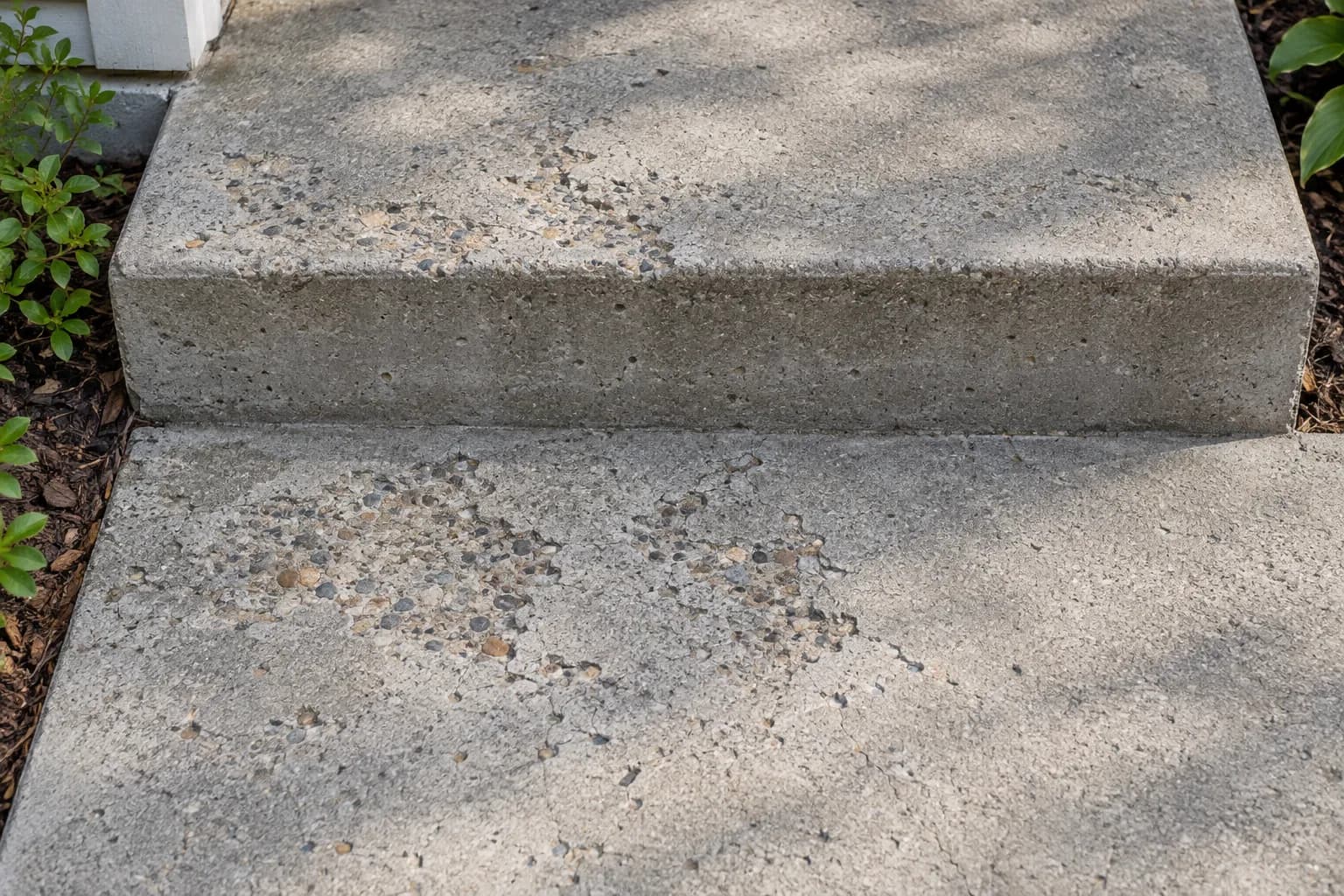
Diagnostic Comparison: Spalling vs. Scaling vs. Pitting vs. Delamination
| Problem | Appearance | Depth | Common Cause | Repair Method |
|---|---|---|---|---|
| Spalling | Coin- to palm-sized pieces breaking off | 1/4" to 1"+ | Rebar corrosion, freeze-thaw, impact | Patch or resurface |
| Scaling | Thin layers peeling or flaking off | 1/16" to 1/8" | Finishing over bleed water, salt, poor cure | Resurface |
| Pitting | Small holes or craters across surface | 1/8" to 1/4" | Popouts from reactive aggregate, acid rain | Fill and seal |
| Delamination | Large sheets lifting from substrate | Surface layer | Finishing too early, trapped bleed water | Remove loose layer, overlay |
If you are unsure how much concrete you will need for a repair or replacement, run the numbers through our concrete calculator.
Spalling: Deeper Chunks Breaking Away
Spalling is the most serious of the four surface failures. Pieces of concrete--ranging from coin-sized chips to palm-sized chunks--break loose, often exposing aggregate or even rebar underneath.
What to look for:
- Irregular pieces breaking off, not thin sheets
- Exposed aggregate visible in damaged areas
- Rust stains near damage (indicates corroding rebar)
- Damage worsening each winter
Root causes:
- Corroding reinforcement. Rebar rusts, expands, and pushes the concrete cover off from underneath. This is the most structurally significant cause.
- Freeze-thaw cycles on non-air-entrained concrete. Water in the pores freezes, expands 9%, and fractures the matrix. Without air entrainment, concrete has no internal pressure relief.
- Impact or overloading. Heavy equipment, dropped objects, or loads exceeding the slab's capacity cause localized fractures.
- Poor original mix. Too much water, insufficient cement content, or contaminated aggregates produce weak concrete that cannot resist weathering.
When to worry: If you see rust stains around spalled areas, corroding rebar is the likely cause. That is a structural issue--not just cosmetic. Get a professional assessment before patching.
For a full breakdown of spalling causes and severity levels, read concrete spalling: what it is and how to fix it.
Scaling: Thin Surface Layers Peeling Off
Scaling affects only the top 1/16 to 1/8 inch. The surface peels away in thin, flat flakes, leaving a rough texture but not deep craters.
What to look for:
- Thin, flat flakes lifting from the surface
- Damage appears uniform across large areas
- Aggregate is not exposed (damage too shallow)
- Problem often appears after the first winter
Root causes:
- Finishing over bleed water. The most common cause. If the surface is troweled while bleed water is still present, excess water gets trapped under the finished layer, creating a weak bond. That weak layer peels off under stress. See our finishing guide for proper timing.
- Deicing salt in the first winter. Salt increases the number and severity of freeze-thaw cycles at the surface. New concrete is especially vulnerable.
- Inadequate curing. Rapid drying prevents full hydration of the surface layer, leaving it weak and prone to flaking.
- No air entrainment. Same freeze-thaw vulnerability as spalling, but the damage stays shallow because the surface layer fails first.
Key difference from spalling: Scaling is shallow and uniform. Spalling is deeper and more irregular. If you can slide a credit card under a loose piece and the piece is paper-thin, it is scaling.
Pitting: Small Holes Across the Surface
Pitting creates small, roughly circular holes--typically 1/8 to 1/4 inch in diameter--scattered across the concrete surface.
What to look for:
- Small round craters, often with a cone shape
- May have a piece of aggregate at the bottom of each pit
- Random distribution, not following a pattern
- Damage does not worsen dramatically over time
Root causes:
- Popouts from reactive aggregate. Certain aggregates (chert, pyrite, soft limestone) absorb water and expand, popping out of the surface and leaving cone-shaped voids.
- Acid rain or chemical exposure. Acidic substances dissolve cement paste at the surface, creating shallow pits over time.
- Bug holes from poor consolidation. Air bubbles trapped during placement create surface voids when forms are removed.
Severity: Pitting is almost always cosmetic. It rarely worsens to the point of structural concern unless chemical exposure is ongoing.
Delamination: Surface Sheets Separating
Delamination is a hidden problem. The surface layer separates from the concrete below but may not be visible until the loose layer cracks or you happen to tap the surface.
What to look for:
- Hollow sound when tapping with a hammer or chain dragging
- Large, relatively flat sections lifting as sheets
- Surface may look intact but sound different from solid areas
- Edges of delaminated sections may curl or crack
Root causes:
- Premature finishing. Troweling the surface before bleed water has risen creates a dense crust over a wet, weak layer. The two never bond properly.
- Trapped bleed water or air. Vapor barriers placed directly under thin slabs can trap moisture that cannot escape downward, pushing bleed water to the interface between the surface layer and the base concrete.
- Rapid surface drying. Hot sun or wind dries the surface before the interior, causing the surface to skin over while the concrete below is still plastic.
How to detect it: Drag a chain across the surface or tap with a hammer. Solid concrete sounds sharp and ringing. Delaminated areas sound dull and hollow. Mark any hollow-sounding areas with chalk.
Repair Methods by Problem Type
Scaling and Shallow Spalling: Resurfacing
Best for: Surface damage less than 1/4 inch deep across a wide area.
- Pressure wash to remove all loose material
- Let surface dry, then dampen (damp but no standing water)
- Apply polymer-modified resurfacer with a squeegee at 1/8 to 1/2 inch thickness
- Broom finish for traction if needed
- Cure for 24-48 hours, keeping moist
Cost: $0.50-1.00/sqft in materials. Products like Quikrete Concrete Resurfacer cover roughly 40 sqft per bag.
For complete resurfacing and overlay options, see our concrete resurfacing and overlay guide.
Deep Spalling: Patching
Best for: Localized damage deeper than 1/4 inch.
- Chip out all loose and crumbling concrete to a minimum 1/2 inch depth with clean, vertical edges
- If rebar is exposed, wire-brush to remove rust and coat with zinc-rich primer or epoxy
- Apply bonding agent to prepared surface
- Fill with polymer-modified repair mortar, slightly overfilling
- Screed flush and texture to match surrounding surface
- Cure for at least 48 hours
Cost: $10-25 per repair depending on size. Professional rebar repair adds significantly.
Pitting: Fill and Seal
Best for: Scattered small craters without structural concern.
- Clean pits with a wire brush and remove dust
- Fill each pit with vinyl concrete patch or epoxy filler
- Smooth flush with surrounding surface
- After all fills cure, seal the entire surface with a penetrating sealer
Delamination: Remove and Overlay
Best for: Areas where the surface has separated from the substrate.
- Mark all delaminated areas using the chain-drag or hammer-tap method
- Remove the entire delaminated layer with a chipping hammer or grinder--do not leave any unbonded material
- Clean and prepare the exposed surface
- Apply bonding agent or primer
- Install a self-leveling or trowel-applied overlay at 1/4 to 1/2 inch thickness
- Cure properly
Cost: $2-5/sqft depending on area and whether you DIY or hire out.
When to Replace Instead of Repair
Stop repairing and start planning replacement when:
- Damage covers more than 30% of the surface
- Spalling has exposed rebar in multiple locations
- Previous repairs have failed within 1-2 years
- The concrete is older than 25 years and damage is accelerating
Prevention: Stop Surface Failure Before It Starts
Most concrete surface failures trace back to installation mistakes or missing maintenance. Three practices prevent the majority of problems.
1. Finish at the right time. Never trowel while bleed water is on the surface. Wait until the sheen disappears and the concrete supports your weight with only a slight impression. For a detailed walkthrough, see our concrete finishing guide.
2. Cure for at least 7 days. Cover with plastic sheeting, apply curing compound, or keep the surface moist. Shortcutting this step creates the weak surface layer that leads to scaling and delamination.
3. Seal before the first winter. A penetrating sealer blocks water and salt from entering the pore structure. Apply after curing is complete--typically 28 days. Reapply every 2-5 years. For product recommendations and application details, read how to seal concrete.
Additional steps: Use air-entrained concrete in freeze-thaw climates. Avoid deicing salts in the first year--use sand instead. Keep up with routine concrete maintenance to catch small problems before they spread.
Key Takeaways
- Diagnose first. Spalling, scaling, pitting, and delamination require different repairs--the wrong fix fails fast
- Scaling is shallow (1/16-1/8 inch) and usually caused by finishing errors or salt; resurfacing fixes it
- Spalling is deeper (1/4 inch+) and may indicate corroding rebar--check for rust stains before patching
- Pitting is cosmetic; fill, seal, and move on
- Delamination is hidden--use the chain-drag test to find it, then remove the entire loose layer before overlaying
- Replace, don't repair when damage exceeds 30% of the surface or rebar is corroding in multiple locations
- Prevention comes down to three things: finish timing, proper curing, and sealing before the first winter
For ongoing surface protection, follow our concrete maintenance guide. Browse all concrete guides for help with every stage of your project. See our freeze-thaw spalling identification guide for detailed severity ratings, or upload a photo for free AI damage analysis.