

Concrete Curing Methods: Wet Burlap, Plastic, Compounds and What Actually Works
Proper curing is the difference between concrete that reaches its design strength and concrete that tops out at 50-60% of what it should be. The method you choose depends on your project size, climate, and how much effort you're willing to put in. Here's an honest comparison of every common curing method—what works, what doesn't, and what's worth the hassle.
Use our concrete calculator to get your quantities right before you pour, then come back here to pick a curing method that fits your project. For a full curing timeline, see how long concrete takes to cure.
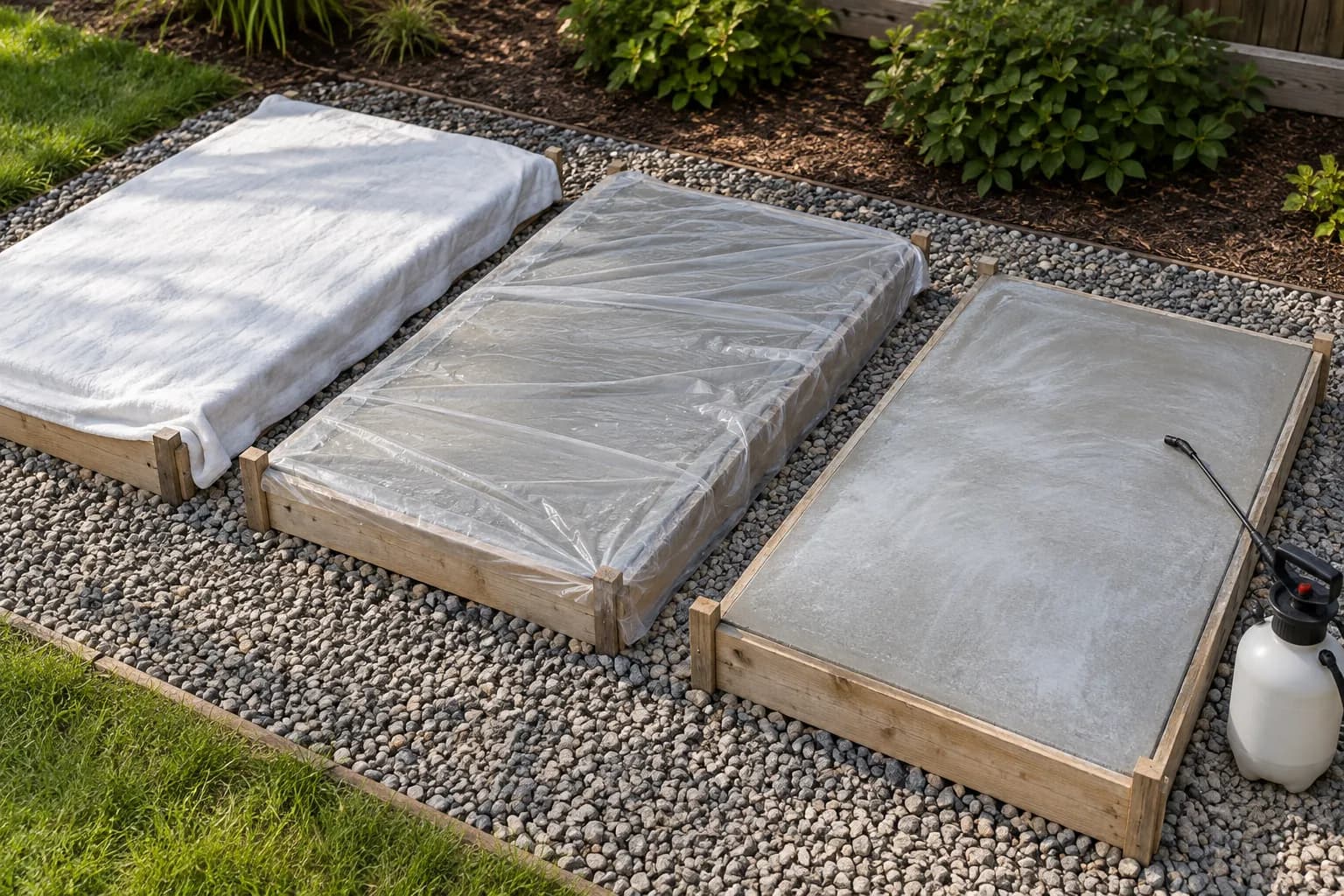
Why Curing Method Matters More Than You Think
Concrete gains strength through hydration--a chemical reaction between cement and water that continues for weeks. If the surface dries out before hydration is complete, the reaction stops permanently in those areas. The result is a slab that looks fine on the outside but has a weak, dusty surface layer that will spall, scale, and deteriorate years before it should.
Here is the strength curve that illustrates the difference:
| Curing Method | 7-Day Strength | 28-Day Strength |
|---|---|---|
| Continuously moist (ideal) | 70-75% | 100% |
| Curing compound | 65-70% | 95-98% |
| Plastic sheeting | 60-68% | 90-95% |
| Intermittent spraying | 50-60% | 80-85% |
| No curing (air dry) | 40-50% | 55-65% |
That bottom row is the problem. Concrete left to air dry in typical conditions reaches barely half its design strength. A 4,000 PSI mix that should last 30 years tops out around 2,200-2,600 PSI and starts failing in 10-15 years. Every dollar spent on curing pays for itself many times over.
Curing Method Comparison
This table covers the six most common methods, ranked by effectiveness.
| Method | Moisture Retention | Effort Level | Cost (400 sq ft slab) | Best For |
|---|---|---|---|---|
| Ponding / immersion | 100% | Very High | $0 (water only) | Flat slabs with formed edges; lab specimens |
| Wet burlap + plastic | 95-100% | High | $40-$80 | Critical structural pours; hot weather |
| Spray-on curing compound | 90-95% | Low | $15-$30 | Residential slabs; driveways; most DIY projects |
| Plastic sheeting alone | 80-90% | Medium | $10-$20 | Budget option; moderate climates |
| Water spraying / misting | 50-80% (varies) | Very High | $0 (water only) | Small pours where constant access is possible |
| No curing | 0% | None | $0 | Never recommended |
Each Method in Detail
Ponding and Immersion
The gold standard in laboratory settings. You build a small berm or dam around the slab edges and flood the surface with 1-2 inches of standing water. The concrete stays 100% saturated throughout the curing period.
Why most people don't use it: It requires formed edges tall enough to hold water, a level slab with no slope, and constant water replenishment as it evaporates. On a 95°F day, you can lose an inch of water in 24 hours. Any breach in the berm floods your yard. Practical for test cylinders, impractical for most residential work.
Wet Burlap Topped with Plastic
This is what the ACI recommends for critical pours, and it works. Lay wet burlap (soaked in water, not damp) directly on the finished surface once it can handle the weight without marking--typically 4-8 hours after finishing. Cover the burlap with polyethylene sheeting to trap moisture and slow evaporation. Re-wet the burlap daily.
Pros: Near-perfect moisture retention. Burlap conforms to surface irregularities. The plastic dramatically reduces how often you need to re-wet.
Cons: Labor intensive. You need enough burlap to cover the entire slab with 6-inch overlaps. You must check and re-wet daily for 7 days minimum. Burlap in direct contact with concrete can cause slight discoloration patterns if not kept uniformly wet. In hot weather, re-wetting may be needed twice daily.
Cost: $30-$60 for burlap rolls plus $10-$20 for 6-mil poly sheeting. Reusable for multiple pours.
Spray-On Curing Compound
For most residential projects, this is the answer. Curing compounds are liquid membranes--typically acrylic or resin-based--sprayed onto the finished surface. They form a thin film that blocks 90-95% of moisture evaporation. One application, no maintenance.
Application: Spray or roll on as soon as the surface sheen disappears after finishing (the bleed water has been absorbed). Coverage rate is typically 150-200 square feet per gallon. Apply in two passes at right angles for even coverage. Do not apply to concrete that has already started to dry--wet the surface first, then apply.
Pros: Single application. No daily maintenance. Works on sloped surfaces, vertical forms, and irregular shapes where burlap is difficult. Widely available at any home improvement store.
Cons: Must be applied at the right time--too early and it mixes with bleed water, too late and the surface has already started drying. Some compounds leave a white residue that must be removed before sealing or painting. Dissipating-type compounds avoid this issue but cost more.
Cost: $15-$30 for a 5-gallon bucket covering 400-600 square feet. The best value per square foot of any active curing method.
Plastic Sheeting Alone
Laying 6-mil polyethylene sheeting directly over finished concrete traps the moisture that bleed water provides. No external water source needed. This is the budget option.
The catch: Plastic in direct contact with concrete causes uneven moisture distribution. Where the plastic touches the surface, moisture is trapped; where it lifts (over ridges, wrinkles, or air pockets), the concrete dries normally. This creates blotchy discoloration patterns that are permanent. If appearance matters, this method is risky.
Mitigation: Use white or clear plastic (black absorbs heat). Smooth the sheeting as flat as possible. Tape seams and weight edges to prevent wind from lifting it. Accept that some discoloration is likely.
Best use: Slabs that will be covered by flooring, topped with another material, or where cosmetic appearance is not a concern.
Water Spraying and Misting
Periodically hosing down the slab surface. Simple in concept, difficult in execution.
The problem is consistency. Concrete curing benefits from continuous moisture, not wet-dry cycles. Every time the surface dries between spraying sessions, the outer layer undergoes shrinkage stress. Repeated wet-dry cycling causes the surface layer to craze (develop a network of fine cracks) and can create permanent discoloration. If rain hits your fresh concrete intermittently, it creates similar issues.
If you must spray-cure: Set a sprinkler or soaker hose on a timer. Ten minutes of misting every 30-60 minutes during daylight hours, for 7 days minimum. The goal is to never let the surface visibly dry. This level of commitment is why most people switch to curing compound after one attempt at spray curing.
No Curing (Air Drying)
Doing nothing is technically an option, but it is the most expensive one in the long run. Air-dried concrete develops a weak surface that will dust, scale, and crack prematurely. Repairs or replacement within 10-15 years will cost far more than any curing method. See concrete cost per yard for what replacement runs. Never skip curing.
Climate-Specific Recommendations
Your local climate should drive your curing method choice more than any other factor.
Hot and dry (Southwest, summer anywhere above 85°F): Curing compound applied immediately after finishing is the minimum. For critical pours, use wet burlap topped with plastic and re-wet twice daily. Evaporation rates in hot, dry, windy conditions can exceed 1 lb/sq ft/hr--fast enough to cause plastic shrinkage cracking within 1-2 hours of finishing. See the full temperature guide for hot weather protocols.
Hot and humid (Southeast, Gulf Coast): High humidity slows evaporation naturally, making curing compound highly effective. This is the easiest climate to cure in. A single coat of curing compound is usually sufficient.
Cold weather (below 50°F): Curing compounds do not work well in cold weather because they need warm surface temperatures to form a proper film. Use insulated blankets or heated enclosures instead--these protect against both freezing and moisture loss. Cold weather curing is as much about temperature maintenance as moisture retention.
Moderate and variable (Midwest, Northeast): Curing compound for summer pours, insulated blankets for fall and spring pours when overnight lows can drop unexpectedly. Have both on hand.
Rainy climates (Pacific Northwest): Natural moisture can assist curing, but uncontrolled rain on fresh concrete (under 4 hours old) is still damaging. Apply curing compound as insurance--it protects the surface regardless of whether rain arrives. For protection timing, see our guide on rain on fresh concrete.
Common Curing Mistakes
Applying compound too early. If bleed water is still on the surface, the compound mixes with it and fails to form a proper membrane. Wait until the sheen disappears.
Applying compound too late. If the surface has visibly dried, you have already lost the moisture window. Wet the surface with a fine mist before applying compound.
Using black plastic in direct sun. Black plastic absorbs heat, raising the concrete surface temperature and accelerating moisture loss underneath. Use white or clear plastic.
Removing plastic or burlap too early. Seven days is the minimum. Removing cover after 3 days and assuming the rest will take care of itself costs you 10-15% of final strength.
Thinking sealer equals curing compound. Concrete sealers and curing compounds are different products. Sealers are applied to fully cured concrete to protect against staining and moisture intrusion. Curing compounds are applied to fresh concrete to retain moisture during hydration. For sealer guidance, see how to seal concrete.
Key Takeaways
- Curing compound is the best all-around choice for residential projects--one application, no maintenance, 90-95% moisture retention for $15-$30
- Wet burlap + plastic is the gold standard when maximum strength matters, but it demands 7+ days of daily attention
- Plastic sheeting alone works for slabs where appearance does not matter, but expect blotchy discoloration
- Intermittent spraying is unreliable--if you cannot keep the surface continuously wet, use compound instead
- Uncured concrete loses 35-45% of its design strength--the cheapest curing method costs a fraction of what early replacement costs
- Climate drives the decision: hot and dry demands aggressive curing; cold weather needs blankets over compounds
- Seven days minimum for any curing method; longer is always better
For more on planning your concrete project from quantities to finishing, browse all concrete guides. To calculate materials for your next pour, start with the concrete calculator.