
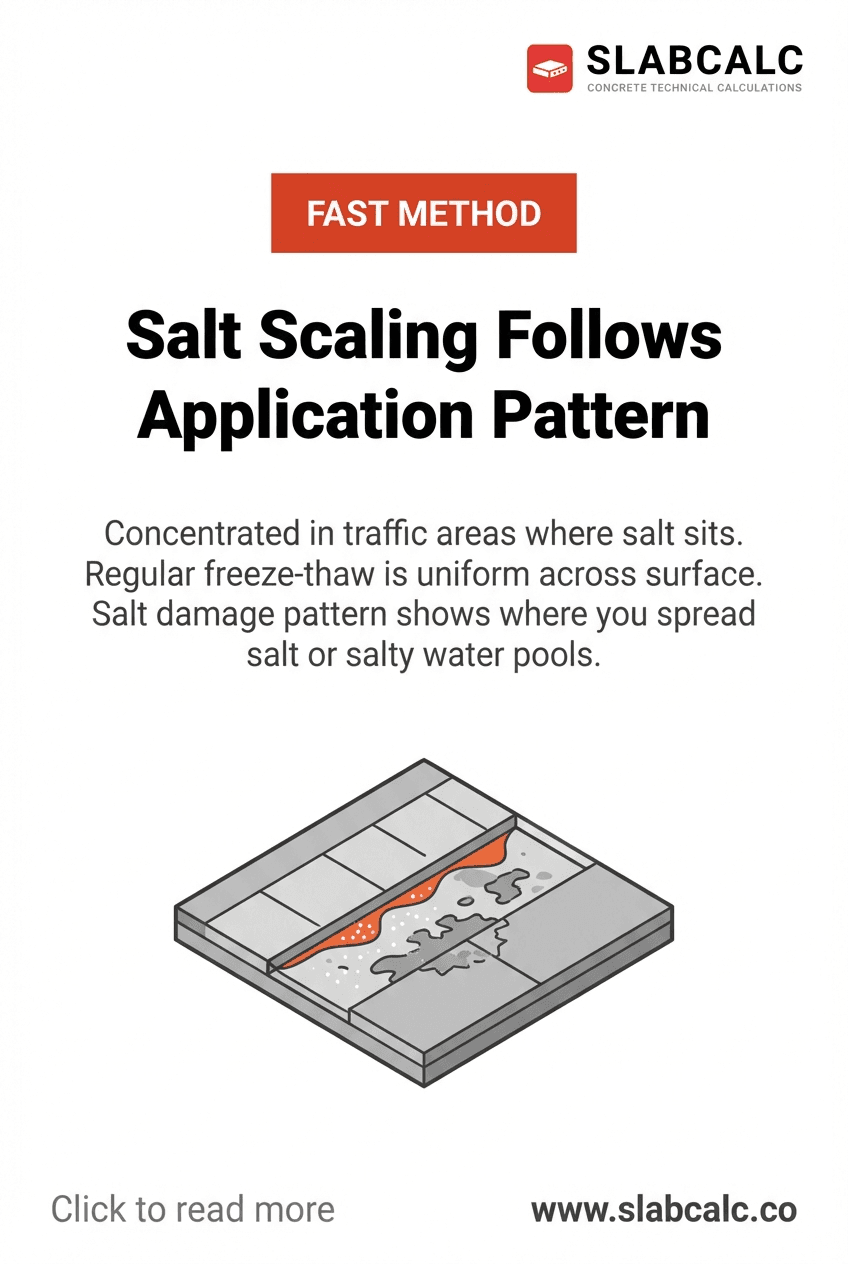
Salt Scaling Follows Application Pattern
The Slow Way vs. The Fast Way
Slow way: Wait until spring, notice vague concrete damage, assume it's freeze-thaw wear, spend $1,200+ replacing a whole section that only needed partial repair.
Fast way: Walk your concrete 3–4 times during winter thaw cycles, photograph damage patterns, identify salt concentration zones within 10 minutes, target repairs to actual problem areas only.
The difference isn't just speed—it's accuracy. Salt scaling creates a distinct damage footprint that tells you exactly where de-icing chemicals accumulated, pooled, or where foot traffic redistributed salt. Once you learn to read that pattern, you'll repair only what matters.
Reading the Salt Damage Map
Salt scaling doesn't spread evenly across your concrete. It clusters where salt sits longest and concentrates heaviest.
High-traffic center lanes show the worst damage because:
- Tire traffic pushes salt residue inward
- Salt remains longer in compression zones
- Repeated wetting and drying cycles accelerate deterioration
Edges and corners suffer secondary damage because:
- Water and salt pool against the perimeter during melt cycles
- Drainage from the main surface flows toward edges
- These areas dry slower, extending salt's contact time
Uniform freeze-thaw damage (small pitting scattered across the whole slab) looks completely different—it indicates the original concrete lacked air entrainment, not a salt application problem.
The pattern matters because salt damage is repairable; poor concrete design isn't (short of replacement).
Spot-Check Technique: 10-Minute Assessment
What you need:
- Wire brush (5–7 dollars)
- Chalk or spray paint
- Camera phone
- Ruler or tape measure
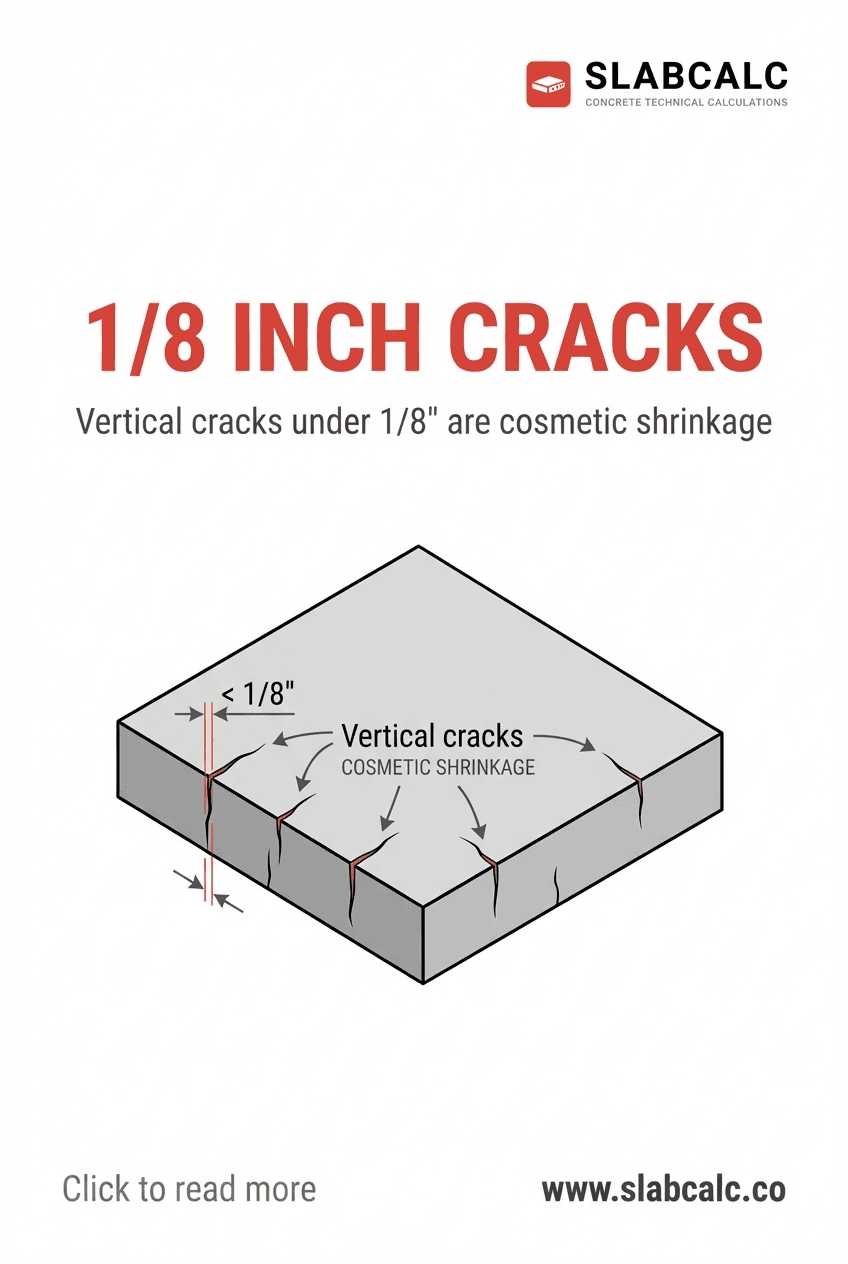
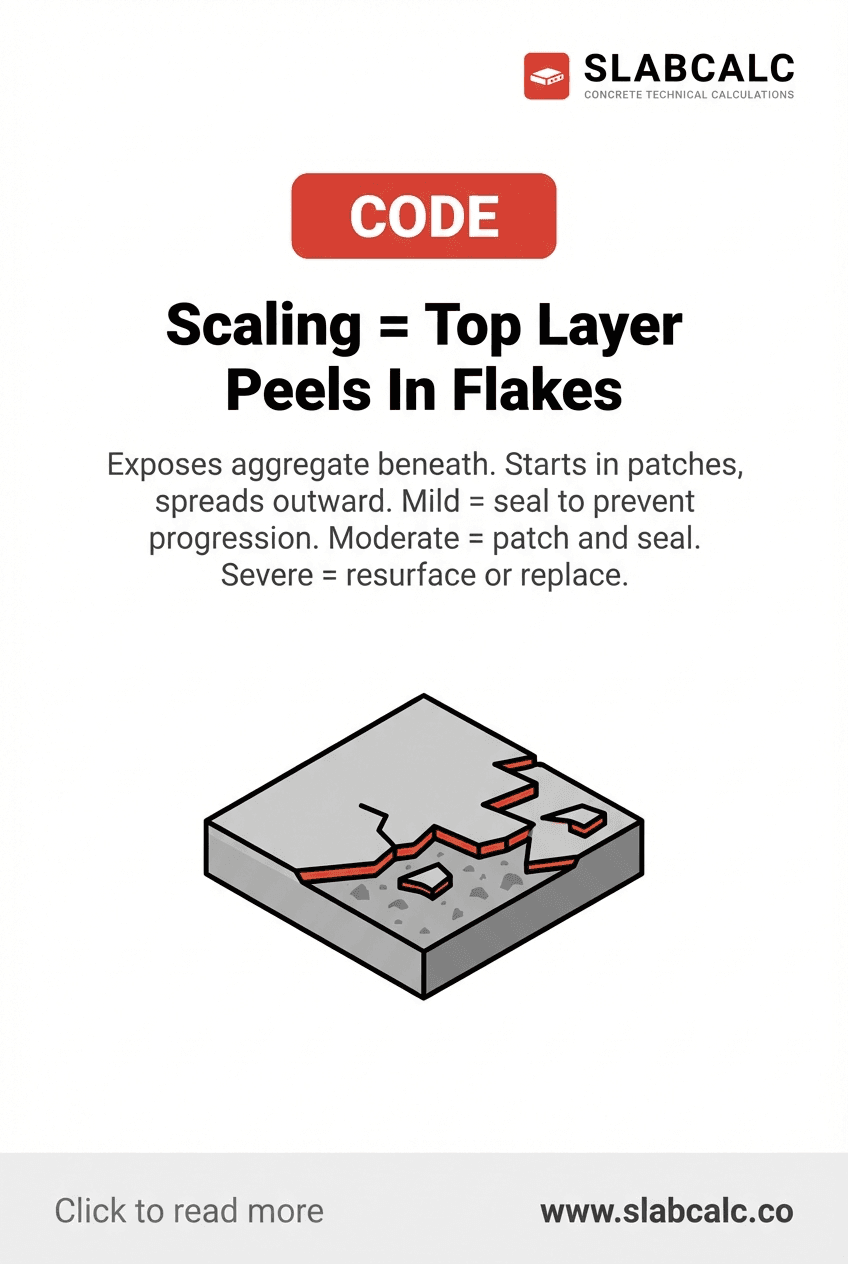
The process: Walk your driveway, patio, or parking area during a thaw day. Look for scaling (surface flakes peeling away, exposing aggregate). Mark three zones: center lane, edges, and low spots where water pools. Brush away surface debris and photograph each zone. Note the scaling depth—if flakes are 1/8 inch or less, it's cosmetic. If chunks are 1/4 inch or deeper, it's structural.
The whole assessment takes 10 minutes and gives you a clear picture of salt concentration. You'll typically see 60–80% of damage concentrated in the top 30% of your surface area (the main travel path).
Why This Matters for Your Budget
Repairing salt damage in a 500 sq ft driveway costs $400–$600 if you address only affected zones. Full resurfacing runs $1,500–$2,200. Identifying salt concentration patterns before planning repairs can cut your costs by half.
This pattern recognition also helps you prevent future damage. If salt pooled in low corners, you now know to improve drainage there or reduce salt application in that zone. Next winter, you're fixing the root cause, not just patching symptoms.
Spring is coming. Walk your concrete now while patterns are visible.