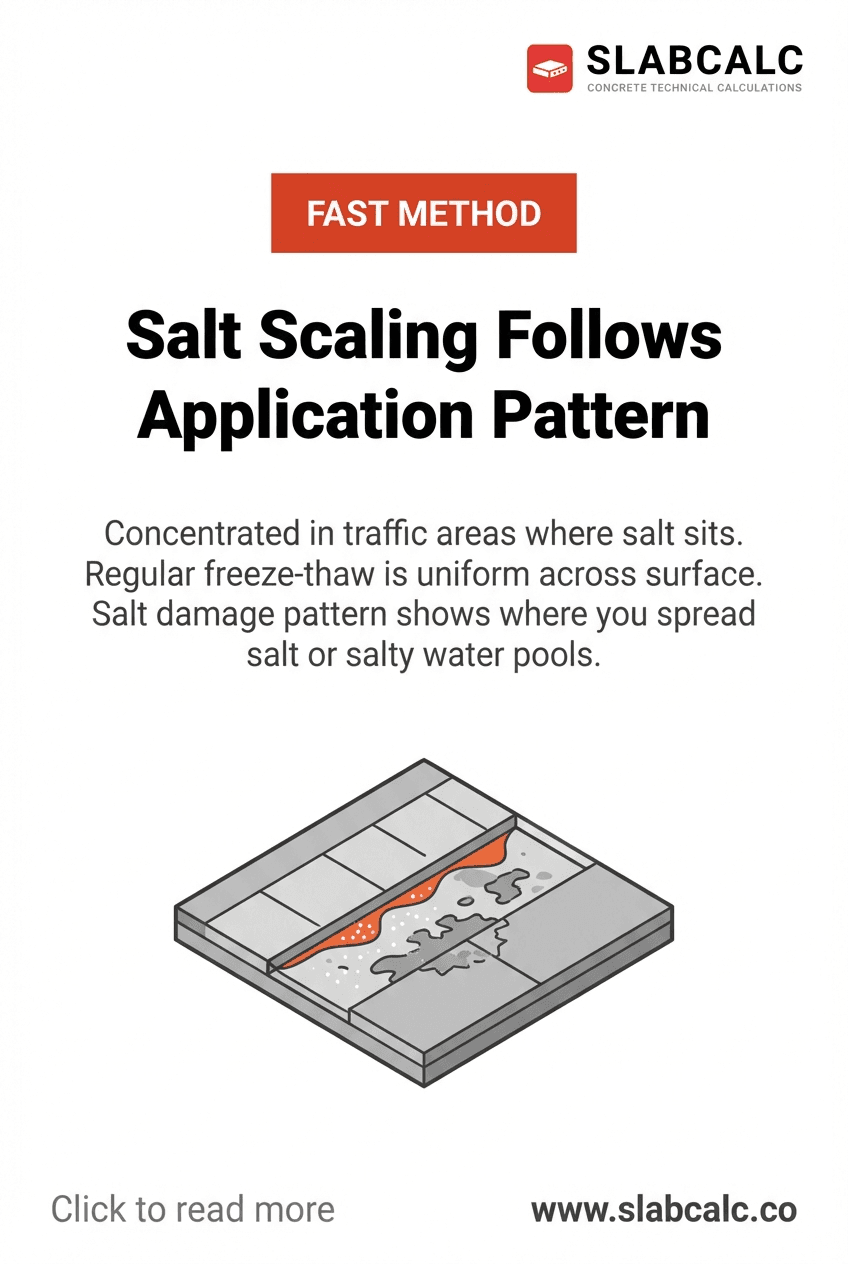

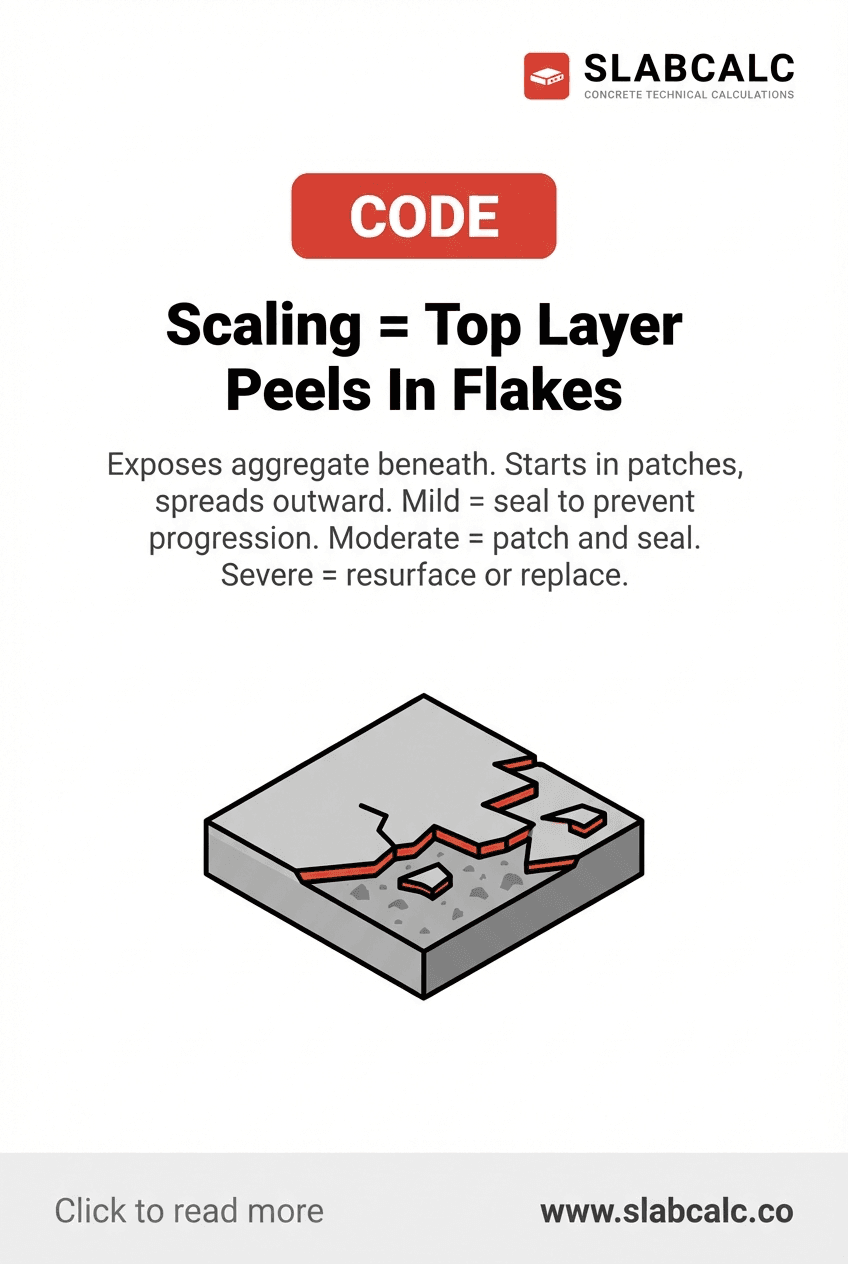
Scaling = Top Layer Peels In Flakes
What the Code Actually Requires
The ACI 201.2R (Guide to Durable Concrete) and IRC Section 1907 establish minimum durability standards for concrete exposed to freeze-thaw cycles. Both require air-entrained concrete with 5–7% air content for climates experiencing more than one freeze-thaw cycle per month. They also mandate a water-to-cement ratio no higher than 0.45 for freeze-thaw environments and concrete strength of at least 4,000 psi at 28 days.
Most homeowners don't realize their original concrete may not have met these standards—especially for garage floors, driveways, and exterior pads poured before 2010. If scaling has already started, the damage itself signals that the concrete lacked proper design or protection from day one.
Recognizing Scaling vs. Other Damage
Scaling looks like thin, irregular flakes peeling away from the surface, typically 1/8 to 1/4 inch thick. It almost always starts in patches—often near edges, joints, or low spots where water collects—and spreads outward over one to three winters. Underneath those flakes, you'll see the coarse aggregate (rocks) exposed and often still intact.
This differs from spalling, which creates deeper craters (1/4 to 1 inch), or pop-outs, which are cone-shaped holes from individual rocks fracturing. Scaling is the mildest form of freeze-thaw damage, but it's also the first warning sign.
Three Repair Paths by Severity
Mild Scaling (small patches, < 10% of surface): Apply a concrete sealer immediately. This won't reverse damage, but it will slow water penetration and prevent the problem from spreading. Cost: $0.50–$1.50 per square foot. Timeline: 2–3 days for surface prep and curing.
Moderate Scaling (widespread patches, 10–30% of surface): Use a concrete patching compound rated for freeze-thaw environments. Grind or scarify the damaged area to remove loose material, apply bonding agent, fill with high-strength concrete patch (minimum 4,500 psi), then seal the entire surface. Cost: $2–$5 per square foot for materials and labor. This prevents further deterioration but won't restore appearance.
Severe Scaling (> 30% of surface, structural concerns): Resurfacing or full replacement is necessary. A 4-inch overlay with proper air entrainment and sealing costs $8–$15 per square foot. Complete removal and replacement runs $10–$20 per square foot depending on site conditions and local labor rates. Use our concrete cost calculator to estimate replacement costs for your area and slab size.
Common Code Violations
Contractors often skip sealing to cut costs—this violates ACI durability guidelines and voids most concrete warranties. Another frequent violation: applying sealer after scaling has begun. Sealer only protects uncompromised concrete; it cannot reverse freeze-thaw damage.
Patch-only repairs without follow-up sealing on the entire slab almost always fail within two winters because water finds new paths around the patched area.
Bottom line: If you see scaling patches, act within the first season. Mild cases caught early need only sealing. Wait two years, and you'll be paying for resurfacing.