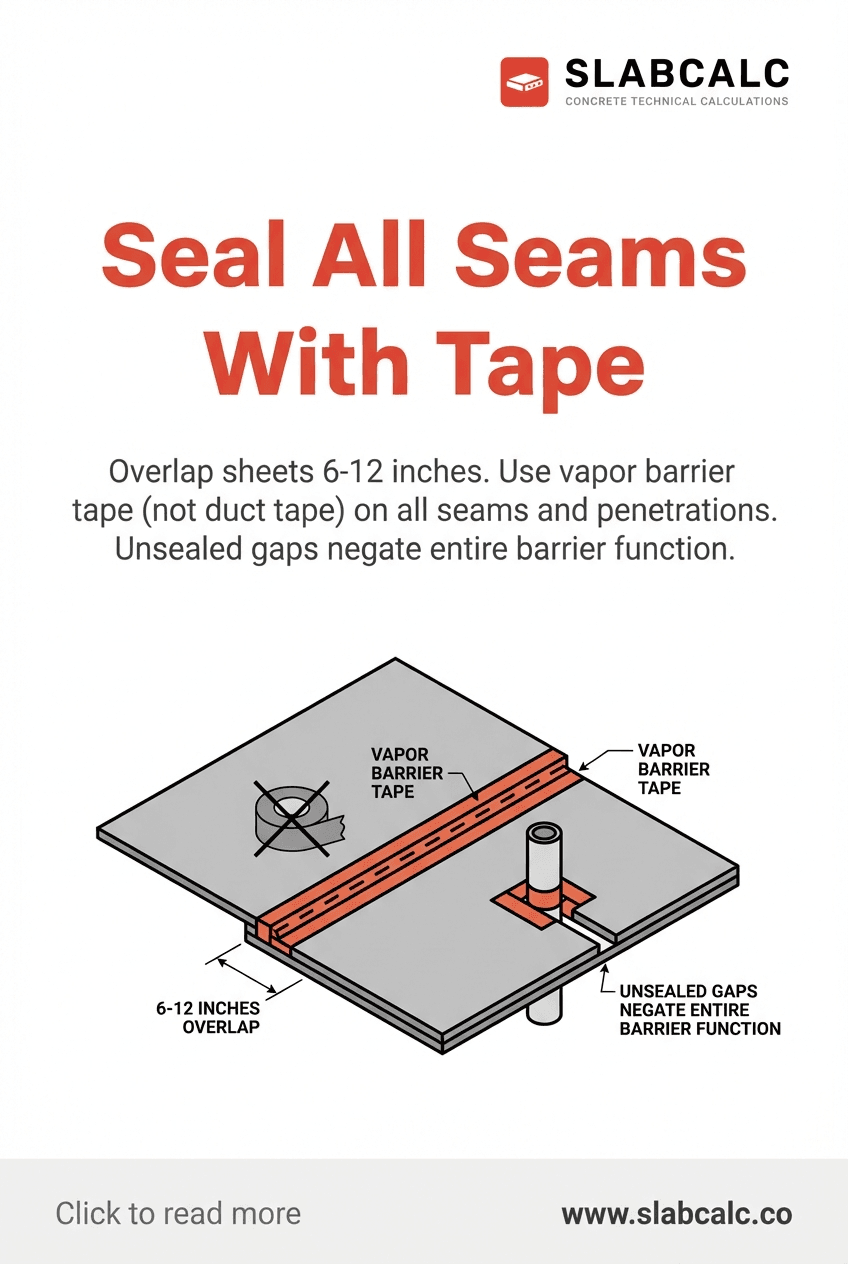
Seal All Seams With Tape
The Critical Spec: 6–12 Inch Overlap + Vapor Barrier Tape
A vapor barrier's entire function depends on one detail: every seam must be sealed with vapor barrier tape—not duct tape, not construction tape, and not hope. Polyethylene sheets naturally come in standard widths (typically 6 feet), so overlapping seams are unavoidable on most slabs. If you don't tape them, you've essentially installed nothing.
The specification is straightforward:
- Overlap sheets 6–12 inches (6 inches minimum, 12 inches for high-moisture areas)
- Use pressure-sensitive vapor barrier tape (aluminum or butyl-based, 2–3 inches wide)
- Seal all penetrations: rebar, conduit, pipes running through the barrier
- Press tape firmly for full contact—no bubbles or folds
Why this matters: moisture vapor travels upward through concrete at roughly 1–3 pounds per 1,000 square feet per day in typical soil conditions. A single unsealed 1-inch gap is enough to negate the barrier's function across the entire slab. Flooring fails—carpet molds, vinyl bubbles, hardwood cups, tile grout cracks—and you're facing $8,000–$15,000 in removal and replacement costs.
Why Regular Tape Fails
Many DIYers use duct tape or Gorilla tape because they're cheap and on hand. Both are mistakes:
- Duct tape has a rubber-based adhesive that degrades under concrete's alkaline environment and moisture. It begins failing within weeks.
- Construction/masking tape has insufficient adhesive strength and tears under handling during the concrete pour.
- Vapor barrier tape (e.g., Polyken, Nashua Zip System tape, 3M) uses acrylic or butyl adhesives formulated to bond polyethylene permanently and resist moisture.
Cost difference: vapor barrier tape runs $12–$25 per roll (covers ~80–100 linear feet), versus $3–$5 for duct tape. For a 1,000-square-foot slab with 6–8 seams, you need 5–6 rolls of proper tape. Total tape cost: $60–$150. That's 0.5–1.5% of your slab's total cost and the difference between success and failure.
Installation Best Practices
-
Clean seams before taping: wipe polyethylene sheets with a dry cloth to remove dust and moisture. Adhesive won't bond to dirty surfaces.
-
Press tape firmly for 30 seconds per seam: apply steady hand pressure along the entire length. Use a roller tool if available.
-
Stagger seams: avoid having multiple sheets meet at one point. Offset them by at least 2–3 feet.
-
Don't skimp on overlap: use the full 6–12 inches. The extra material costs pennies and prevents migration paths.
-
Tape before rebar placement: if rebar crosses a seam, tape the seam first, then lay rebar. This prevents tearing.
Sourcing and Storage
Buy vapor barrier tape from concrete suppliers (Concrete Construction Supply, Ennor), masonry retailers (Home Depot, Lowe's), or online (Amazon, eBay). Check that it's labeled for polyethylene sealing—not window flashing or general construction tape.
Store in a cool, dry place. Adhesive weakens in extreme heat (above 85°F) or high humidity. Buy tape 1–2 weeks before your pour, not months ahead.
Bottom line: sealing vapor barrier seams with proper tape isn't optional. It's the difference between a functional moisture barrier and 20 years of floor failures.