
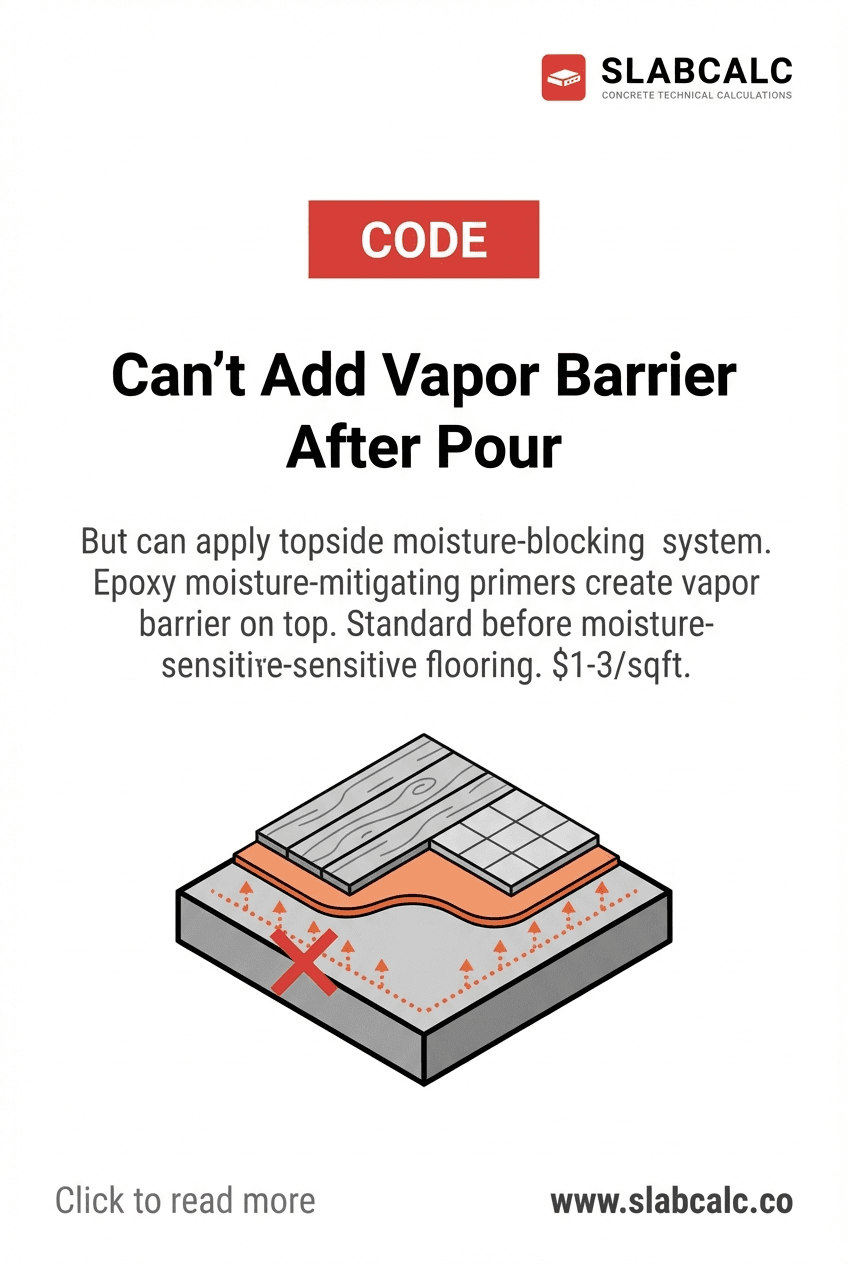
Can't Add Vapor Barrier After Pour
The Code Requirement (You Can't Ignore It)
The 2021 IRC (International Residential Code) Section R506.2.2 and ACI 302 both require a vapor retarder under slabs that will receive flooring, radiant heat, or sit below grade. Most jurisdictions adopt these standards. The code is unambiguous: the barrier must be installed before the concrete is placed. Once concrete sets, you've missed the window—and you've likely violated code.
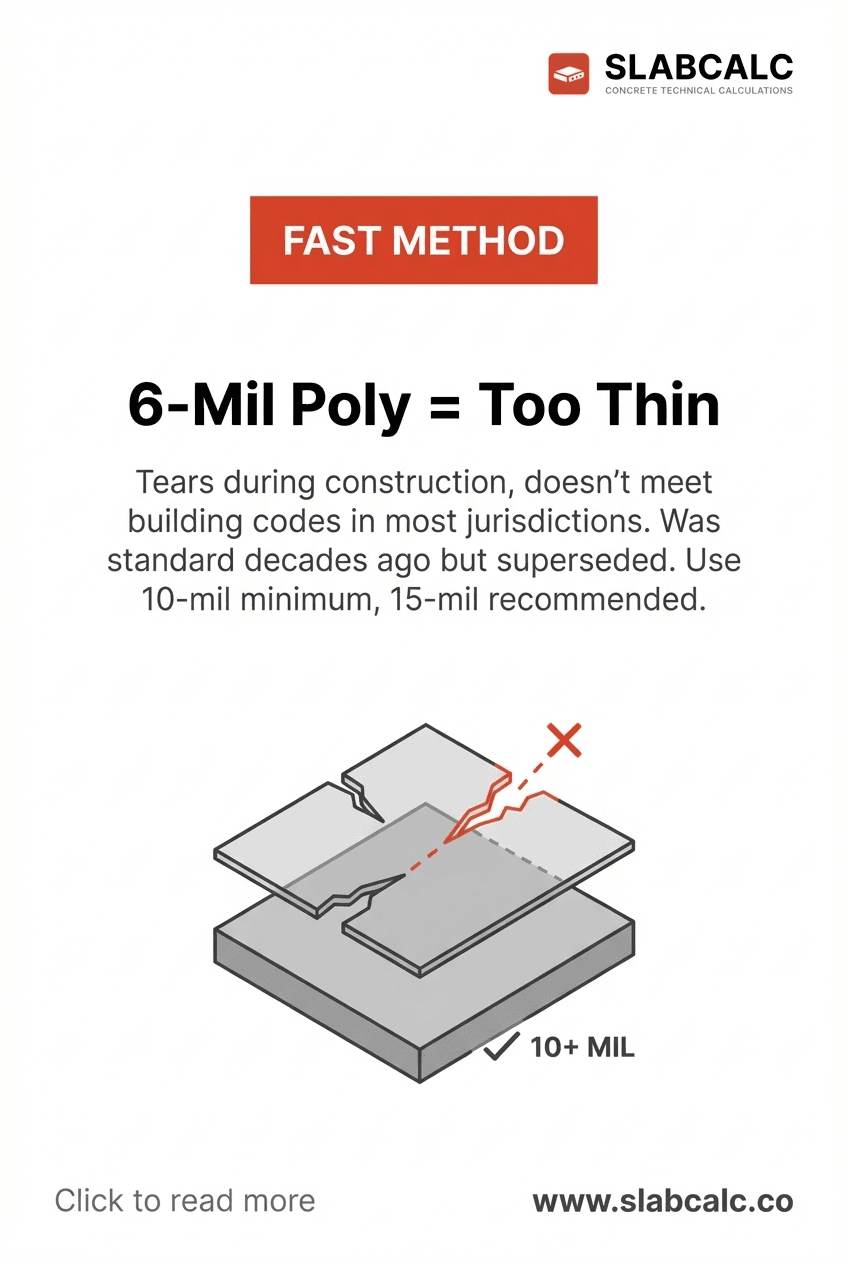
Local amendments vary. Some jurisdictions mandate 6-mil polyethylene sheeting; others allow 10-mil. A few regions require tape-sealed seams or specify that the barrier extend 6 inches up the perimeter. Check your local building department before ordering concrete.
Why Installation Timing Is Non-Negotiable
A vapor barrier works by blocking moisture vapor from traveling upward through the concrete. This only works if it sits directly against the soil, forming a continuous seal. Once concrete is poured and cured, the barrier is inaccessible and cannot be installed underneath. The concrete itself cannot be removed without demolition.
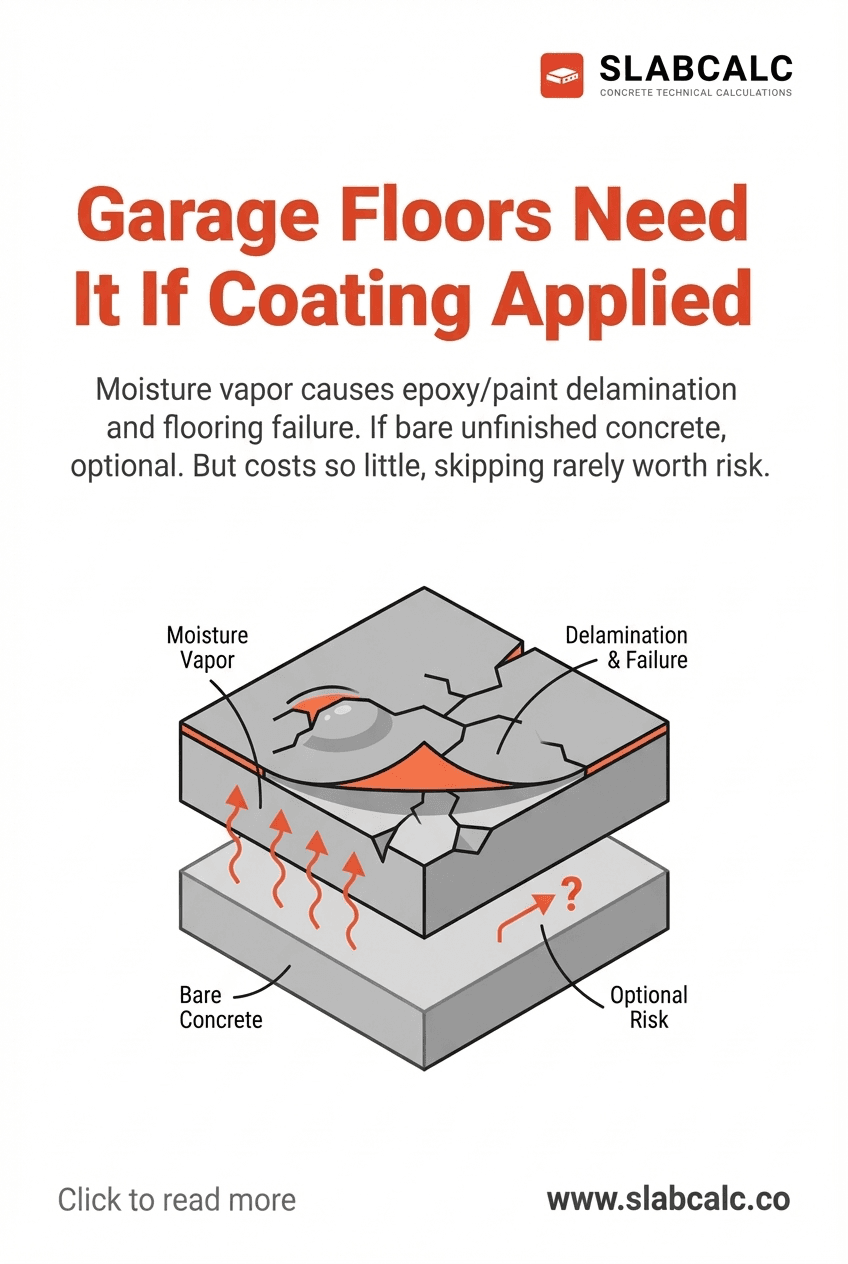
Moisture vapor travels through concrete capillaries at 3–8 ounces per square foot per 24 hours (in typical soil conditions). Over a year, that's enough moisture to destroy flooring, create mold under carpets, and cause blistering in epoxy or polyurethane coatings. Installing the barrier beforehand prevents this entirely.
Your Topside Alternative (If It's Too Late)
If your slab is already poured and flooring is planned, you have one option: topside moisture-blocking systems. These are typically epoxy or polyurethane moisture-mitigating primers applied directly to the concrete surface after it cures (usually 28 days). They create a surface barrier that slows moisture transmission significantly.
Cost: $1–$3 per square foot for material and labor, depending on primer type and surface preparation.
Limitations: Topside barriers are less effective than subsurface barriers. They slow moisture transmission but don't eliminate it. The concrete still absorbs and releases moisture at the edges and any cracks. For sensitive flooring (hardwood, luxury vinyl plank), this may still fail.
Best practice: Use topside systems as supplemental protection, not a replacement. Ensure excellent surface preparation—grind away laitance (chalky residue) and seal all cracks wider than 1/8 inch.
What You Should Do Right Now
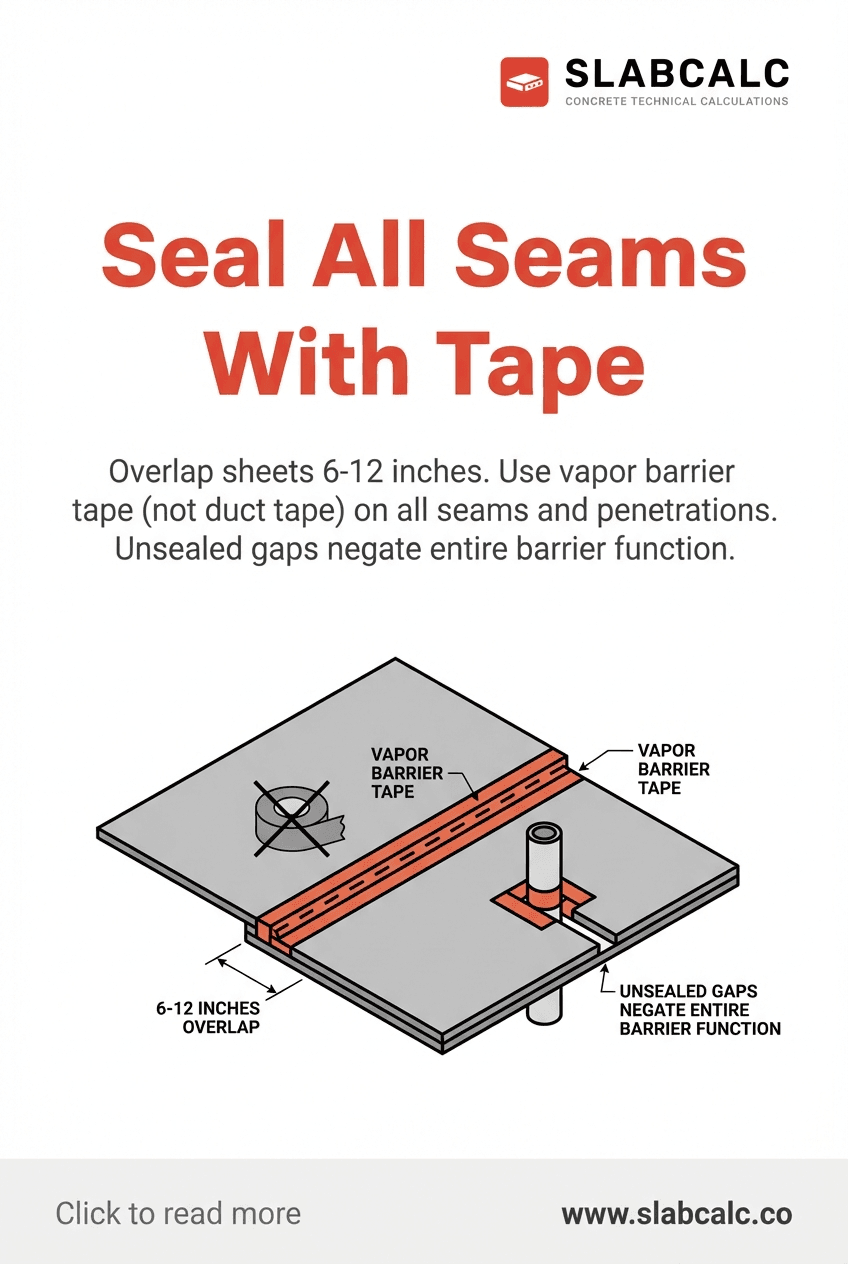
If your pour hasn't happened: Install the vapor barrier before ordering concrete. Lay 6-mil polyethylene over compacted soil, overlap seams by 12 inches, seal them with compatible tape, and extend the material 6 inches up any perimeter edges. The cost is $0.10–$0.25 per square foot—cheap insurance.
If your slab is already set: Have a moisture test performed (calcium chloride or relative humidity testing per ASTM F1869/F2170). If results exceed 3–5 lbs/1000 sqft/24 hours, apply a moisture-mitigating primer before installing flooring. Document all moisture testing for your flooring warranty and future resale.
Don't guess. Code exists because moisture damage is expensive and permanent.