
50-60°F
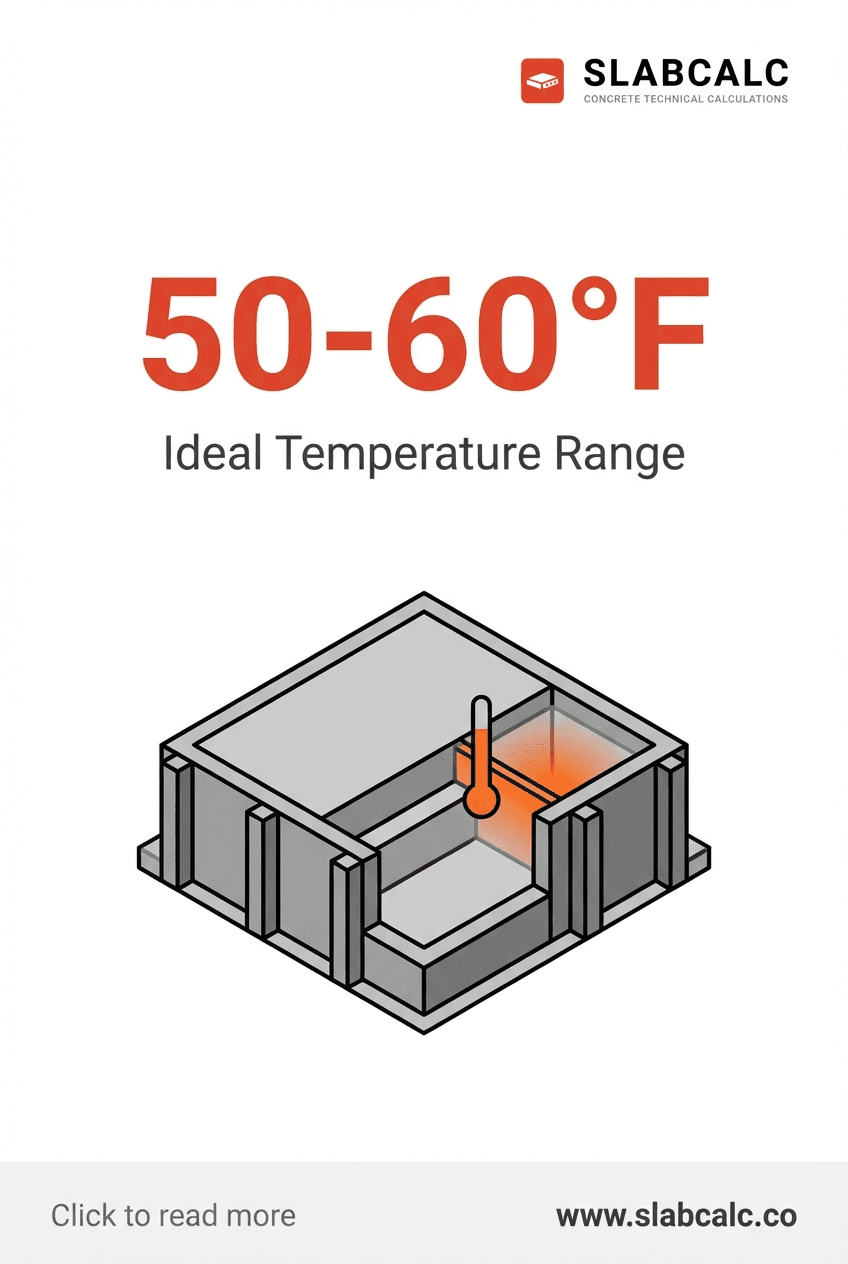
The Magic Number: 50-60°F
50-60°F is the ideal air and ground temperature for pouring concrete. At this range, the chemical hydration process that hardens concrete proceeds at a predictable, manageable pace. You get enough time to finish the surface properly without the concrete setting before you're done working—and without it curing so slowly that your project timeline stretches indefinitely.
This narrow window matters because concrete's strength development is tied directly to curing speed, which is controlled by temperature. Get it right, and your slab reaches design strength as planned. Get it wrong, and you're either chasing a surface that hardens too fast to smooth, or waiting days for concrete that won't cure at all.
Why Temperature Control Matters More Than You Think
Below 50°F, concrete cures slowly. A slab poured at 40°F takes roughly twice as long to reach 50% strength compared to one poured at 60°F. Below 40°F, you enter dangerous territory: the concrete may freeze before it fully cures, creating weak, porous material that will crack and spall within the first winter.
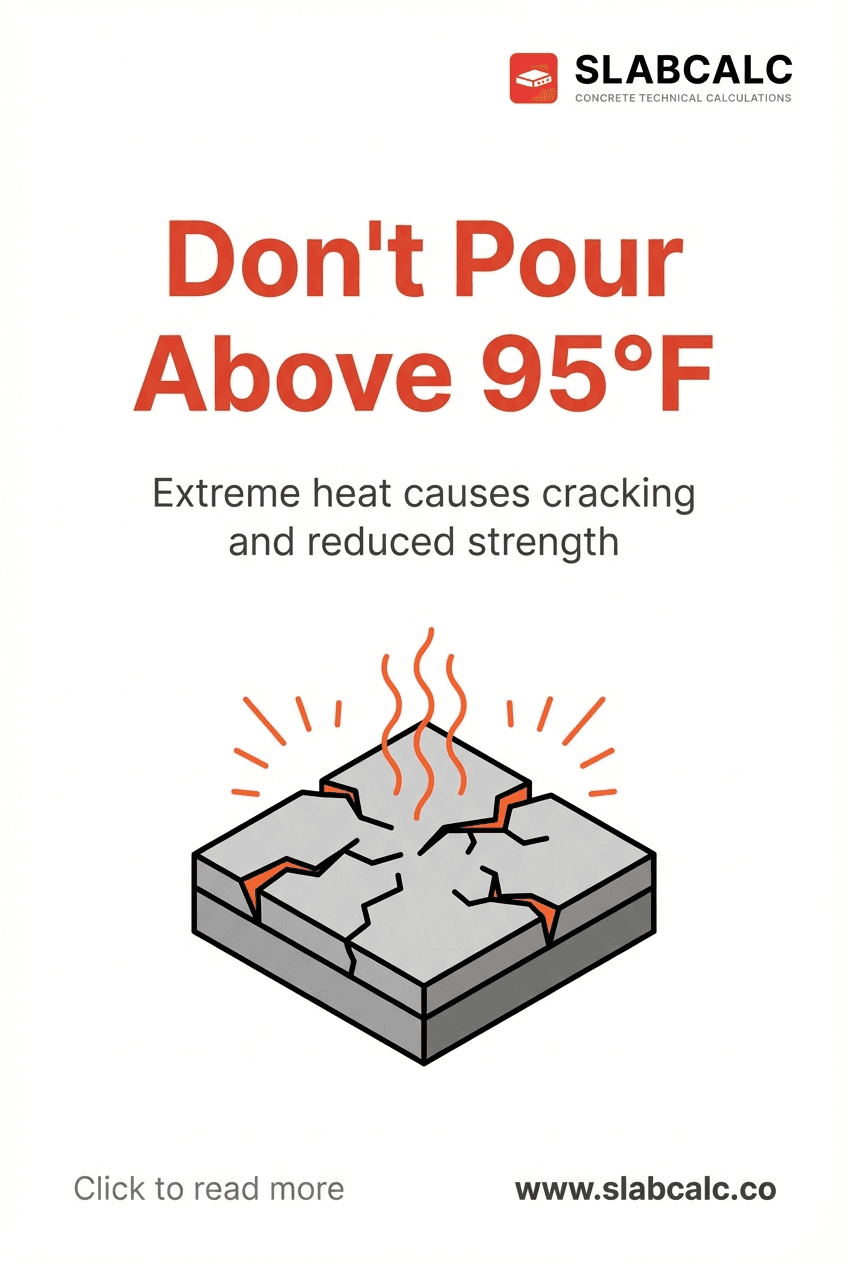
Above 60°F, the opposite problem emerges. At 80°F, concrete can set in 2-3 hours instead of 6-8 hours. That sounds fast until you realize you can't finish the surface—it hardens before you've had time to screed, float, and broom it. Worse, rapid curing creates internal stress that leads to hairline cracks and reduced durability.
The 50-60°F range gives you a 6-8 hour working window with standard concrete mix designs. That's realistic for most DIY projects involving a driveway, patio, or shed foundation.
When to Pour: Seasonal Timing by Region
In the Northeast and Midwest, April-May and September-October hit this window most reliably. Avoid December through February entirely—frost damage costs thousands to repair.
The Southeast benefits from pouring in March-May and September-November, steering clear of July-August heat waves that routinely exceed 90°F.
Southwest homeowners have a narrower window: March-April and October-November. Summer temperatures exceed 110°F; winter rarely drops low enough to freeze but can still complicate curing.
The Pacific Northwest works best April-June and again in September, avoiding the wet, cold months that stretch from November through February.
Check Your Forecast, Not Just the Calendar
Don't rely on "it's April, so it must be 50-60°F." Check your 7-day forecast the week before pouring. You need:
- Air temperature at the pour time (early morning is cooler)
- Ground temperature at least 50°F (use a soil thermometer if you're serious)
- No rain in the 24 hours after pouring
- Light wind under 10 mph
- Moderate humidity between 40-60%
A single unexpected cold snap or heat wave can ruin a pour. If conditions don't align, waiting costs far less than fixing a failed slab. Most concrete contractors won't pour outside 50-70°F because the risk isn't worth the scheduling pressure.
Plan your project around this number, and you'll avoid the two costliest concrete mistakes: pouring in freezing conditions and rushing through finishing in extreme heat.