
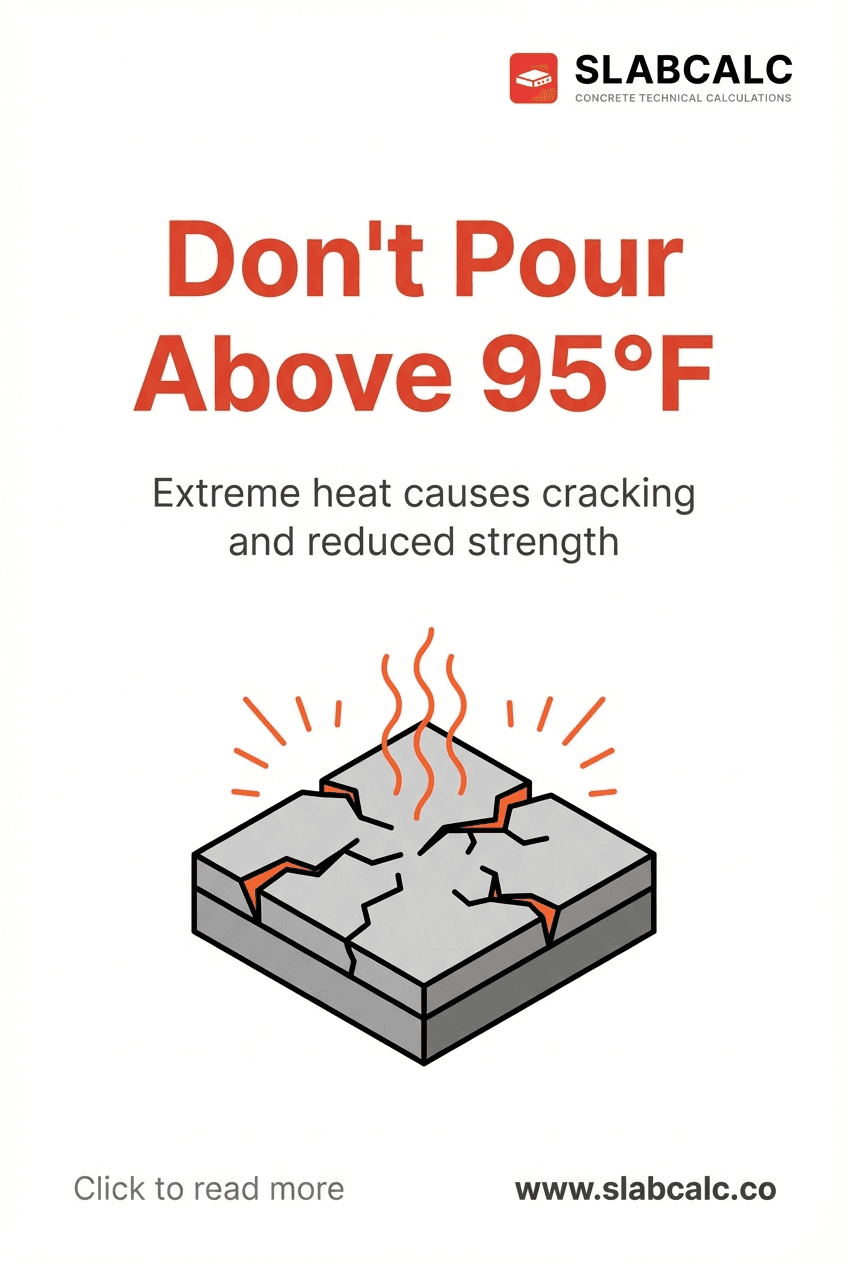
Don't Pour Above 95°F
The Worst Outcome: Permanent Structural Weakness
Pouring concrete when air temperature exceeds 95°F doesn't just create cosmetic problems—it produces a slab that's 10-15% weaker than one poured in ideal conditions. The concrete may look fine at first, but it cracks prematurely, fails under normal loads, and deteriorates faster. A driveway poured in 105°F heat might fail within 3-5 years instead of lasting 30+ years. Once the damage happens, there's no fix short of removing and replacing the entire slab—a $3,000–$8,000 expense for a typical driveway.
Why Heat Destroys Concrete Quality
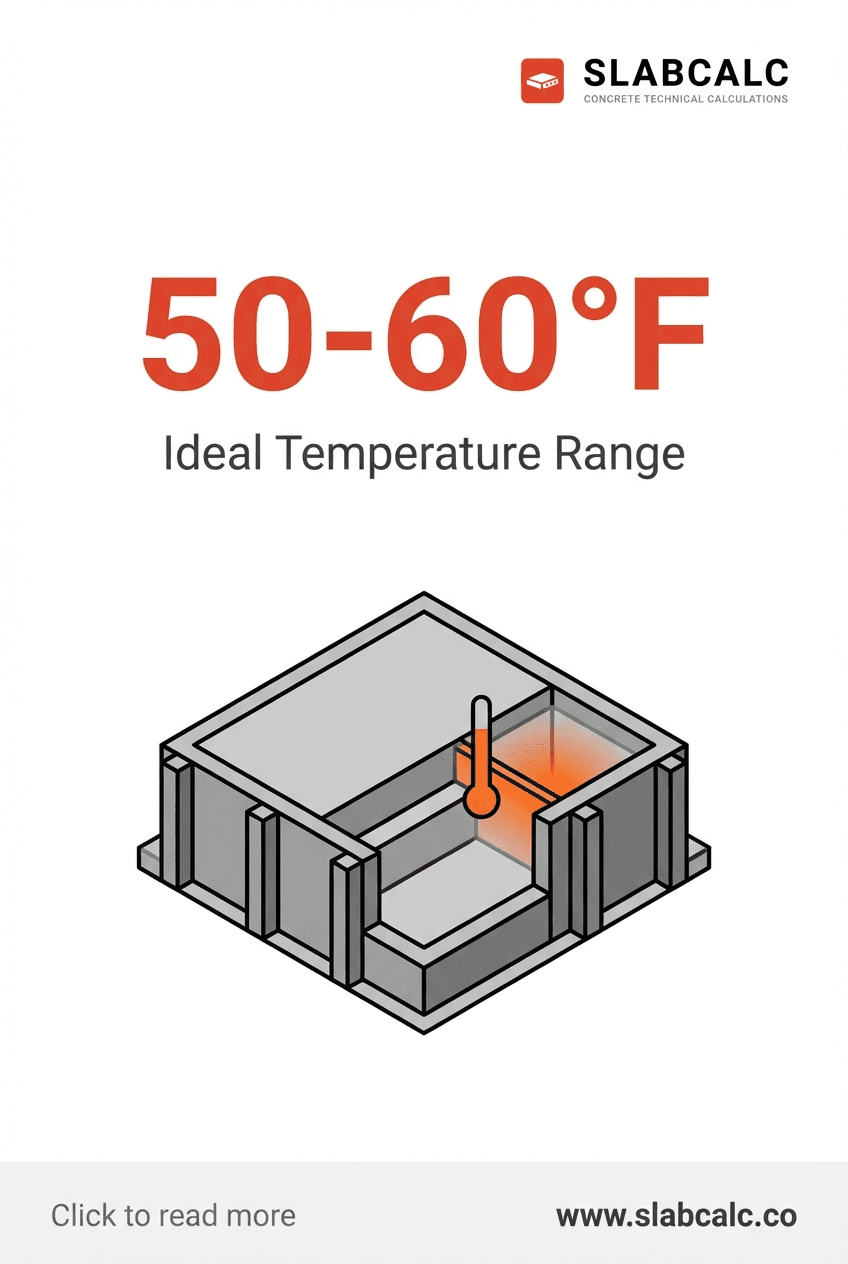
Concrete strength comes from a chemical reaction called hydration. In moderate temperatures (50–60°F), this reaction happens slowly and thoroughly, creating a dense, durable material. Heat accelerates this reaction dramatically—sometimes too fast to control.
When it's above 95°F, concrete sets in 2–3 hours instead of 6–8 hours. This creates three critical problems:
Rapid evaporation: High heat pulls water out of the concrete surface before it fully hydrates. The outer layer dries and shrinks faster than the interior, creating internal stress and surface cracking.
Fast setting reduces workability: You have almost no time to finish, float, or edge the surface properly. A 4,000 sq ft driveway becomes impossible to finish evenly.
Incomplete strength development: The accelerated set traps air voids and weak zones throughout the slab. The concrete reaches its initial set quickly but never develops full compressive strength—often 15% below specifications.
How to Identify High-Heat Risk Before You Pour
Check the forecast 3–5 days before your scheduled pour date. Look for:
- Air temperature above 90°F at the time of pour
- Ground temperature above 85°F (measure 4 inches deep with an infrared thermometer; concrete absorbs ground heat)
- Low humidity (below 40%) combined with sun and wind
- No cloud cover predicted during curing
If any of these apply, reschedule. Delaying 2–4 weeks beats paying for a failed slab later.
Prevention Checklist
Before pouring in warm weather:
- Schedule early morning pours only. Start at 5:00–6:00 AM when temperatures are coolest; finish before noon.
- Use concrete retarders. These admixtures slow hydration and buy you 2–4 extra hours of workability. Cost: $40–$80 per yard.
- Wet the subgrade thoroughly. Moist soil cools the concrete from below. Spray the excavated area the night before and again 2 hours before pouring.
- Mist the surface during curing. Use a fine spray every 2–4 hours for the first 24 hours to replace evaporated water.
- Cover the slab with white plastic or burlap. This reflects heat and slows evaporation. Keep it on for 7 days minimum.
- Keep tools and chutes cool. Pre-wet your finishing tools and spray down the ready-mix truck chute before discharge.
- Avoid pouring above 95°F under any circumstances. No retarder, admixture, or technique fully compensates for this heat.
The safest approach: pour in spring (April–May) or fall (September–October) when temperatures naturally stay in the 50–80°F range. Your future self—and your slab—will thank you.