
All Concrete Cracks Eventually
The Worst Consequence: Visible Pattern Breaks
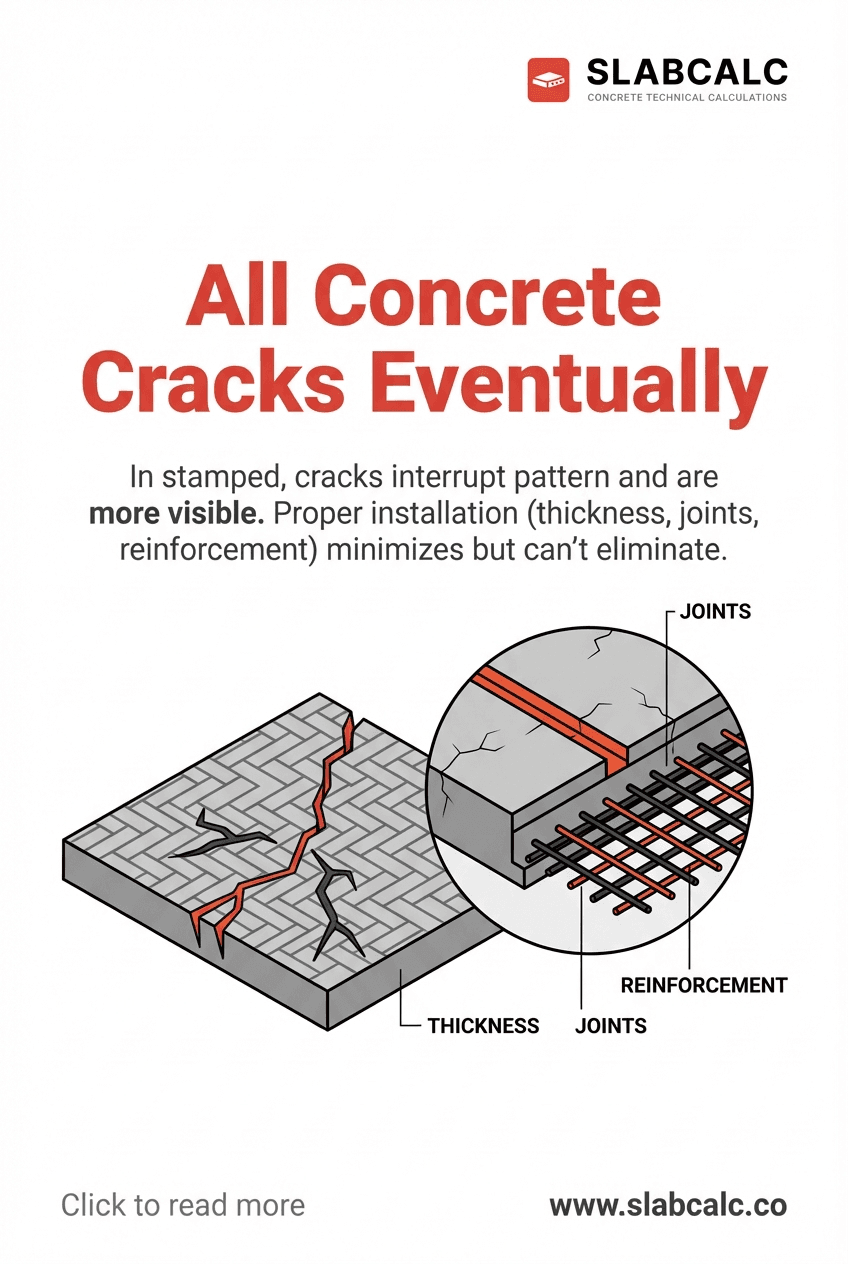
Stamped concrete costs $8–15 per square foot installed—three times the price of plain concrete. A cracked stamped patio doesn't just fail structurally; it fails aesthetically. A single hairline crack running through your slate pattern destroys the illusion you paid premium dollars to create. Unlike plain broom-finish concrete, where cracks are expected, cracks in stamped concrete look like installation mistakes—even if they're simply the nature of the material.
Why Concrete Cracks: The Root Cause
Concrete shrinks as it cures. This isn't a flaw; it's chemistry. As water evaporates from the concrete mix, the material shrinks roughly 0.5–1% of its total volume. On a 500-square-foot patio, that's enough movement to cause cracks in the first 28 days of curing.
Stamped concrete is especially vulnerable because:
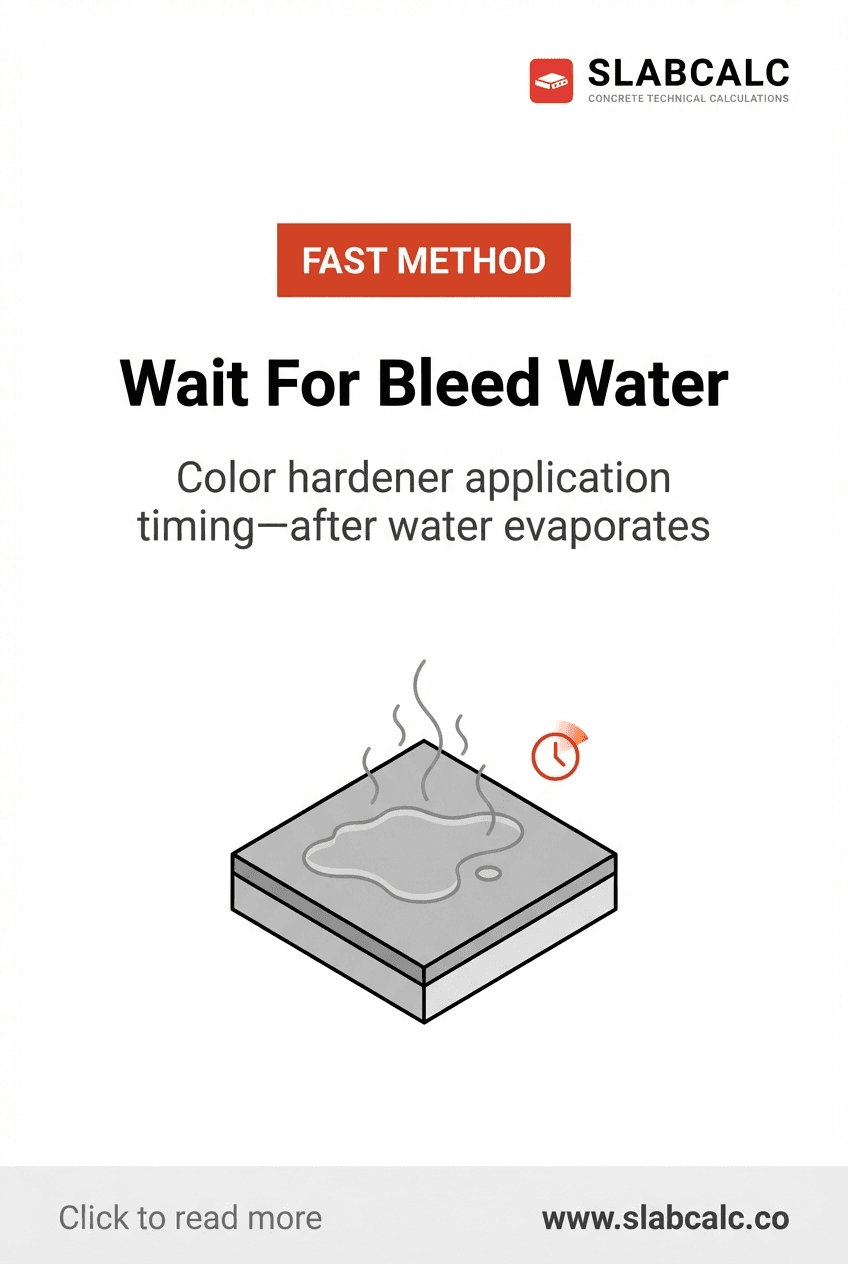
- Color hardener and release agents slow water evaporation unevenly, creating stress points
- Thinner sections near stamp edges dry faster and crack first
- Stamped patterns concentrate stress at pattern lines, so cracks follow the design
- Sun exposure accelerates drying on one side, creating directional cracking
The truth: properly installed stamped concrete will crack. Improper installation just makes it happen faster and more visibly.
Identifying Early Warning Signs
Check your stamped concrete within the first 7–14 days of installation:
- Hairline fractures appearing along pattern lines (most common)
- Wider cracks (over 1/8 inch) forming within 48 hours indicate poor base preparation
- Map cracking (spiderweb pattern) suggests too-fast drying or inadequate reinforcement
- Alligator cracking (interlocking pattern) signals subgrade failure or insufficient thickness
Early cracks are easier to fill and seal before water infiltration causes further damage.
The Prevention Checklist: Installation Standards That Matter
Professional contractors minimize cracking by following these steps:
Before Pouring:
- Compact subgrade to 95% standard Proctor density
- Install 4–6 inches of base stone (not dirt)
- Specify concrete thickness of 4 inches minimum (6 inches if vehicle traffic possible)
- Request air-entrained concrete (6–8% air) for freeze-thaw resistance
During Installation:
- Use concrete mix with low water-cement ratio (0.45 or lower)
- Add fiber reinforcement or rebar 12 inches on center
- Install control joints every 8–12 feet in both directions
- Space joints strategically to hide them in stamp patterns
After Pouring:
- Apply curing compound to slow water loss evenly
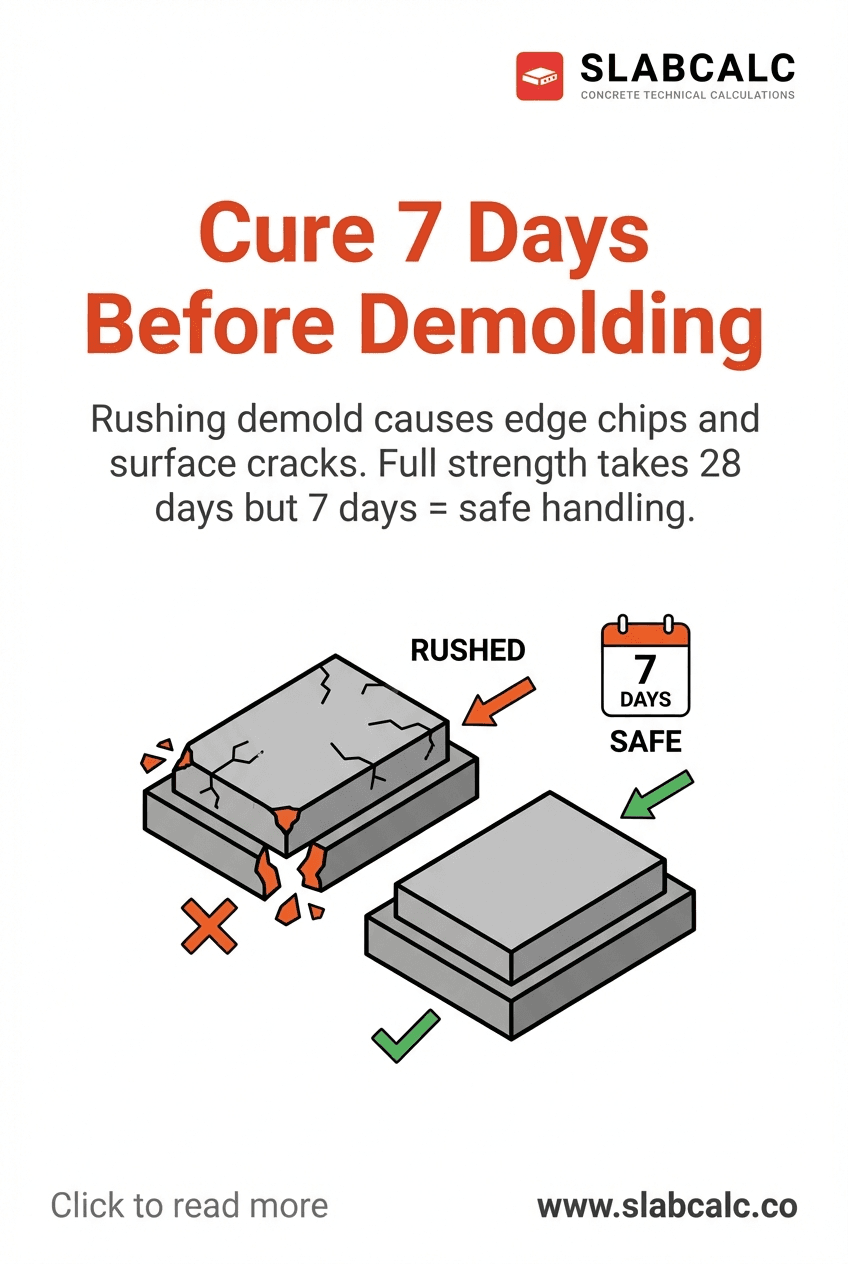
- Mist-spray the surface twice daily for 7 days (don't flood it)
- Avoid direct sun with tarps if temperatures exceed 85°F
- Wait full 28 days before sealing
Sealing Matters:
- Apply quality penetrating or acrylic sealer within 30 days
- Reseal every 2–3 years to prevent water infiltration
- Sealed cracks are less visible and won't expand with freeze-thaw cycles
The Bottom Line
Concrete cracks. Plan for it. Proper installation, joint placement, and ongoing sealing minimize the damage and keep your stamped finish looking intentional rather than damaged.