

Stamped Concrete: Complete Guide (Patterns, Costs, Pros & Cons)
Stamped concrete mimics the look of natural stone, brick, slate, or even wood at a fraction of the cost. It's created by pressing patterns into freshly poured concrete and adding color treatments that replicate expensive materials. For patios, pool decks, and walkways, stamped concrete offers high-end appearance with the durability concrete is known for.
The trade-off: stamped concrete costs 2-3x more than plain broom-finish concrete and requires professional installation. It also needs regular maintenance (resealing every 2-3 years) to maintain its appearance.
What Is Stamped Concrete?
Stamped concrete is standard concrete that's been:
- Colored with integral color or color hardener
- Textured with rubber stamps pressed into the surface
- Accented with release agents that create depth variation
- Sealed to protect the color and texture
The result looks remarkably like natural materials—flagstone, slate, brick, cobblestone—but performs like concrete: seamless, durable, and relatively low maintenance.
The Stamping Process
Understanding the process explains why DIY isn't practical:
Step 1: Pour and Screed
Concrete is poured, spread, and leveled like any slab.
Step 2: Apply Color Hardener (Optional)
Broadcast color powder onto wet surface for rich, durable color. Floated in.
Step 3: Apply Release Agent
Liquid or powder release prevents stamps from sticking and adds color variation (antiquing effect).
Step 4: Stamp the Pattern
Large rubber stamps (typically 2×2 ft or larger) are pressed into concrete.
- Must work quickly—concrete is setting
- Pattern must align seamlessly
- Timing is critical (too early = muddy; too late = no impression)
Step 5: Detail Work
Hand tools create borders, fix imperfections, and detail edges.
Step 6: Clean and Seal
Remove excess release agent, clean surface, apply protective sealer.
Why timing matters: The stamping window is narrow—typically 30-60 minutes depending on conditions. Work too early, and stamps sink into mud. Work too late, and you can't make impressions. This is why stamped concrete is almost exclusively professional work.
Popular Stamped Concrete Patterns
Natural Stone Patterns
| Pattern | Best For | Look |
|---|---|---|
| Ashlar slate | Patios, walkways | Formal, angular stone |
| Flagstone | Patios, pool decks | Natural, organic shapes |
| Fieldstone | Rustic applications | Random, naturalistic |
| Cobblestone | Driveways, borders | European, traditional |
Brick Patterns
| Pattern | Best For | Look |
|---|---|---|
| Herringbone | Driveways, patios | Classic, formal |
| Running bond | Walkways, borders | Traditional brick |
| Basket weave | Patios | Decorative, detailed |
Other Patterns
- Wood plank: Resembles weathered wood planks
- Tile: Square or hexagonal tile patterns
- Fractured earth: Abstract, naturalistic
- Custom designs: Logos, borders, combinations
Most contractors offer 20-50 pattern options. Larger companies may have 100+.
Pattern Examples
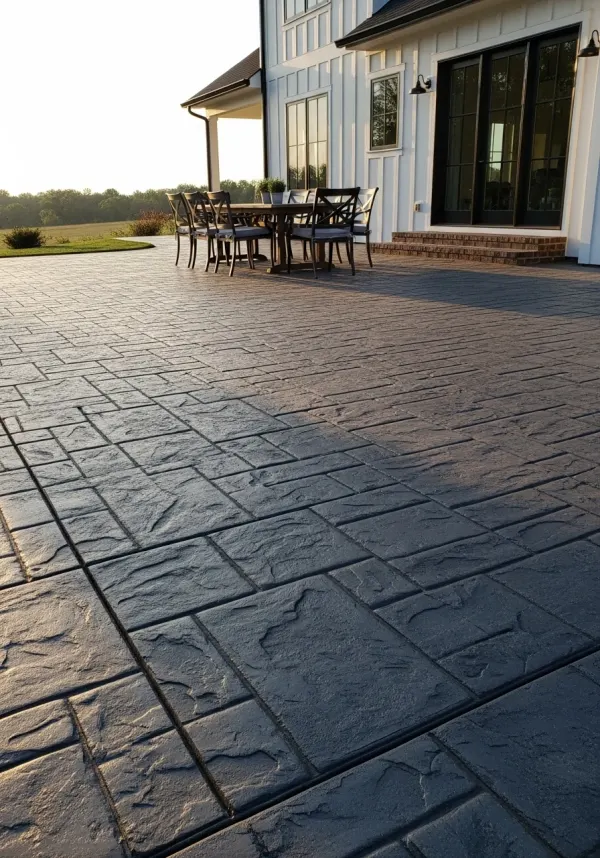
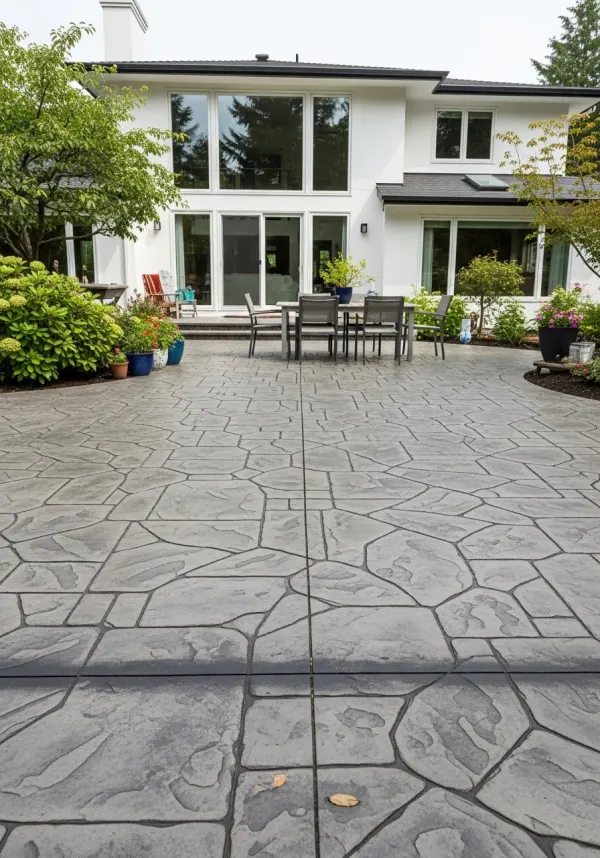
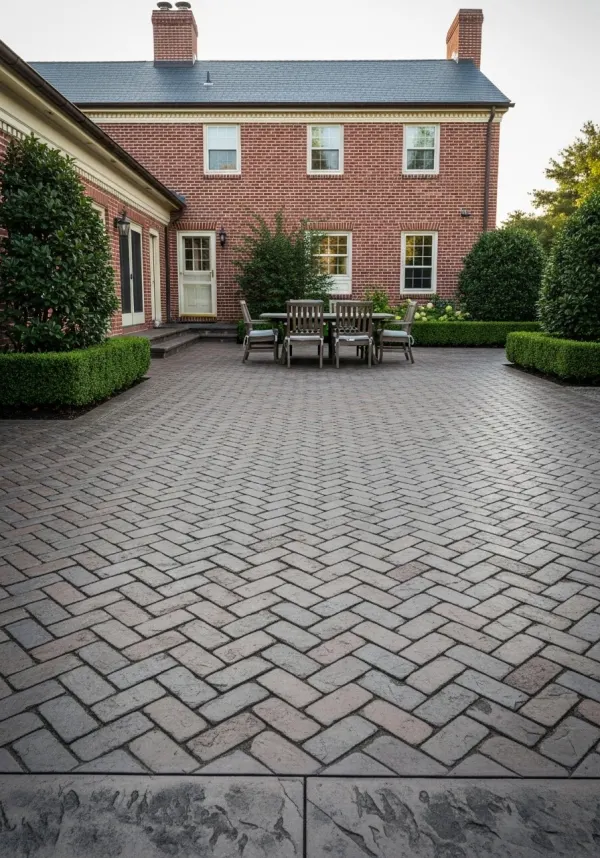
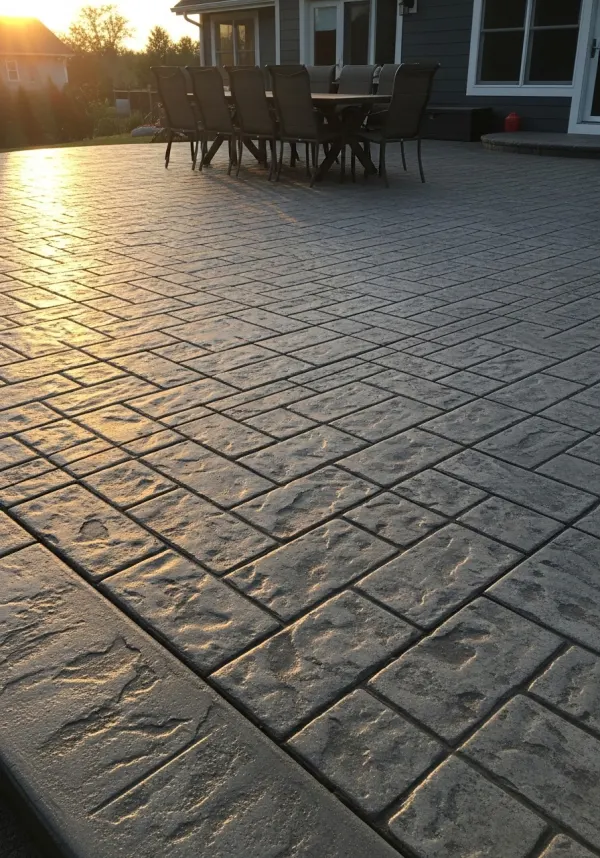
Pattern previews above were generated with PourCanvas, a free tool that lets you preview stamped concrete patterns on a photo of your own patio before you commit to a contractor.
Stamped Concrete Costs
Stamped concrete costs significantly more than plain concrete:
| Concrete Type | Cost per Sqft |
|---|---|
| Plain broom finish | $4-8 |
| Colored concrete | $6-12 |
| Stamped concrete | $8-18 |
| Premium/complex stamped | $15-25+ |
What Affects Cost
| Factor | Impact |
|---|---|
| Pattern complexity | Simple patterns: lower; detailed: higher |
| Number of colors | Single color: lower; multiple: +$1-3/sqft |
| Size of project | Larger projects may have lower per-sqft cost |
| Site access | Difficult access adds cost |
| Region | Labor rates vary by market |
Project Cost Examples
| Project | Size | Basic Stamped | Premium Stamped |
|---|---|---|---|
| Small patio | 100 sqft | $800-1,400 | $1,500-2,500 |
| Medium patio | 200 sqft | $1,600-2,800 | $3,000-5,000 |
| Large patio | 400 sqft | $3,200-5,600 | $6,000-10,000 |
| Driveway | 500 sqft | $4,000-7,000 | $7,500-12,500 |
Use our patio cost calculator or driveway cost calculator for project-specific estimates.
Stamped Concrete Pros and Cons
Advantages
Appearance: High-end look at fraction of natural stone cost. Stamped slate might cost $8-15/sqft vs. $20-40/sqft for real slate.
Durability: Same strength as standard concrete. 25+ year lifespan with maintenance.
Seamless surface: No gaps for weeds, no settling pavers, no shifting stones.
Versatility: Works for patios, driveways, pool decks, walkways, even interior floors.
Customization: Endless pattern and color combinations.
Value: Adds 10-15% to perceived home value for outdoor living spaces.
Disadvantages
Cost: 2-3x the cost of plain concrete.
Cracking: Concrete cracks. In stamped concrete, cracks are more visible and harder to repair seamlessly.
Repair difficulty: Patching stamped concrete rarely matches the original. Repairs are visible.
Maintenance required: Must reseal every 2-3 years ($0.50-1.50/sqft) to maintain appearance.
Slipperiness: Sealed stamped concrete can be slippery when wet. Requires anti-slip additive in sealer for pool decks.
Not DIY: Requires professional installation—the timing and technique can't be learned on your first project.
Fading: Without regular resealing, colors fade over time.
Stamped Concrete vs. Pavers
This is a common comparison for homeowners:
| Factor | Stamped Concrete | Pavers |
|---|---|---|
| Initial cost | $8-18/sqft | $10-25/sqft |
| Appearance | Natural stone look | Actual individual units |
| Installation time | 1-3 days | 2-5 days |
| Durability | 25-30 years | 25-50 years |
| Repairs | Difficult, visible | Easy—replace individual units |
| Maintenance | Reseal every 2-3 years | Re-sand joints occasionally |
| Cracking | Will crack eventually | Joints absorb movement |
| Settling | Can occur | Can occur (but fixable) |
| Weeds | None (seamless) | Possible in joints |
| DIY friendly | No | Yes (moderately) |
Choose stamped concrete if:
- You want seamless surface (no joints for weeds)
- Budget is a concern vs. high-end pavers
- You prefer the slightly varied look of stamped patterns
- You're comfortable with periodic sealing
Choose pavers if:
- Repair-ability matters (cold climates, tree roots)
- You want a true modular look
- Budget allows for quality pavers
- You might expand or modify later
Best Applications for Stamped Concrete
Excellent For:
Patios: The ideal application. Low traffic, high visual impact, easy maintenance access.
Pool decks: Great appearance, but requires anti-slip additive in sealer.
Walkways: Creates visual continuity from front entry to backyard.
Outdoor kitchens: Defines the space, coordinates with countertops.
Good For:
Driveways: Works well but shows wear in high-traffic areas (tire paths). Cracks may be more noticeable.
Courtyards: Formal patterns suit architectural spaces.
Less Ideal For:
Steep slopes: Stamping on slopes is challenging.
Areas with tree roots: Root heaving cracks stamped concrete, and repairs are obvious.
Extreme freeze-thaw climates: More susceptible to surface damage than plain concrete.
Maintenance Requirements
Stamped concrete isn't maintenance-free:
Regular Maintenance
| Task | Frequency | Why |
|---|---|---|
| Clean surface | 1-2x/year | Remove debris, prevent staining |
| Reseal | Every 2-3 years | Protect color, prevent wear |
| Inspect for cracks | Annually | Catch small cracks early |
Resealing Process
- Clean surface thoroughly
- Let dry completely
- Apply thin coat of acrylic sealer
- Allow to cure before use
Cost: $0.50-1.50/sqft DIY, $1-3/sqft professional
Without resealing, stamped concrete fades, loses its sheen, and becomes more susceptible to damage.
For sealing techniques, see how to seal concrete.
Can You DIY Stamped Concrete?
Short answer: No. Stamped concrete requires:
- Precise timing: The stamping window is 30-60 minutes
- Experience: Knowing when concrete is ready by feel
- Specialized tools: Stamps, release agents, color hardeners
- Crew size: 3-5 people minimum for most projects
- Pattern alignment: Seamless transitions require skill
Your first attempt at stamping will be your only attempt on that slab. There's no learning curve accommodation—if you miss the timing, you get a plain (or worse, partially stamped) slab.
What you CAN do:
- Research patterns and colors
- Get multiple quotes
- Verify contractor references
- Understand maintenance requirements
Key Takeaways
- Cost: $8-18 per sqft (2-3x plain concrete)
- Best for: Patios, pool decks, walkways
- Not DIY: Professional installation required
- Maintenance: Reseal every 2-3 years
- Lifespan: 25+ years with proper care
- Trade-off: Beautiful but repairs are visible
Explore other decorative options: colored concrete, stained concrete, and exposed aggregate. For comprehensive patio planning, see our complete patio guide.