
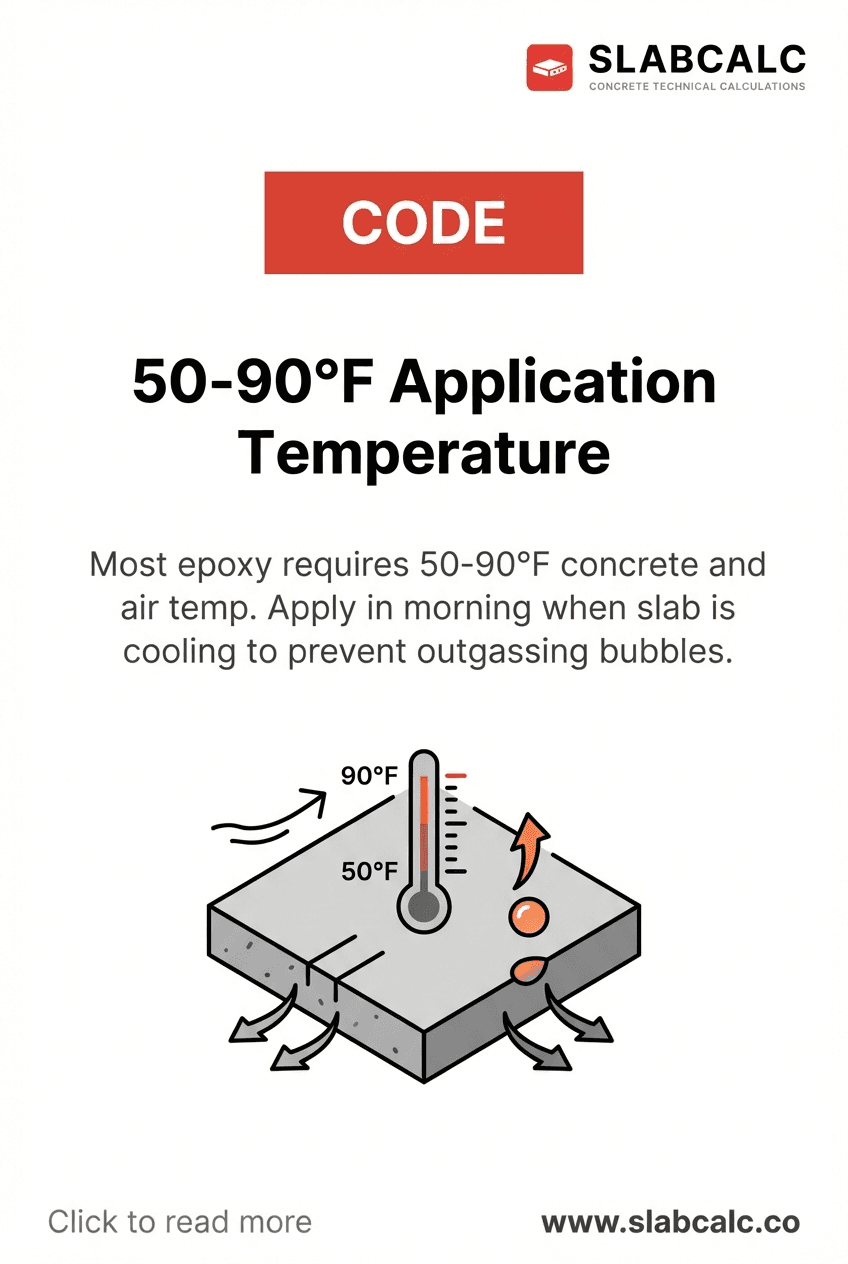
50-90°F Application Temperature
The Code Requirement
Most epoxy manufacturers—and by extension, local building codes adopting ACI (American Concrete Institute) standards—require both concrete surface temperature and air temperature to remain between 50°F and 90°F during application and cure. This isn't a suggestion. Violating this window voids warranties and guarantees failure.
Why? Epoxy is a chemical reaction. Temperature controls how fast that reaction happens and how well the coating bonds to concrete.
What Temperature Does to Epoxy
Below 50°F, the chemical reaction slows dramatically. The epoxy stays tacky longer, doesn't cure properly, and never hardens to full strength. You'll end up with a soft, sticky surface that attracts dust, debris, and footprints for weeks. This violates ACI 546 guidelines for resinous coatings.
Above 90°F, the opposite problem occurs: outgassing. As the concrete slab heats up, moisture trapped in the pores rises toward the surface. When epoxy seals that surface, the rising vapor gets trapped underneath, creating bubbles and tiny craters. These aren't cosmetic—they're weak points where the coating delaminates and peels. A 400-500 square foot garage floor can develop 100+ bubble defects this way.
The 50-90°F window ensures the chemical reaction proceeds at the right pace while minimizing moisture vapor pressure.
Practical Application Timing
Apply epoxy in the morning—ideally between 7 AM and 10 AM in spring or fall when ambient temperature is rising into the target range but hasn't peaked.
Avoid:
- Late afternoon applications when the slab has absorbed all-day sun and is cooling. The temperature differential causes condensation risk.
- Overnight cure below 50°F. Epoxy needs active curing time within the ideal range.
- Summer midday applications when concrete temperatures can exceed 95°F, especially in garages with south or west-facing doors.
Check both concrete surface temperature (use an IR thermometer—$15-30) and air temperature before mixing. Don't estimate. The slab stays 5-10°F cooler than the air, so a 85°F day might have a 75°F slab—ideal. But a 95°F day with 105°F slab temps will fail.
Common Violations
Homeowners ignore temperature requirements because:
- They apply epoxy on hot summer weekends when the garage is convenient to access.
- They don't own a thermometer and assume "warm enough" works.
- Moisture tests show false negatives because they skipped them during the cooler morning window.
Result: $300-500 material investment yields a failed floor in 6-12 months.
The Fix
Plan your project for spring (April-May) or fall (September-October) when morning temperatures naturally fall in the 50-70°F range. If you must apply in summer, do it before 8 AM. If winter is your only option, you'll need a garage heater or propane tent to maintain 50°F+ for the full cure period (12-24 hours depending on product).
Temperature control is the cheapest insurance you can buy for an epoxy floor that lasts 10+ years instead of failing in one.