
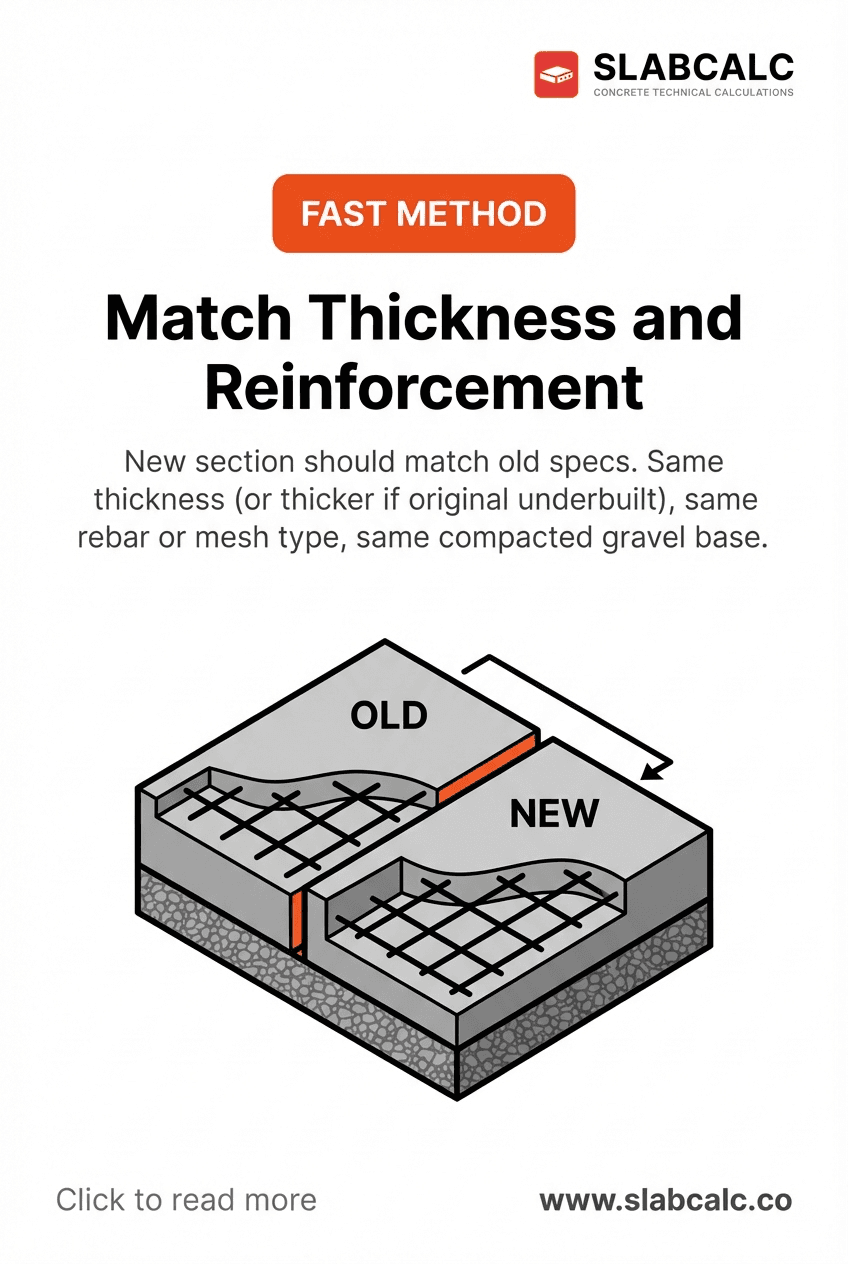
Match Thickness and Reinforcement
The Time Difference: Spec Matching Saves Rework
The slow way: Pour a new section without matching the original specs, discover cracking within months, hire a contractor to cut out and replace the failed section. Total cost and time: $1,200–$2,500 and 3–4 weeks including curing delays.
The fast way: Measure the existing slab specs upfront, build and pour the new section to match those exact specifications in one pour, enjoy a durable extension. Total time: one weekend plus 7 days cure. Total cost: materials only, no rework.
Matching thickness and reinforcement isn't complicated—it just requires five minutes of inspection before you start.
Step 1: Measure Existing Slab Thickness
Most residential concrete slabs range from 4 to 6 inches thick. Driveways are typically 4–5 inches; patios and walkways often 4 inches; garage floors and high-traffic areas 5–6 inches.
How to check: Drill a small test hole (1/2-inch bit) near the edge of the existing slab where it won't be visible. Measure from the top surface to the gravel base below. Write down the measurement—this is your target thickness for the new pour.
If the original slab is underbuilt (less than 4 inches for a driveway), consider pouring the new section 5 inches thick. This prevents the new section from becoming the weak point.
Step 2: Identify the Reinforcement Type
The existing slab likely uses one of three reinforcement methods:
- 6x6 wire mesh (most common in residential work)
- #4 rebar on 18–24 inch spacing (driveways and patios)
- No reinforcement (older, thinner slabs)
Quick inspection: Chip away a small corner of the existing slab (or look at an exposed edge if available) to see what's inside. Photos work too—text them to a concrete supplier if you're unsure. Match the same material and spacing in your new section.
Step 3: Prepare an Identical Base Layer
The base is invisible but critical. Most failures stem from mismatched base preparation.
- Existing slab base depth: Typically 4 inches of compacted gravel or crushed stone
- Your new section: Compact the same 4-inch layer to match the existing slab's base elevation
- Compaction tool: A hand tamper (rented, $15–$25/day) compacts small areas; a vibratory plate compactor ($40–$60/day) handles larger extensions
Poor base prep causes settling and cracking within 1–2 years. Don't skip this step.
Step 4: Set Forms to Match Grade
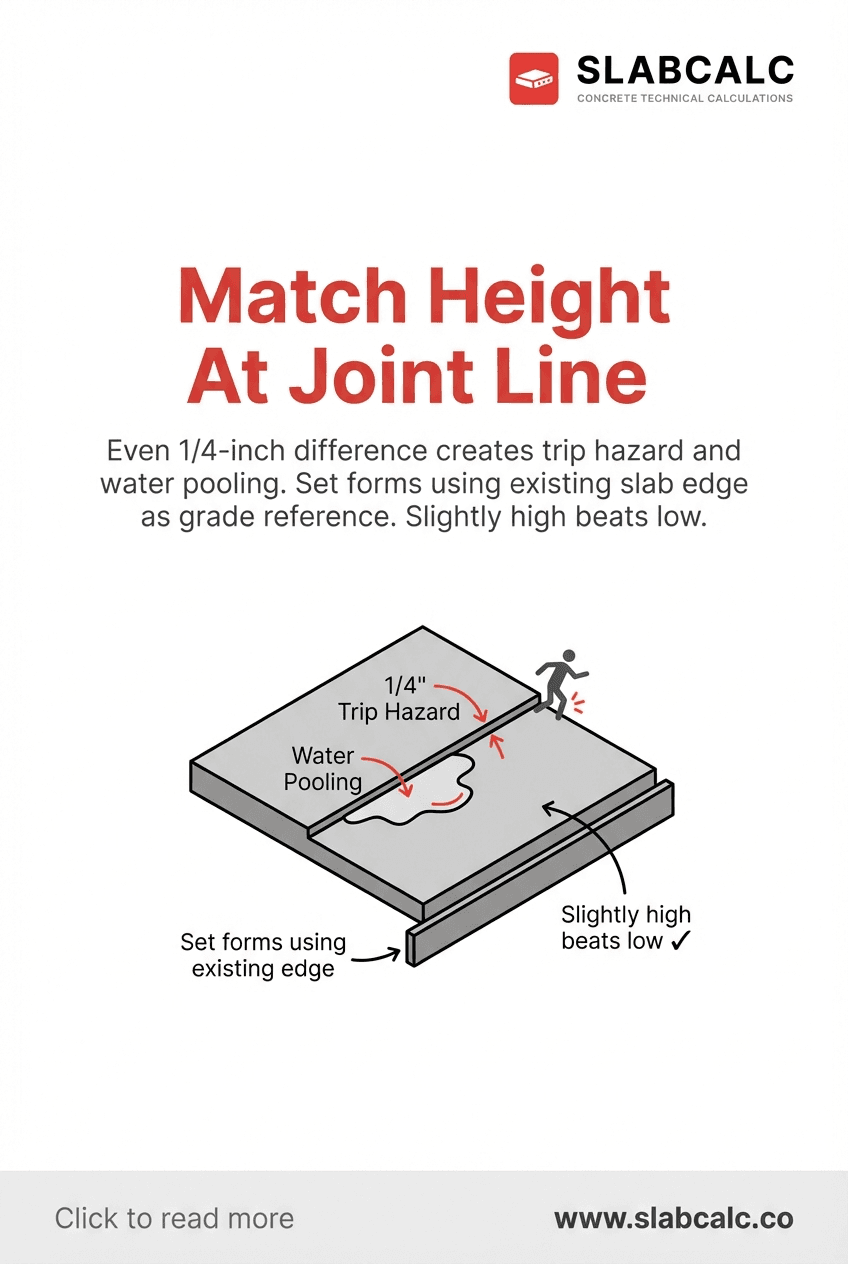
The top surface of the new slab must align exactly with the existing slab—within 1/4 inch.
- Use a long straightedge across both slabs to confirm alignment
- Adjust form heights as needed before pouring
- Check at multiple points along the joint line
The Tools You'll Need
- 4-foot straightedge ($20–$40)
- Tape measure (25-foot minimum)
- Gravel or crushed stone (matching existing base)
- Hand tamper or vibratory compactor (rental)
- Concrete mix or ready-mix truck
- Concrete (use our calculator to estimate cubic yards)
Matching specs upfront takes 30 minutes and costs nothing extra in materials. Skipping this step costs thousands in repairs.