
Use 1/2-Inch Expansion Joints
The Key Number: 1/2 Inch
Use a 1/2-inch expansion joint when pouring new concrete next to an existing slab. This measurement is non-negotiable—it's the gap that saves you from expensive cracks and failed repairs.
Why This Number Matters
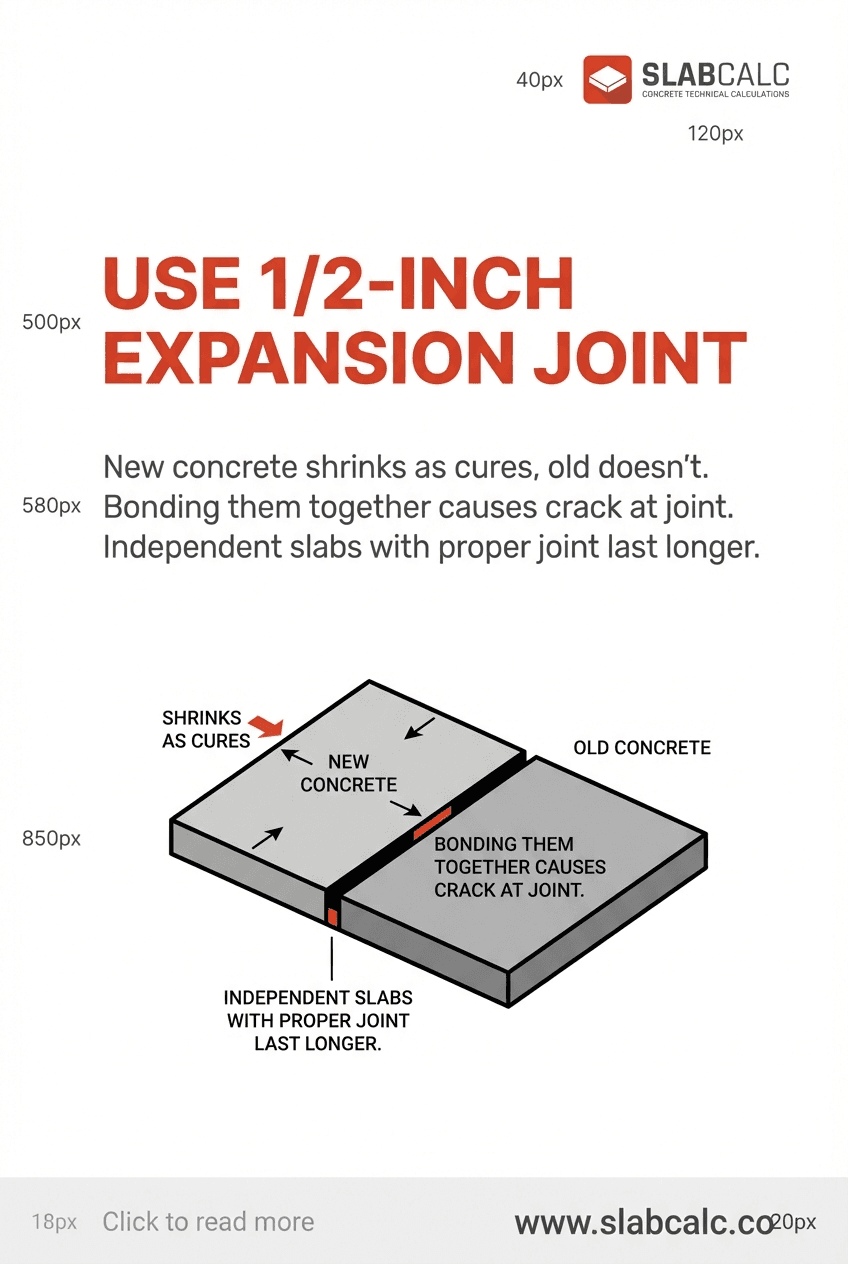
New concrete shrinks as it cures. Old concrete doesn't move. When you bond them directly together, the new slab's shrinkage creates internal stress at the joint. That stress has nowhere to go—so it cracks, usually within weeks or months. A 1/2-inch gap allows both slabs to move independently, eliminating the force that causes failure.
Think of it like this: concrete wants to shrink about 1/16 inch per 10 feet of length. When new concrete is locked to old concrete, it's fighting against a rigid wall. When it's separated by an expansion joint, it can shrink freely without pulling or pushing against its neighbor.
When to Use the 1/2-Inch Joint
Use this joint size whenever you're extending an existing slab—adding to a patio, widening a driveway, extending a sidewalk, or connecting a new walkway to an existing one. It applies whether your existing slab is 1 year old or 10 years old.
The 1/2-inch joint also applies to any scenario where new concrete is poured beside existing concrete that you're not removing and replacing. If you're doing a cut-and-replace (removing the old section and pouring fresh concrete in its place), the rules change and you don't need an expansion joint at that cut line.
How to Install It Correctly
Purchase asphalt-impregnated fiber board or closed-cell foam backer rod—both are standard materials designed for this exact purpose. Cost runs $0.50 to $1.50 per linear foot.
-
Clean the edge of your existing slab. Remove dirt, loose concrete, and any old joint filler with a wire brush or angle grinder.
-
Position the joint material against the cleaned edge. It must extend the full depth of your new slab—if you're pouring 4 inches thick, the joint goes down 4 inches.
-
Set your forms against the joint material, not directly against the existing slab. This keeps the 1/2-inch gap consistent during pouring.
-
Pour and finish normally. The expansion joint material stays in place as you work.
-
After curing (wait 7+ days), seal the top of the joint with flexible polyurethane caulk. This prevents water from entering the gap and keeps debris out.
The Critical Mistake to Avoid
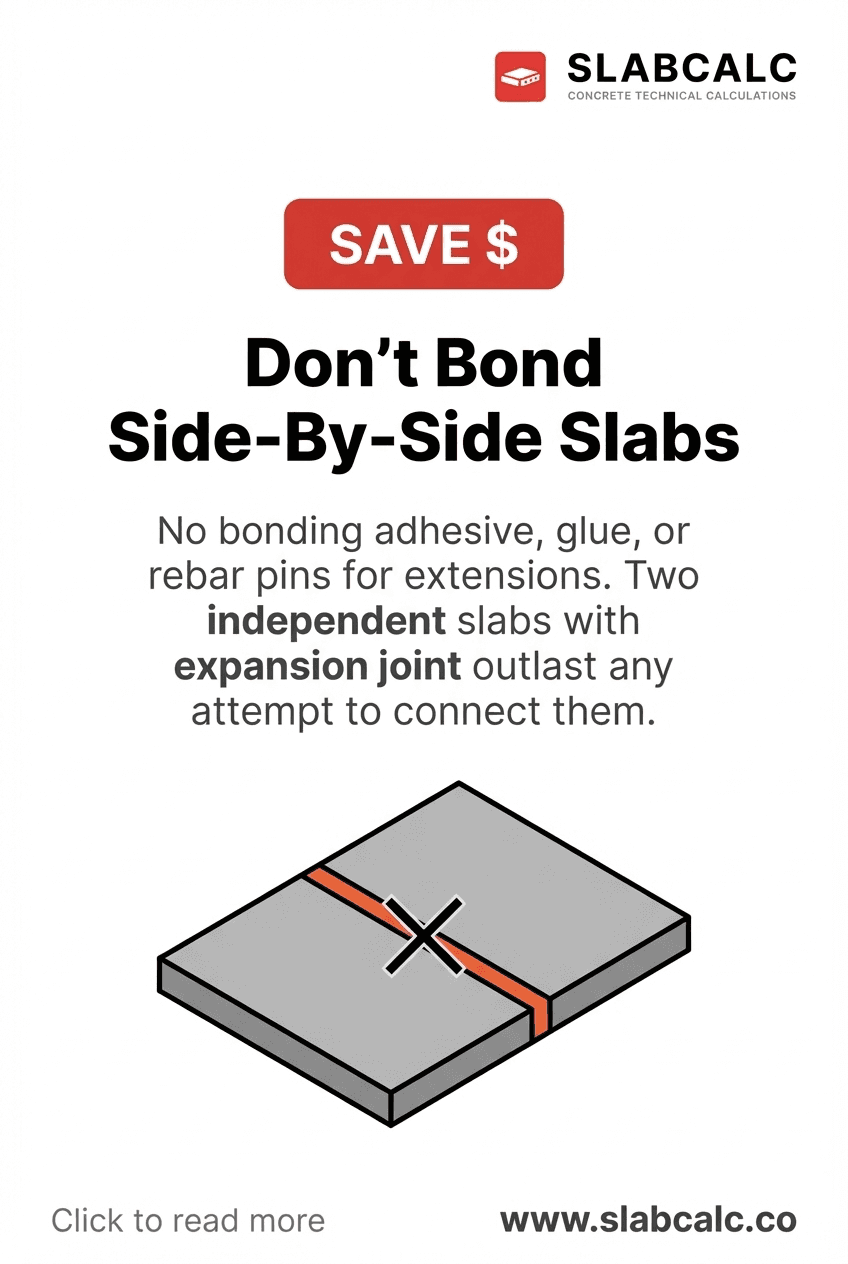
Do not use bonding adhesive, concrete glue, rebar pins, or any method to connect the two slabs. These create the exact problem you're trying to prevent. Two independent slabs with a proper joint will outlast any bonded connection.
A 1/2-inch gap looks small, but it's doing massive work—allowing your concrete to last 20+ years instead of cracking within months.