
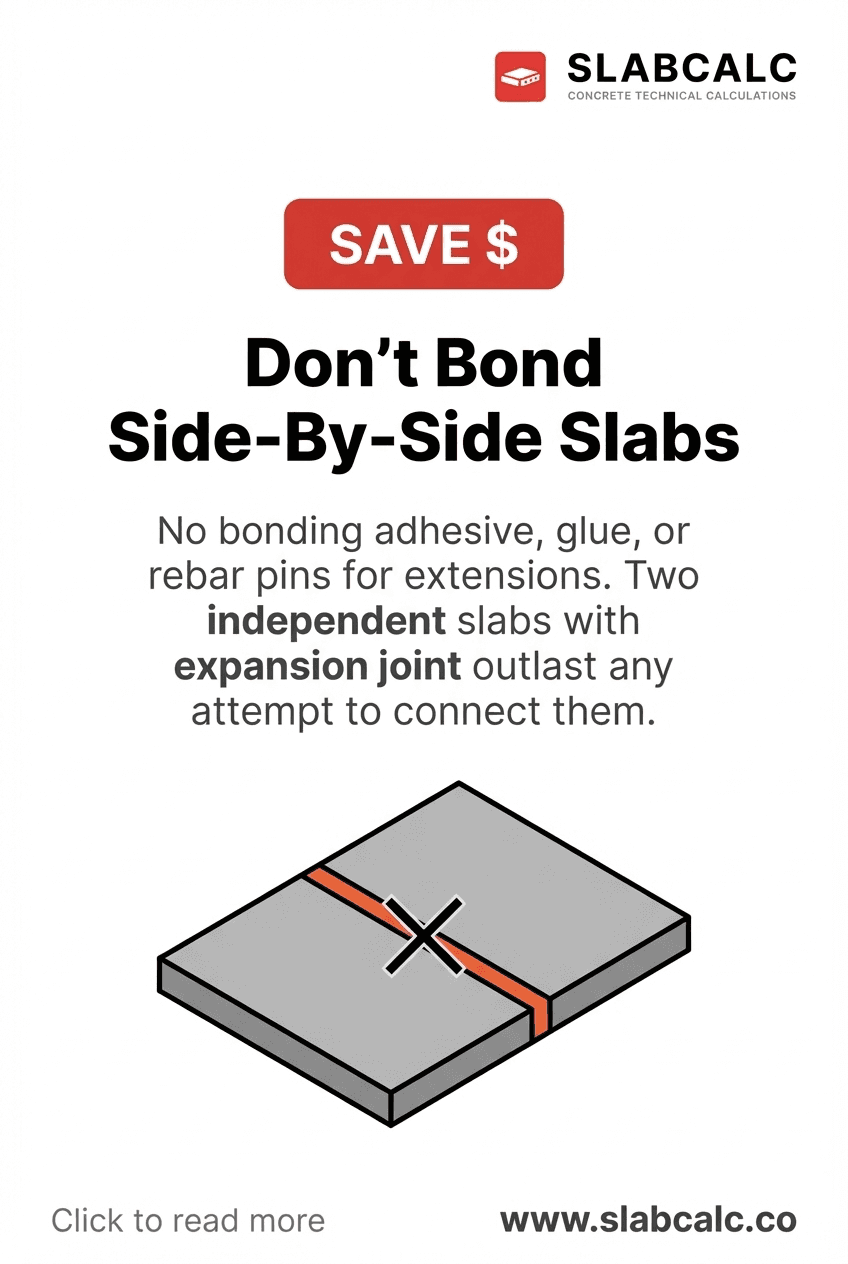
Don't Bond Side-By-Side Slabs
Save $500+ by Keeping Slabs Independent
When extending a concrete patio, driveway, or walkway, many DIYers waste money on bonding adhesives, concrete glues, and rebar pins to "connect" the new slab to the old one. Don't. This approach costs $300–$800 more and fails faster than a simple expansion joint. A properly installed expansion joint costs under $50 in materials and outperforms any bonded connection by years.
The Math: Bonded vs. Independent
The bonded approach:
- Concrete bonding adhesive: $120–$200 per 5-gallon bucket (you'll need 1–2 buckets for a typical 12×16-foot extension)
- Rebar pins or spikes: $60–$150
- Epoxy injection equipment or surface primer: $80–$120
- Labor time preparing the old slab edge: 3–4 hours
- Total: $260–$470 in materials, plus significant prep time
The independent slab approach:
- Asphalt-impregnated fiber board or closed-cell foam backer rod (1/2-inch thick): $20–$40
- Flexible polyurethane caulk for sealing: $15–$25
- Minimal edge preparation (cleaning only): 30–45 minutes
- Total: $35–$65 in materials, minimal labor
Why Bonding Fails
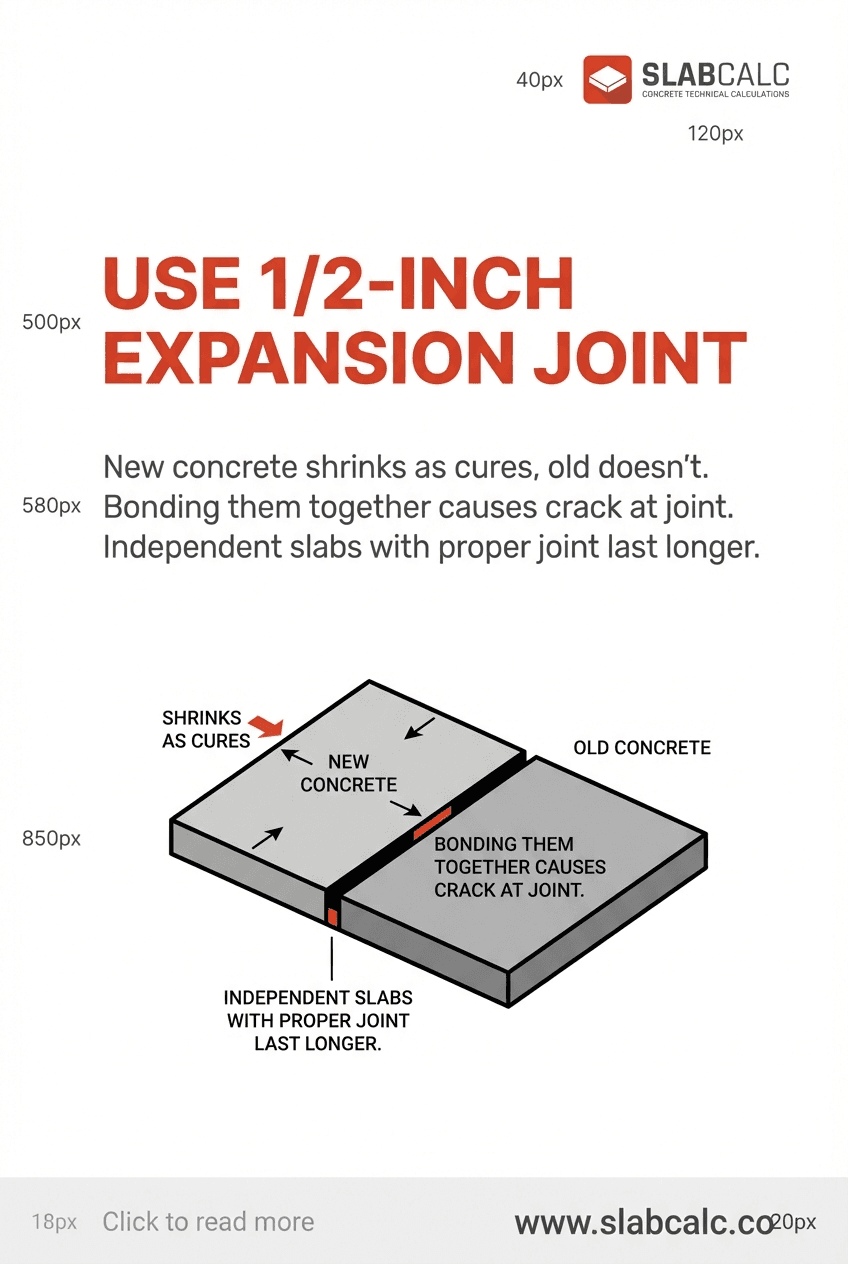
New concrete shrinks as it cures—old concrete doesn't. When you lock them together with adhesive or rebar, the new slab's shrinkage pulls directly against the rigid old slab. Cracks appear within 2–3 years, usually right at the joint where stress concentrates. Once bonded cracks form, they're permanent. Repairing them means cutting out and replacing sections—a $1,500–$3,000 job.
Two independent slabs don't fight each other. The expansion joint absorbs seasonal movement, temperature changes, and settling differences without stress transfer. A properly sealed joint can last 15+ years with only routine caulk maintenance (every 3–5 years).
The Right Way to Install the Expansion Joint
-
Clean the existing slab edge thoroughly. Remove dirt, algae, loose material, and any old joint filler. Use a wire brush or pressure washer at 3,000 psi maximum.
-
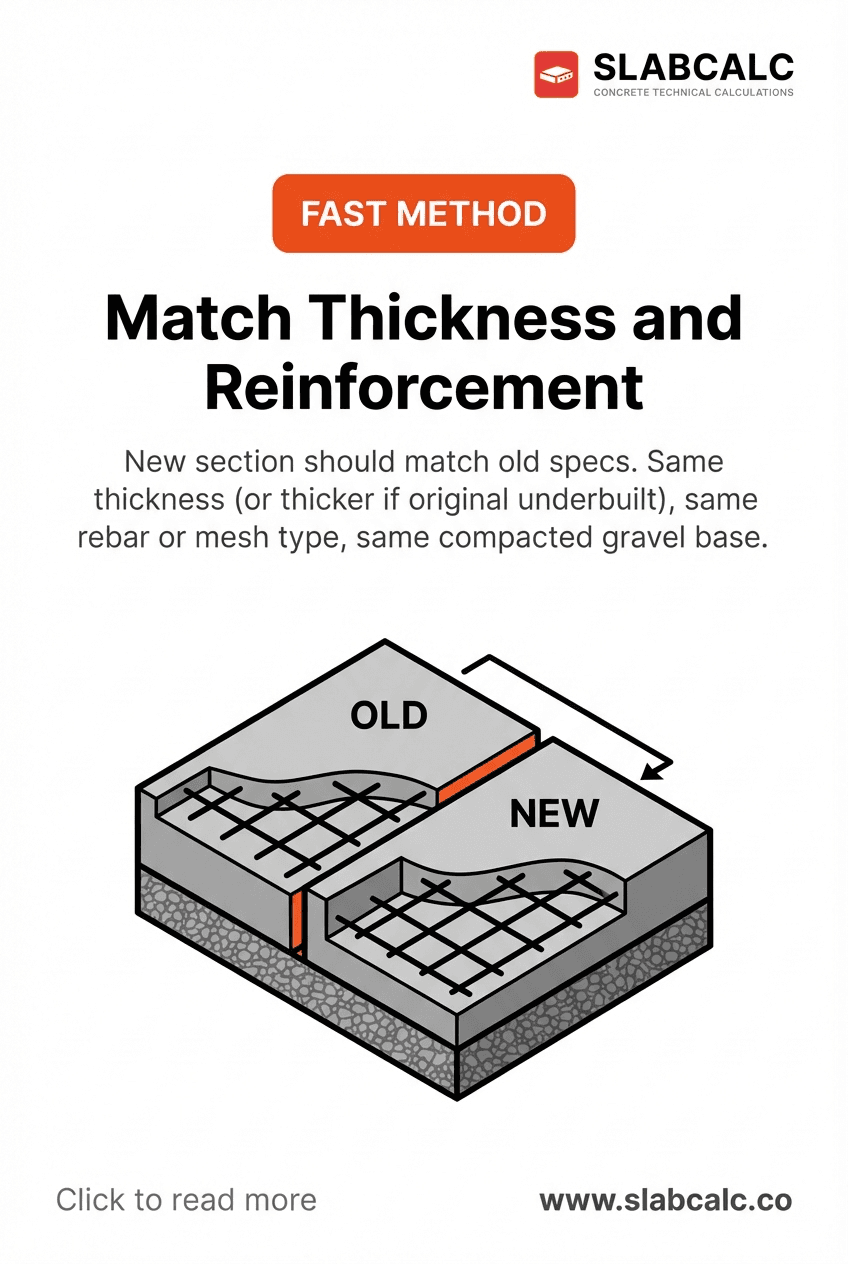
Install 1/2-inch expansion joint material against the existing slab edge. Asphalt-impregnated fiber board is most common and costs $0.50–$1.00 per linear foot. The joint must extend the full depth of your new slab.
-
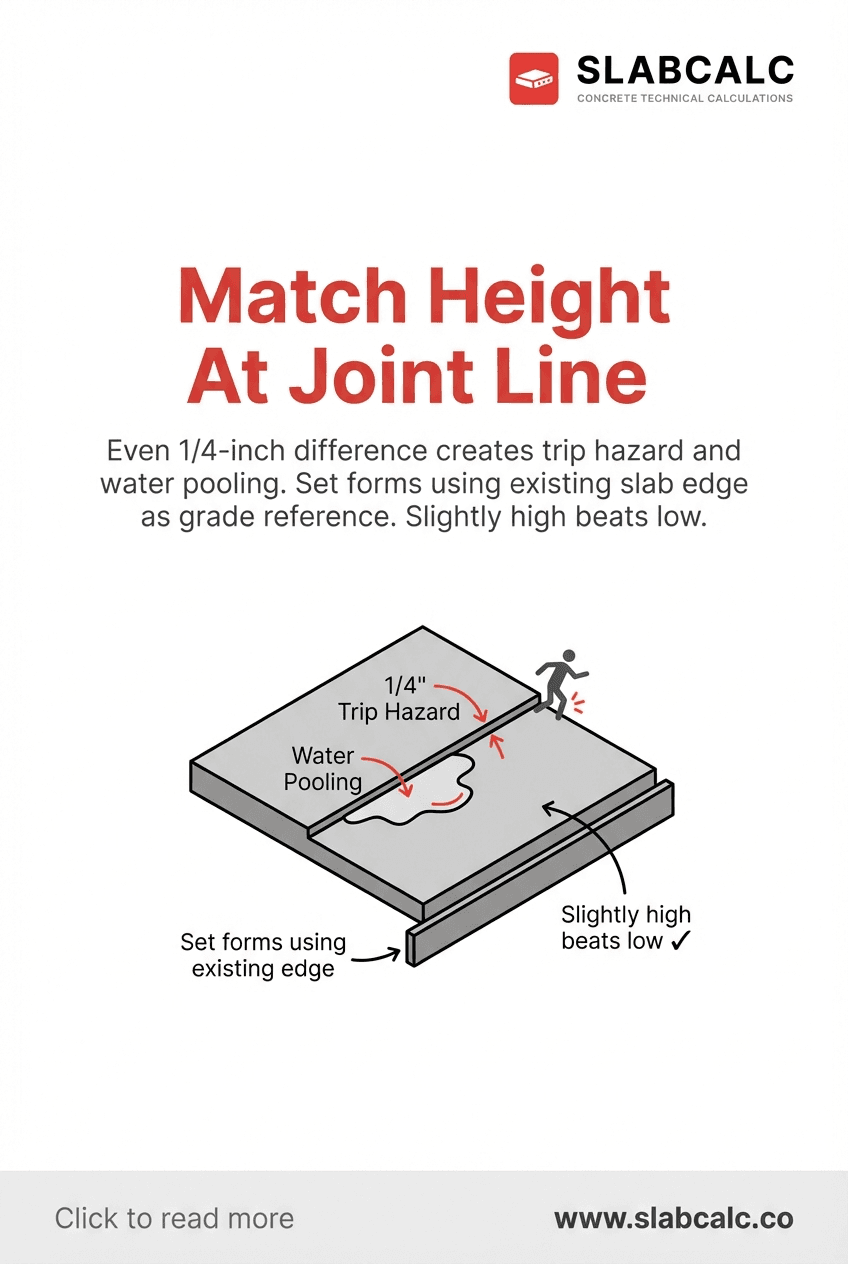
Build forms against the joint material, not against the old slab directly. This ensures the joint stays intact during pour.
-
Pour and finish normally. The joint material acts as a form edge—nothing special required.
-
Seal after 7+ days cure time with flexible polyurethane caulk rated for outdoor concrete. This prevents water infiltration that accelerates deterioration.
The Decision Framework
If you're extending an existing slab, always use an expansion joint. If someone recommends bonding adhesive or rebar pins, ask them to guarantee the joint won't crack in five years—they won't. Save $400+, cut labor time by hours, and build a slab system that actually accommodates natural movement instead of fighting it.
Use our concrete slab calculator to estimate material quantities for your extension, then add the expansion joint cost ($0.50–$1.00 per foot) to your budget.