
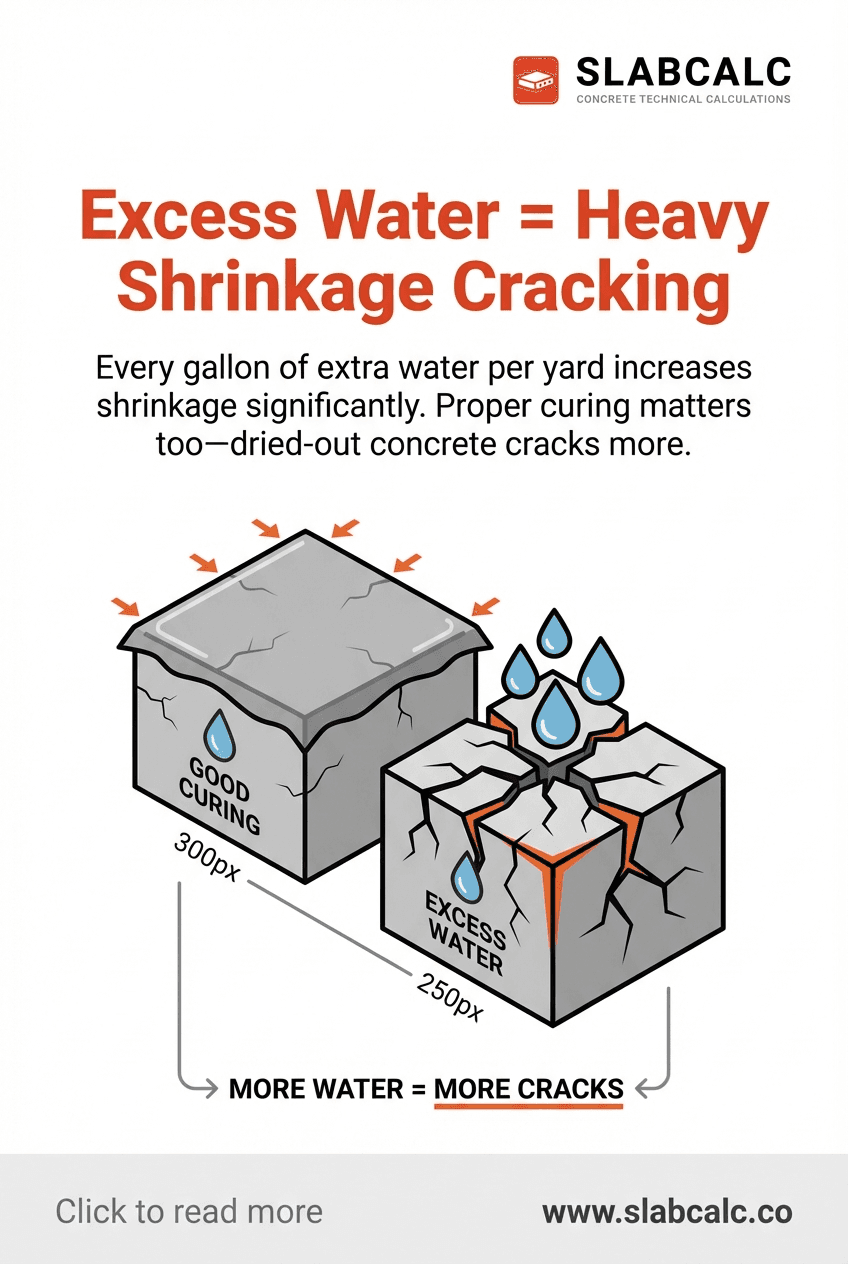
Excess Water = Heavy Shrinkage Cracking
The Material Spec That Stops Cracks Before They Start
The water-to-cement (w/c) ratio is your single most important defense against shrinkage cracking. Every extra gallon of water per cubic yard of concrete increases shrinkage by roughly 15–20%, and that shrinkage creates internal stress that becomes visible cracks within 2–6 weeks.
The industry standard for durable concrete is a w/c ratio of 0.45 to 0.55. This means no more than 45–55 pounds of water for every 100 pounds of cement. A typical 3,000 psi residential slab uses approximately 5.5 gallons of water per cubic yard at the correct ratio. Adding just 2 extra gallons pushes you to 7.5 gallons—a 36% increase that dramatically raises your cracking risk.
Why This Specification Matters for Your Concrete's Life
Water serves two purposes in concrete: it activates the cement (hydration) and makes the mix workable. But excess water doesn't stay in the concrete—it evaporates, leaving tiny voids behind. These voids weaken the concrete and create pathways for water infiltration, freeze-thaw damage, and rebar corrosion. A slab poured at 0.60 w/c instead of 0.50 can lose 15–25% of its design strength and durability.
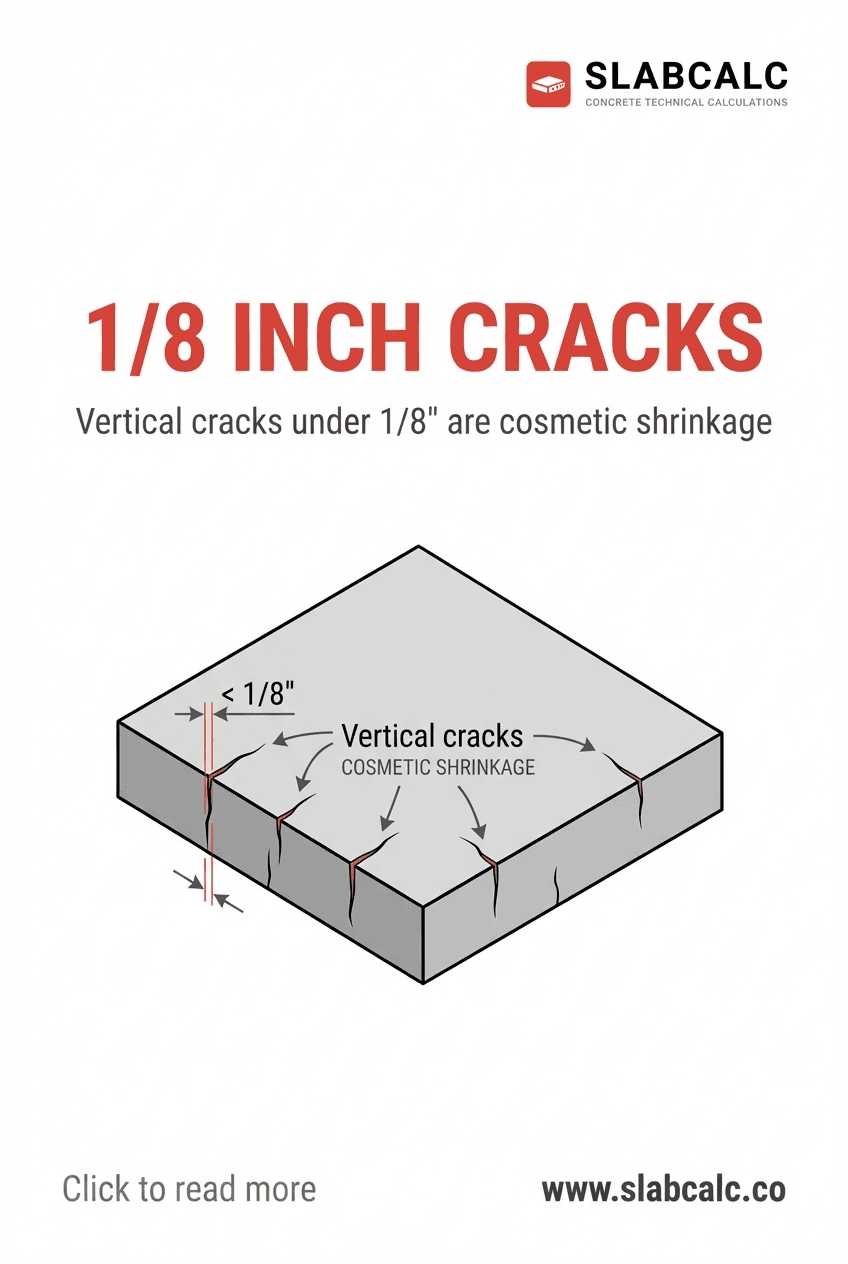
Beyond strength, high w/c ratios accelerate shrinkage cracking. The concrete shrinks unevenly as water leaves the surface faster than the interior, creating stress concentrations at weak points. Hairline cracks under 1/16 inch are normal at 2–4 weeks, but cracks wider than 1/8 inch appearing in the first month signal a water-heavy mix.
Proper Curing Prevents Rapid Evaporation
Specification is only half the battle. A correctly mixed slab still cracks if it dries too fast. Once your crew finishes the slab, apply curing compound within 10 minutes of final troweling, or cover the slab with polyethylene sheeting weighted at the edges. Proper curing keeps surface evaporation to roughly 0.1 lb/sq ft/hour instead of the 0.4–0.6 lb/sq ft/hour you'll see on an uncured slab in hot, windy conditions.
Maintain moisture for at least 7 days in normal weather (14 days in hot, dry climates). A slab that dries out in 2–3 days will develop plastic shrinkage cracks within the first 24 hours and larger drying shrinkage cracks at 1–2 weeks.
Sourcing Concrete with the Right Specification
When ordering from a ready-mix plant, always specify your w/c ratio in writing—don't rely on phone calls. Ask for a 0.50 w/c maximum and confirm it on the ticket before the truck leaves the yard. If your crew requests "good workability," remind them that adding water on-site is the most common source of failures.
Test the slump (workability) on arrival: a 4-inch slump is still workable for residential slabs and keeps w/c ratio low. If they deliver a 6-inch slump, water was added, and you should reject the load.
Use our concrete calculator to order the exact volume you need and avoid cold joints—another crack risk that compounds water-related problems. Proper planning, the right specification, and controlled curing eliminate 80% of shrinkage cracking issues before the first week ends.