
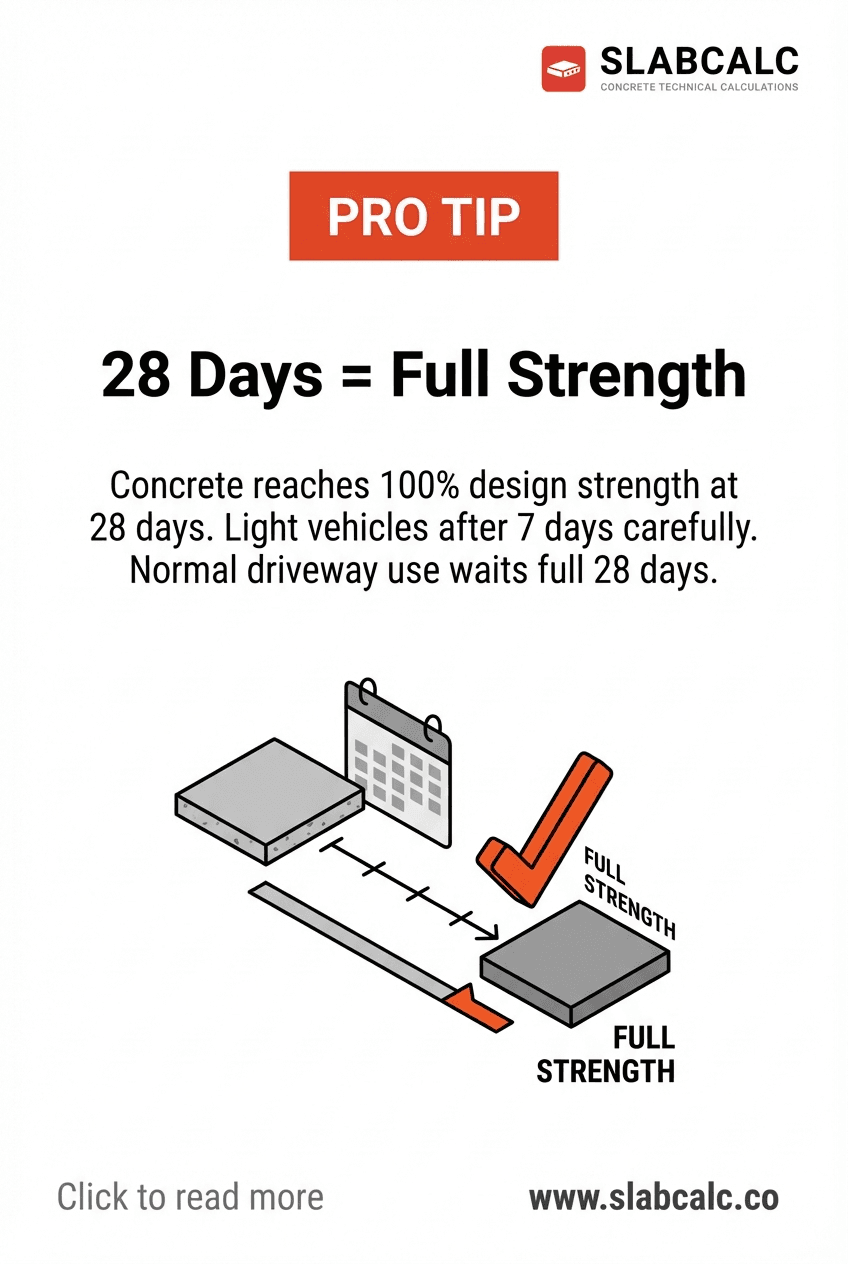
28 Days = Full Strength
The Mistake Almost Everyone Makes
You pour your driveway on a Saturday. By Wednesday, it feels rock-hard. Your neighbor parks on it. Your spouse drives over it carefully. Seems fine, right? Wrong. This is the most expensive mistake homeowners make with concrete—and it's invisible until cracks appear months later.
Most people confuse concrete feeling hard with concrete being strong. That's like thinking a teenager is fully grown because they're taller than a toddler.
The Professional Reality
Concrete reaches its design strength—the full 100% the engineer specified—at exactly 28 days. Not 21 days. Not when it feels hard. 28 days from the pour date.
Here's the strength progression professionals use:
- 7 days: 70% strength (light vehicles only, if you must)
- 14 days: 90% strength (still not full)
- 28 days: 100% strength (safe for normal use)
The magic number matters because concrete strength is measured in PSI (pounds per square inch). A standard driveway is designed for 4,000 PSI at 28 days. At 7 days, that same slab is typically only 2,800 PSI—still 30% weaker.
Why Timing Actually Matters
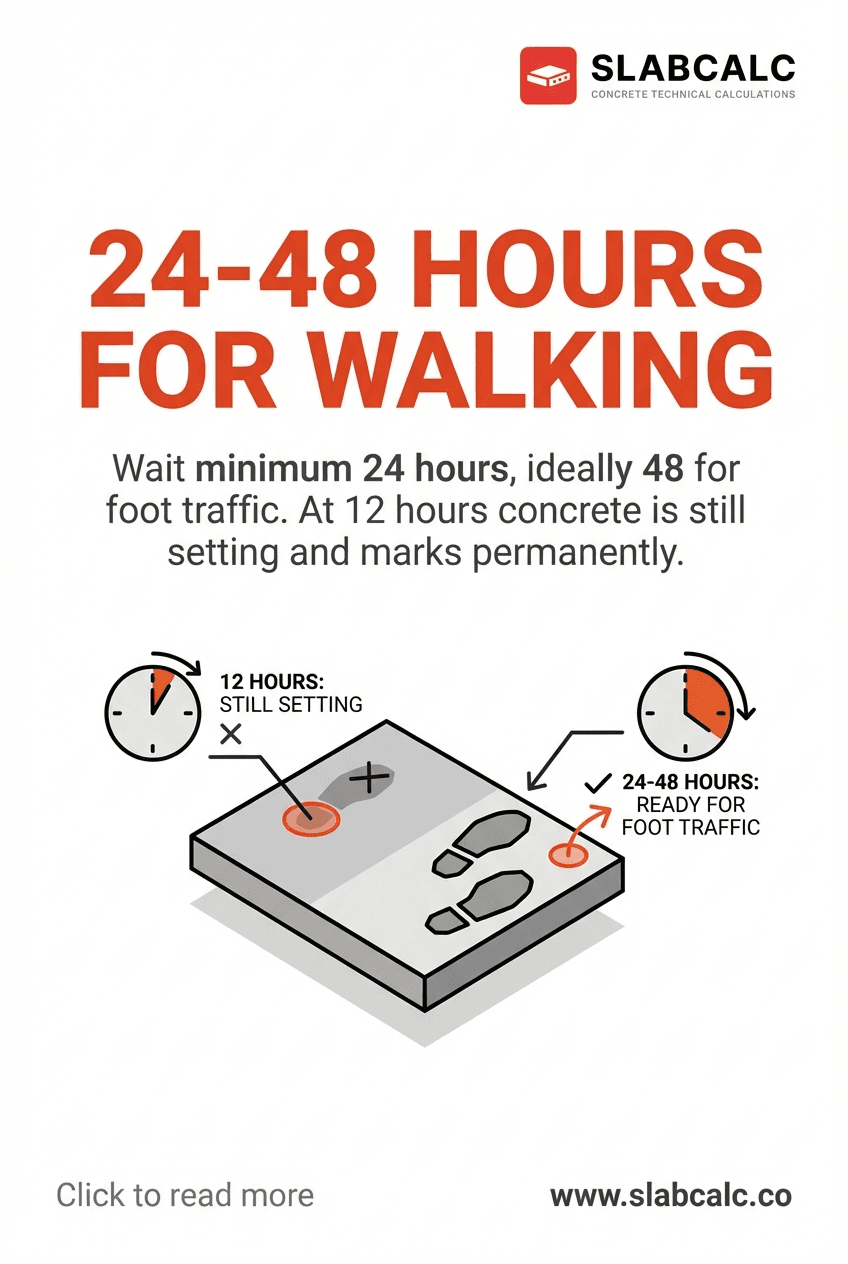
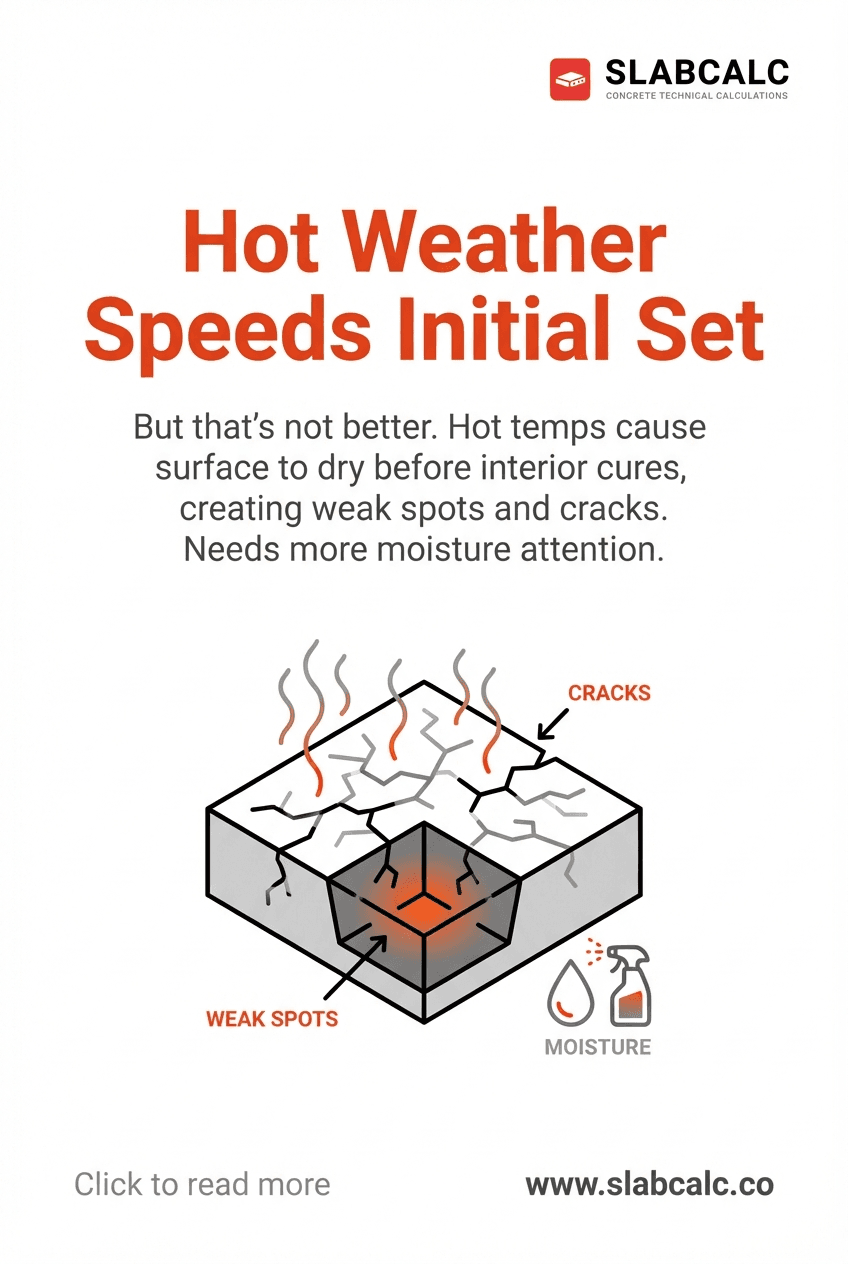
Concrete cures through hydration, a chemical reaction between cement and water. This reaction doesn't happen because the surface dries—it happens because moisture stays in the concrete. When you drive on concrete before full strength, you're applying stress while the crystalline bonds are still forming.
Think of it like baking bread. You can poke a loaf after 10 minutes and it'll feel firm. But take it out of the oven then, and it collapses. Concrete works similarly. The internal structure is still vulnerable.
Load it too early, and you create micro-fractures invisible to the naked eye. These fractures become the entry points for water, salt, and freeze-thaw cycles. By year 3, you're looking at spalling, potholes, and expensive repairs.
The 7-Day Rule (If You Must)
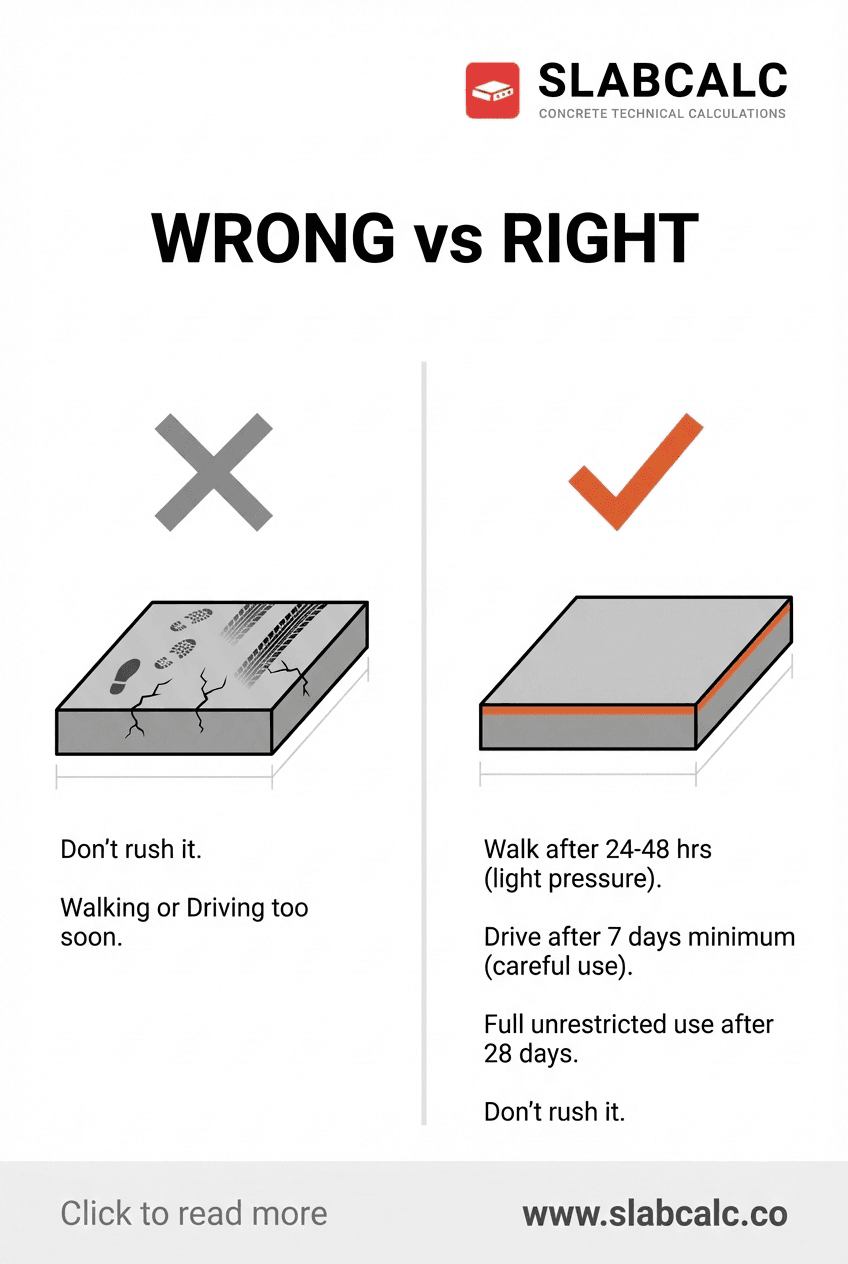
If you absolutely must use the driveway before 28 days:
- Wait minimum 7 days in normal conditions (50–70°F)
- Limit use to light vehicles only (cars, not trucks or RVs)
- Drive slowly and carefully—no hard turns or braking
- Avoid parking in the same spot repeatedly
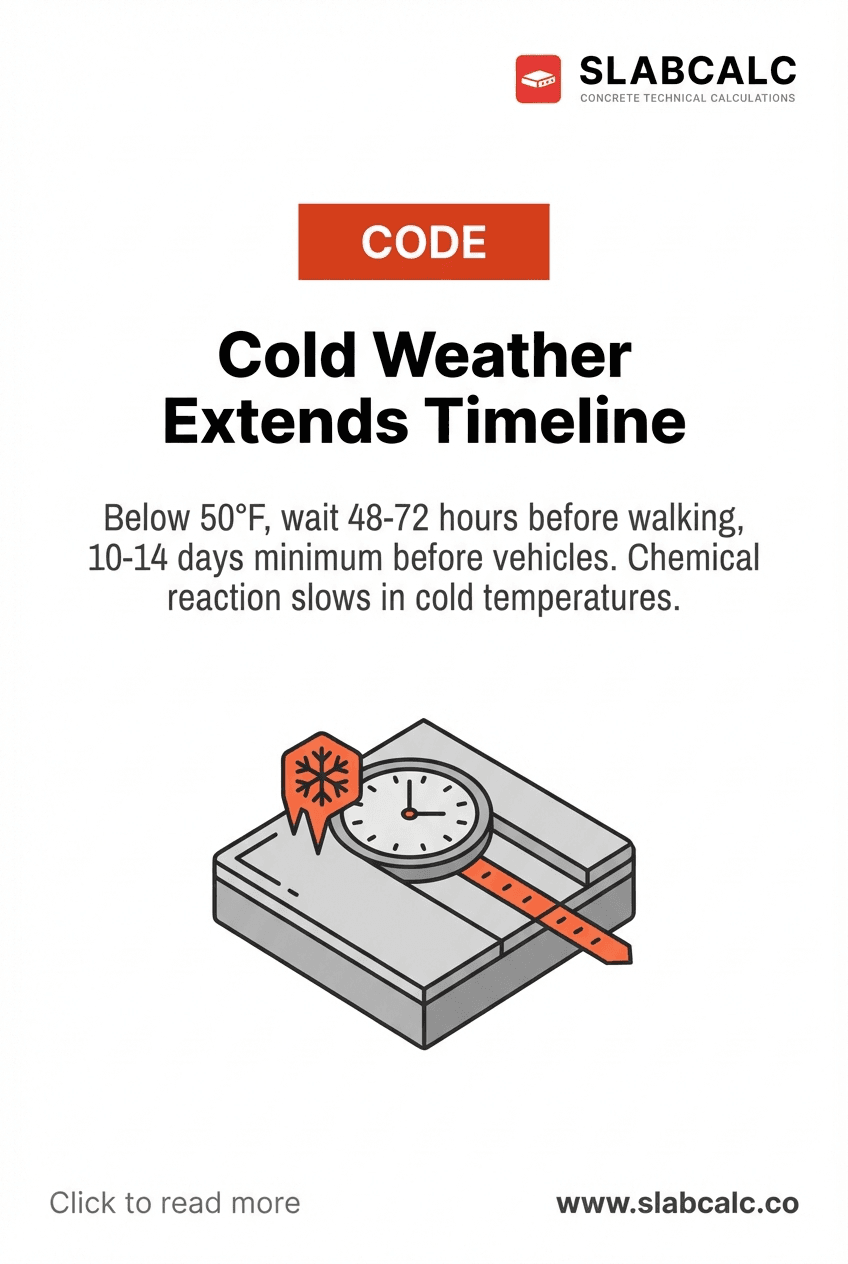
Cold weather extends this timeline dramatically. Below 50°F, concrete cures 2–3 times slower. At 40°F, you might not reach 70% strength until day 10–14.
The Professional Standard
Contractors don't take shortcuts with their own projects. Plan your work assuming 28 days of restricted access. Cover the slab with plastic to retain moisture. If it rains, that's actually helping—it's keeping the concrete wet for curing.
Mark your calendar. Count from pour day to day 28. That's when you can confidently use your driveway normally without risking expensive damage.
The extra three weeks of patience pays for itself the first time you avoid a premature crack repair that would cost $1,500–$3,000.