
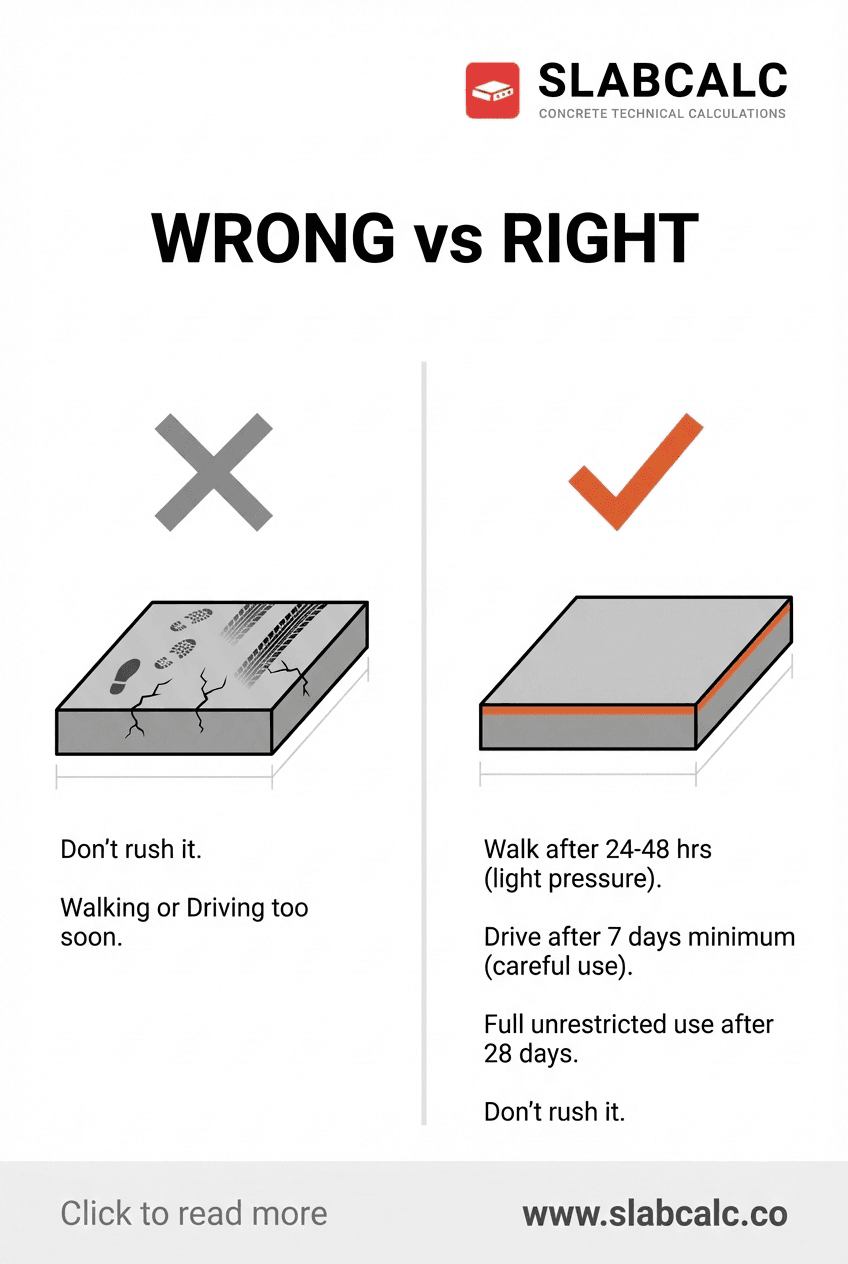
Walk vs Drive Timeline
One of the most common questions homeowners ask after pouring concrete is: "When can I use it?" The answer depends on what you mean by "use"—and waiting too long or not long enough can both damage your investment.
The Decision Tree: What Can You Do When?
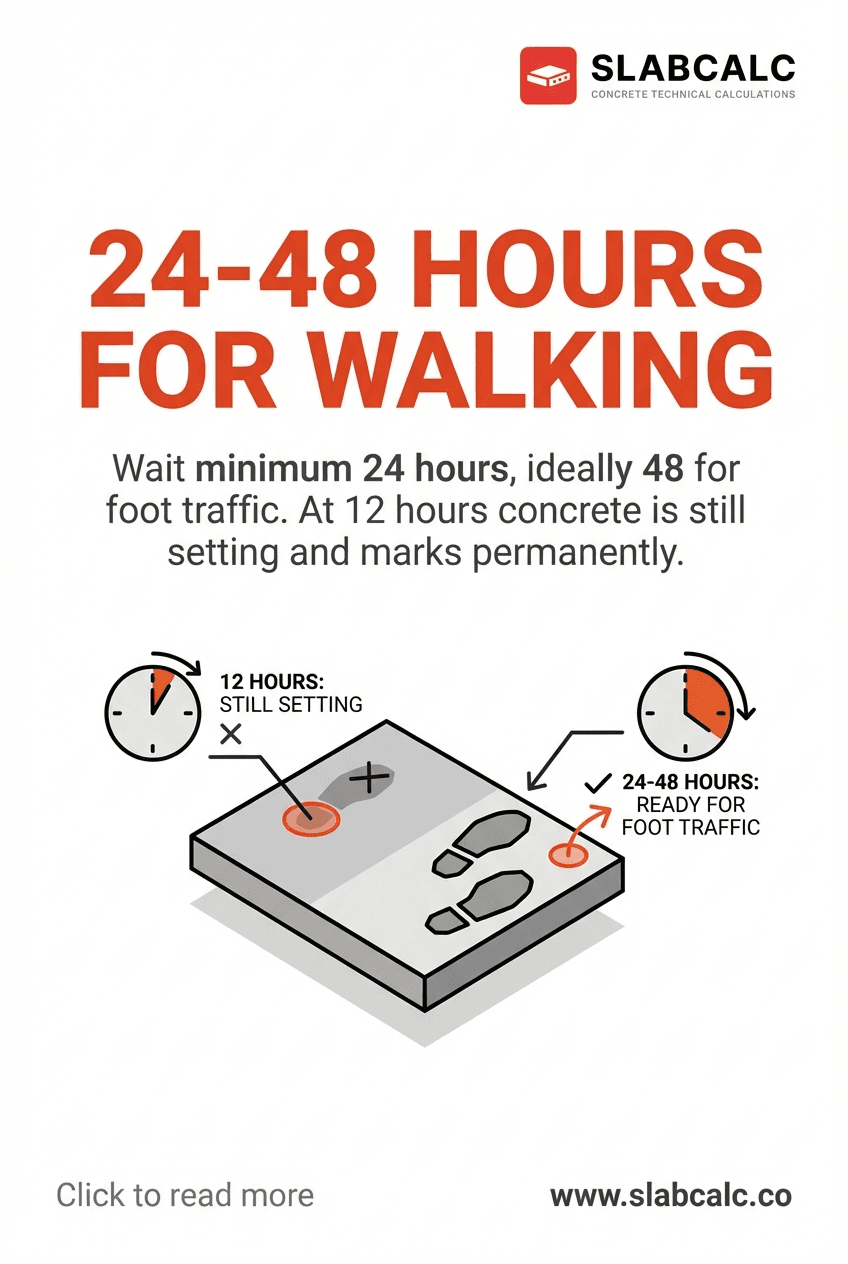
If it's been 24-48 hours: You can walk on it carefully. Light foot traffic is safe. Don't drag heavy items or stand in one spot for extended periods.
If it's been 3-7 days: You can use it for light activity. Wheelbarrows, lawn equipment, and foot traffic are fine. Vehicles are still too much.
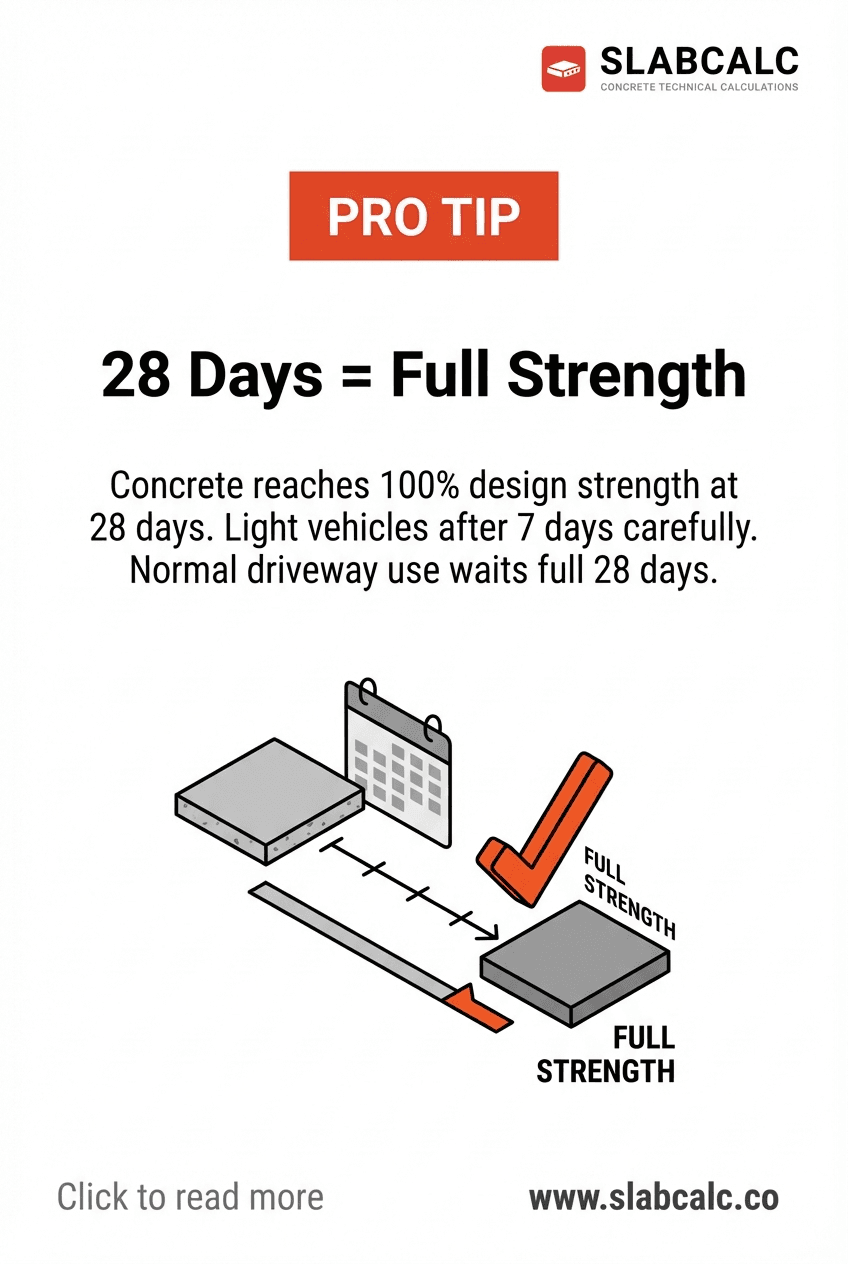
If it's been 7 days: You can drive on it cautiously. Light vehicles at low speeds are acceptable, but treat it as temporary permission, not unrestricted use.
If it's been 28 days: You have full unrestricted use. The concrete has reached 99% of its design strength. Drive normally, park heavy trucks, use it however you planned.
Why Curing Takes So Long
This is the part most DIYers miss: concrete doesn't cure by drying—it cures through a chemical reaction called hydration. Water and cement combine to form crystalline bonds that create strength. This process requires moisture and continues for weeks, even after the surface feels hard.
That's why professionals cover fresh concrete, mist it with water, or apply curing compounds. Letting concrete dry too fast actually weakens it. If you pour concrete in hot, dry weather and leave it uncovered, it may reach only 80% of its intended strength, even at 28 days.
Factors Most People Overlook
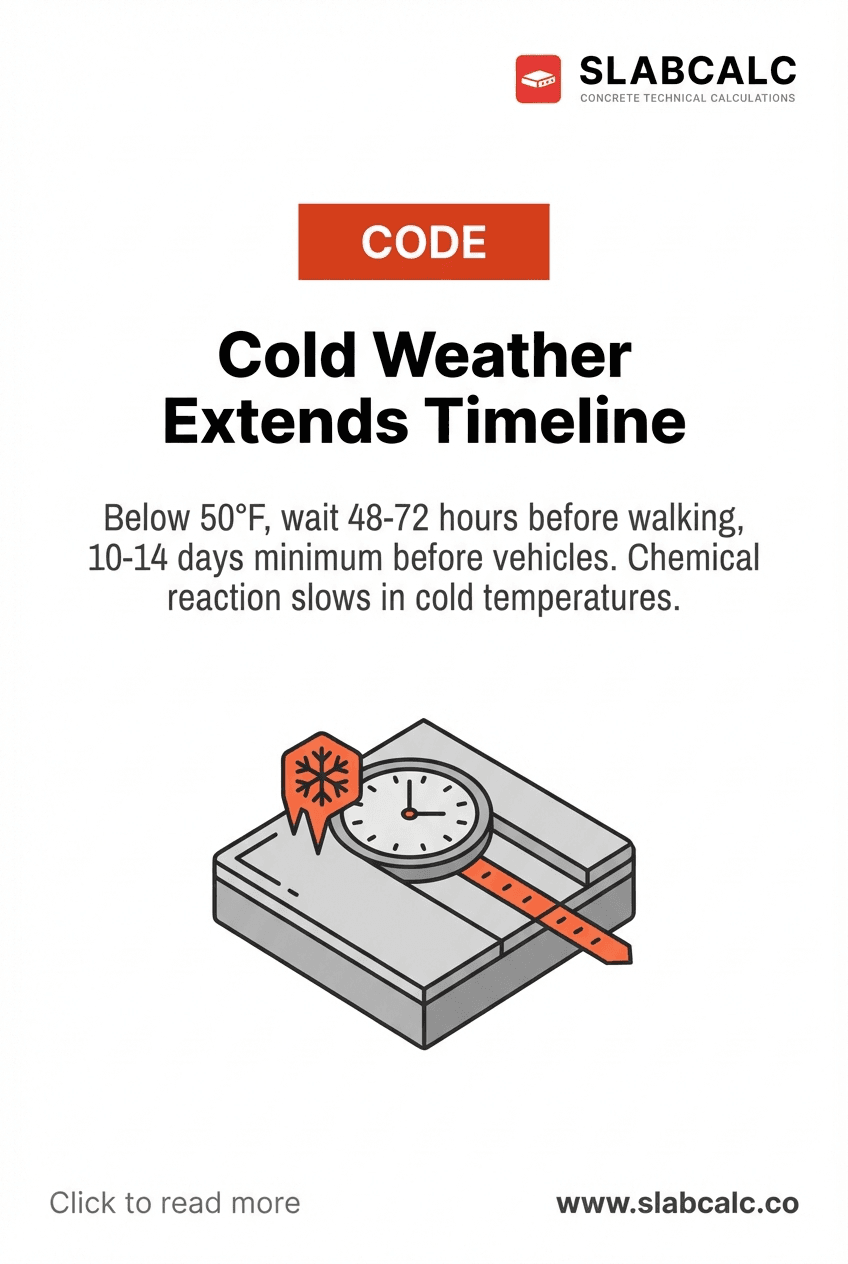
Temperature matters significantly. The 24-48 hour timeline assumes 50-70°F conditions. Cold weather (below 50°F) extends everything:
- Wait 48-72 hours before walking
- Wait 10-14 days before driving
- Don't use the slab normally until 35-42 days have passed
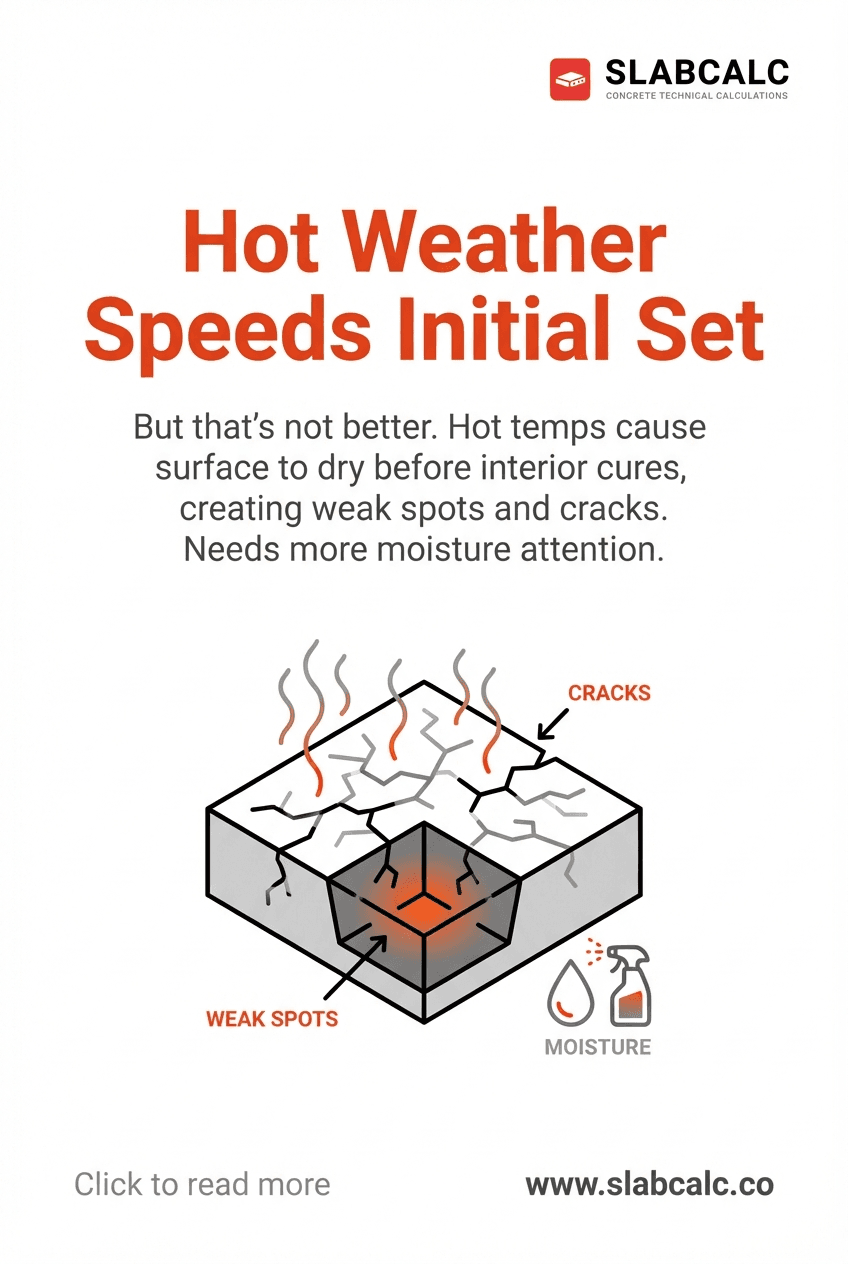
Hot weather (above 80°F) actually speeds things up slightly, but introduces different risks—the surface may harden quickly while the interior is still soft.
Concrete strength at common intervals (ideal conditions):
- 24 hours: ~40% strength
- 7 days: ~70% strength
- 28 days: ~99% strength
Edge vulnerability is another overlooked factor. Edges and corners take longer to develop strength than the center of the slab. They're also the most likely places for damage. Stay away from edges for the first week.
The 28-Day Standard Explained
Building codes and structural engineers assume 28 days for design strength. This is when concrete has fully cured under normal conditions. It's not arbitrary—it's the engineering minimum that guarantees the strength you paid for.
Shortcuts like "I drove on it at day 4 and it was fine" miss the point. Early use might not visibly damage fresh concrete, but it can create internal micro-fractures that reduce lifespan and durability.
Final Recommendation
Plan for 28 days of restricted use. Walk on it after 2 days. Let it rest from vehicles until day 7. Live with light-duty use only until day 28. This single decision protects your concrete's structural integrity and extends its lifespan by years.