
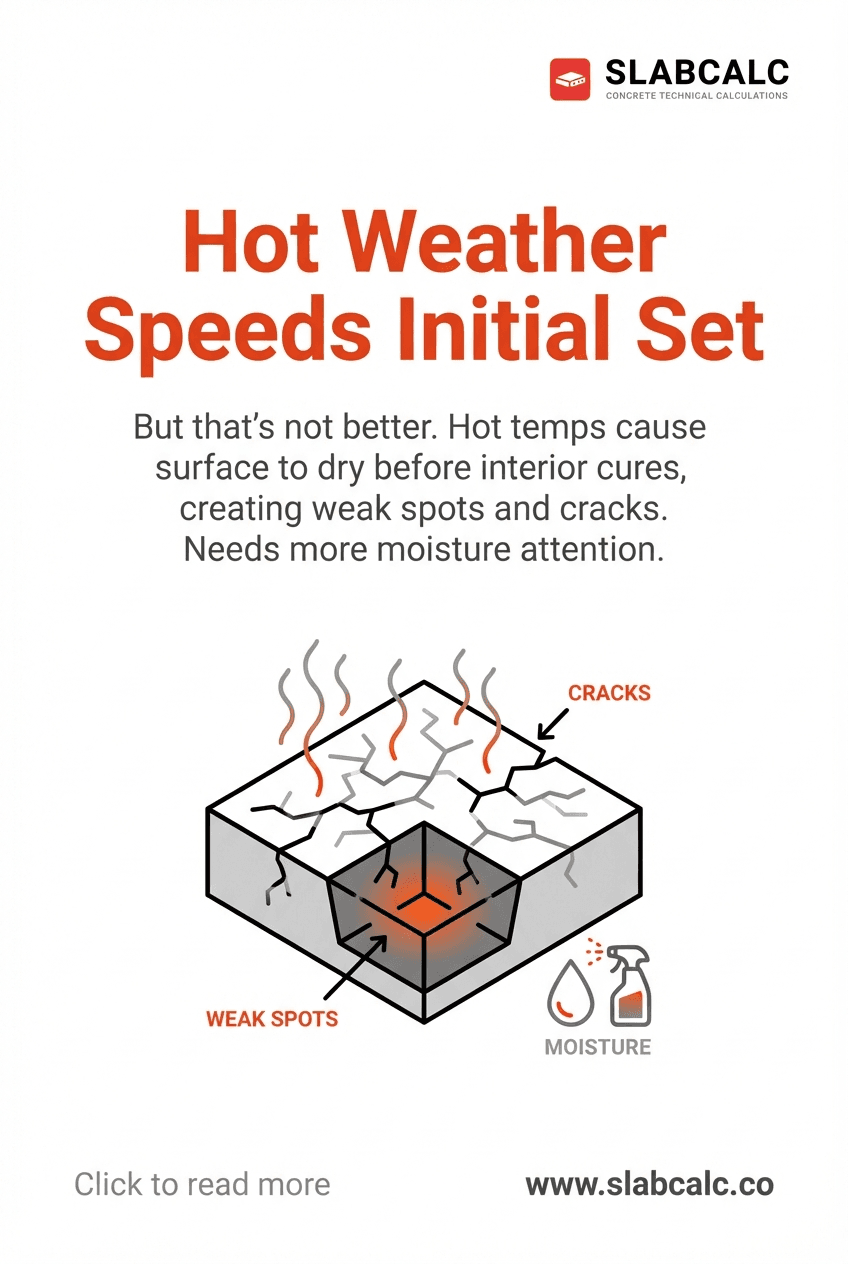
Hot Weather Speeds Initial Set
The Deceptive Problem with Hot Weather
When temperatures climb above 80°F, your concrete's surface firms up in 2–3 hours instead of the standard 4–6 hours. On the surface, this seems like a bonus—you can remove forms faster and get moving with your project. But this is a trap. Fast surface set masks a critical problem: the interior is still curing while the exterior is already drying out.
Concrete strength comes from the hydration reaction between cement and water. This chemical process needs moisture to continue working throughout the slab's depth. When hot weather dries the surface too quickly, that outer layer becomes a moisture barrier. The interior concrete can't access the water it needs to cure properly, leaving you with a weak exterior shell around an incompletely cured core.
Why This Creates Lasting Damage
The result is a slab with serious structural weaknesses. Early-age cracks typically appear within 24–72 hours in hot conditions—sometimes as a network of fine hairline fractures, sometimes as wider structural cracks. These aren't cosmetic. They compromise the slab's ability to handle loads and accelerate long-term deterioration.
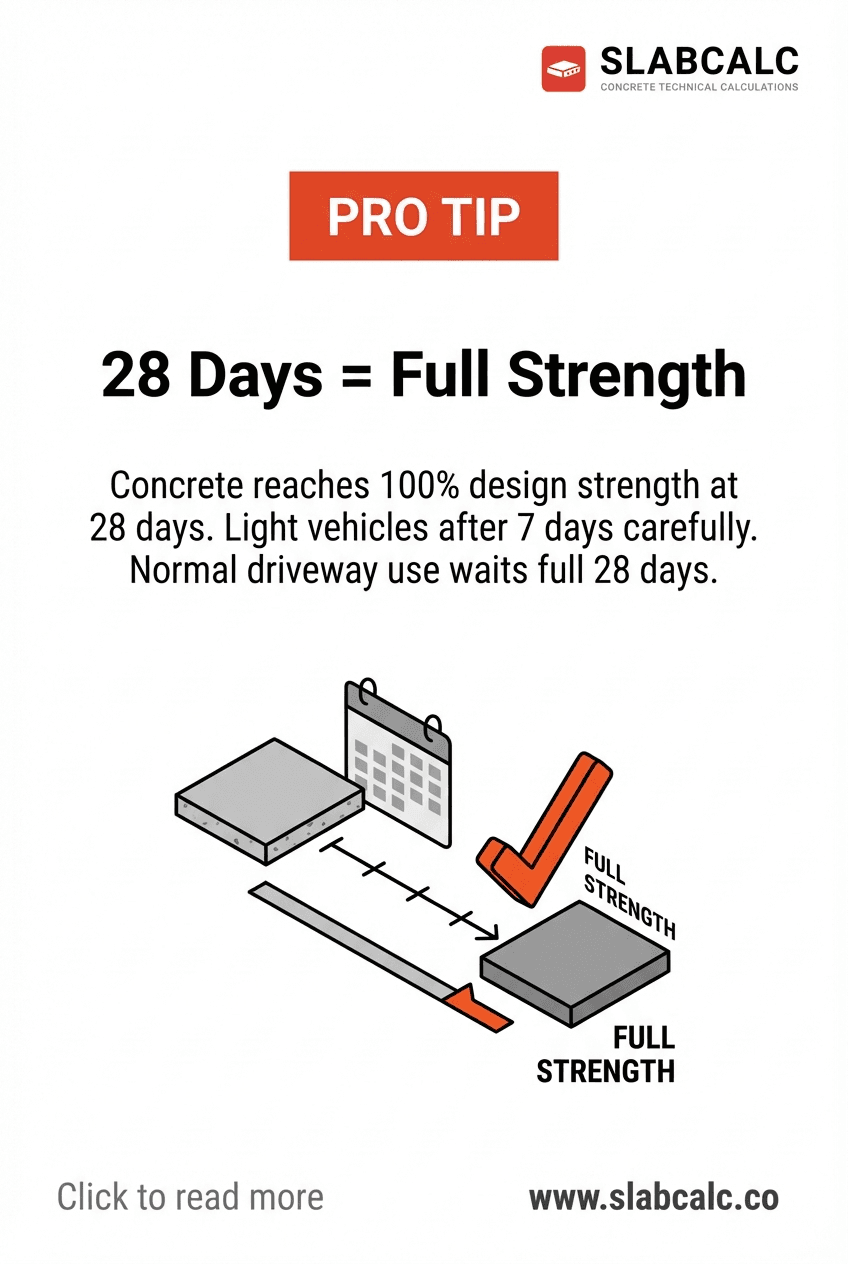
A properly cured concrete slab reaches 99% of its design strength by day 28. A slab that dried too fast may never reach that strength, even after months or years. You've essentially locked in permanent weakness from day one.
The cost difference is striking. Fixing improper curing later—through epoxy injection, grinding, or complete replacement—runs $500–$3,000+. Preventing the problem costs nothing.
Material Spec: Moisture Retention Strategy
The specification: Maintain surface moisture for a minimum of 7 days in temperatures above 80°F. This overrides the standard "initial set" timeline.
Concrete professionals use one of three proven approaches:
1. Misting and wet burlap (most effective, labor-intensive)
- Spray the surface with a fine mist every 2–4 hours for the first 7 days
- Cover with wet burlap, plastic, or curing blankets
- Keep the blanket damp, not soggy
- Cost: ~$30–$80 in materials
2. Liquid curing compound (convenient, reliable)
- Apply a clear or white sealer immediately after finishing
- Creates a vapor barrier that traps internal moisture
- Reapply per manufacturer instructions
- Cost: ~$40–$100 for a standard driveway
3. Plastic sheeting (budget option, requires discipline)
- Place 4-mil plastic over the entire slab
- Tape edges to prevent air gaps
- Leave in place for 7 days
- Cost: ~$15–$30
Hot Weather Timeline Adjustment
In temperatures above 85°F, extend all cure times by 24 hours:
- Initial set: 3–4 hours (don't finishing until firm)
- Remove forms: 48–72 hours (not 24–48)
- Light traffic: 4–8 days (not 3–7)
- Full cure: 28 days (unchanged, but interior curing continues longer)
Sourcing Your Moisture Control
Quality curing compounds are available at any concrete supply house. Products like Cona-Crete Cure or Armorpoxy are industry standards. For burlap and plastic, home improvement stores stock everything you need. The key is buying enough—most DIYers underestimate coverage by 20–30%.
Bottom line: Hot weather doesn't give you a shortcut. It demands extra attention. Invest 7 days of careful moisture management now and your concrete will outlast your house.