
24-48 HOURS FOR WALKING
The Critical Number: 24-48 Hours
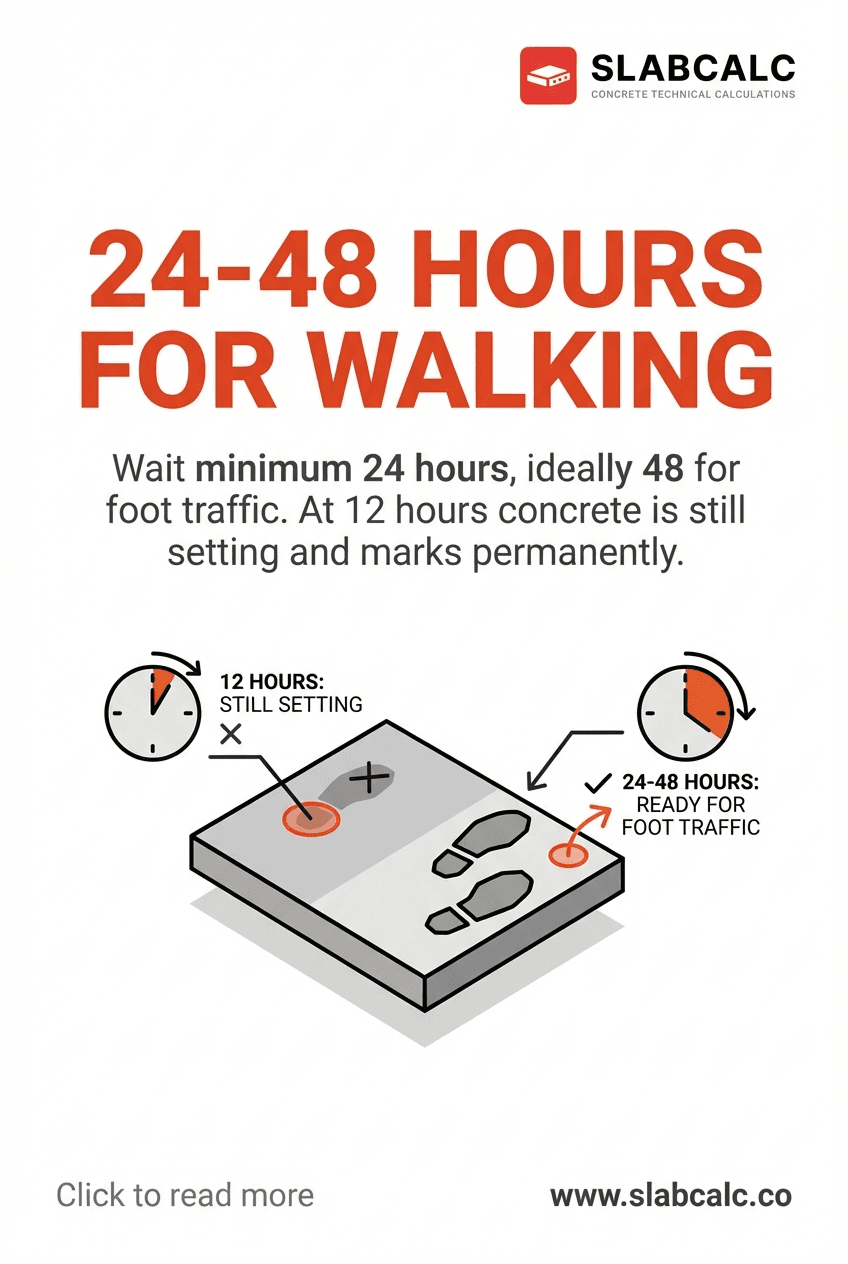
Do not walk on fresh concrete before 24 hours have passed. Ideally, wait the full 48 hours. This single number will protect your investment and prevent costly repairs.
At the 12-hour mark, concrete looks solid but isn't. The surface has firmed up enough to be walked on without immediately collapsing, but it will still accept permanent marks, footprints, and indentations. Damage at this stage isn't surface damage—it's structural. You're actually pushing uncured material deeper into the slab, creating weak points that will fail under load later.
Why This Timeline Matters
Concrete strength comes from a chemical reaction called hydration. When Portland cement powder meets water, microscopic crystalline bonds begin forming. This isn't a drying process—it's an ongoing chemical transformation that requires moisture to complete successfully.
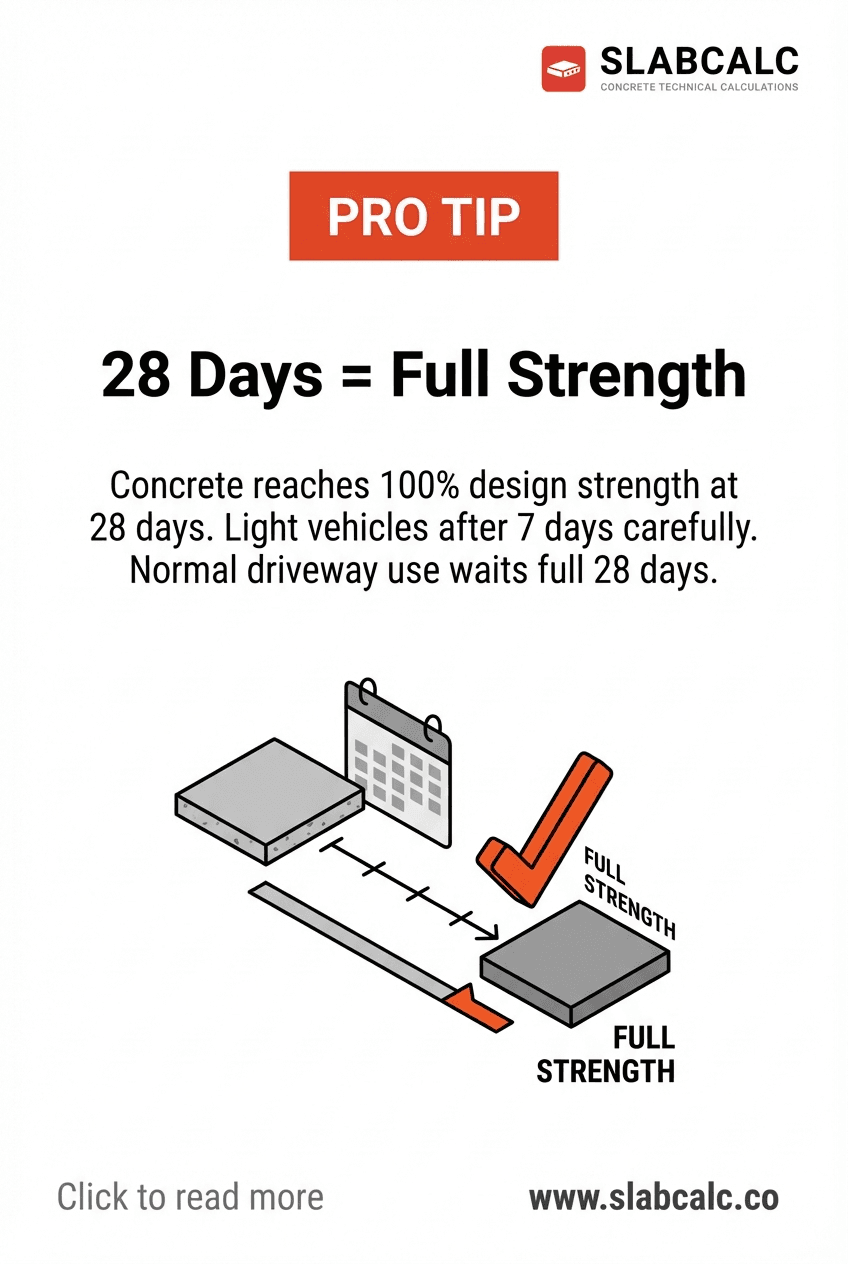
At 24 hours, concrete typically reaches 50-60% of its final strength. At 48 hours, you're closer to 70-75%. This is enough to support careful foot traffic without permanent damage. But the reaction keeps going. Full strength takes 28 days, which is why you shouldn't drive on a new driveway for a week minimum.
Temperature Changes Everything
The 24-48 hour window assumes ideal conditions: temperatures between 50-70°F with proper moisture.
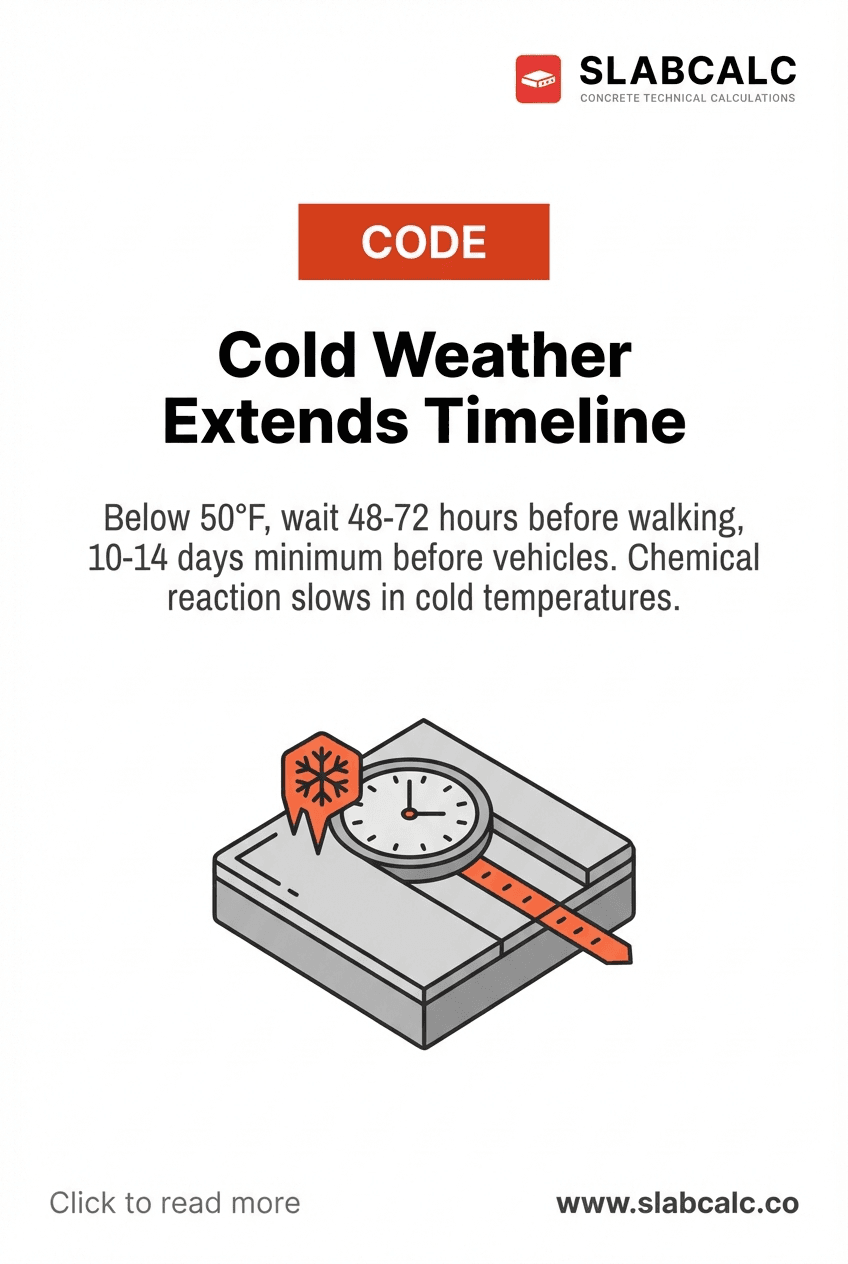
Cold weather extends curing:
- Below 50°F: add 24-48 hours to every timeline
- Below 40°F: concrete cures very slowly; expect 72+ hours before foot traffic
- Freezing weather: do not attempt to cure concrete; it won't develop strength properly
Hot weather speeds it up slightly:
- Above 80°F: 24 hours is usually safe for foot traffic
- Above 90°F: watch for rapid surface drying, which actually weakens concrete. Keep it moist with a light mist or covering
Humidity also matters. Dry conditions pull moisture out of concrete too quickly, preventing proper hydration. This is why professionals cover fresh slabs with plastic sheeting or apply curing compounds.
Practical Application for Your Project
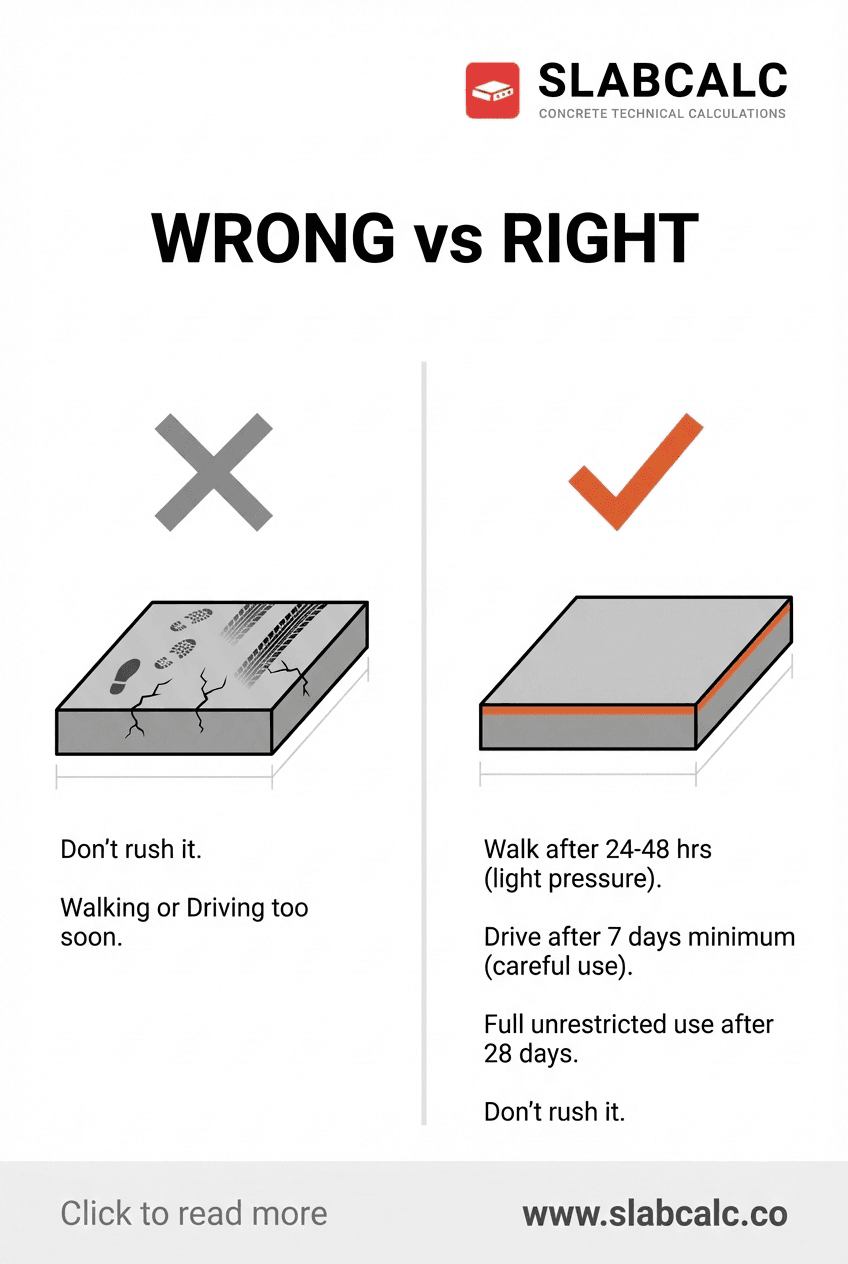
Before 24 hours: Keep everyone off the concrete—kids, pets, and yourself. Don't set tools, lumber, or equipment on the slab. This includes wheeled carts or dollies, which leave permanent marks.
At 24 hours: Light foot traffic is acceptable. Walking carefully across the slab to retrieve a tool or check progress won't cause damage. Avoid dragging anything.
At 48 hours: You can walk freely across the slab. Move light materials if needed, but don't park equipment or vehicles on it.
At 7 days: You can carefully drive light vehicles (like a car or small truck) on the concrete.
At 28 days: Full strength is reached. Now you can use the slab for its intended purpose—parking vehicles, heavy equipment, or regular traffic.
Mark your calendar. Take a photo of the date you pour. Set phone reminders for the 24-hour and 48-hour milestones. This simple discipline prevents the permanent damage that happens when impatient crews or homeowners walk on concrete too early. The wait is worth it.