
Cold Weather Extends Timeline
The Code Requirement
The American Concrete Institute (ACI) and International Building Code (IRC) don't specify one universal cure time—they specify conditions. Both standards require concrete to reach adequate strength before use, with the critical variable being temperature. Below 50°F, the hydration process (the chemical reaction that hardens concrete) slows dramatically. This is why ACI 308 recommends extended curing periods in cold climates: 48–72 hours minimum before foot traffic, and 10–14 days before vehicle traffic when temperatures stay below 50°F.
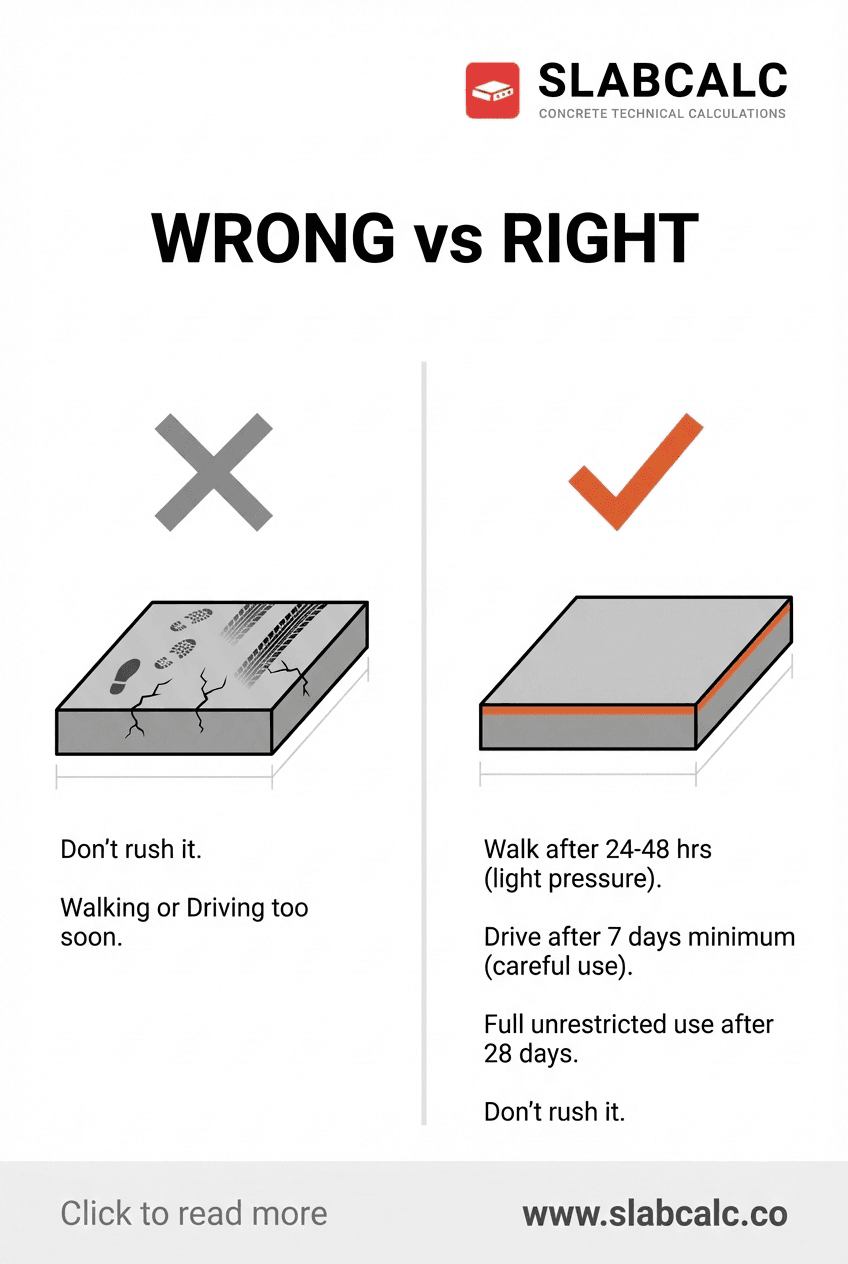
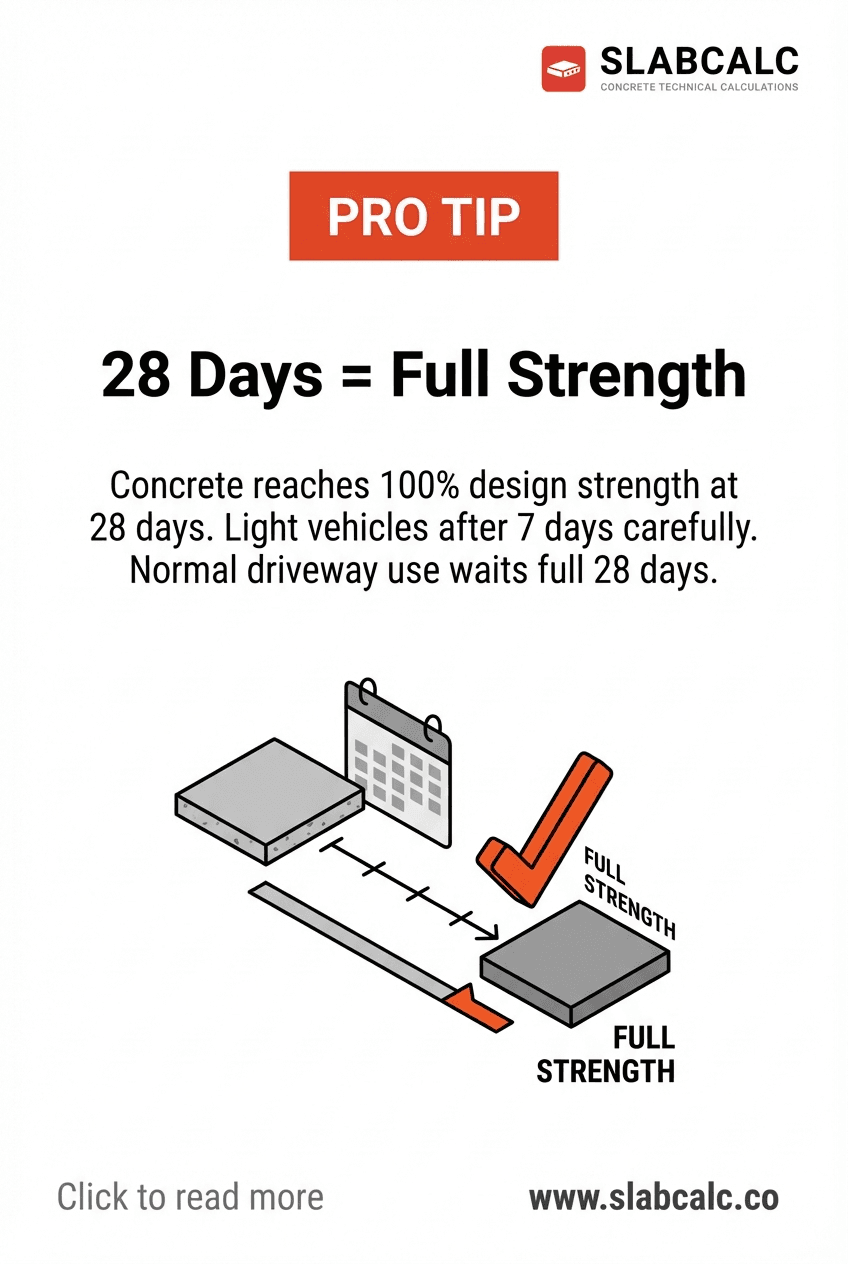
Many homeowners and DIYers follow standard timelines (7 days for driving) without accounting for weather, which violates these code requirements and risks permanent damage to the slab.
Why Cold Slows the Cure
Concrete doesn't cure by drying—it cures through hydration, a chemical reaction between cement and water. Chemical reactions slow in cold temperatures. For every 10°F drop below 70°F, the hydration process roughly halves in speed.
At 70°F, concrete reaches 50% strength in about 7 days. At 50°F, that same 50% strength takes 14–21 days. At 40°F, you're looking at 4–6 weeks. At freezing (32°F) or below, hydration nearly stops entirely. If concrete freezes before reaching 500 psi (roughly 24 hours at normal temperature), ice crystal formation can permanently damage the internal structure, creating weakness that no amount of additional curing fixes.
Practical Implications for Your Project
If you're pouring in fall, winter, or in a cold climate, plan for a longer project timeline. A driveway that would normally be ready for vehicle traffic in 7–10 days might require 3–4 weeks below 50°F.
What you can do:
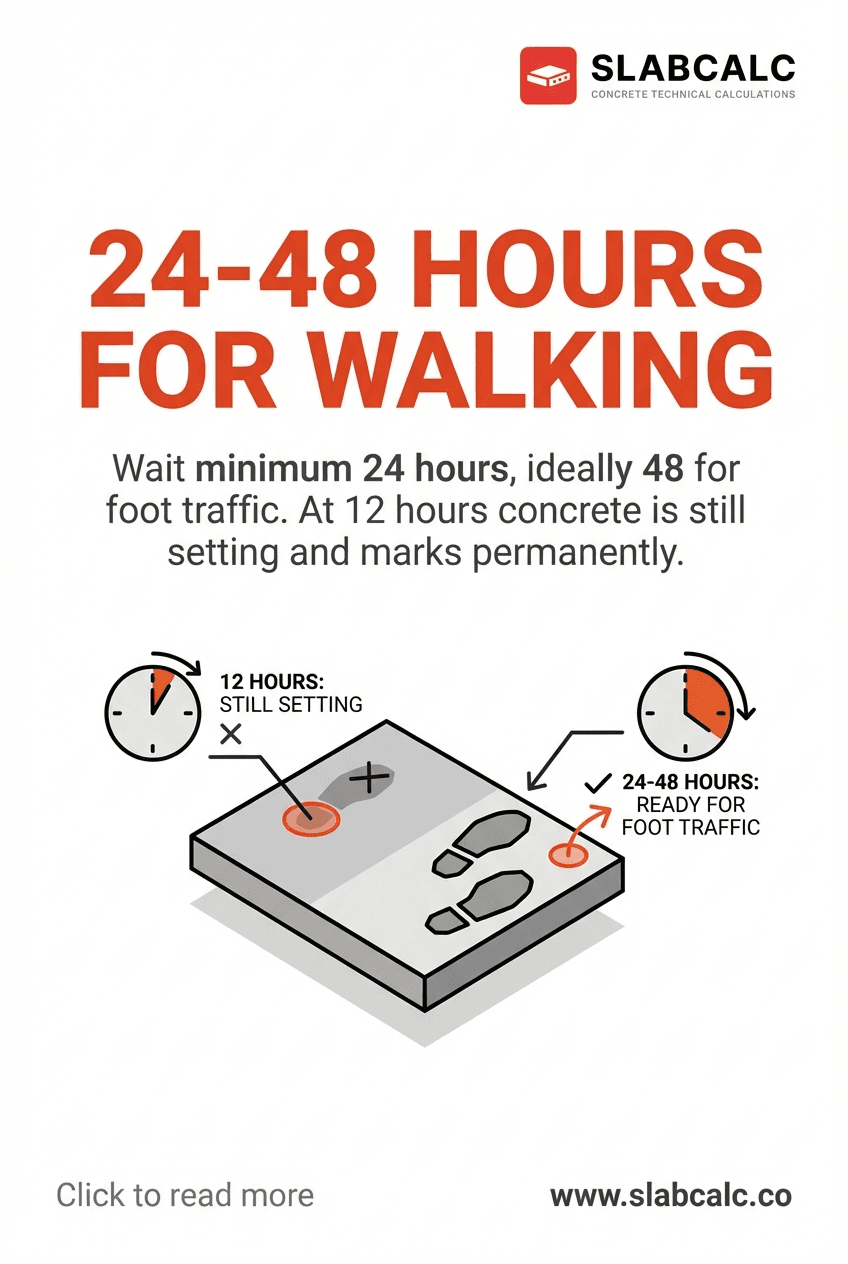
- Wait longer. Don't walk on the slab for 48–72 hours in cold weather; don't drive on it for 10–14 days minimum.
- Use concrete additives. Accelerators contain calcium chloride or other chemicals that speed hydration even in cold. They can reduce cure time by 30–50%.
- Protect the slab. Covering concrete with plastic or blankets retains heat and moisture, speeding the cure. Keep the surface moist by misting with water every few hours for the first 24–48 hours.
- Check the forecast. Avoid pouring if temperatures will drop below 40°F within 72 hours of placement.
Common Violations
The most frequent mistake is assuming standard timelines apply regardless of weather. Homeowners let cars on driveways after 7 days in cold weather, not realizing the concrete hasn't reached adequate strength. This causes surface spalling, cracking, and rebar exposure—problems that are expensive or impossible to fix.
Another violation: removing forms too early in cold weather. Forms provide lateral support while concrete is weak. Removing them after 24 hours in summer is safe; in 40°F weather, concrete may still be too soft and can sag or crack under its own weight.
The Bottom Line
Cold weather is a major variable in concrete curing. If temperatures stay below 50°F, double or triple the standard timeline. Check ACI 308 for your specific climate zone, use a concrete calculator that accounts for weather, and when in doubt, wait longer. A few extra days of patience now prevents months of problems later.