
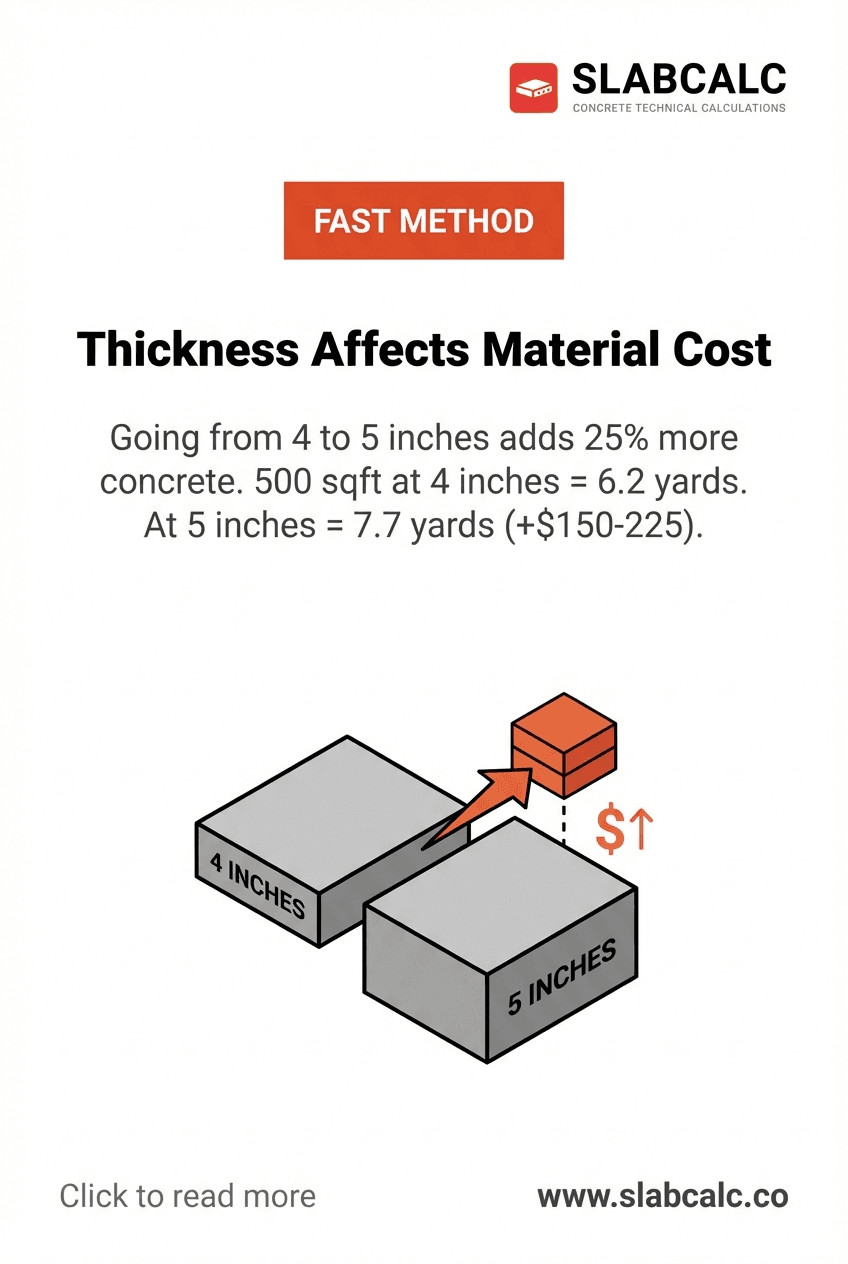
Thickness Affects Material Cost
The Slow Way vs. The Fast Way
Slow way: Pour at 4 inches because it's cheaper upfront, then watch your driveway fail in 10 years and pay twice.
Fast way: Calculate the real cost difference between thicknesses before you order concrete and make an informed decision once.
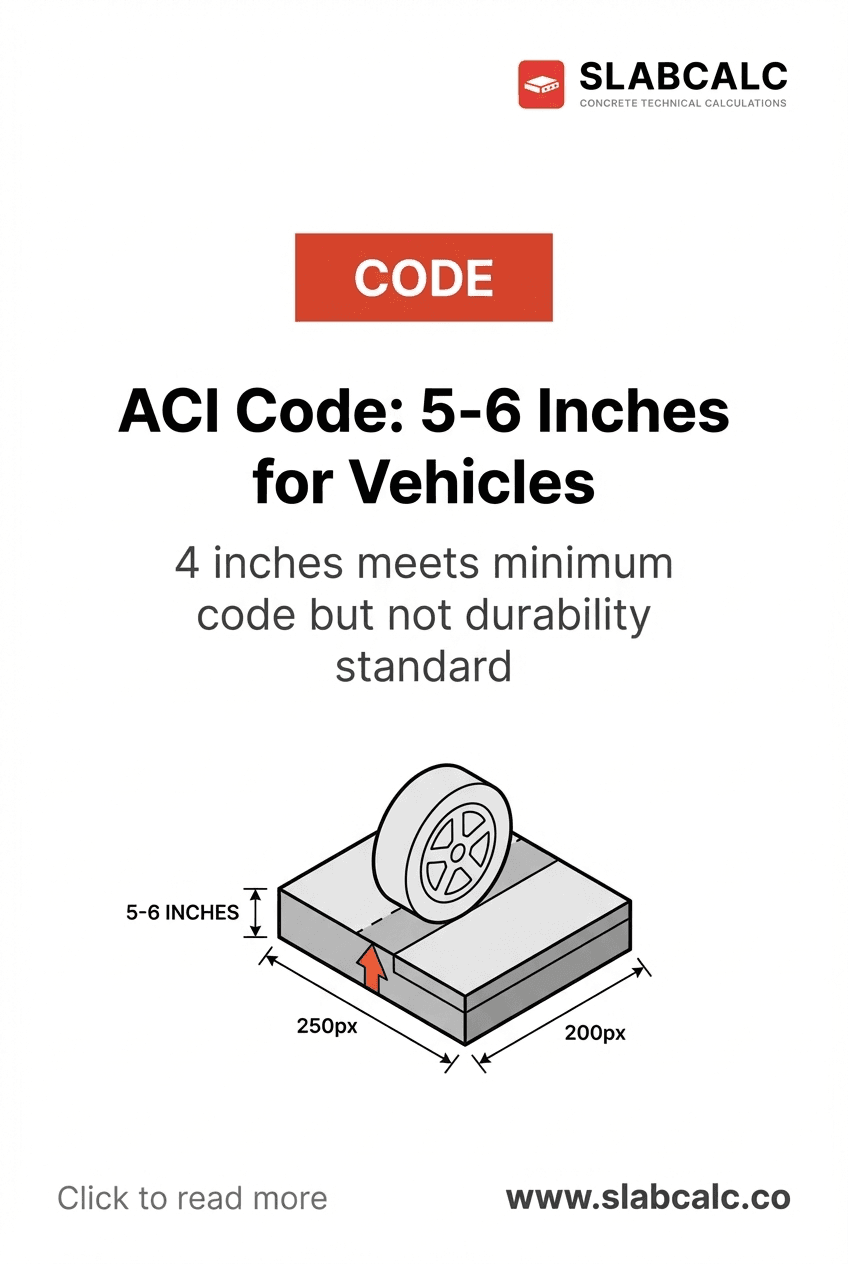
A 500-square-foot driveway at 4 inches requires 6.2 cubic yards of concrete. Jump to 5 inches, and you need 7.7 cubic yards—that's a 25% increase in material volume. At $150 to $225 per extra yard (depending on your region), you're looking at an additional $150–$225 total.
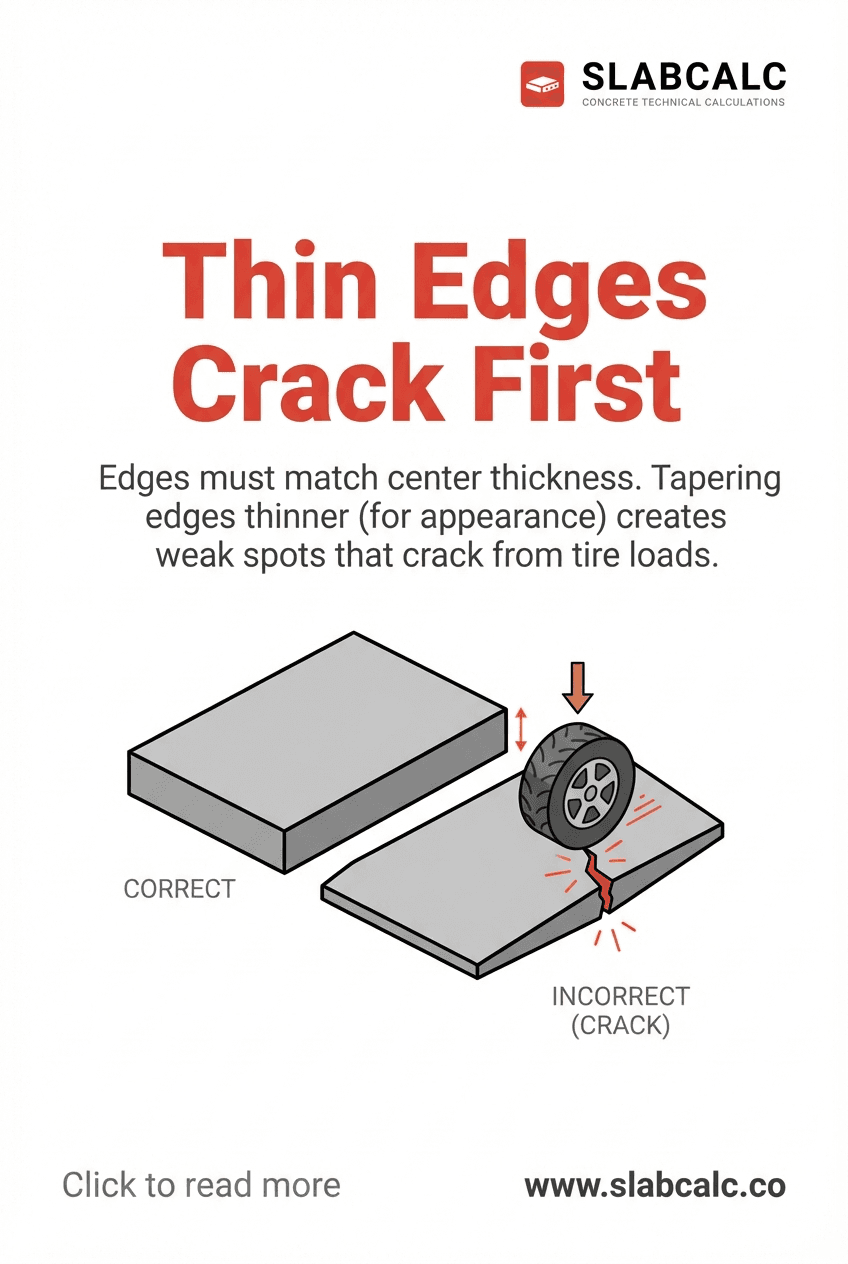
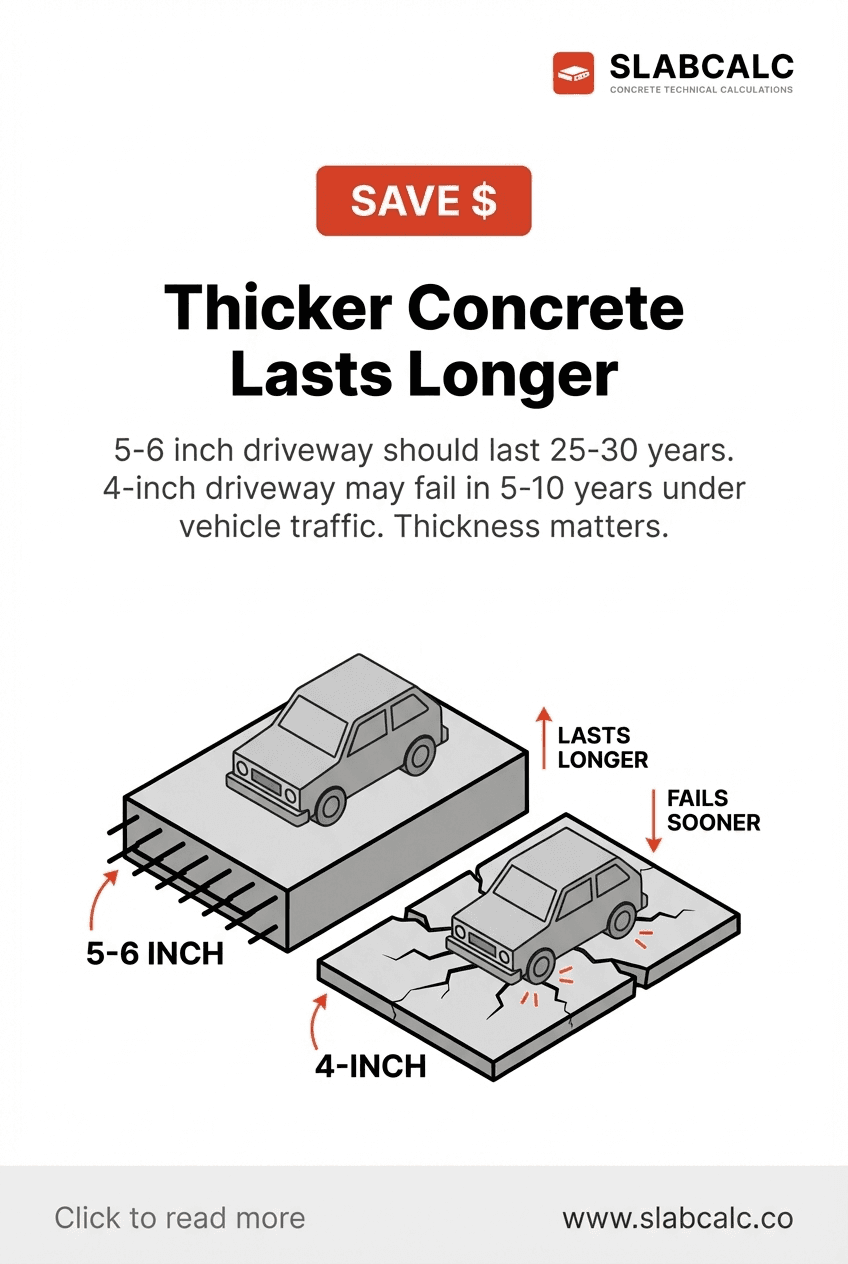
Sounds steep? Here's the reality check: a 4-inch driveway typically needs replacement in 10–15 years due to edge cracking, freeze-thaw damage, and flexing under vehicle loads. A properly thickened 5–6 inch driveway lasts 25–30 years. You're comparing a one-time upfront cost of $150–$225 against a full driveway replacement (typically $2,000–$4,000) within 15 years.
Understanding the Math on Material Volume
Concrete is sold by the cubic yard. One yard covers different areas depending on thickness:
- 4 inches: One yard covers 81 square feet
- 5 inches: One yard covers 65 square feet
- 6 inches: One yard covers 54 square feet
For your 500-square-foot project:
- 4 inches = 6.2 yards × $85/yard = ~$527
- 5 inches = 7.7 yards × $85/yard = ~$654
- 6 inches = 9.3 yards × $85/yard = ~$790
That $127–$263 difference is the price of avoiding early failure. Concrete pricing varies by region ($75–$110 per yard), so calculate your exact numbers with SlabCalc's concrete slab calculator.
When Thickness Really Matters
Not every driveway needs 6 inches. Here's when it does:
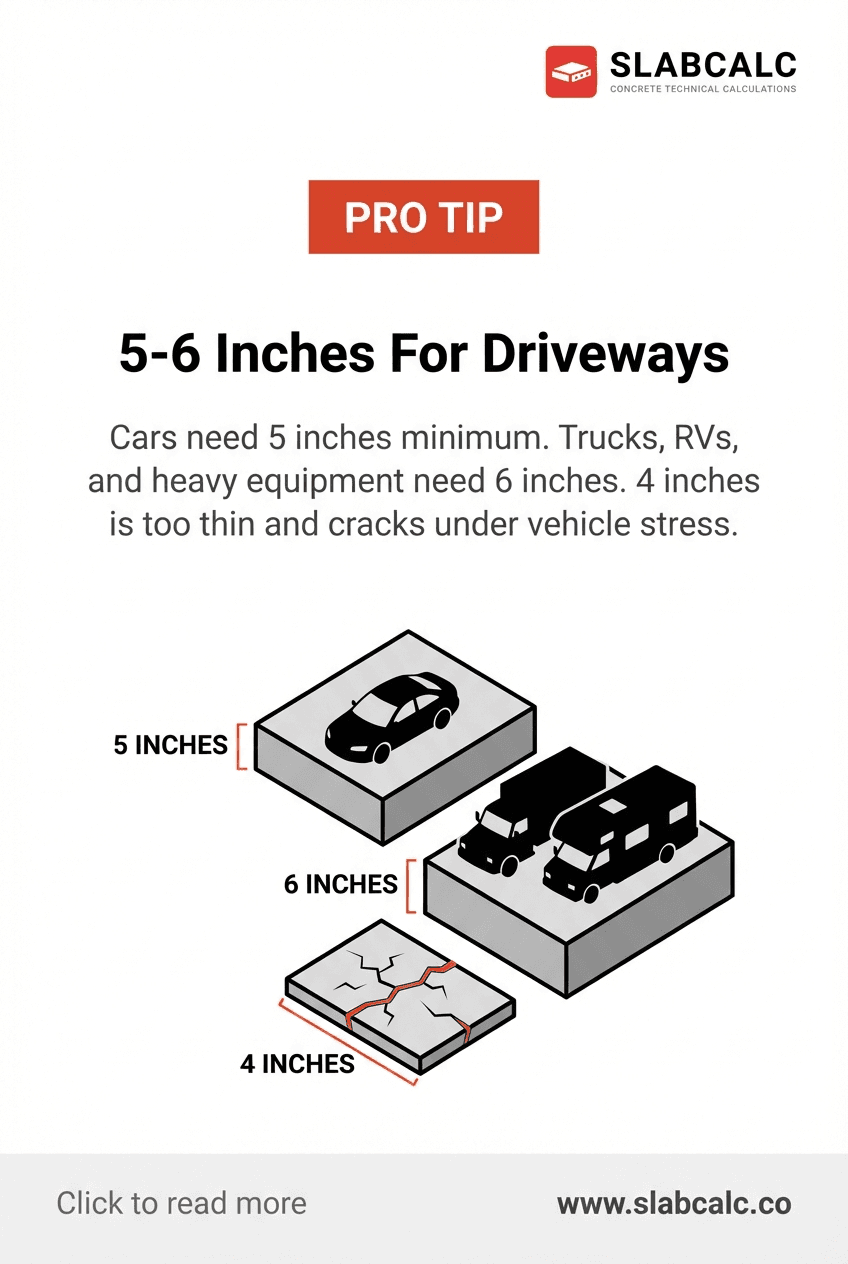
Stick with 5 inches if your household has passenger cars and light SUVs as primary vehicles, and your soil is reasonably stable (no clay, sand, or expansive soils).
Go to 6 inches if you have:
- Heavy trucks or large work vehicles regularly parked or turning on the driveway
- Poor soil conditions (clay, sandy, or wet soil)
- Frequent deliveries or commercial vehicle access
- RV or boat trailer storage
Use 6–8 inches for dedicated commercial access routes or areas with historically poor soil performance.
The Bottom Line
Thickness isn't just about durability—it's about math. A 25% material increase ($150–$225) prevents a 100% replacement cost ($2,000–$4,000) a decade from now.
Before you order concrete, use SlabCalc to compare thickness options side-by-side. Plug in your square footage, soil type, and vehicle load, and see exactly what you'll spend. The extra $150 spent today is insurance against costly failure tomorrow.
The fastest decision is the informed one.