
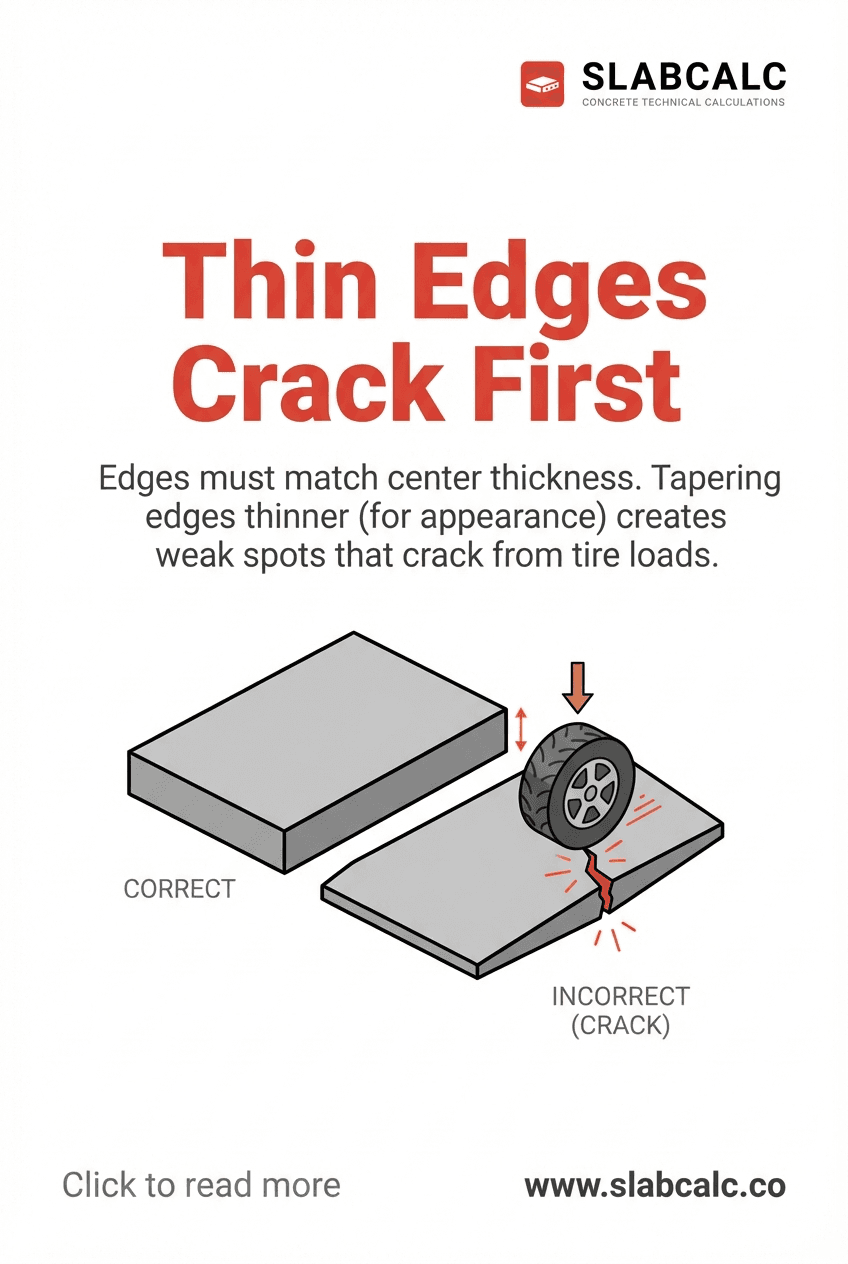
Thin Edges Crack First
Your driveway edges will fail first—and you probably created the problem yourself during planning.
The Consequence: Edge Failure in 5–10 Years
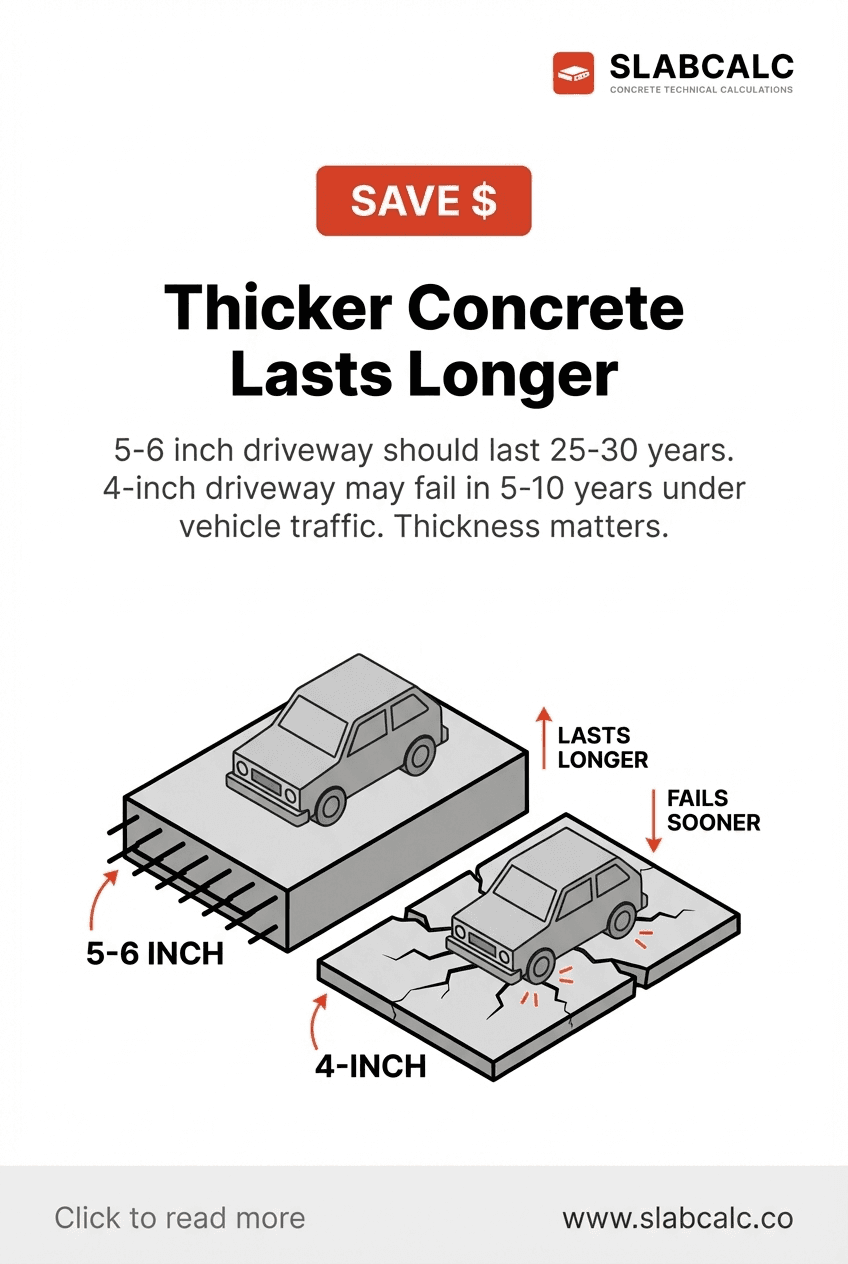
When driveway edges crack and crumble, it's never an accident. Thin edges under tire loads flex and stress-fail because they can't distribute weight properly. Vehicle wheels track near edges constantly. A tire on a 4-inch tapered edge creates localized pressure the concrete can't handle. Within 5–10 years, you'll see spalling (concrete chunks breaking away) along the perimeter, water infiltration, and freeze-thaw damage that spreads inward.
The repair? Grinding out the damaged edge, rebuilding with concrete, and hoping it bonds—a $500–$1,200 fix that's never as strong as the original. Prevention costs nothing extra during the pour.
Why Tapering Edges Is a Structural Mistake
Contractors and DIYers taper edges thinner for appearance—a smooth, beveled look instead of a chunky right angle. This aesthetic choice carries a hidden structural cost.
The physics: A 5-inch center slab can handle vehicle loads because thickness distributes stress over depth. A 3-inch tapered edge cannot. The thinner material flexes more, creating tensile stress (pulling stress) that concrete resists poorly. Add freeze-thaw cycles, and micro-cracks propagate outward from the weakest point—the edge.
A 2-inch difference in thickness at the edge isn't decorative—it's a structural weakness zone that shortens slab life by 50%.
Identifying This Risk Before the Pour
Ask your concrete contractor or examine your plans for these red flags:
- Sloped edges: Anything less than the center thickness is a liability
- No mention of edge thickness: If specs don't explicitly state edge thickness matches center, assume tapering
- "Standard practice" edges: Pressing the contractor for a specific edge thickness reveals whether they're thinking about durability or just finishing fast
- Budget cuts: When costs are tight, uniform thickness gets sacrificed for tapered "appearance"
Prevention Checklist
Before ordering concrete, confirm every item below:
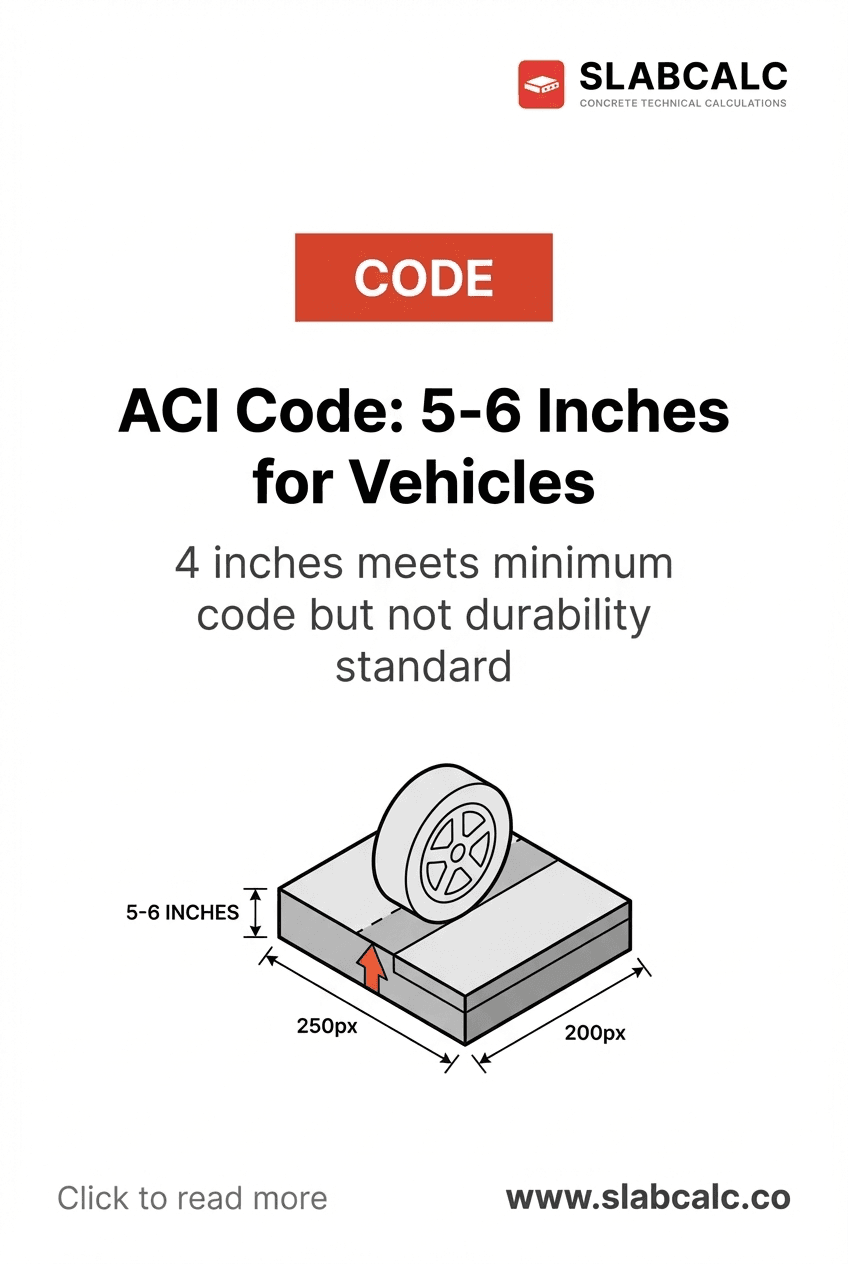
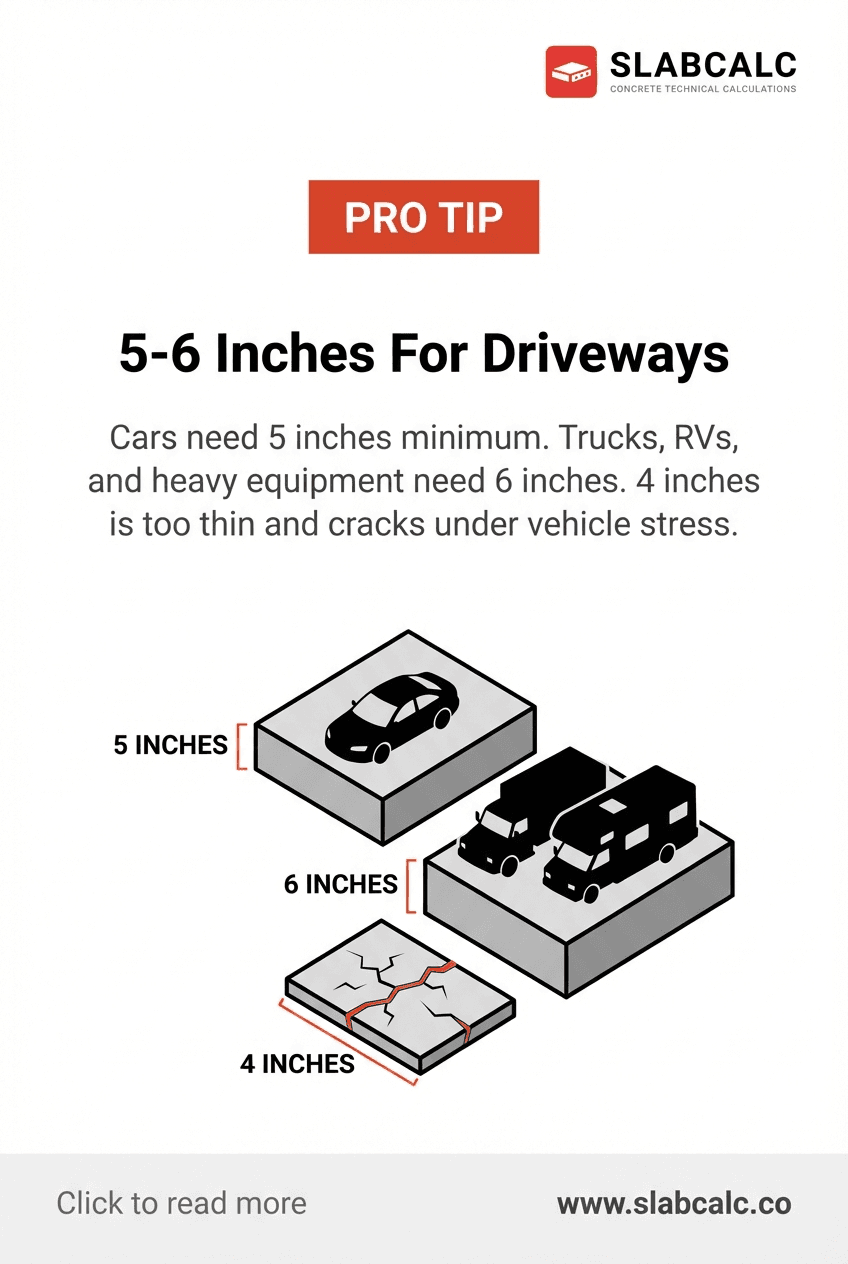
- Specify uniform thickness throughout. All sections—center, edges, corners—must be 5 inches minimum (6 inches if SUVs/trucks are primary vehicles)
- Confirm edge support. Check that your subgrade preparation extends to 12 inches beyond the slab edge. Weak soil near the edge is a secondary failure point
- Reject beveled edges in specs. A slight bevel for safety is fine (1/4 inch), but nothing that reduces structural thickness
- Request cross-section details. Written specifications prevent site-level mistakes
- Inspect before pouring. Walk the forms with your contractor. If edges look thin, stop and clarify before concrete arrives
- Verify concrete strength. Thin edges need concrete at minimum 4,000 PSI (not 3,500 PSI), which is standard but worth confirming
The Real Cost Equation
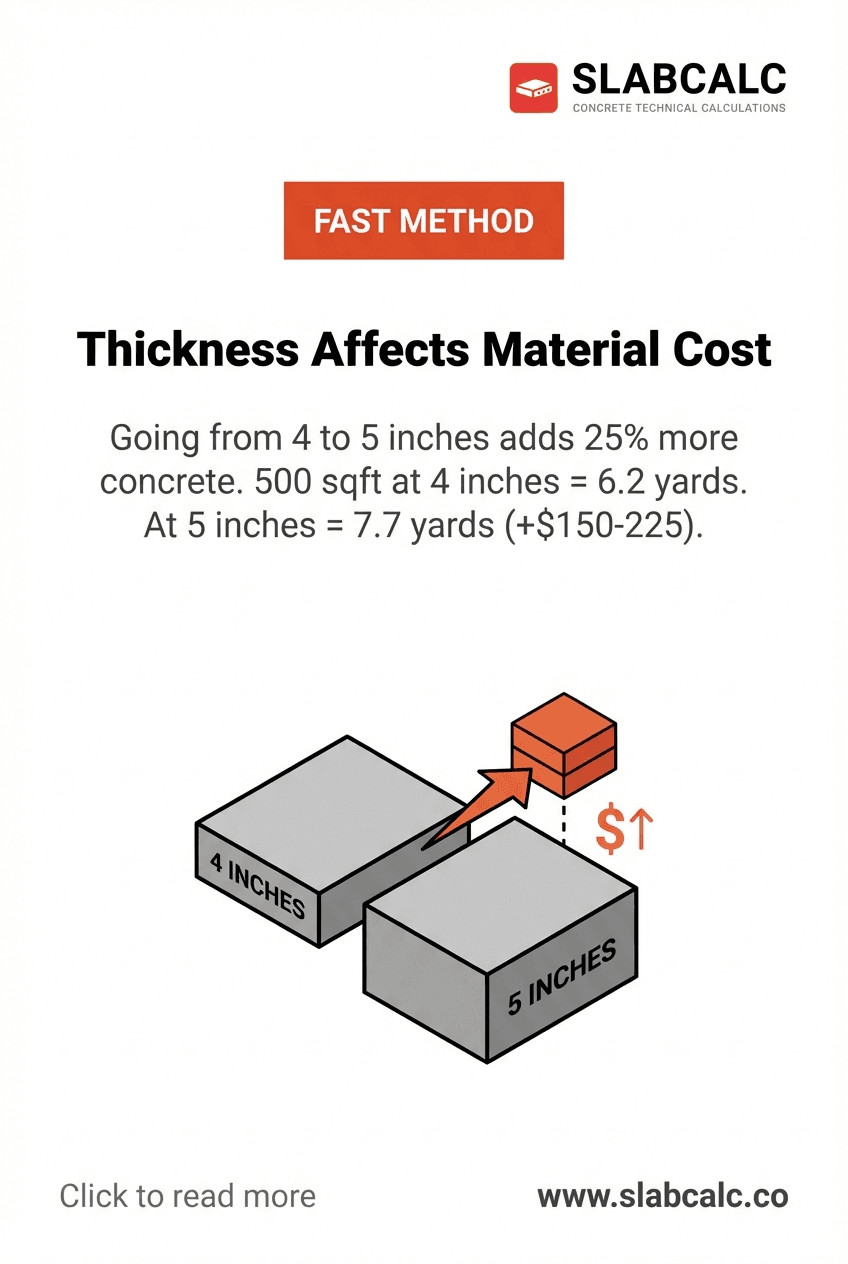
A 5-inch driveway costs roughly $10–$15 per square foot installed. A 4-inch costs $8–$12. That $2–$3 per square foot difference on a 400-square-foot driveway is $800–$1,200 total—trivial compared to a $1,000+ edge repair or $5,000+ complete replacement in 15 years.
Uniform thickness wins on every metric: durability, repairability, and long-term cost. Taper-free edges aren't trendy. They're structural necessity.