
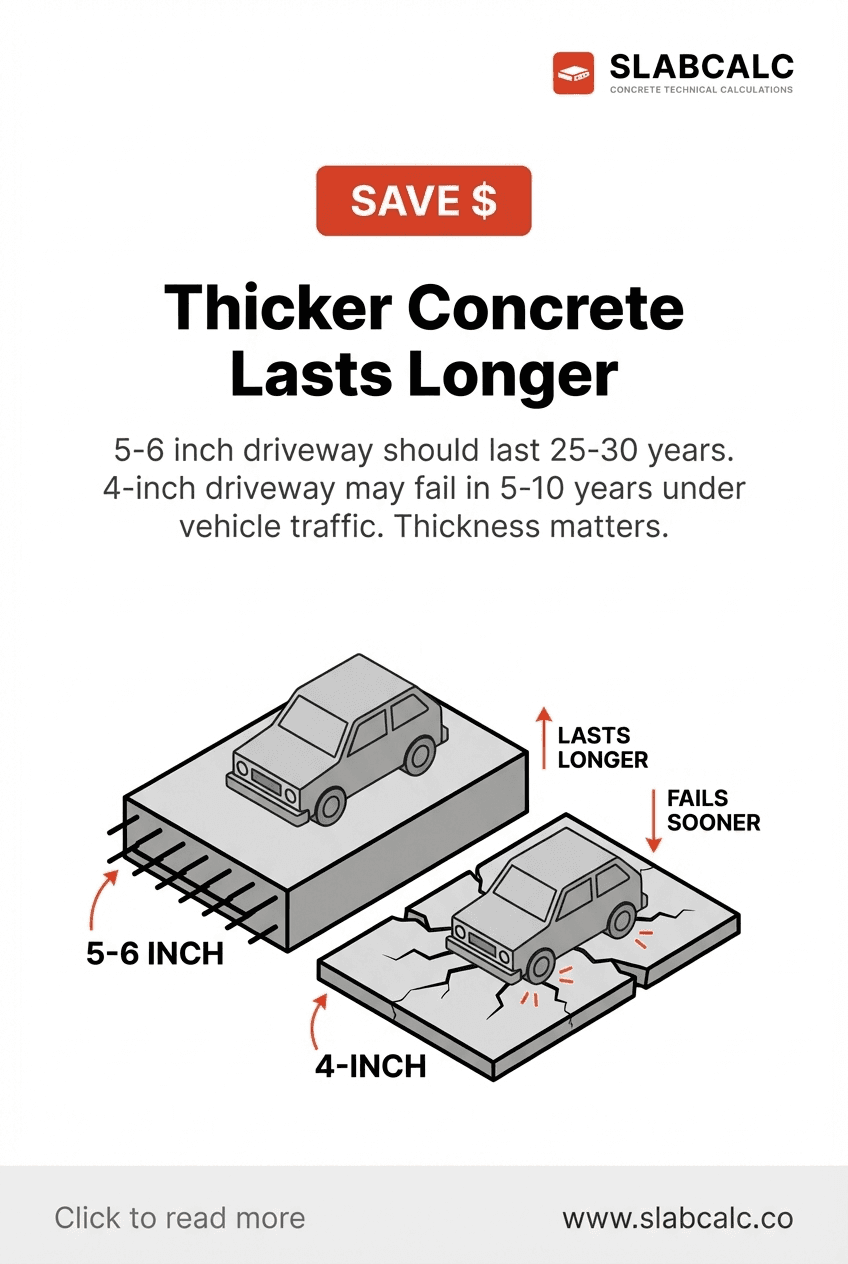
Thicker Concrete Lasts Longer
Save $8,000–$15,000 by Getting Thickness Right the First Time
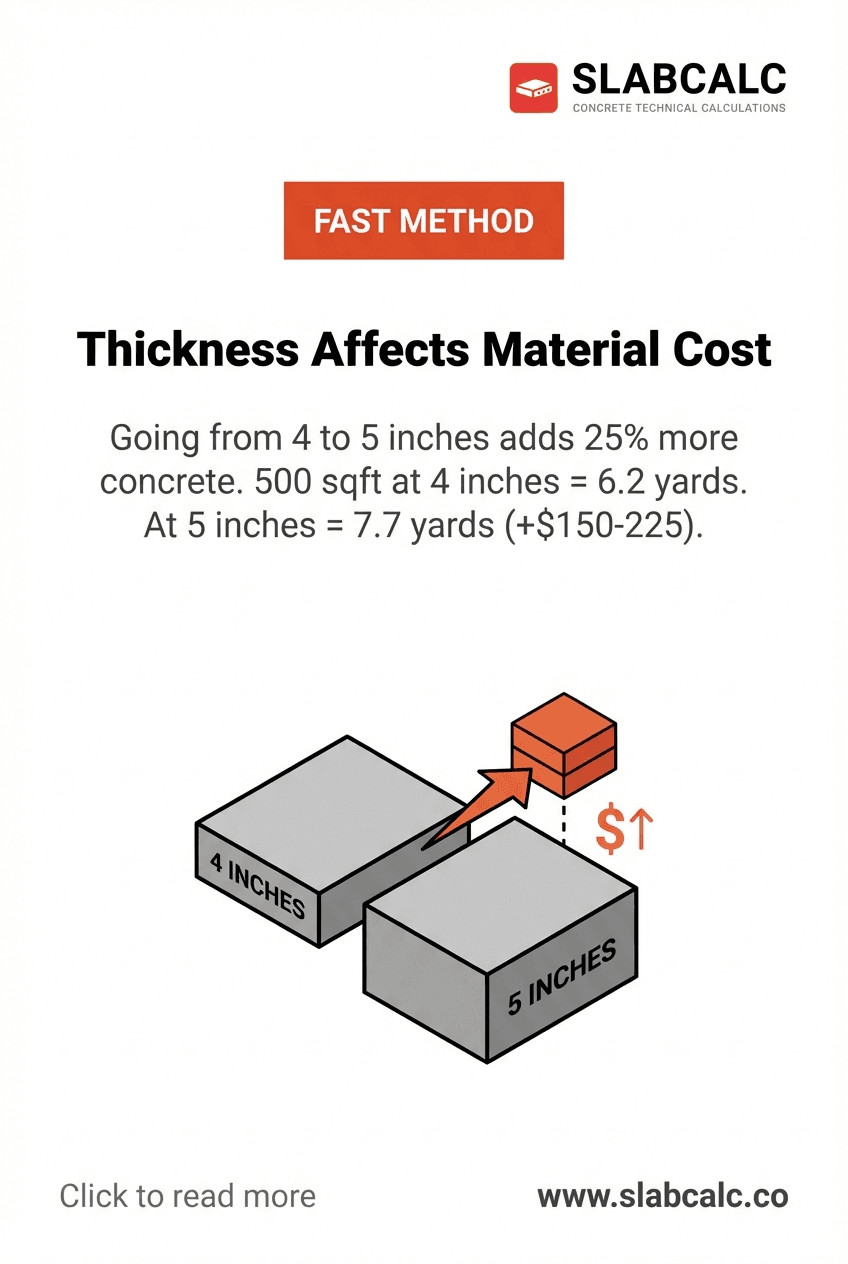
A 4-inch driveway costs roughly $8–$12 per square foot to install. A 6-inch driveway costs $10–$14 per square foot. That extra 2 inches? It's only $160–$200 more for a standard 400-square-foot driveway—but it adds 15–20 years to your concrete's lifespan.
Here's the real cost: replacing a failed 4-inch driveway at year 8 runs $3,200–$4,800. Add demolition, hauling, and prep work: you're looking at $5,500–$8,000 total. Do that twice in 20 years, and you've paid $11,000–$16,000. Spend $200 extra upfront on proper thickness, and your concrete lasts 25–30 years with minimal maintenance.
The math is simple: invest small now, avoid massive costs later.
Why Thickness Fails: The Physics Behind It
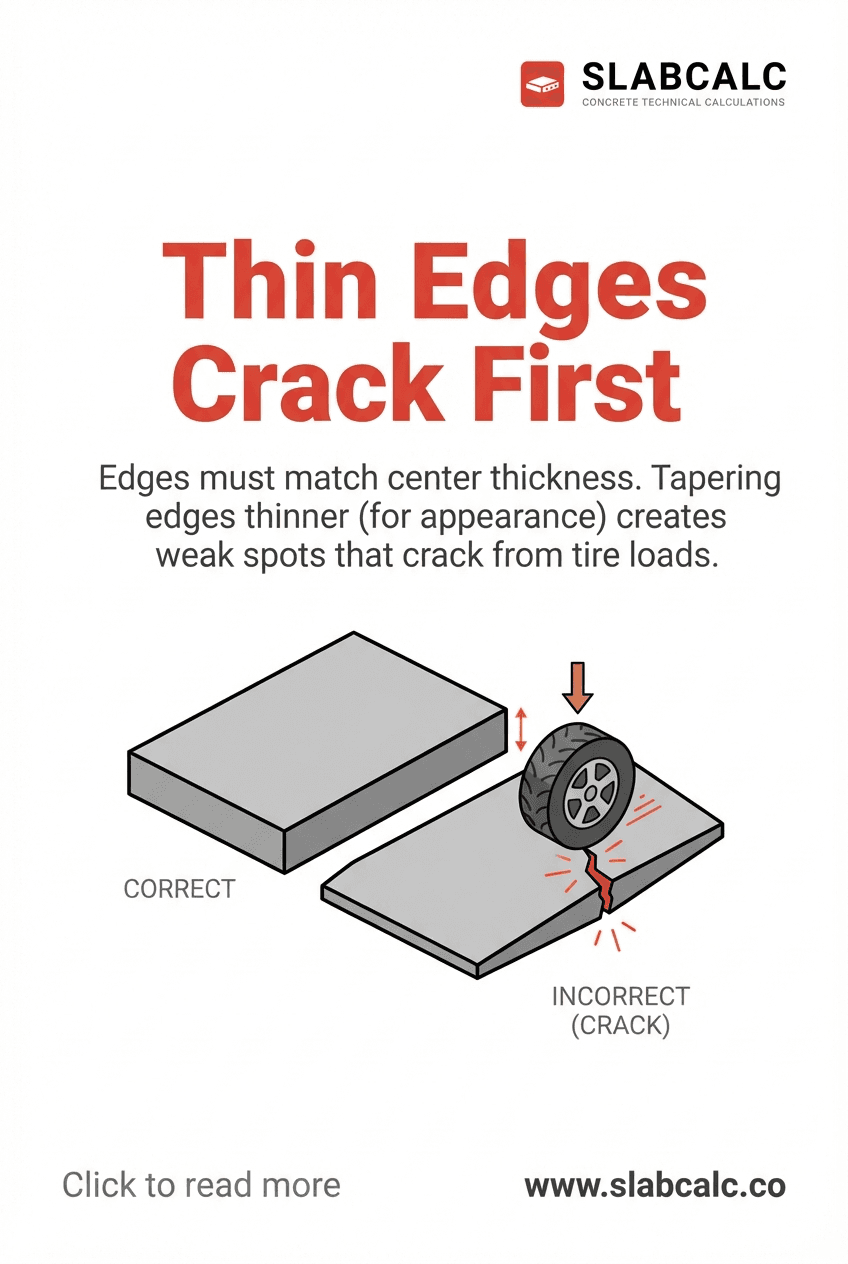
Concrete's strength improves with depth. A 4-inch slab can handle moderate foot traffic and light vehicle loads initially, but vehicles create dynamic stress—the repeated impact and weight cycling that breaks down thin concrete from the inside out.
Over 5–10 years, a 4-inch driveway under regular car traffic develops:
- Fine hairline cracks (year 2–3)
- Spalling and scaling (year 4–6)
- Large chunks breaking away (year 6–10)
A 6-inch driveway distributes that same load over a larger mass. The concrete beneath the surface stays intact longer, resisting the fatigue that destroys thin slabs.
The Right Thickness for Every Project
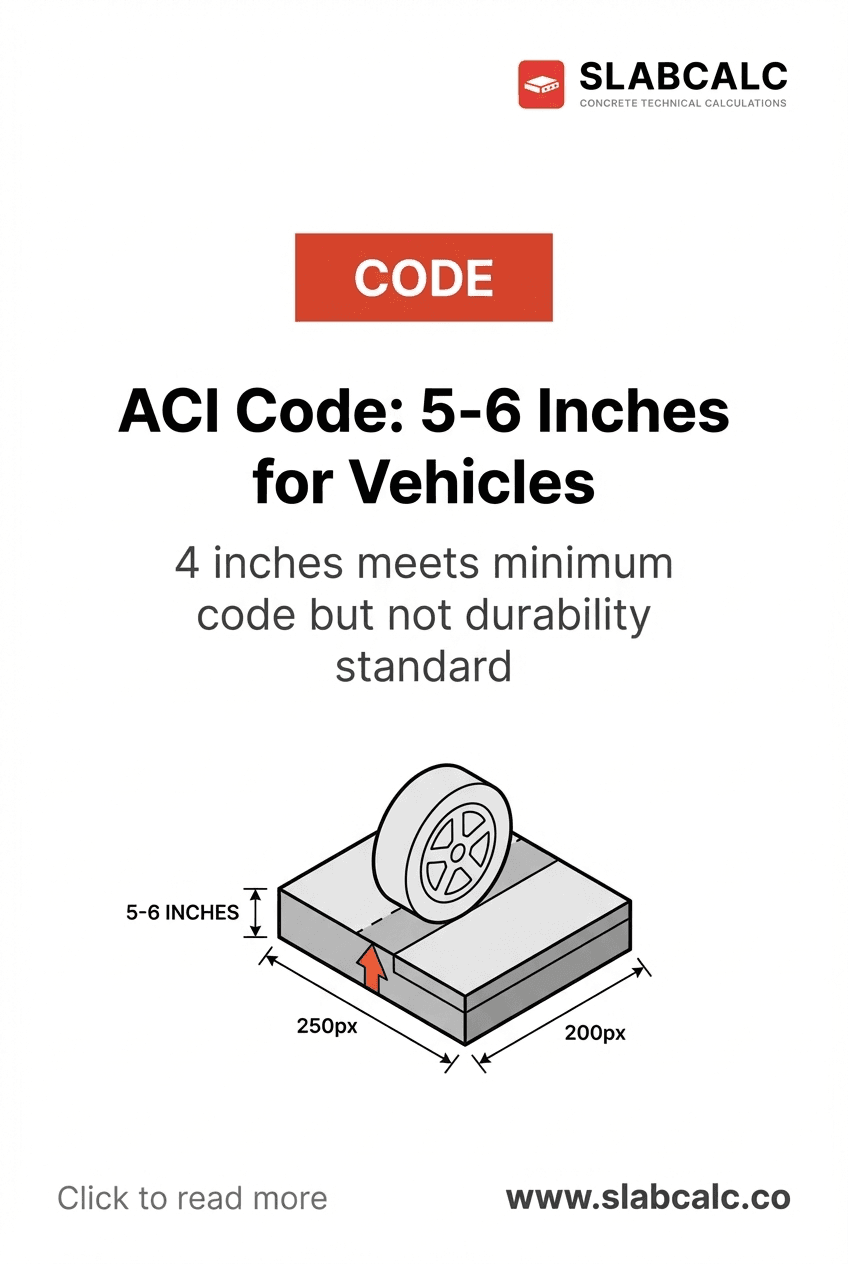
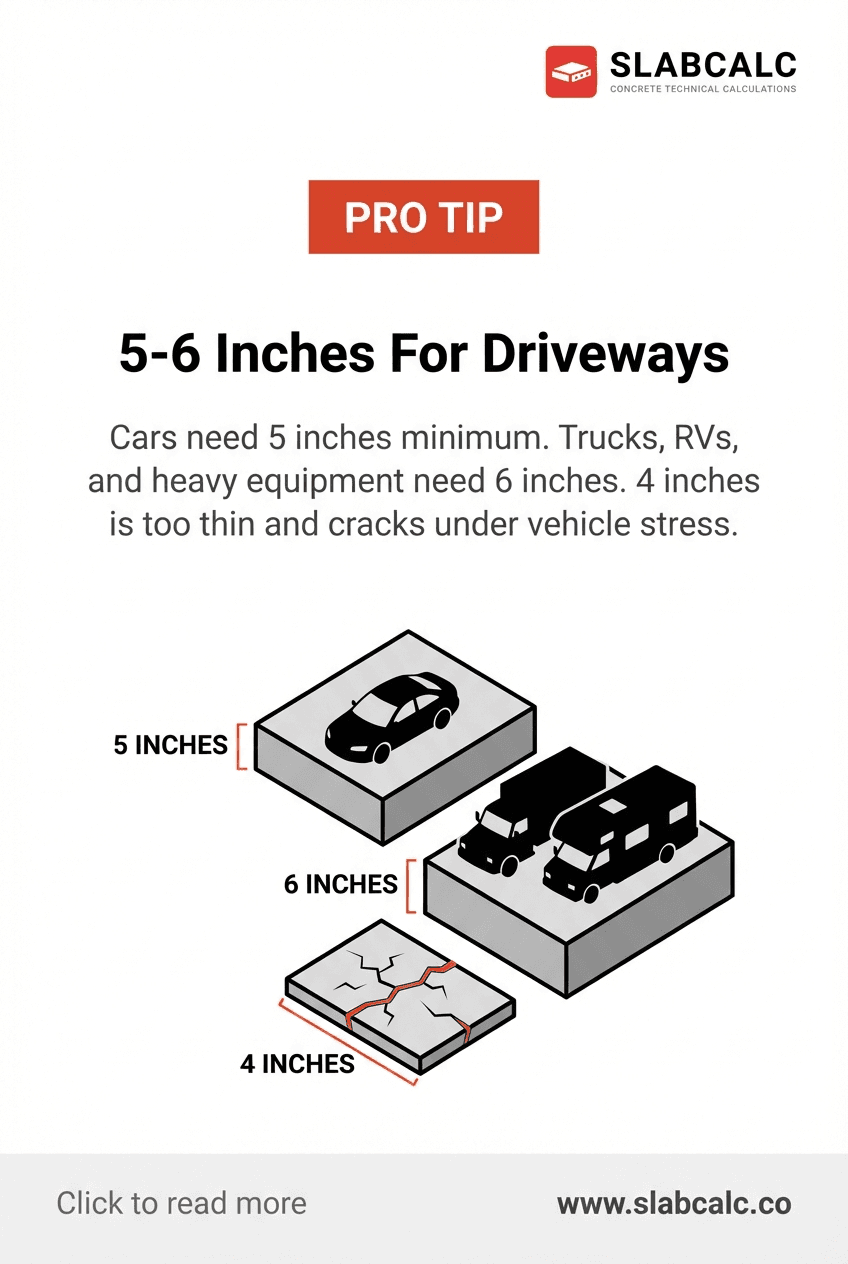
Driveways (vehicle traffic): 5–6 inches minimum. If you park trucks, RVs, or regularly haul heavy loads, go 6 inches. The extra concrete costs $150–$250 but eliminates the risk of failure.
Garage floors: 4–6 inches, depending on use. A standard car garage can handle 4 inches, but 5–6 inches prevents cracking from tool placement and vehicle weight concentration.
Patios: 4 inches is adequate for foot traffic and patio furniture. Only increase to 5 inches if you're installing a hot tub or heavy outdoor kitchen.
Sidewalks: 4 inches is standard and sufficient unless truck traffic occasionally crosses it.
Your Decision Framework
Ask yourself three questions:
-
What will drive or park on this concrete? Passenger cars can handle 4–5 inches. Trucks, RVs, and heavy equipment need 6–8 inches.
-
How long do I want to keep this slab? Aiming for 25+ years? Go 1 inch thicker than the minimum. Planning to move in 10 years? Minimum is acceptable (but still risky).
-
What's the cost difference? For most residential projects, thickness upgrades cost $100–$400 total. That's a fraction of removal and replacement.
Bottom line: Concrete thickness is your cheapest insurance policy. Spend $150–$300 extra today and avoid $5,000–$8,000 in demolition and rebuilding costs within a decade. Use our concrete calculator to compare materials and costs for your specific project dimensions.