
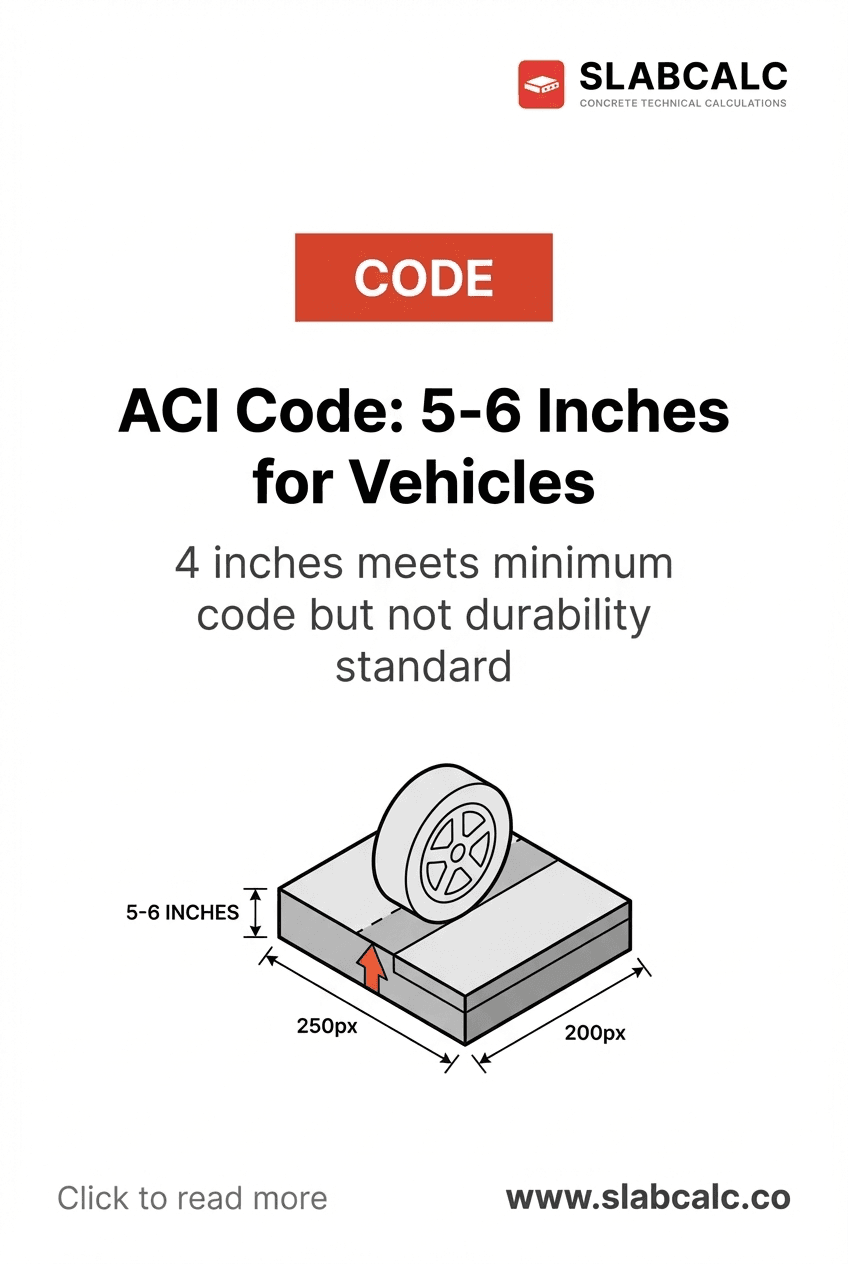
ACI Code: 5-6 Inches for Vehicles
The ACI Code Standard
The American Concrete Institute (ACI) and the International Building Code (IRC) both specify minimum 5-inch thickness for driveways and parking areas where vehicles operate. This isn't a suggestion—it's a structural requirement tied to load-bearing capacity and long-term durability. Many local jurisdictions adopt these standards verbatim in their building codes.
A 4-inch slab meets the bare minimum for pedestrian-only surfaces like patios and sidewalks. But the moment vehicles enter the equation, 4 inches becomes inadequate. The code recognizes this distinction because vehicle loads create concentrated point stress that fundamentally exceeds what thinner concrete can reliably handle over time.
Why Vehicle Weight Changes Everything
A parked car exerts 3,000–5,000+ pounds of force distributed across four tire contact patches, each roughly the size of a hand. This creates intense point loading—stress concentrated in small areas—that differs drastically from the distributed weight of a person standing on a patio.
When a vehicle drives across a 4-inch slab, the concrete flexes. Repeated flexing causes:
- Micro-cracking in the concrete matrix
- Erosion of the base layer underneath
- Joint deterioration where slabs meet
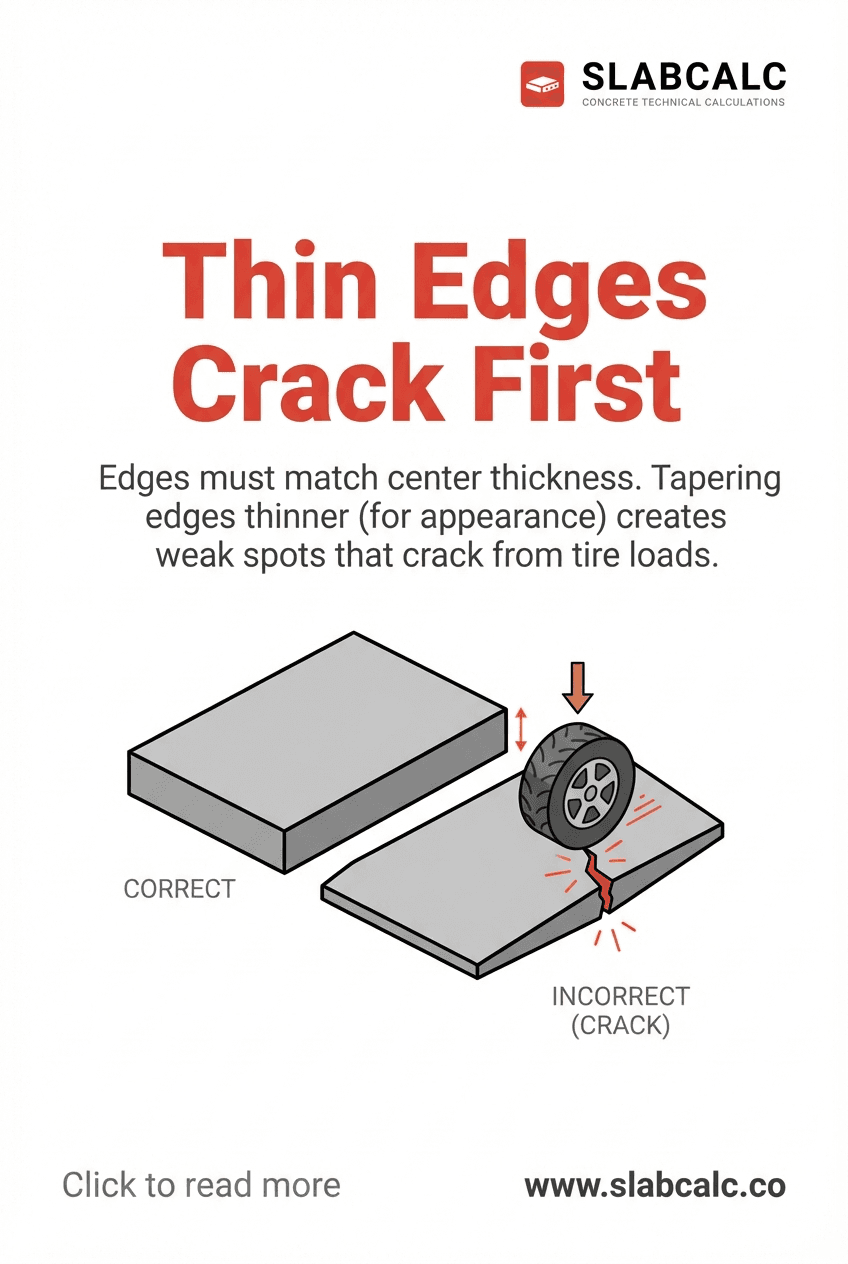
- Edge spalling (chunks breaking away at slab edges)
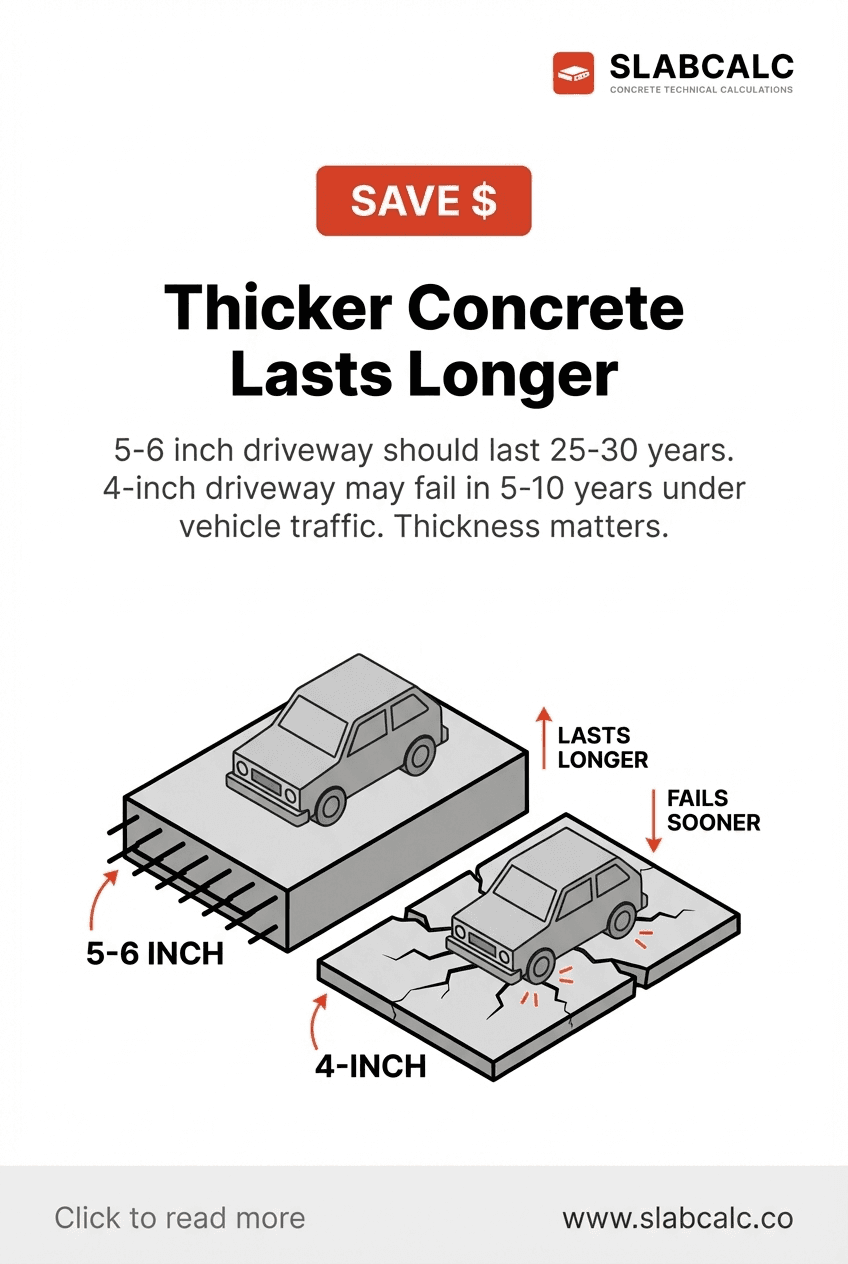
- Reduced lifespan from 20+ years down to 8–12 years
A 5-6 inch slab distributes that same vehicle weight across a larger vertical profile, reducing flexing and stress concentration. The extra 1–2 inches of concrete provides the structural depth needed to handle repeated loading without accelerated failure.
Common Code Violations
Many homeowners and even some contractors cut corners by pouring 4-inch driveways or parking pads. This happens because:
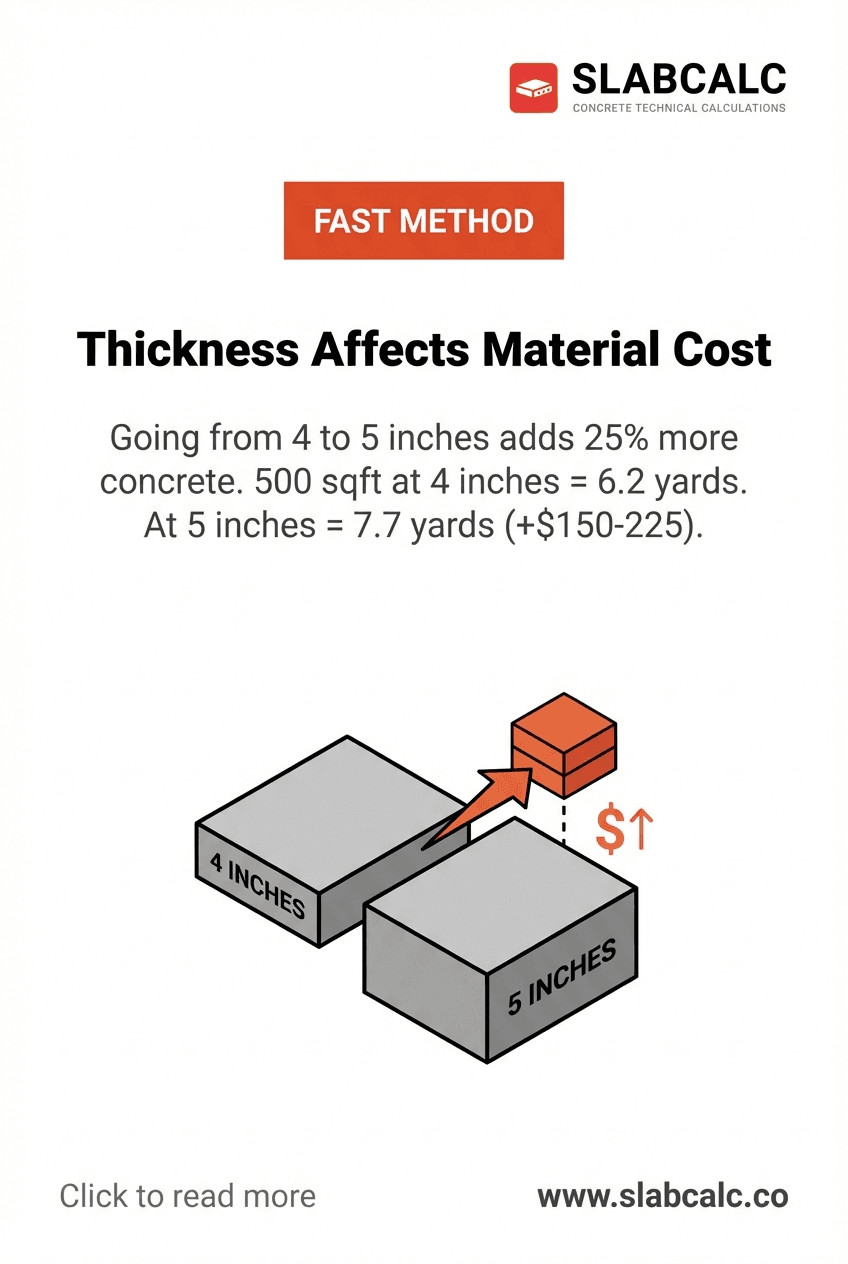
- 4-inch concrete costs 15–25% less material
- The mistake isn't visible immediately
- Insurance and inspection standards vary by locality
The hidden cost: A 4-inch driveway might fail within 10 years, requiring full replacement ($1,200–$2,500+) instead of lasting 25+ years with proper 5-6 inch construction. The initial savings evaporate.
When to Use 4 Inches vs. 5-6 Inches
4 inches is appropriate for:
- Patios and outdoor entertaining areas
- Sidewalks and pedestrian walkways
- Shed pads (light storage only)
- Decorative concrete paths
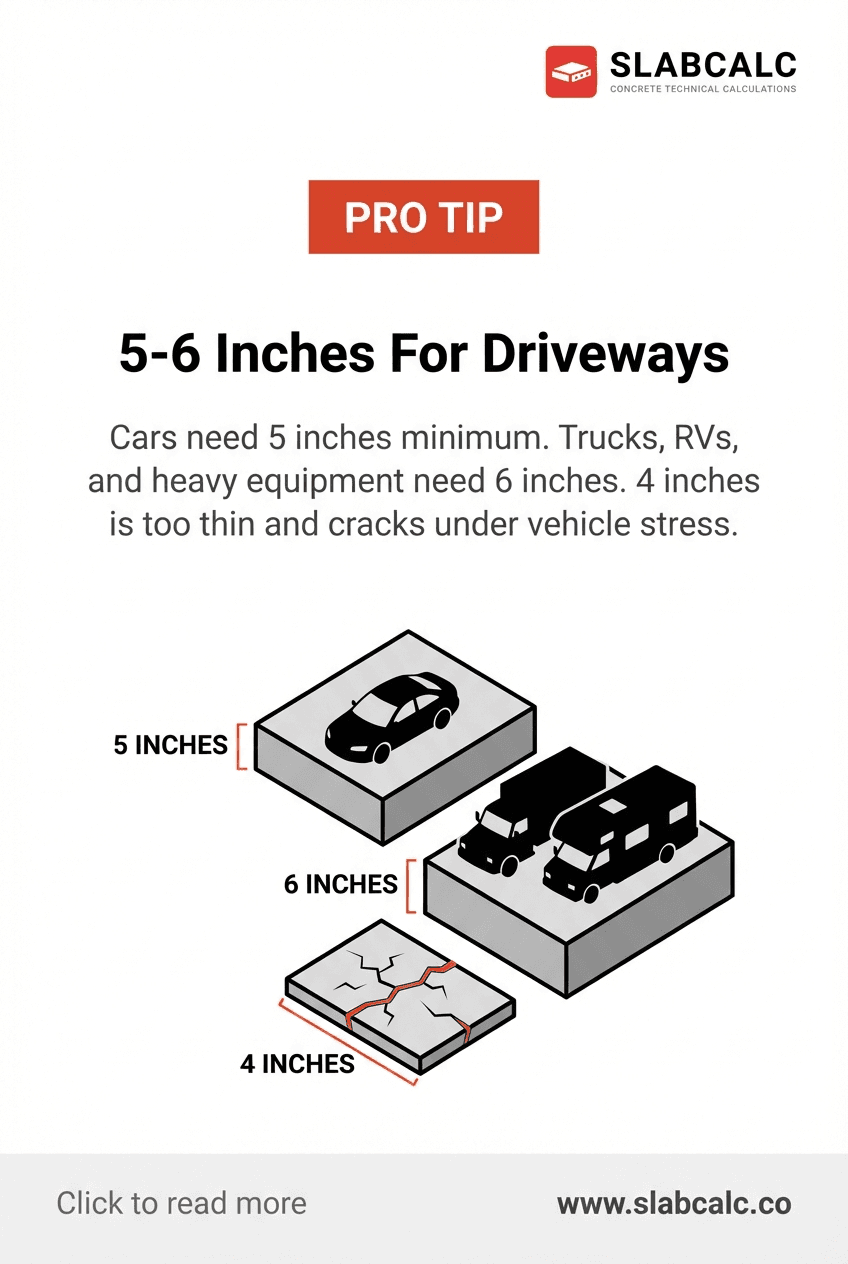
5-6 inches is required for:
- Driveways (5 inches minimum)
- Parking pads
- Garage floors with vehicle traffic
- RV pads (6 inches recommended)
- Heavy-use workshop floors with equipment
The Smart Investment
Upgrading from 4 to 6 inches adds roughly $0.50–$1.00 per square foot in material cost. For a 400-square-foot driveway, that's $200–$400 more upfront—a negligible expense compared to the 15-year lifespan advantage you gain. Proper thickness also improves resale value, as future buyers recognize durability as a feature.
Bottom line: If wheels will touch it, code requires 5-6 inches. Follow the standard, and your concrete investment will outlast the vehicles that drive on it.