
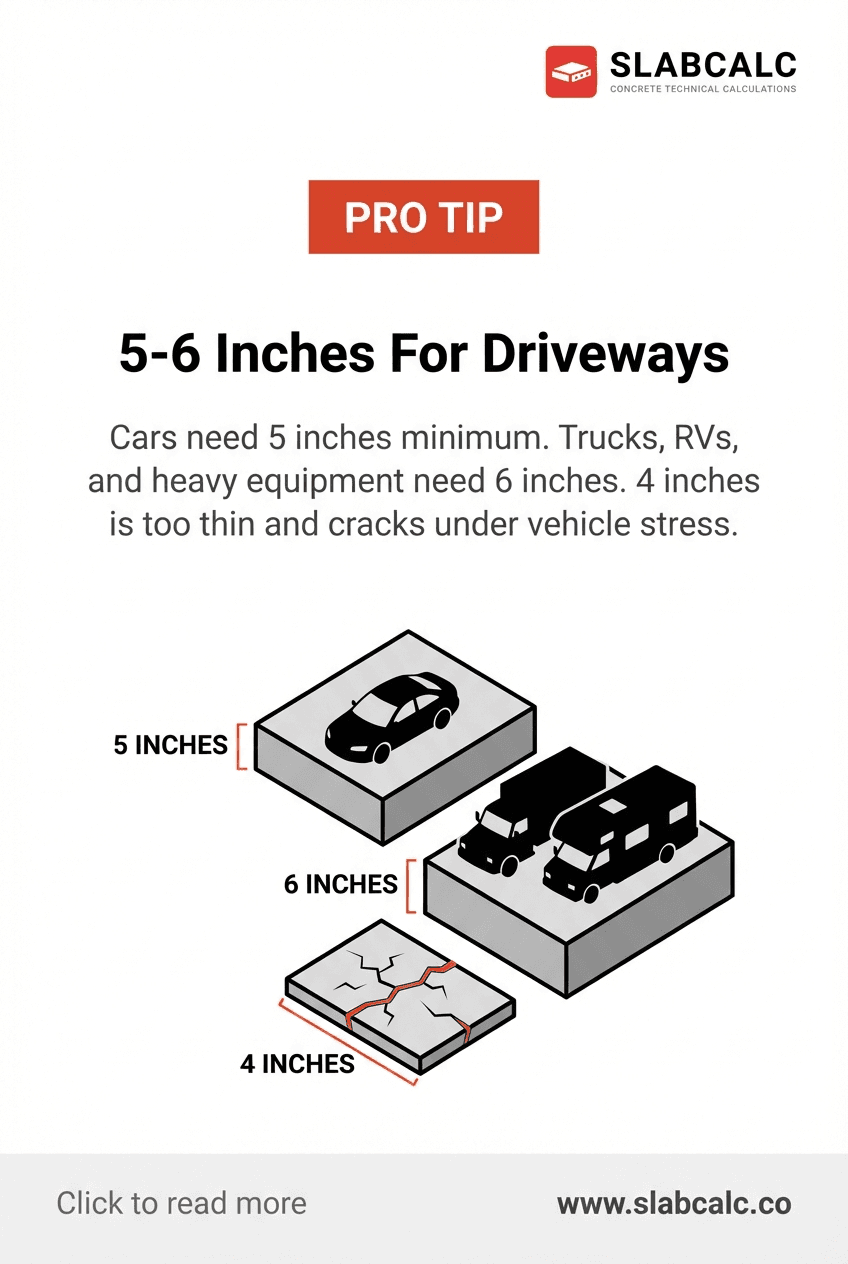
5-6 Inches For Driveways
The Common Mistake That Costs Thousands
Most homeowners think "concrete is concrete"—that 4 inches works everywhere. This assumption turns into expensive cracks, potholes, and premature replacement. A driveway bearing vehicle weight is fundamentally different from a patio or sidewalk. The concentrated, repetitive stress of tires demands thicker concrete than foot traffic ever will.
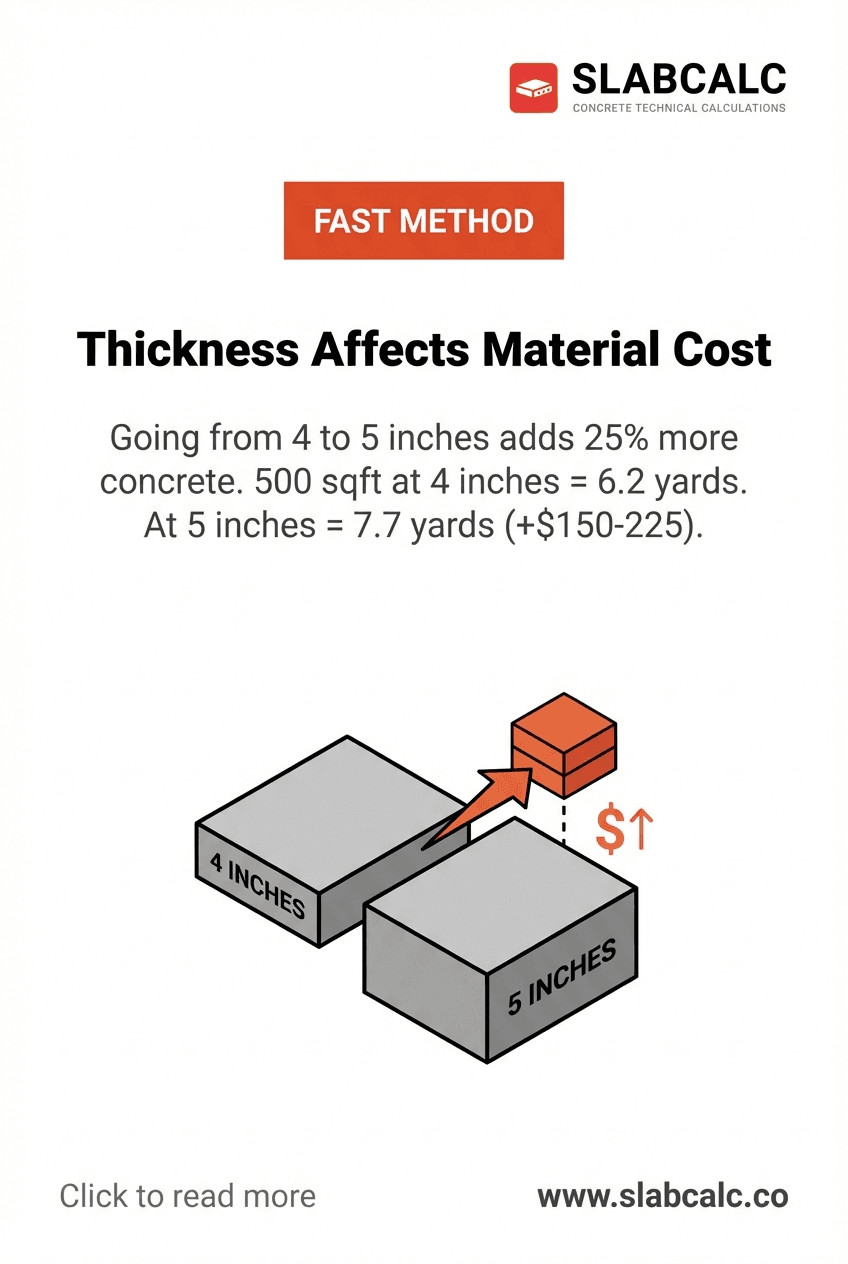
Contractors sometimes cut corners on thickness to reduce material costs. A 4-inch driveway saves roughly $200–$400 compared to 5 inches on a 500-square-foot pad. That savings evaporates the first time you see spalling, edge breaking, or stress cracks—often within 3–5 years.
Why 5–6 Inches Actually Works
Professional contractors follow these thickness rules for documented reasons:
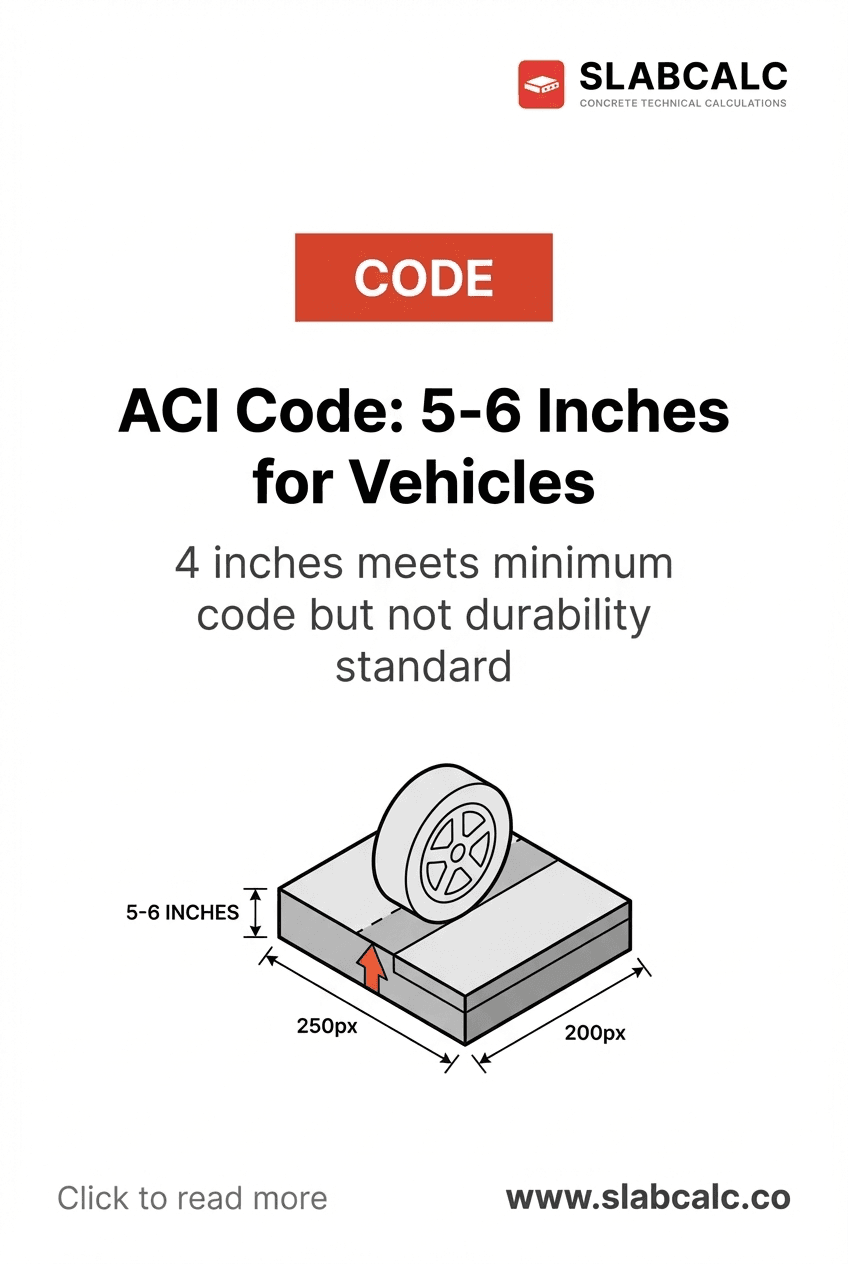
5 inches for passenger cars only. Standard sedans and light SUVs (under 5,000 lbs) distribute loads across four tires. Five inches of concrete, combined with a 4-inch compacted base, provides adequate structural capacity. The math works because vehicle weight spreads across a large contact area.
6 inches for trucks, heavy SUVs, and RVs. Pickup trucks (6,000–8,000 lbs) and RVs create concentrated, dynamic stress. The heavier the vehicle and the more frequent the loading cycle, the greater the risk of stress fractures. Six inches gives you a safety margin that prevents edge cracking and surface spalling.
Why 4 inches fails. Concrete gains strength from thickness. At 4 inches, the concrete slab lacks enough mass to absorb and distribute vehicle impact. You're essentially stretching a thin material past its flexural strength limit. After months of repeated loading, micro-cracks form, water infiltrates, and the cycle accelerates to visible failure.
The Step-by-Step Professional Approach
Step 1: Determine your vehicle load. Do you own only passenger cars, or will trucks regularly park on the driveway? If anyone in your household drives a truck, trailer, or RV, plan for 6 inches minimum.
Step 2: Prepare the base properly. Thickness alone doesn't guarantee success. Compact the subgrade to 95% density, then add a 4-inch compacted gravel base. This foundation absorbs moisture and prevents heave under freeze-thaw cycles.
Step 3: Install reinforcement. Use #4 rebar on 18-inch centers or 6x6 wire mesh. Reinforcement prevents cracks from spreading and holds edges together under vehicle stress.
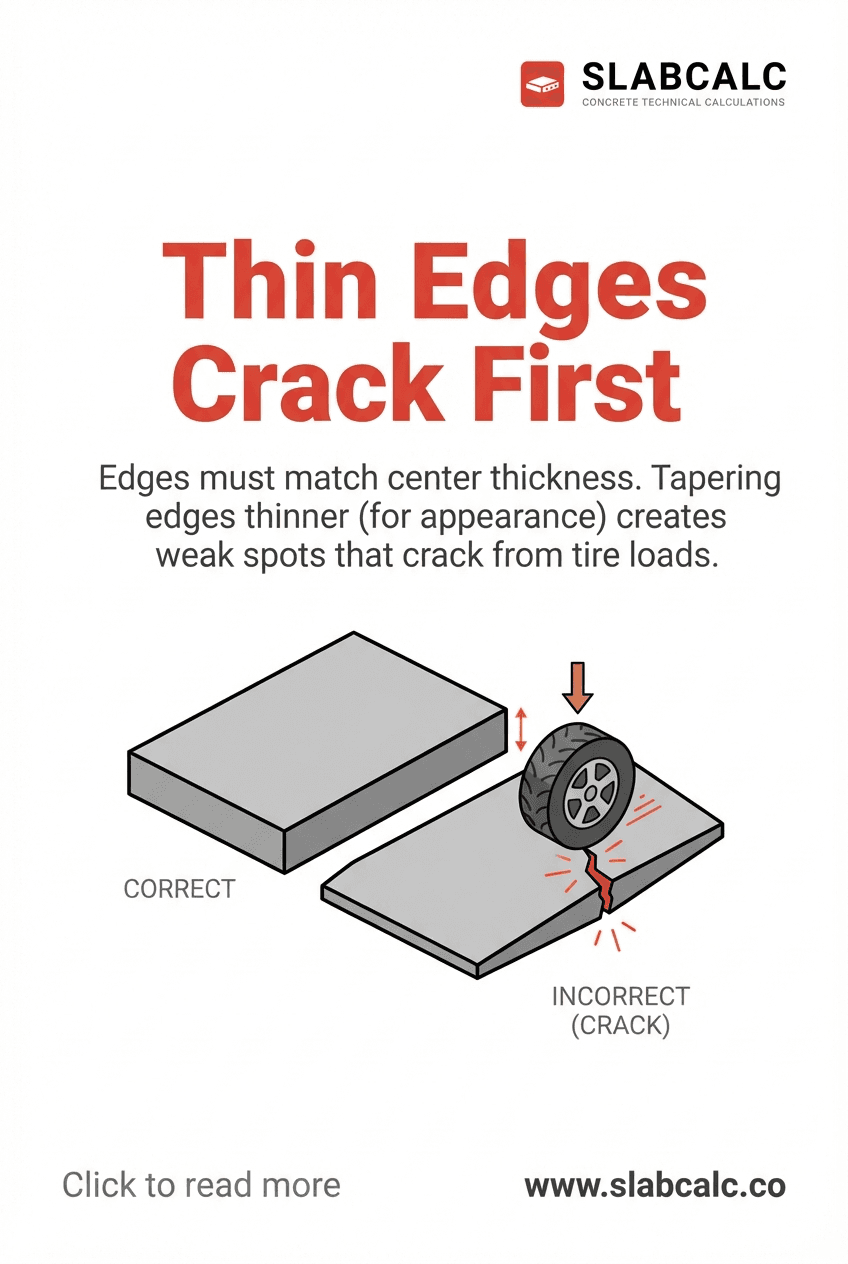
Step 4: Pour to exact thickness. Mark your forms at 5 or 6 inches—don't guess. Screeding level concrete is non-negotiable; uneven thickness creates weak spots.
Step 5: Finish and cure properly. Broom finish for traction, then keep concrete moist for 7 days. Premature drying weakens the surface layer.
The Long-Term Cost Reality
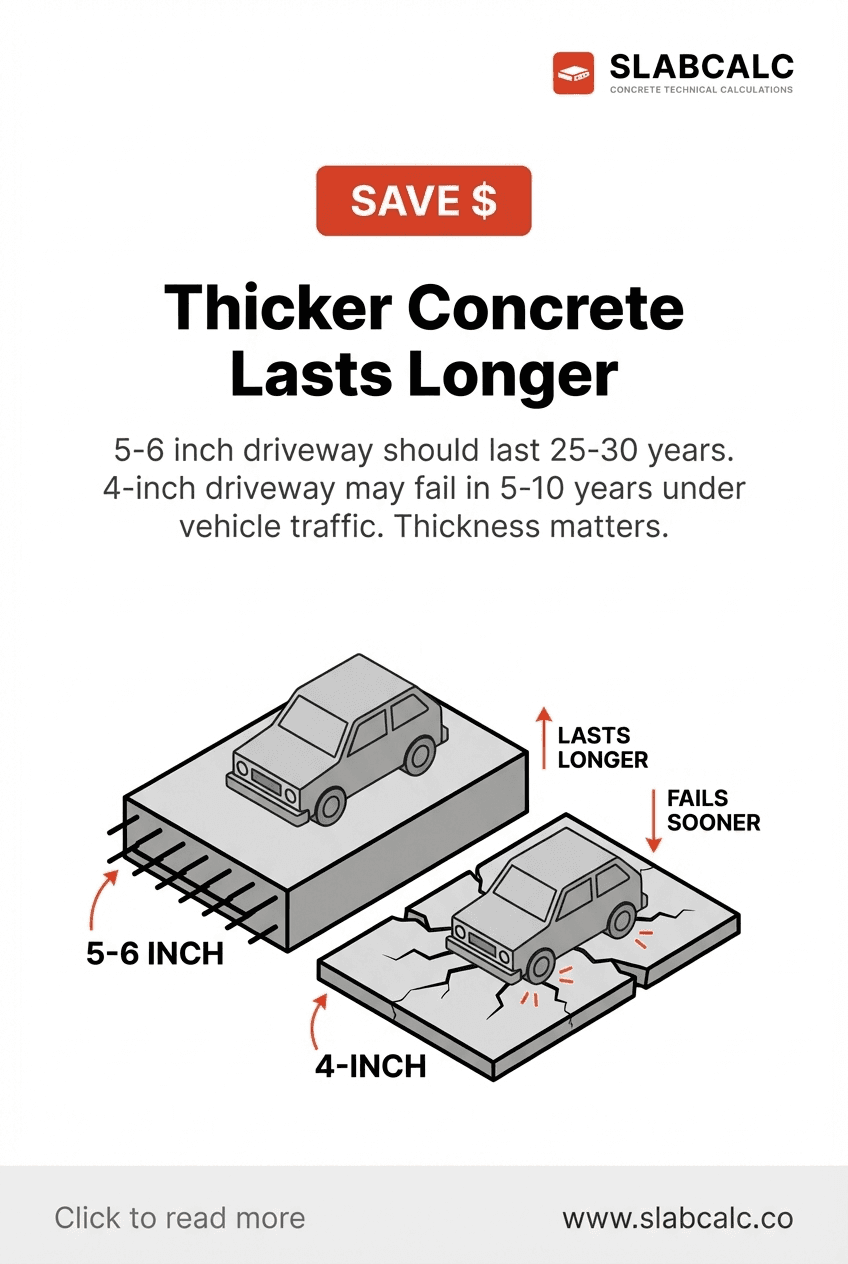
A properly installed 5- or 6-inch driveway lasts 30–40 years with minimal maintenance. A thin 4-inch slab typically fails within 8–12 years, requiring costly removal and replacement. On a typical 500-square-foot driveway, professional replacement costs $3,000–$5,000.
The professional secret isn't complicated: thickness is load insurance. Those extra 1–2 inches cost $200–$500 upfront and save you thousands in premature failure. For driveways, this investment is non-negotiable.