
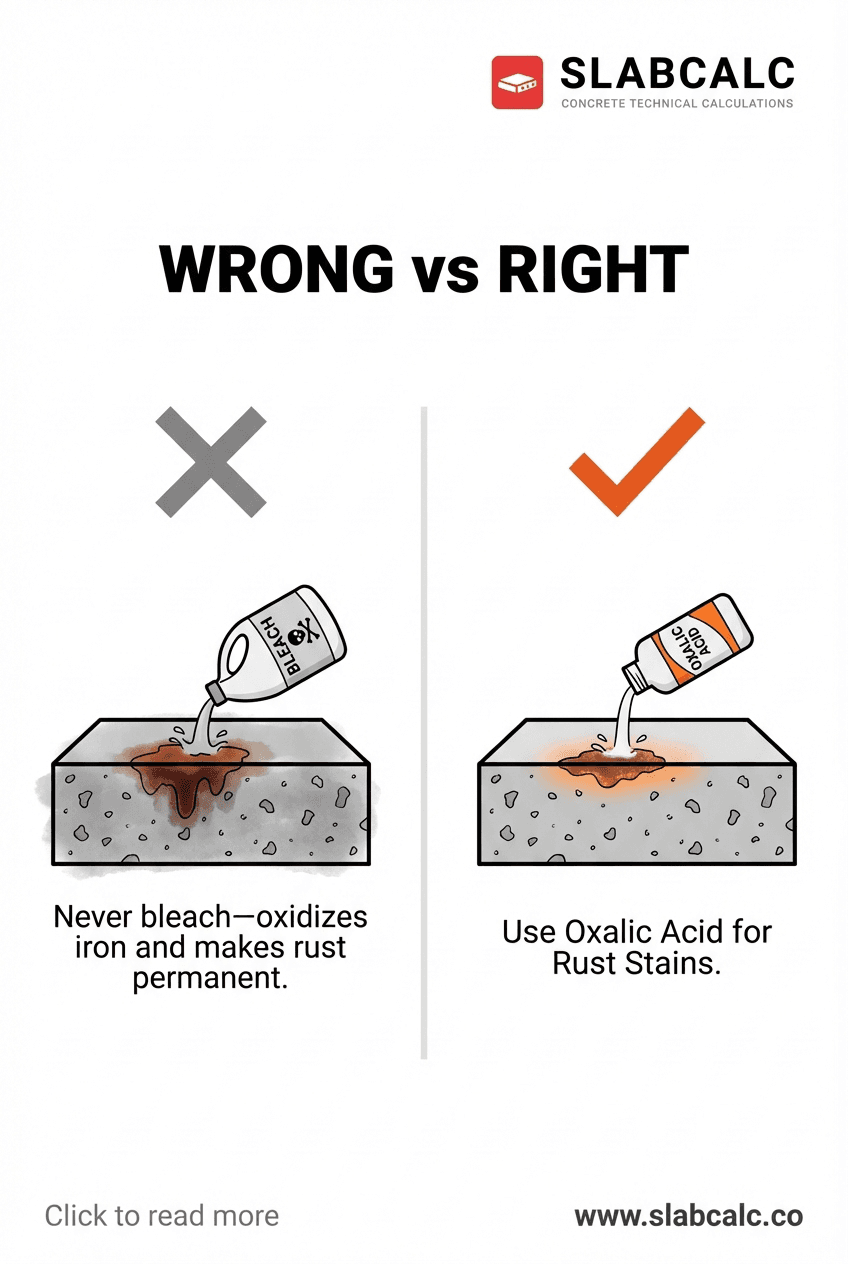
Use Oxalic Acid for Rust Stains
The Bleach Mistake That Makes Rust Permanent
Most homeowners reach for bleach when they spot rust stains on their driveway or patio. It seems logical—bleach is a powerful cleaner. But here's the critical mistake: bleach actually oxidizes iron, turning surface rust into deeper, darker, permanent staining. Once bleach has reacted with rust, the stain penetrates the concrete's pores and becomes nearly impossible to remove without industrial-grade restoration.
The fix? Never use bleach on rust. Use oxalic acid instead—the professional choice that actually dissolves rust rather than setting it permanently into the concrete.
Why Oxalic Acid Works Better
Oxalic acid is a mild organic acid that chemically breaks down iron oxide (rust) without damaging the concrete surface. Unlike bleach, which chemically bonds iron particles to the concrete, oxalic acid dissolves the rust compound itself, lifting it away cleanly.
Commercial rust removers like Iron OUT and Whink Rust Remover both contain oxalic acid or phosphoric acid as their active ingredient. These products are specifically formulated to penetrate concrete pores and neutralize rust at the source—whether it's from metal furniture legs, embedded rebar, fertilizer runoff, or iron-rich irrigation water.
The cost is minimal: most oxalic acid–based rust removers run $6–12 per bottle and treat multiple stains.
Step-by-Step Application
Step 1: Identify the Stain Type Make sure you're actually dealing with rust, not oil or mold. Rust stains are reddish-brown or orange and typically appear as circular rings or streaks from a metal object.
Step 2: Apply the Rust Remover Pour or spray the oxalic acid product directly onto the stain, covering it completely. Extend coverage 1–2 inches beyond the visible stain edge. Don't let it dry out during application—this is critical.
Step 3: Let It Dwell Allow 10–15 minutes of contact time. The oxalic acid needs time to penetrate and dissolve the iron oxide. Set a timer; don't guess on timing.
Step 4: Scrub with Pressure Use a stiff-bristled brush (not a soft one) and scrub vigorously in circular motions. The physical action combined with the chemical reaction breaks up the rust particles and forces them into suspension.
Step 5: Rinse Thoroughly Rinse with clean water using a garden hose or pressure washer at low pressure (under 1500 PSI to avoid etching). Rinse twice to remove all oxalic acid residue.
Step 6: Repeat if Necessary Deep or old rust stains may need a second application. Let the concrete dry completely between treatments (24 hours minimum) before assessing whether another application is needed.
Prevention Tip
For new concrete projects, avoid rust stains by removing metal objects promptly and sealing your slab with a quality concrete sealer. This creates a protective barrier that prevents iron from embedding into the pores. Use our concrete calculator to plan a sealed finish into your project from the start.