
24 Hours
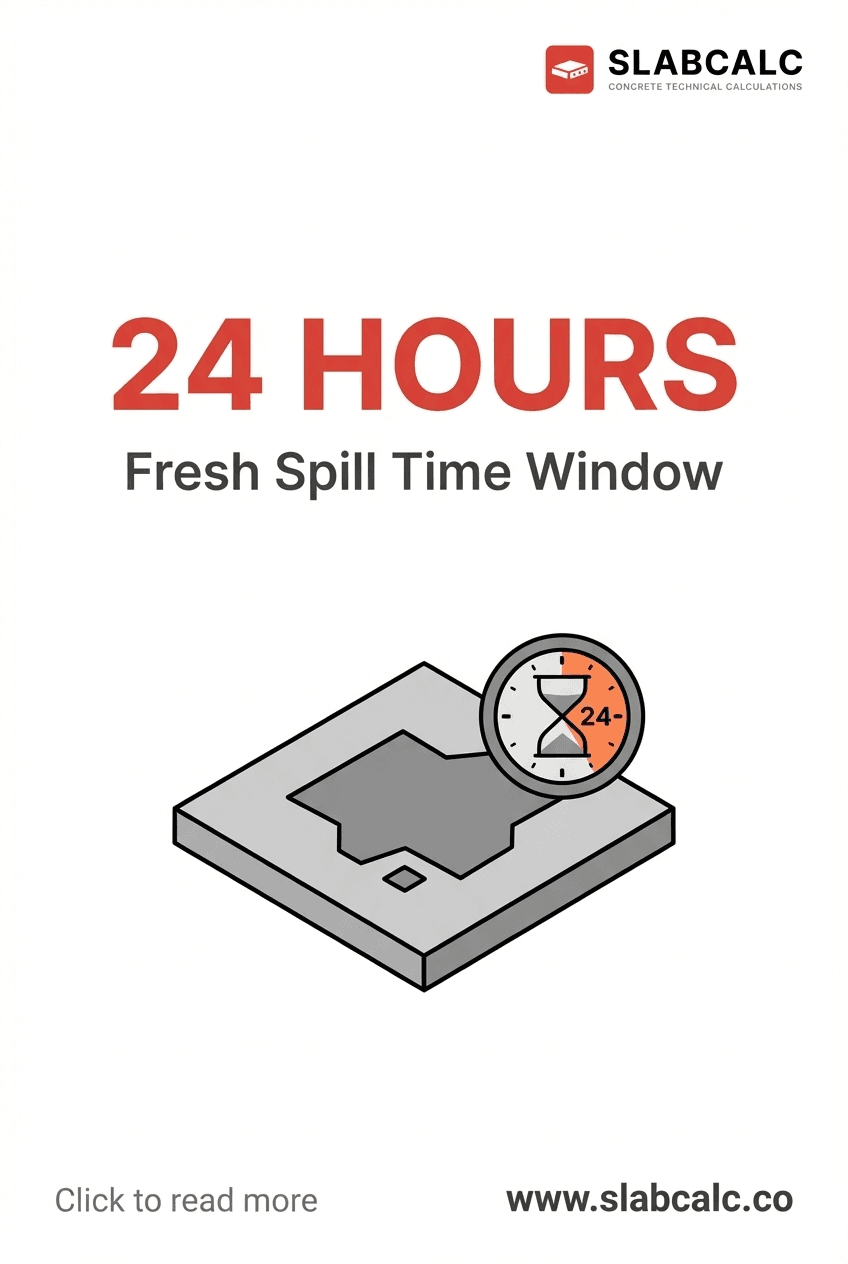
If you've just spilled oil on your concrete driveway or garage floor, you have 24 hours to act before that stain becomes permanent. This single number is the difference between a 20-minute cleanup and a weeks-long battle with a set-in stain that requires professional-grade solvents and repeated treatments.
Why 24 Hours Is Critical
Concrete is porous. Within the first 24 hours, oil sits mostly on the surface and in the shallow pores of the slab. The longer oil sits, the deeper it penetrates into the concrete's capillary system. After 24 hours, oil molecules bond chemically with the concrete matrix, making removal exponentially harder and more expensive. A fresh spill costs $8–15 in degreaser. A stain older than 24 hours requires $10–20 in poultice materials and often needs 2–3 treatment cycles over days or weeks.
Fresh Spills: The 24-Hour Treatment
Act immediately when you spot the spill. First, prevent the oil from spreading deeper by covering it with an absorbent material. Cat litter, sawdust, or cornstarch work equally well. Spread a 2–3 inch layer directly over the spill and let it sit for 30–60 minutes. The absorbent pulls oil upward out of the pores rather than allowing gravity to push it deeper. Sweep up the saturated material and dispose of it properly.
Next, apply a commercial concrete degreaser. Products like Purple Power, Zep, or Simple Green Concrete & Driveway are specifically formulated to break down oil molecules without etching the concrete. Follow the manufacturer's dwelling time—usually 10–15 minutes—then scrub aggressively with a stiff-bristled brush. Don't skip the scrubbing step; the brush action helps lift oil particles out of the pores. Rinse thoroughly with a garden hose or pressure washer set to 2000–3000 PSI to avoid surface damage.
Total time: 90 minutes. Total cost: $10–15.
After 24 Hours: A Different Beast
Once a stain passes the 24-hour mark, surface treatment won't work. You'll need a poultice method that uses solvents to chemically dissolve deep oil. Mix diatomaceous earth or powdered cat litter with acetone or mineral spirits to form a paste. Spread it 1/4-inch thick over the stain, extending 1 inch beyond the visible edges. Cover with plastic wrap and tape the edges to prevent solvent evaporation. Leave it for 24–48 hours while the solvent dissolves trapped oil and the absorbent draws it upward.
This approach takes patience and repetition. Deep stains often require 2–3 poultice applications before the oil is fully extracted. Each cycle adds 1–2 days of drying time.
The Real Cost of Waiting
That 24-hour window isn't arbitrary—it's the boundary between simple cleanup and remediation. Treating a spill within the window typically resolves it completely in one application. Waiting costs you time, money, and frustration. For new concrete projects, use a quality sealer to reduce oil penetration and buy yourself more cleanup time in the future.
When you see fresh oil on concrete, grab the cat litter and degreaser immediately. Your driveway will thank you.