
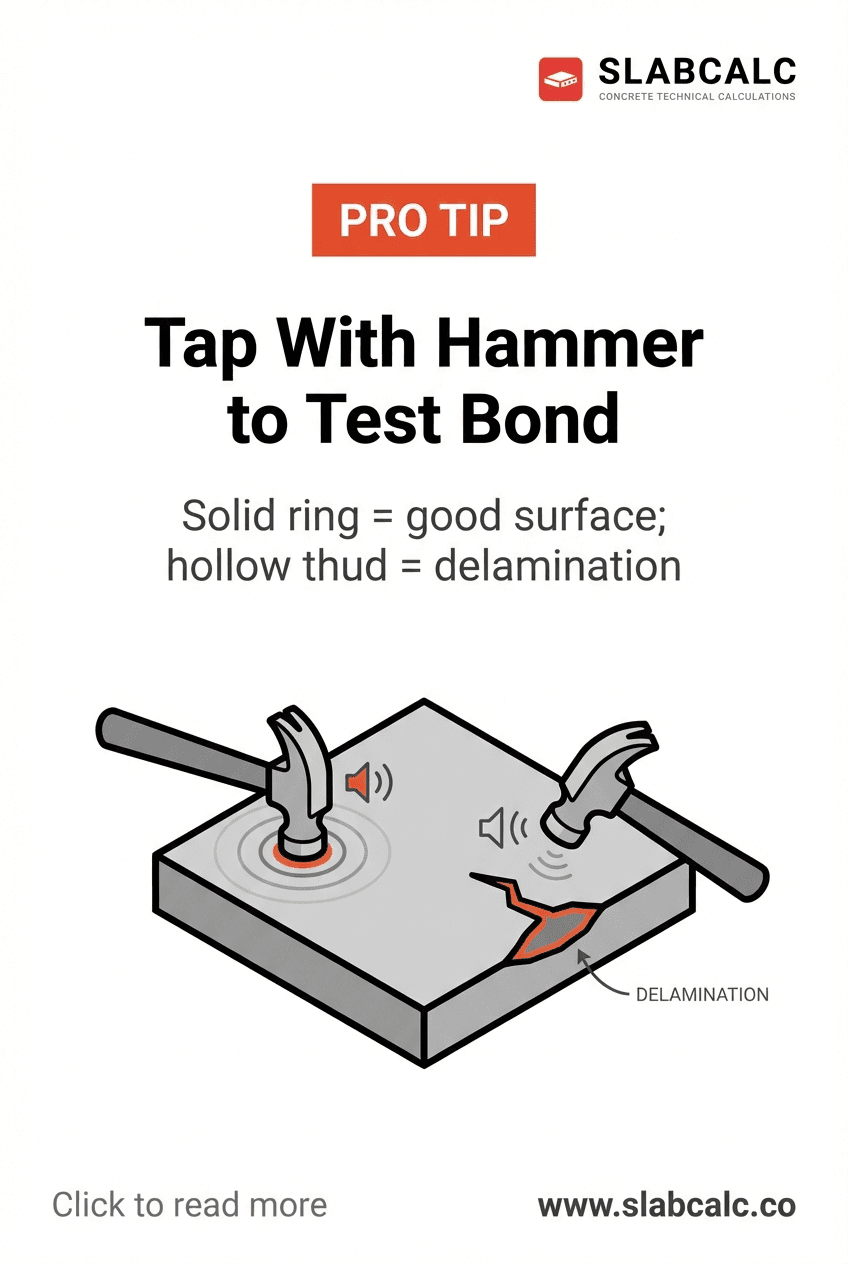
Tap With Hammer to Test Bond
The Mistake Most DIYers Make
You spot surface damage on your concrete slab—flaking edges, lifted areas, or worn patches—and immediately assume you know the depth and cause. You buy repair compound, patch the visible damage, and call it done. Six months later, the patch fails. The real problem? You never diagnosed what was actually wrong underneath.
Delamination is invisible at first glance. Large sheets of concrete can be separating from the substrate—trapped bleed water, poor curing, or finishing too early—while the surface looks fine. Patching over delamination guarantees failure. The overlay has nothing solid to bond to.
The Professional Tap Test
Concrete pros use a simple, free diagnostic tool: a hammer and their ears.
Here's how it works: Use a rubber mallet or the wooden handle of a hammer (not the metal head—that damages the concrete). Tap systematically across the suspected problem area and adjacent healthy sections. Listen carefully to the sound.
- Solid, crisp ring: The concrete is bonded well to the substrate. Surface is intact.
- Hollow, dull thud: The concrete is delaminated. A void or poor bond exists beneath that spot.
The sound difference is dramatic once you hear it. A solid tap produces a clear, almost musical tone. A delaminated spot sounds dead—like tapping a cardboard box instead of wood.
Why This Works
Sound travels through solid material predictably. When concrete is properly bonded to its base, the hammer vibration transfers through the entire thickness and bounces back clearly. When there's a void or air pocket (which exists in delaminated concrete), the vibration gets absorbed instead. That absorption creates the hollow sound.
Delamination typically ranges from surface-level to 1 inch deep. The tap test catches it before you spend money on repairs that will fail.
Step-by-Step Application
1. Prepare the area. Clean away loose debris and dust so you can hear clearly.
2. Test the baseline. Tap an area you're confident is solid and undamaged. Remember this sound.
3. Work systematically. Tap in a grid pattern—every 12 to 18 inches—moving outward from visible damage. Mark hollow spots with chalk or a marker.
4. Map the full extent. You'll often find delamination spreads beyond visible surface damage. The damaged zone is usually 20–40% larger than it appears.
5. Document findings. Take photos and note the dimensions. This tells you whether you need a simple patch or a full overlay.
Cost impact: Identifying a 4×8 foot delaminated zone early saves $300–800 in failed repairs and warranty callbacks. If you're planning concrete work, always tap-test first.
This 60-second diagnostic separates pros from guesswork. It costs nothing and prevents expensive mistakes.