
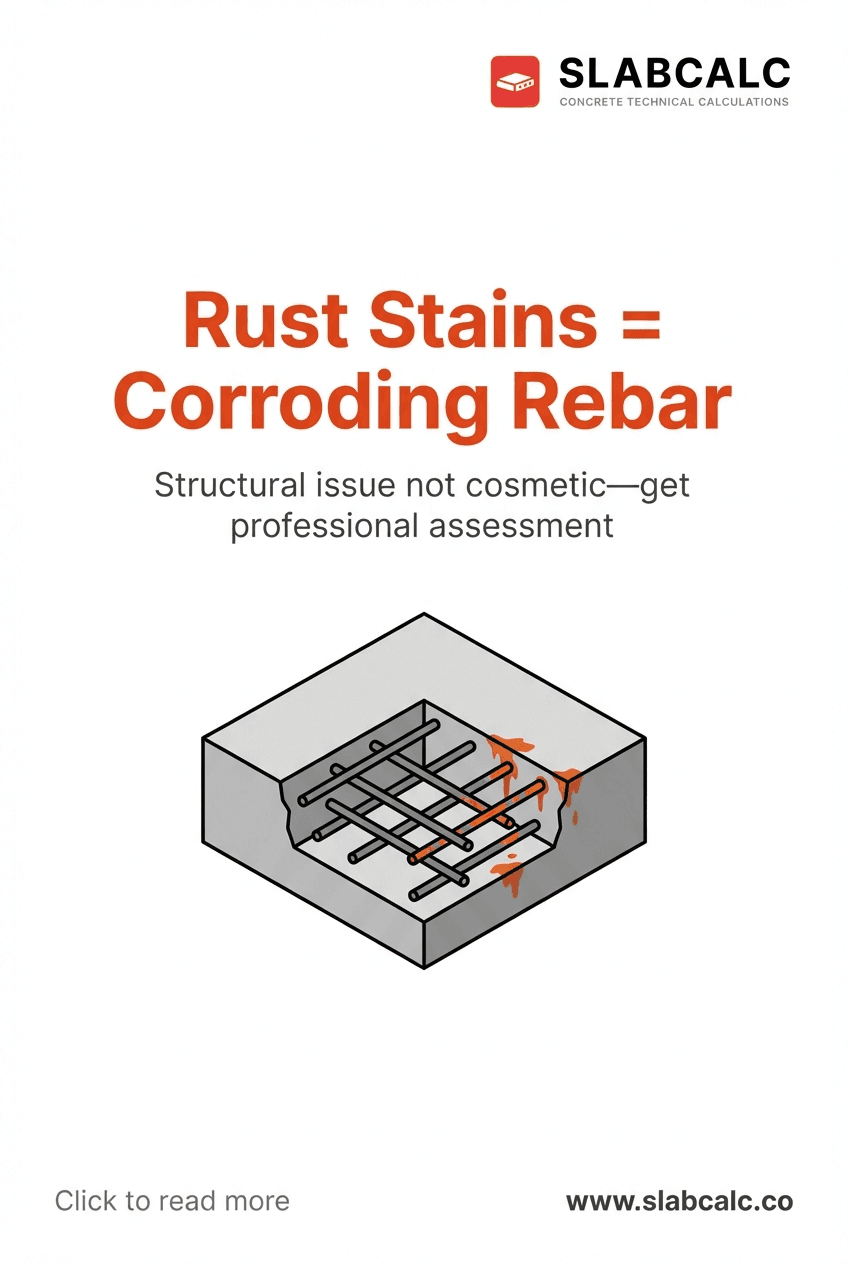
Rust Stains = Corroding Rebar
The Worst-Case Scenario
That rust stain you see creeping down your basement wall or garage floor isn't just an eyesore—it's evidence that steel reinforcement bars (rebar) embedded inside your concrete are actively corroding and expanding. When rebar rusts, it expands up to three times its original volume. This pressure pushes concrete away from the inside out, causing chunks to break loose (spalling). Left unchecked, corrosion weakens the structural integrity of the entire slab. A foundation that looked solid last year could fail dramatically in 5–10 years, potentially making the structure unsafe and creating repair bills exceeding $50,000.
Why Rebar Rusts in the First Place
Concrete is supposed to protect steel. It creates an alkaline environment that naturally prevents oxidation. But three common factors destroy this protection:
Chloride Intrusion. Road salt, de-icing salt, or seawater penetrates the concrete surface over years. Once chlorides reach the rebar, corrosion begins—even in the normally protective alkaline concrete. This is the #1 culprit in freeze-thaw climates.
Carbonation. Concrete's pH drops as carbon dioxide from the air reacts with calcium hydroxide in the paste. When pH falls below 9, the passive protection fails. This takes 10–30 years depending on concrete quality and climate.
Water and Oxygen. Rebar needs moisture and oxygen to rust. Poorly sealed concrete or cracks that allow water infiltration accelerate the process dramatically.
Spotting It Early Saves Thousands
Don't wait for large chunks to break off. Watch for these warning signs:
- Rust-colored stains or streaks flowing down from a crack or horizontal surface
- Tiny hairline cracks in concrete, often in clusters above the corroding bar
- Spalling (coin to palm-sized chunks) breaking away, especially near edges or penetrations
- Discoloration forming a halo pattern around damaged areas
- Efflorescence (white powdery deposits) combined with rust—often means active corrosion nearby
If you see rust stains, don't assume they're cosmetic. Contact a concrete contractor or structural engineer for a professional assessment. They can use a concrete cover meter (costs $2,000–$5,000 for professional testing) to measure how thick the concrete layer is above the rebar. If that cover is less than 1.5 inches, corrosion risk is high.
Prevention Checklist
Before You Finish a Slab:
- Specify air-entrained concrete (4–6% entrained air)
- Ensure minimum 1.5–2 inches of concrete cover over rebar
- Use proper water-cement ratio (0.50 or lower)
- Allow adequate curing time (7–14 days, not 48 hours)
After Installation:
- Seal exterior slabs within 6 months using penetrating sealer
- Reapply sealer every 2–3 years
- Manage drainage to keep water away from slab edges
- Avoid using rock salt on driveways; switch to calcium chloride or sand
Existing Concrete:
- Inspect annually, especially in spring after winter
- Repair cracks immediately with epoxy or polyurethane
- Keep gutters and drainage away from foundations
Rust stains are your concrete's distress signal. Get a pro's eyes on it now—the structural integrity of your entire project depends on it.