
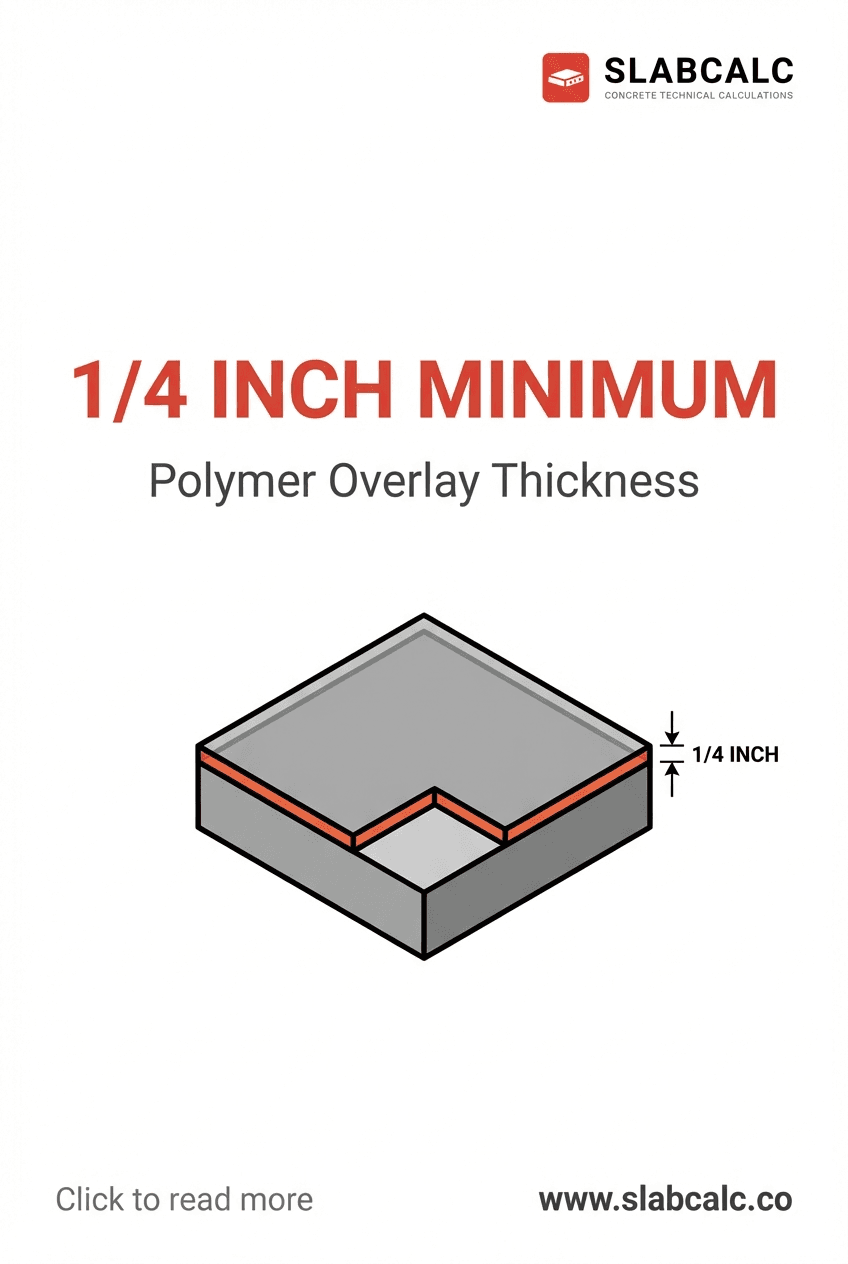
1/4 INCH MINIMUM
1/4 inch (6.4 mm) is the minimum viable thickness for a polymer concrete overlay to survive traffic, weather, and time. Go thinner and you're gambling. The overlay will cure faster, cost less per square foot, and look good for three months—then craze, chip, and peel. At 1/4 inch and above, the overlay has enough mass to bridge minor cracks, resist impact, and maintain flexibility as the base slab moves.
Why This Number Exists
A polymer overlay is only as strong as its structural capacity. Thickness directly controls:
- Tensile strength: Thicker material resists cracking from thermal cycling and substrate movement. A 1/8-inch application lacks the cross-sectional area to handle stress; it cracks like a thin eggshell.
- Bond line integrity: The overlay must grip the existing concrete through mechanical adhesion. 1/4 inch allows proper penetration into the base surface texture without being so thin that the top cure too fast and separates.
- Abrasion resistance: High-traffic areas (garages, driveways, commercial floors) demand durability. At 1/8 inch, foot traffic and tire wear burn through to the base within 18 months. At 1/4 inch, you get 8-12 years of service.
Professional-grade polymer overlays—whether self-leveling epoxy, polyurethane, or polymer-modified cement—all perform best in the 1/4- to 1/2-inch range.
When 1/4 Inch Is Mandatory
Apply 1/4 inch or thicker for:
- Garage floors and driveways (vehicles, foot traffic, freeze-thaw cycles)
- Basements and crawlspaces (moisture exposure, temperature swings)
- Exterior patios and decks (UV exposure, standing water, freeze-thaw)
- Commercial floors (daily equipment movement, cleaning chemicals)
- Areas over active substrate cracks (the overlay bridges the movement)
These conditions demand the structural reserve that 1/4 inch provides.
When You Might Get Away With Less (And Why You Shouldn't)
Some contractors or product manufacturers market 1/8-inch or even 1/16-inch applications as "sufficient" for light residential use or interior-only spaces. The cost savings are real—roughly $0.50–$1.00 less per square foot—but the risk is disproportionate.
A 1/8-inch overlay on an interior basement floor might last 3–5 years before stress cracks appear. Once cracked, water infiltrates at the base, and the overlay delaminates. You're back to resurfacing (or replacement) within a decade, negating any initial savings.
Application Reality
When you order a resurfacing job, the installer should specify thickness in the contract—typically as "1/4-inch minimum" or "3/8-inch self-leveling." If the estimate doesn't mention thickness, ask. Some budget contractors default to thin pours to cut material and labor costs.
Use a depth gauge or caliper to verify thickness on similar completed jobs. The difference between 1/4 inch and 3/8 inch is minor in cost (about $0.50–$1.00 per square foot) but major in longevity.
The Bottom Line
Resurfacing saves 50–70% compared to full replacement. Don't sacrifice that investment by cutting corners on thickness. Specify 1/4 inch minimum, 3/8 inch for high-traffic or exterior areas. The overlay will last 10–15 years instead of 2–4, and you'll actually recoup the resurfacing cost.