
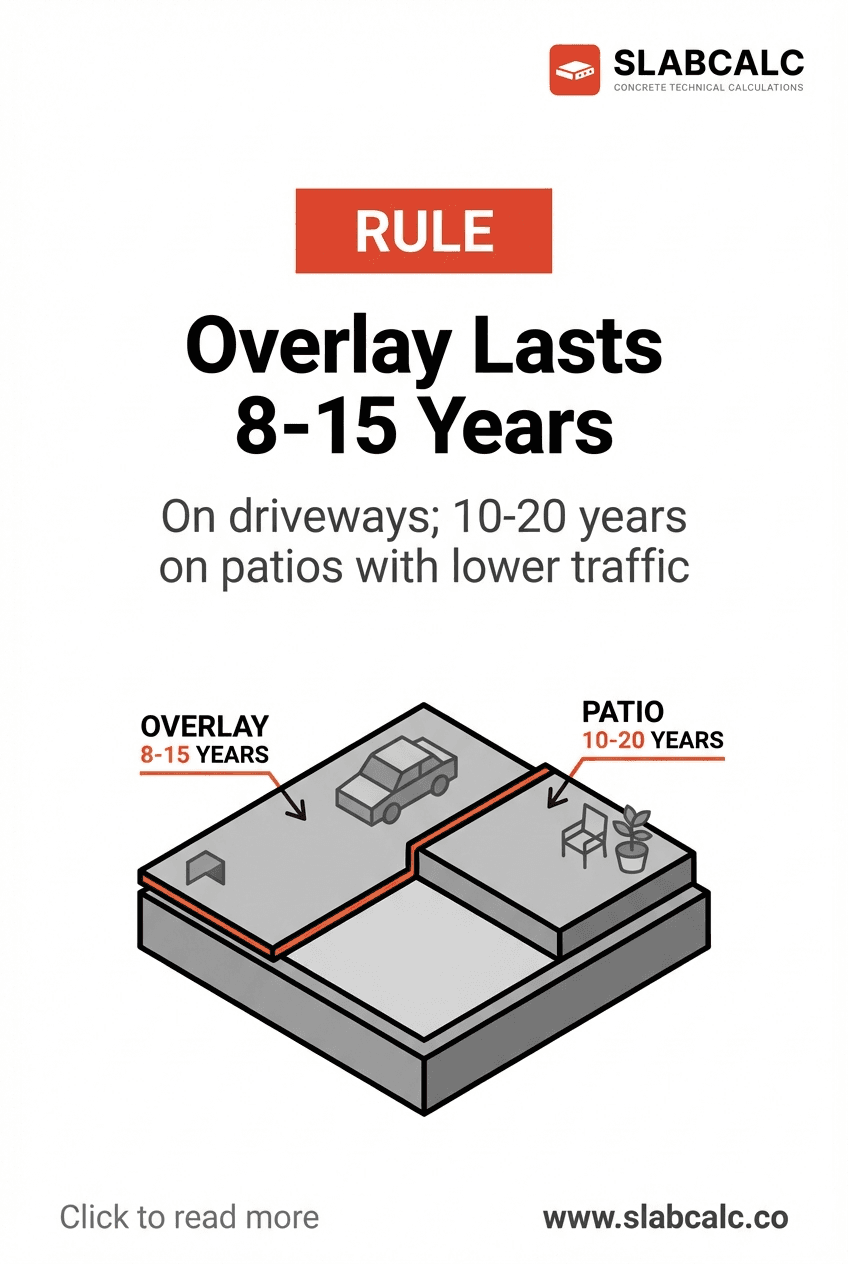
Overlay Lasts 8-15 Years
Concrete overlays are the affordable middle ground between living with a damaged slab and ripping it out. But they only work under specific conditions—and understanding the decision tree saves thousands in wasted money and failed projects.
The Decision Framework
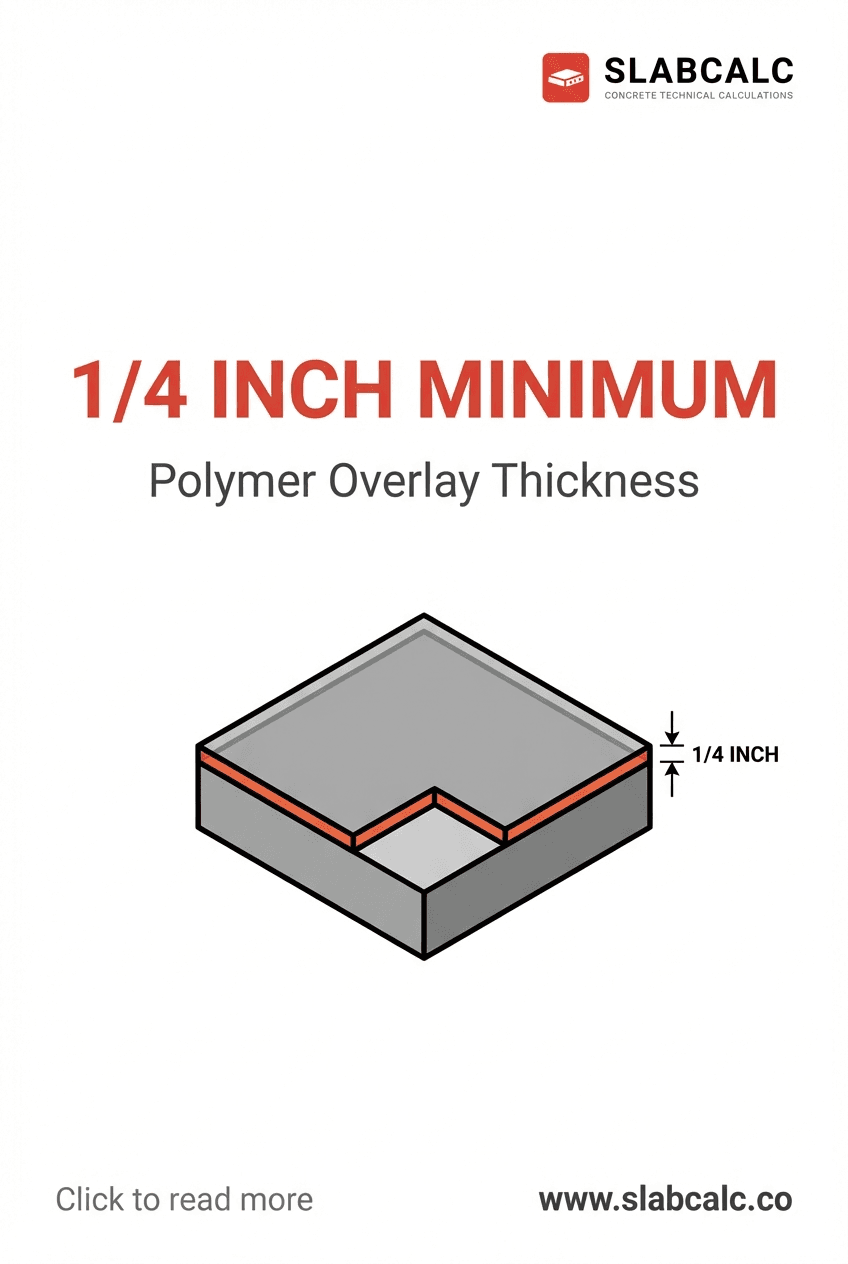
If your slab is structurally sound but cosmetically damaged → overlay is viable. Surface scaling, stains, minor crazing, and worn finishes are overlay candidates. Cost runs $3–8 per square foot, and you'll get 8–15 years of renewed life on driveways, 10–20 years on low-traffic patios.
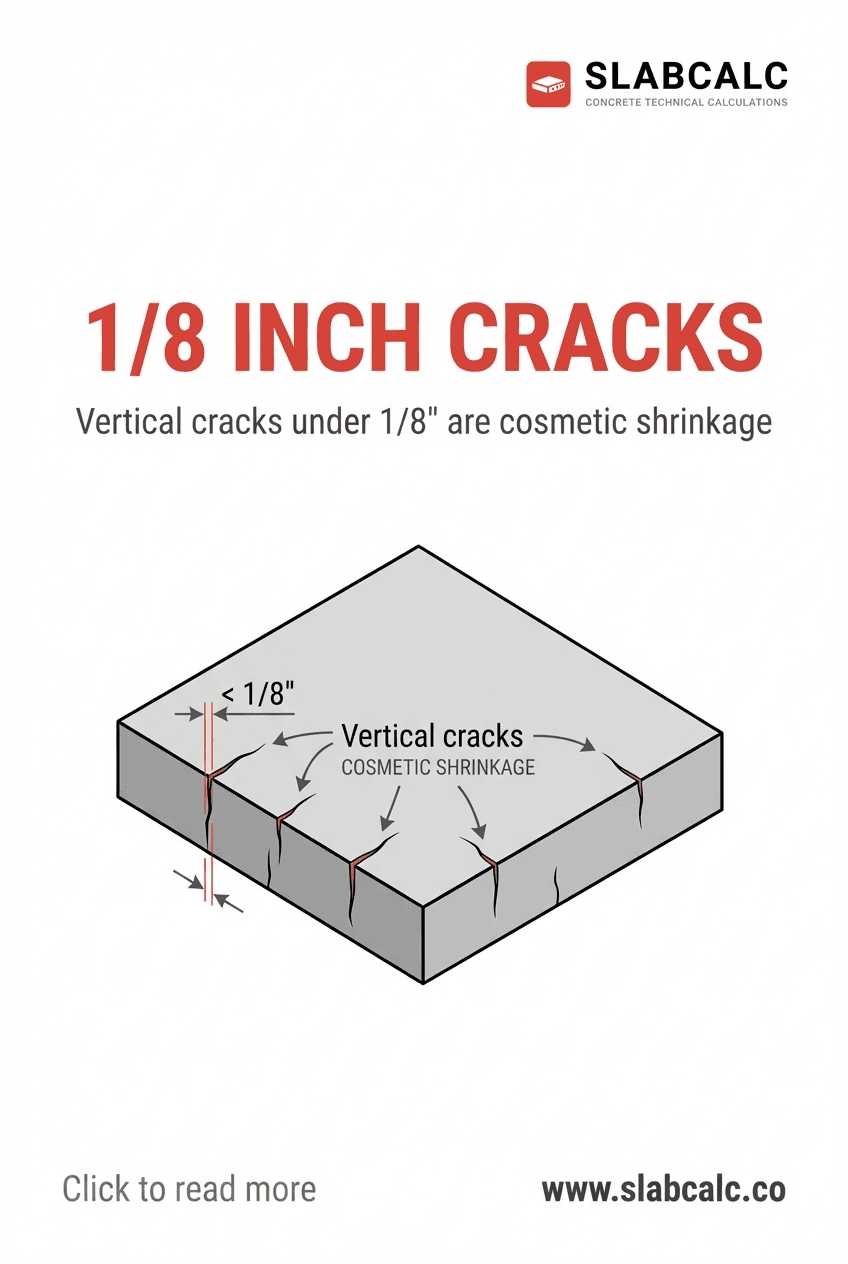
If your slab is actively cracking, settling, or delaminating → overlay will fail. Don't cover the problem. Fix the foundation first, or budget for full replacement at $8–18 per square foot.
The Lifespan Reality
That 8–15 year window assumes three conditions:
1. Traffic level matches the product. Decorative overlays on busy driveways fail faster than polymer-modified overlays on patios. A polymer overlay under normal driveway traffic (2–4 cars daily) hits 12–15 years. A patio under light foot traffic stretches to 20 years. Heavy commercial traffic? Don't even consider an overlay.
2. The substrate stays stable. Overlays bond to the existing slab surface. If the slab below is moving, settling, or heaving, the overlay cracks with it—sometimes within one season. Settlement is the #1 reason overlays fail prematurely.
3. Regional climate is compatible. In freeze-thaw zones, overlays need air entrainment. If your original concrete lacked it and keeps scaling, the overlay will scale too. The overlay is only as durable as the base it protects.
The Overlooked Edge Cases
Most homeowners miss these critical factors:
Hollow spots and delamination. Tap your entire slab with a hammer every 3–4 feet. A solid ring means good adhesion. A hollow thud means the concrete is already separating from the base or has subsurface voids. Overlays won't bond to hollow concrete. Fix it or replace.
Active versus dormant cracks. A crack that's been stable for 12+ months is safe to overlay. One that's still moving or widening seasonally will crack through the overlay. Mark suspect cracks with a pencil line and check them after two weeks. If the line breaks, the crack is active—don't overlay.
Existing sealers and coatings. Old sealers, paint, or epoxy prevent new overlays from bonding. Surface prep—grinding, shot blasting, or chemical removal—adds $1–2 per square foot and is non-negotiable.
The Recommendation
Use SlabCalc's concrete cost calculator to compare overlay costs against full replacement for your slab size. Get quotes from resurfacing contractors that include a 48-hour moisture test. A moisture-trapped slab will cause delamination within months. If the slab passes the test and shows no active cracks or settlement, an overlay delivers strong ROI. You're looking at 10–20 years of extended life at a fraction of replacement cost. Just don't mistake an overlay for a permanent fix—budget for replacement or another overlay in a decade.