
Control vs Expansion Joints
The Worst-Case Outcome
Your 20-foot driveway pours beautifully. Six months later, a long diagonal crack runs the entire length, and the slab on one side has heaved 1/2 inch higher than the other. You've got a trip hazard, water pools in the settlement, and repair costs jump from under $200 to over $2,000. This happens because two different joint types got confused during planning—and one critical detail was skipped.
Why Concrete Needs Two Different Joints
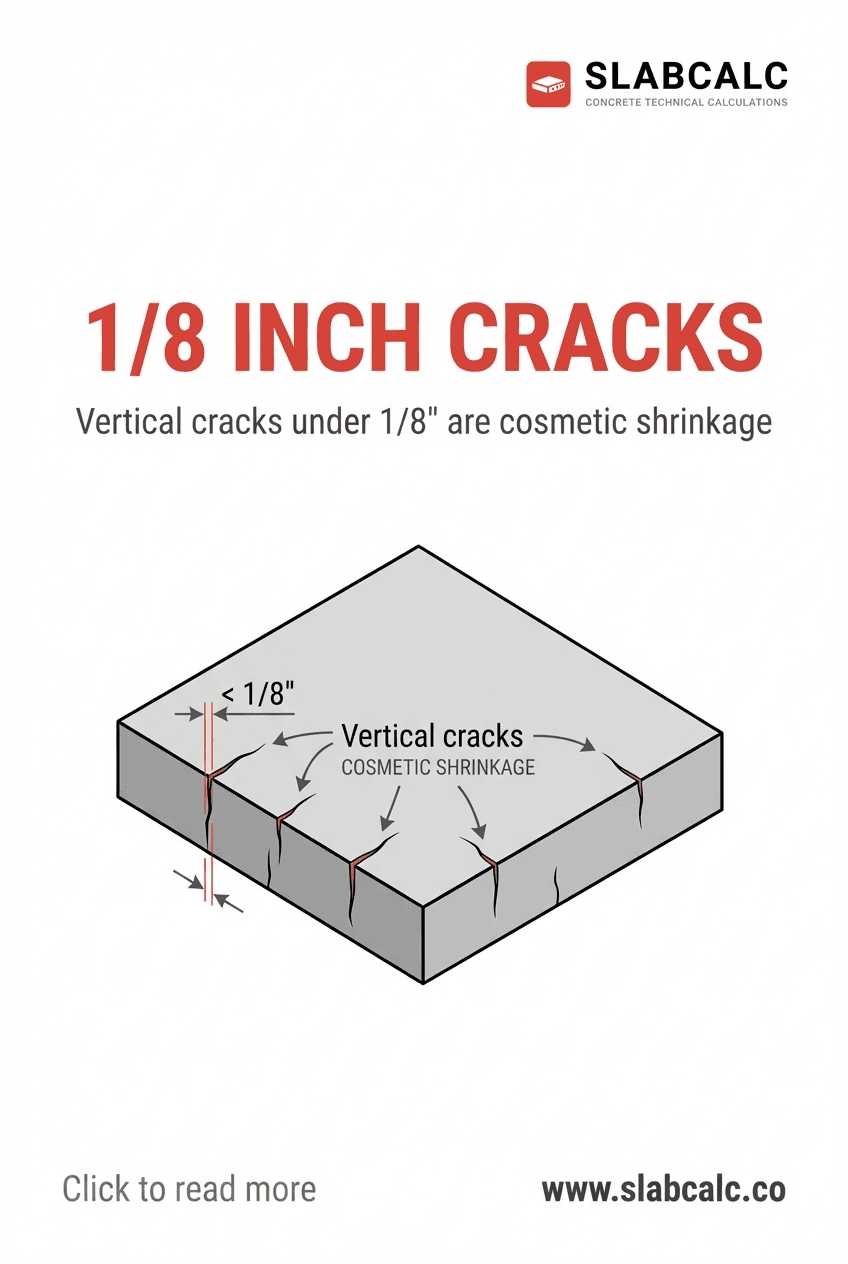
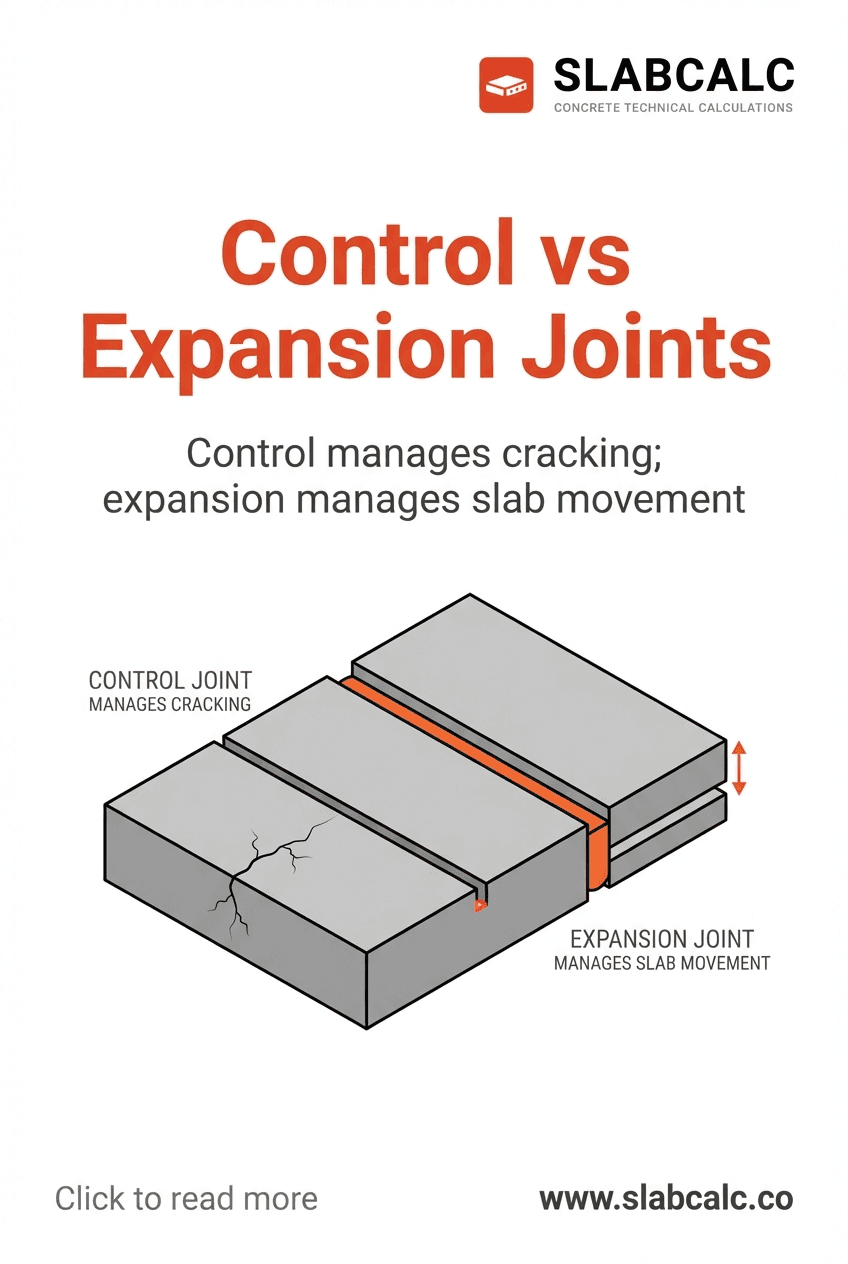
Concrete shrinks as it cures, pulling inward at roughly 1/16 inch per 10 feet. That's why control joints exist: they're intentional weak lines that let the concrete crack there instead of randomly across your slab. A 4-inch driveway slab needs control joints every 8–12 feet, cut 1/4 to 1/3 of the slab depth (minimum 1 inch deep) within 6–18 hours of the pour.
But shrinkage is only half the problem. Concrete also expands and contracts with temperature swings—up to 1/8 inch per 10 feet over a year. In hot climates or where your slab touches a foundation wall, that movement has nowhere to go if joints are filled with rigid material. The slab pushes, buckles, or cracks the structure it's attached to.
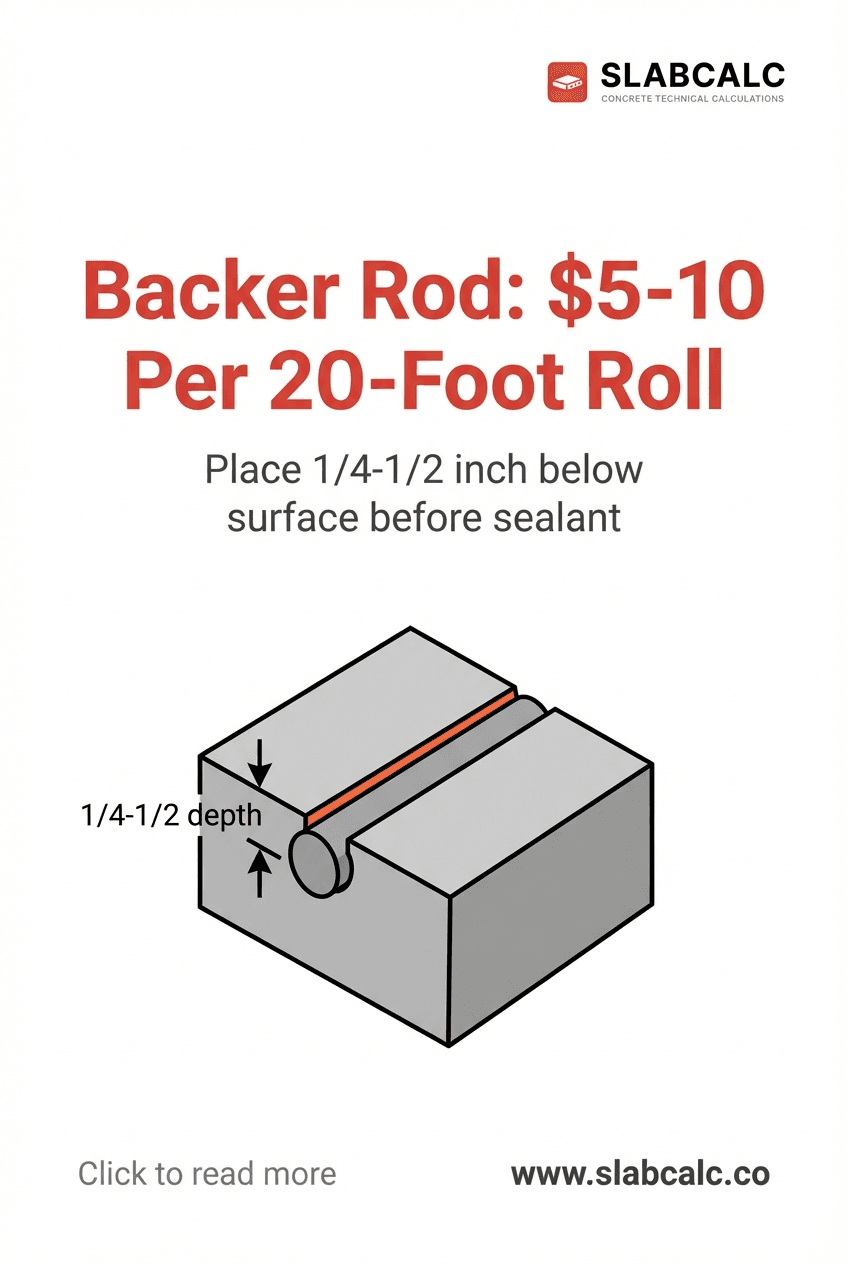
Expansion joints (also called isolation joints) solve this. They're full-depth gaps between separate sections, filled with compressible foam or rubber. Unlike control joints, they stay open—they're not meant to be sealed tight.
How to Identify the Problem Before It Happens
Check for these red flags:
- Your control joints are shallower than 1 inch on a 4-inch slab
- Control joints are spaced more than 12 feet apart
- No expansion joint exists where concrete meets your house foundation
- The expansion joint (if present) is filled with concrete, caulk, or rigid material instead of flexible foam
- Cracks run diagonally or randomly rather than at planned joint lines
If your slab is already cracking, look at where those cracks form. Random cracks = control joints failed. Cracks that force the slab to buckle or heave = expansion joint was missing or blocked.
Prevention Checklist
Before your concrete pour, confirm:
- Control joints: Marked every 8–12 feet for a 4-inch slab; will be cut within 18 hours of pour
- Expansion joints: Planned at every transition (slab-to-foundation, slab-to-wall, between separate pours)
- Joint depth: Control joints at least 1 inch deep; expansion joints full slab thickness with foam insert
- Joint material: Expansion joints use only compressible material; never fill them with concrete or rigid caulk
- Spacing math: For thicker slabs (6 inches), increase control joint spacing to 12–18 feet; increase expansion joint width to 1/2 inch
The cost difference? Adding proper joints during the pour: $50–$100 per 100 square feet. Repairing a cracked, settled slab: $2,000–$5,000 per section. Getting joints right saves you thousands and keeps your concrete safe for 20+ years.