
Backer Rod: The Right Depth Matters
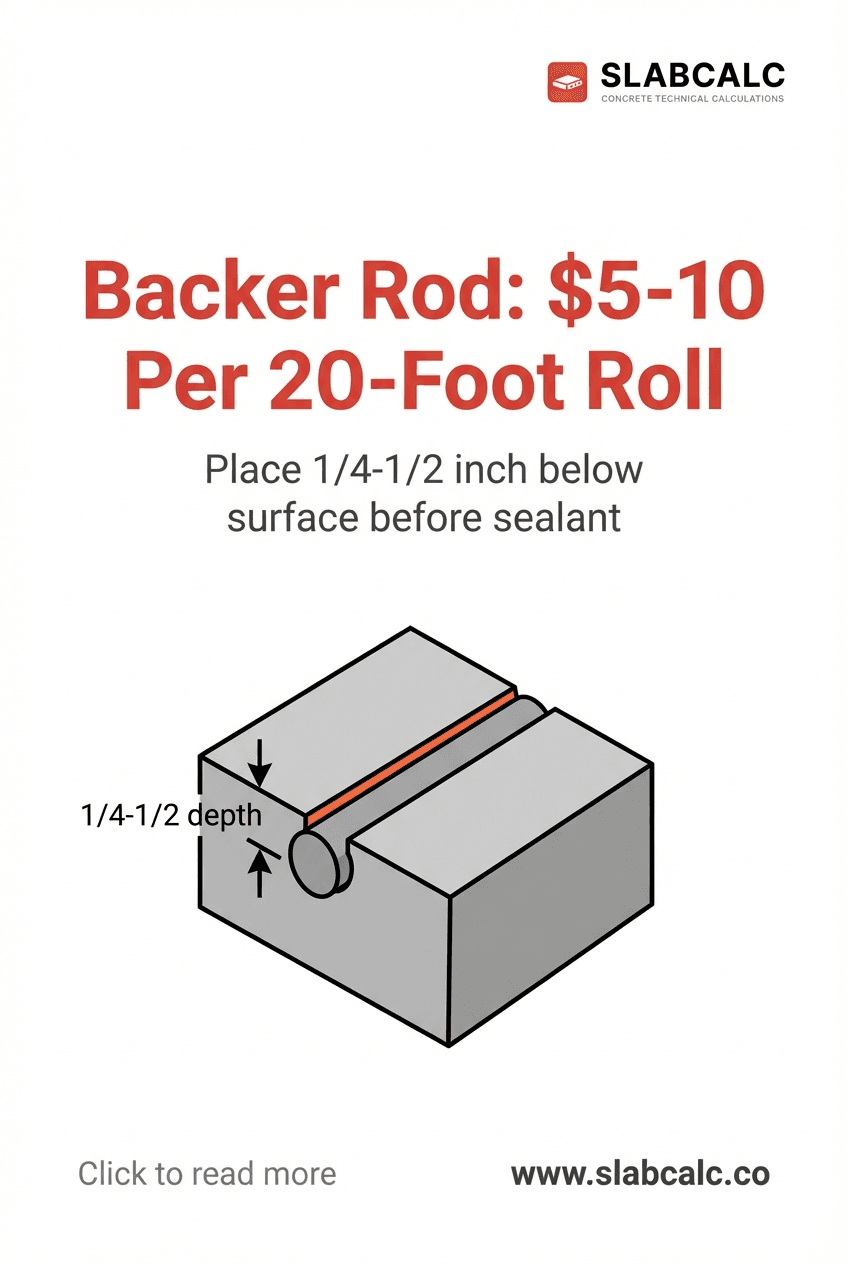
The Spec: 1/4 to 1/2 Inch Below Surface
Backer rod—a compressible foam or rubber rope—must sit 1/4 to 1/2 inch below the finished concrete surface before you apply sealant. This isn't a suggestion. It's the difference between a joint that flexes with seasonal movement and one that fails within 2–3 years.
At $5–$10 per 20-foot roll, backer rod is one of the cheapest materials on a concrete job. Getting the depth wrong costs hundreds in premature repairs.
Why This Depth Matters
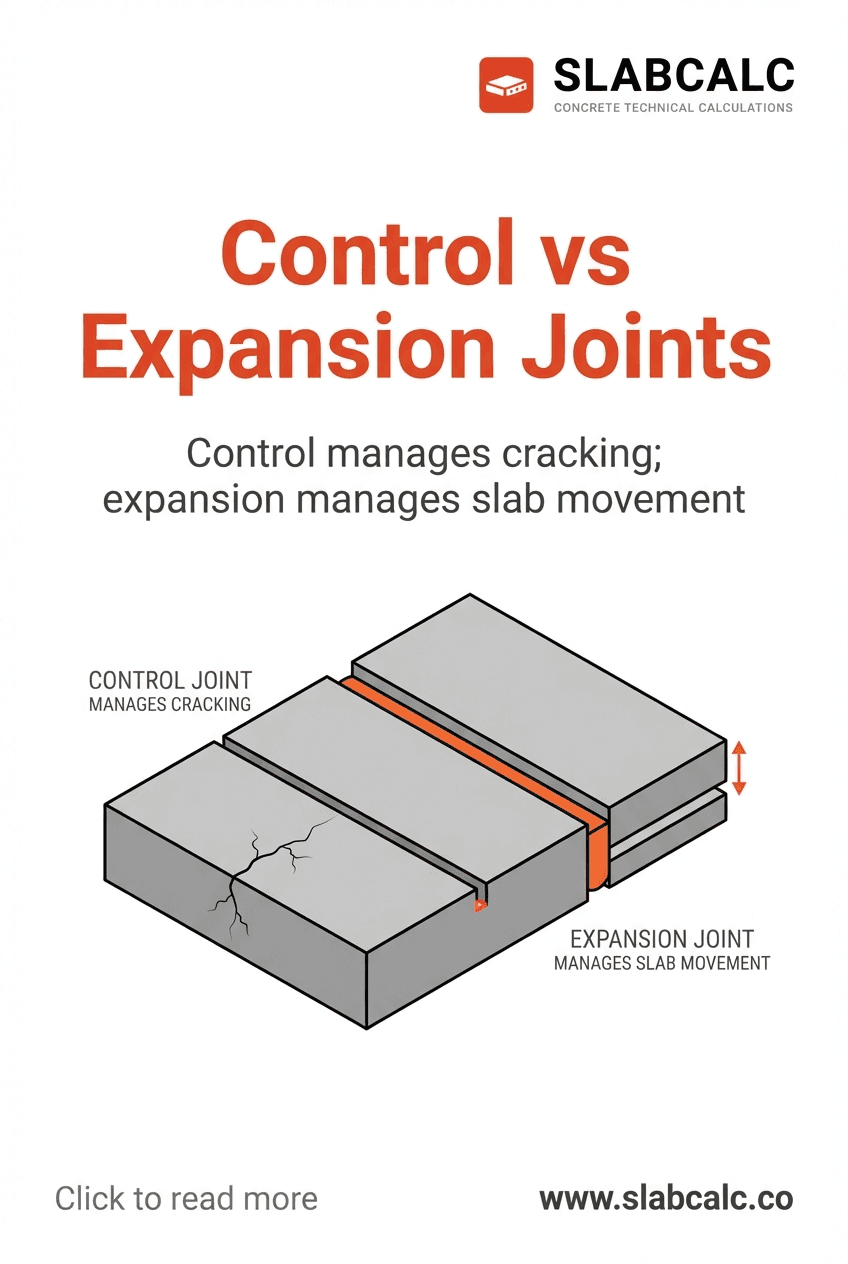
Concrete expands and contracts with temperature swings—as much as 1/8 inch movement per 10 feet of slab width across a single season. Expansion joints must absorb that movement without transferring stress to adjacent slabs or structures.
When backer rod sits flush or above the surface, sealant can't compress enough. The rod becomes a rigid plug instead of a cushion, and lateral movement cracks the sealant bond. You'll see failure within months in freeze-thaw climates.
When placed too deep—more than 1/2 inch down—the sealant layer becomes too thick. It loses elasticity, splits under movement, and water wicks behind it, deteriorating the joint from the inside.
1/4 to 1/2 inch creates a sealant depth of about 1/4 inch, which absorbs movement while remaining elastic enough to flex. A slab moving 1/8 inch seasonally stays within the sealant's strain capacity (typically 25–50% for polyurethane products).
Material Selection: What to Buy
Standard closed-cell foam rod is most common for residential work:
- Diameter: 1/2 inch to 1 inch (match your joint width plus 1/8 inch for compression)
- Cost: $0.25–$0.50 per linear foot
- A 20-foot roll covers 240 linear inches at standard width
Avoid:
- Open-cell foam (absorbs water, deteriorates)
- Weathered or compressed rod (lost elasticity)
- Rod wider than joint opening plus 1/8 inch (won't compress properly)
Check the joint width: Measure with a feeler gauge or thin ruler. Most expansion joints are 1/2 inch wide; some older slabs run 3/4 inch. Select rod diameter accordingly.
Installation: The Critical Step
- Clean the joint with a wire brush and compressed air. Dirt prevents bonding and causes sealant failure.
- Insert the rod with a backer rod tool or spacer. Push it down so the top surface is exactly 1/4 to 1/2 inch below the concrete.
- Don't compress it excessively. Rod should expand slightly to grip the joint walls, not be wedged in like a cork.
- Wait 24 hours before applying sealant (allows rod to relax into position).
Sourcing Tips
Buy backer rod from concrete supply or masonry distributors, not general hardware stores. Home centers often stock only 1/4-inch diameter, which is too small for most residential joints. Online concrete suppliers ship in bulk (10–15 rolls) at $4–$6 per roll with freight included.
Measure your total linear footage first. A typical driveway (48 feet × 10 feet) with control joints every 10 feet needs roughly 100 linear feet of rod—five 20-foot rolls.
The small cost of proper backer rod saves thousands in sealant reapplication and water damage repairs. Don't skip this step.