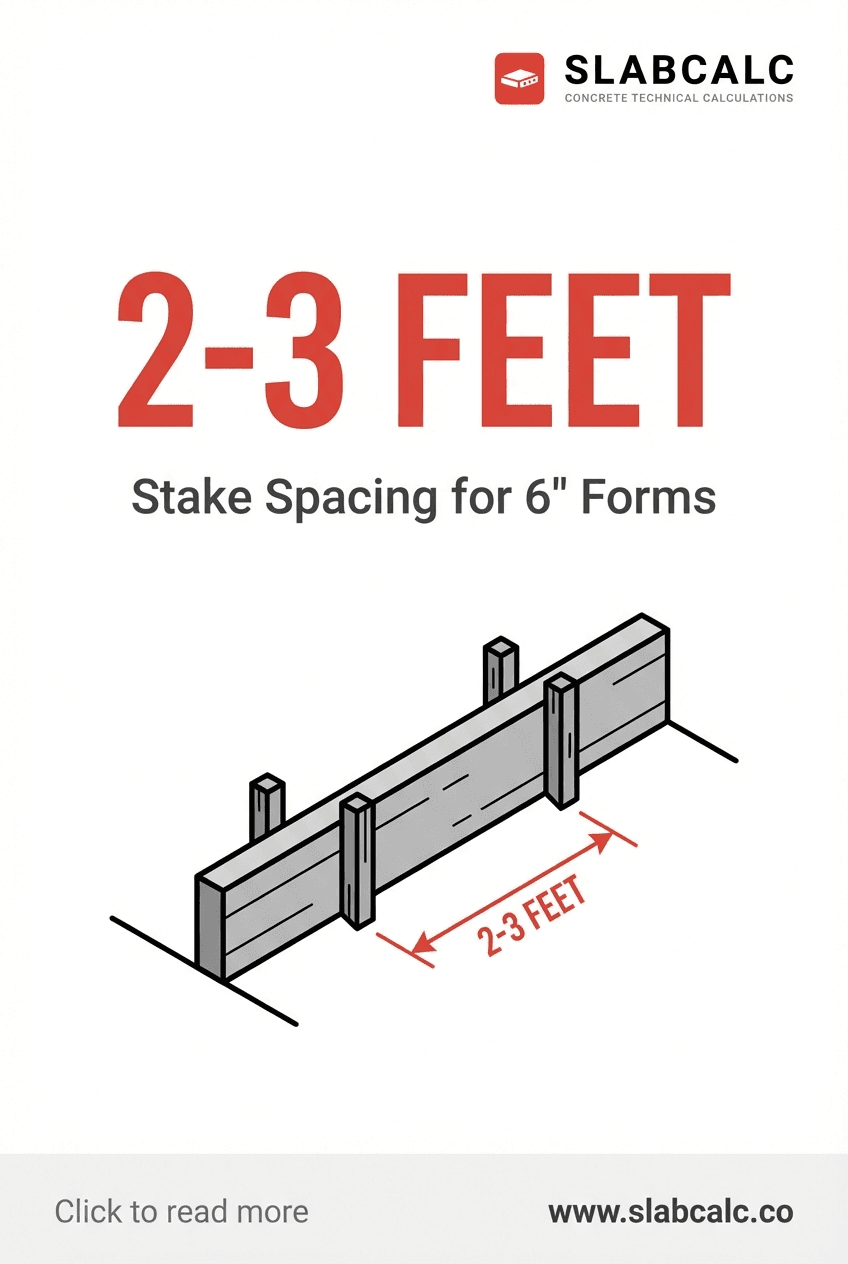

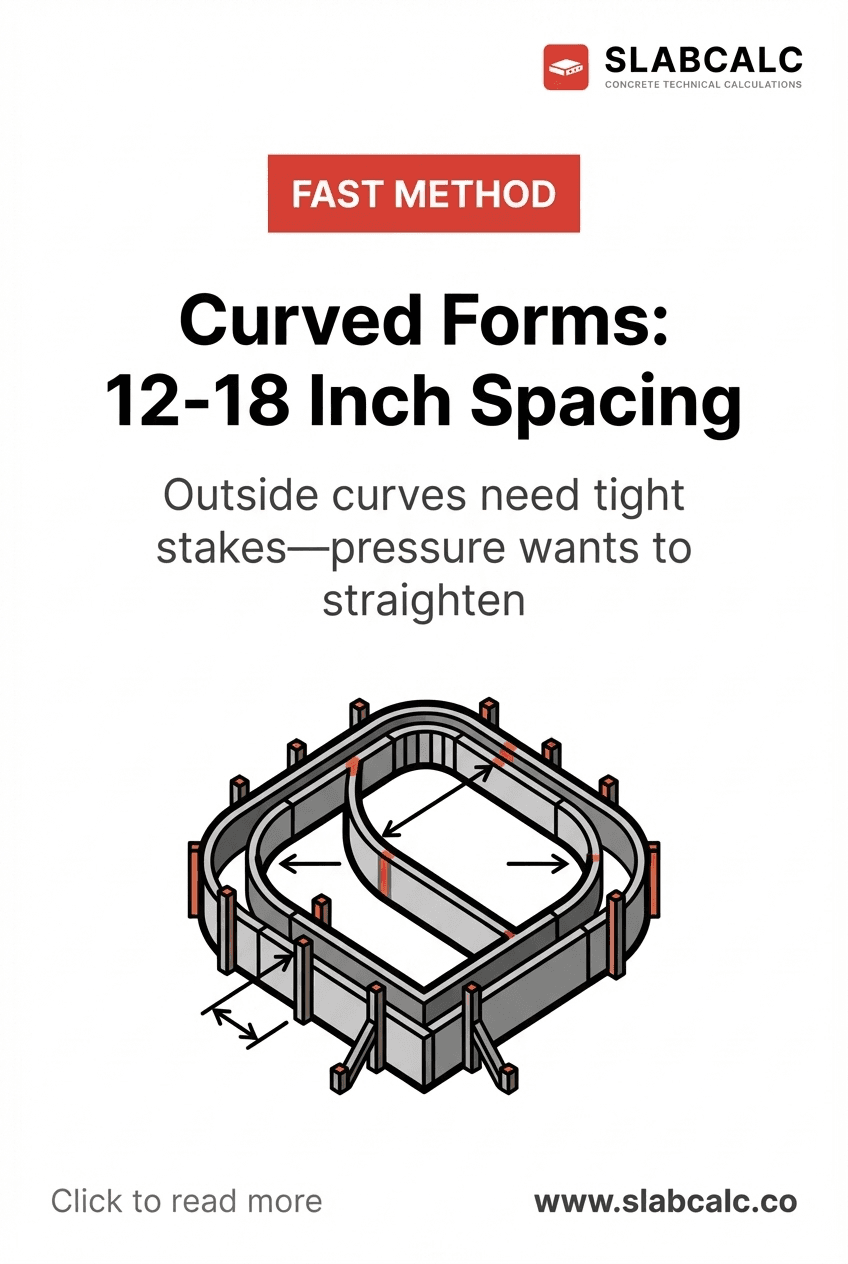
Curved Forms: 12-18 Inch Spacing
The Speed Difference: Do It Right or Do It Twice
The slow way: Space stakes 24–36 inches apart on your curved forms, skip diagonal bracing, and hope. Then watch the form bow outward when concrete hits it, dump concrete onto the ground, and spend 4–6 hours digging out ruined concrete and rebuilding your forms.
The fast way: Install stakes every 12–18 inches with proper diagonal bracing before pouring. Your form holds solid. You pour once, finish once, and move forward. Total time investment upfront: 30–45 minutes. Time saved by avoiding a blowout: 8+ hours.
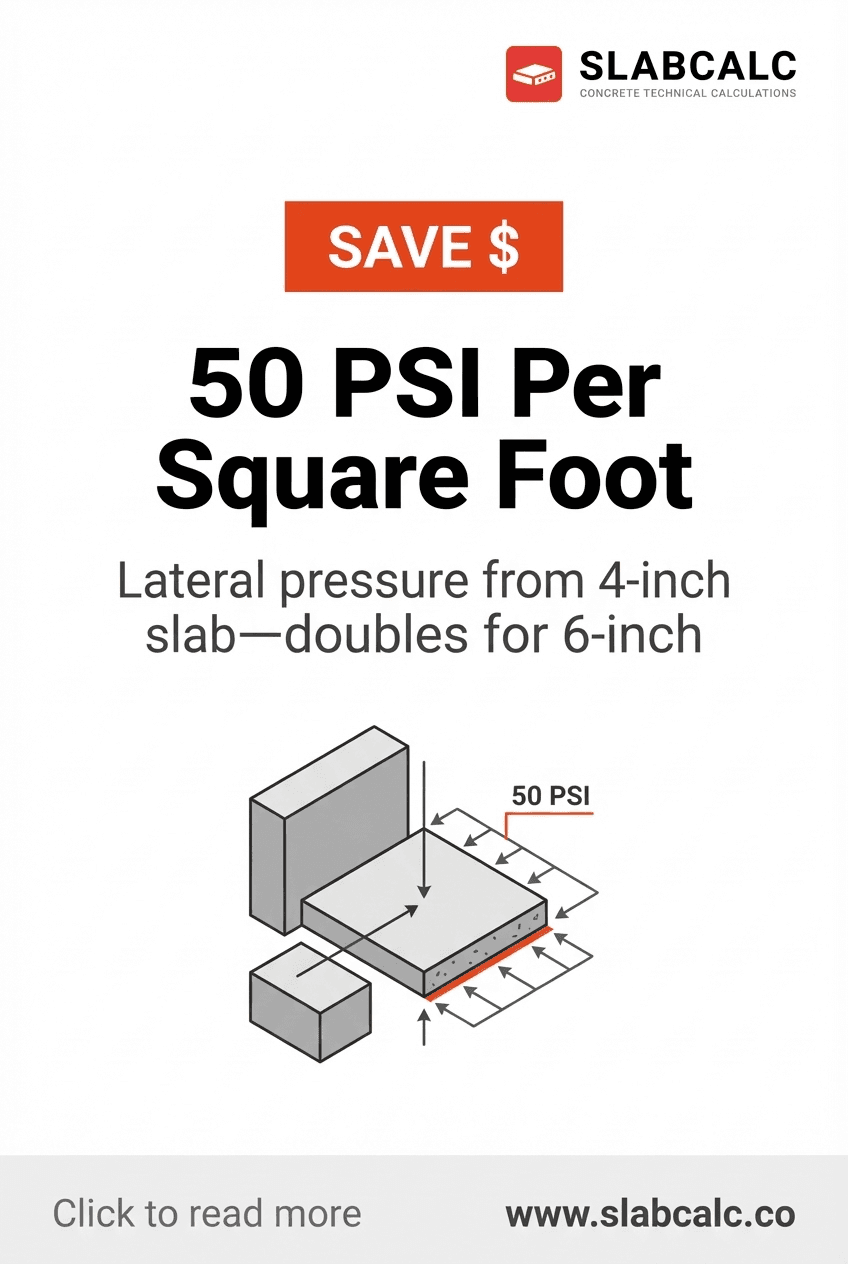
Curved forms demand tighter spacing than straight runs because the curve itself wants to straighten under lateral pressure. Concrete weighs 150 pounds per cubic foot. At 6 inches thick, a 4-foot-wide section exerts over 300 pounds of outward force. On a curve, that pressure has a mechanical advantage—it's pushing the form into its largest possible radius. Loose stakes let the curve flatten, and once it moves, failure happens fast.
Why 12–18 Inches Is the Sweet Spot
For outside curves (the convex side facing the concrete), spacing tighter than 18 inches is non-negotiable. Here's the math: a standard 2x4 form board can span about 3 feet unsupported before flex becomes visible. On a curve, you lose 30–40% of that flex tolerance because the concrete load amplifies any outward movement.
At 12-inch spacing, you're essentially creating a rigid fence that can't move. At 18 inches, you're at the upper limit—still safe for most residential work (patios, pool decks, driveways), but any wider and you're gambling.
Inside curves (concave side) can use slightly wider spacing—24 inches is usually safe—because the concrete naturally pulls inward. Never confuse the two.
Tools and Materials You Need
- Stakes: 2x2 or 2x4 lumber, 24–30 inches long (for 6-inch forms)
- Fasteners: 3-inch galvanized screws (faster and tighter than nails)
- Diagonal bracing: 2x4 scrap at 45-degree angles, every 3 feet minimum
- Level: A 2-foot level to check form straightness before pouring
- Pencil or chalk: Mark your 12 or 18-inch intervals before driving stakes
Rent a cordless impact driver if you don't own one—driving 24 stakes by hand wastes 90 minutes you could spend on layout or finishing.
Timing Benchmarks
- Mark and measure: 10 minutes per 20 linear feet
- Drive stakes: 2–3 minutes per stake with a power driver (48–72 minutes for a typical curved patio section)
- Install diagonal bracing: 15–20 minutes per section
- Final check and tightening: 10 minutes
Total prep time for a 50-linear-foot curved edge: roughly 2–2.5 hours. Rebuilding after a blowout: 5–8 hours, plus material waste and concrete loss.
The real time hack isn't speed—it's elimination. Tight spacing at the start eliminates the catastrophic slowdown of a form failure.