
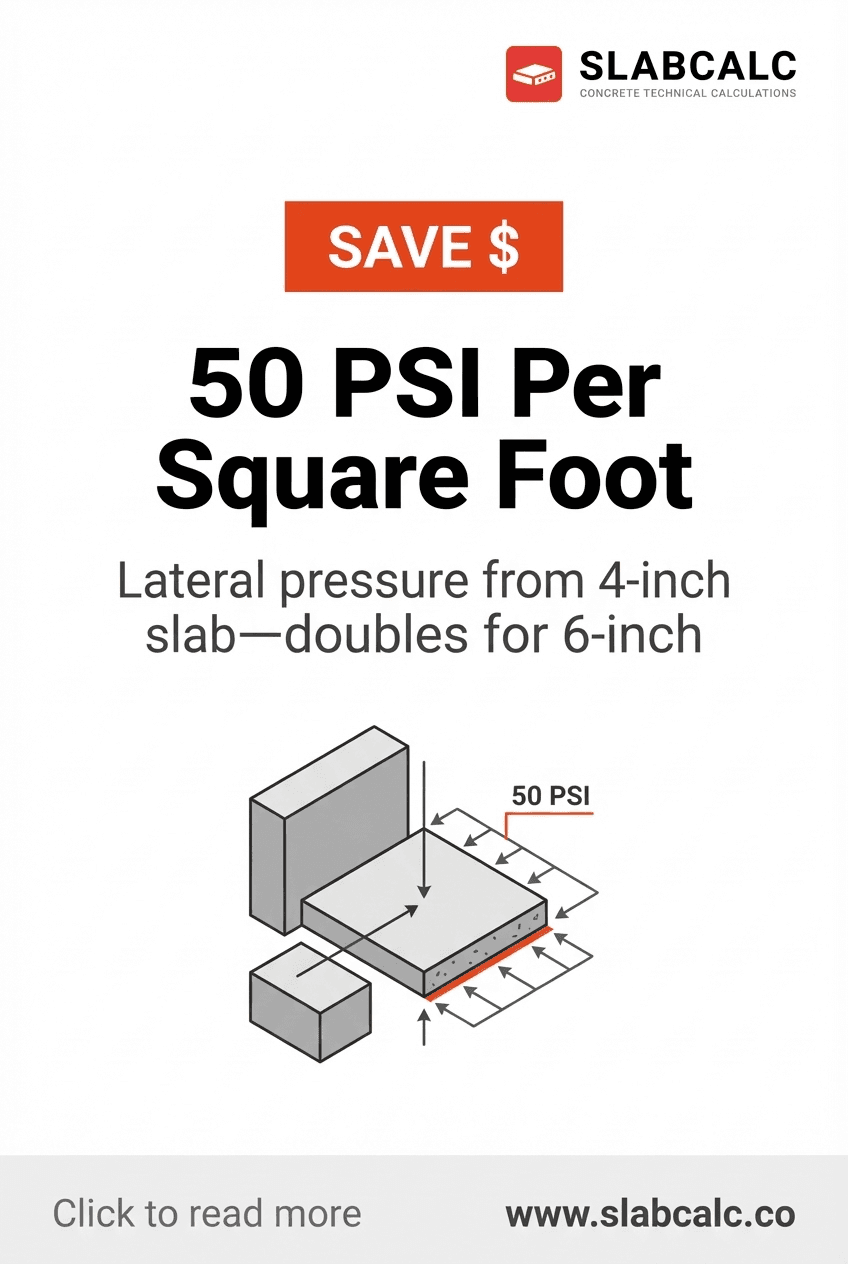
50 PSI Per Square Foot
The Price of Getting Bracing Wrong
A concrete blowout isn't just inconvenient—it's expensive. A failed 4-inch slab costs $400–$800 to excavate, reset forms, and repour. A 6-inch slab failure runs $700–$1,200. Meanwhile, proper bracing costs $60–$150 in materials for a standard 10x10 patio. That's a potential savings of $300–$1,050 by planning ahead.
The physics is simple: concrete applies consistent lateral pressure against forms. At 4 inches thick, you're looking at roughly 50 pounds of pressure per square foot of form face. Double that slab to 6 inches, and pressure doubles to 100 PSI. Your stakes and braces either handle it, or your forms fail.
The Cheap Approach vs. The Right Approach
Budget-conscious (and risky) method:
- Space stakes 4–5 feet apart
- Use 1x2 wooden stakes, driven 8 inches deep
- No diagonal bracing
- Cost: $25–$40
- Failure rate on 6-inch pours: high
- Result if it fails: $700+ repair bill
Proper bracing method:
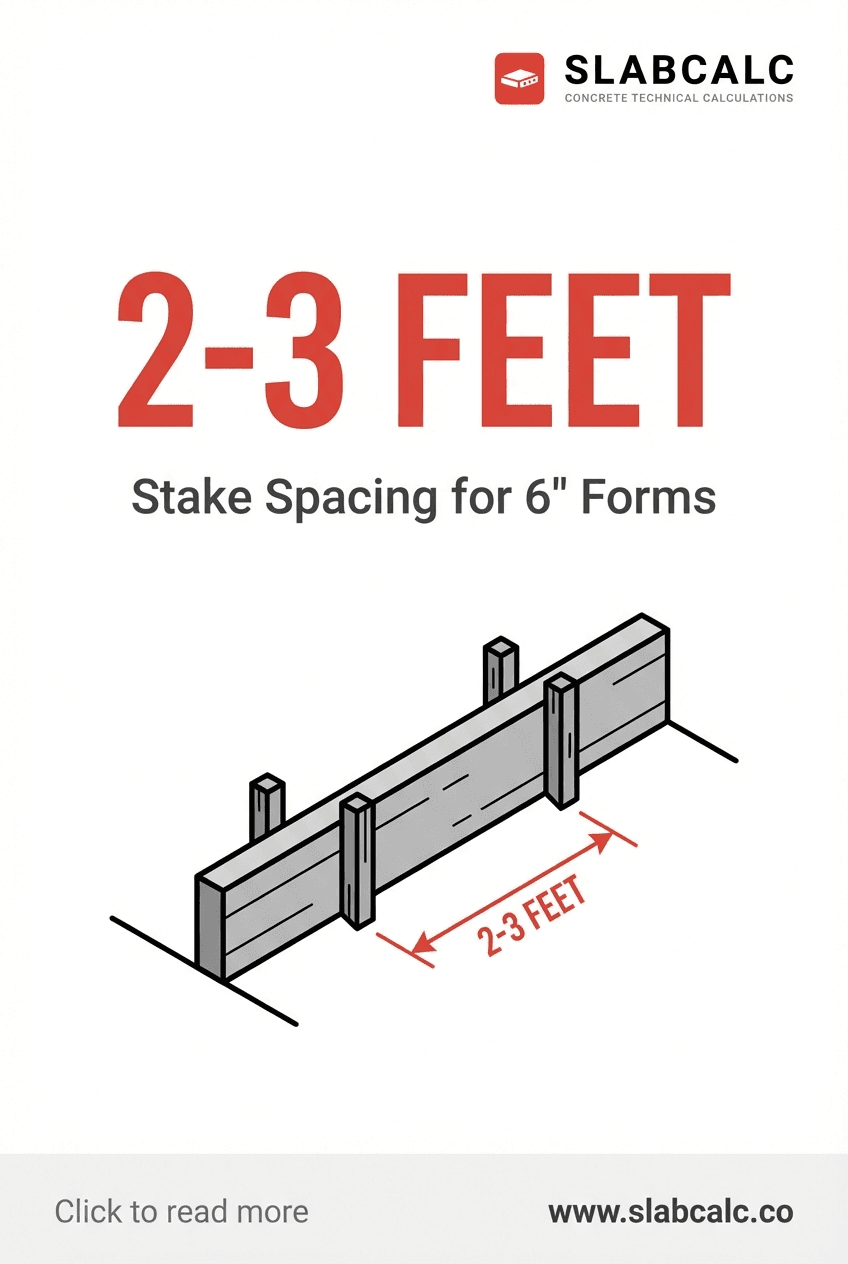
- Space stakes 2–3 feet apart (closer for 6-inch pours)
- Use 2x2 or 2x4 stakes, driven 12–14 inches deep
- Add diagonal cross-bracing every 6 feet
- Use level ties or concrete form braces at mid-height
- Cost: $80–$150
- Failure rate: nearly zero when executed correctly
- Result: patio that stays straight and flat
For a 10x10 patio, proper bracing requires approximately 12–16 stakes and 4–6 diagonal braces. Lumber runs roughly $1.50–$2.50 per linear foot, depending on your region. Add concrete screws ($0.15 each), and you're still under $150.
The Math Behind the Pressure
A 4-inch slab pours at 150 pounds per cubic foot. That concrete weight translates to outward force on your forms. On a 4-foot-wide section, you're resisting roughly 300 pounds of pressure along that stretch. Spaces your stakes 5 feet apart, and each stake must resist 375 pounds—while the wood between stakes flexes and tries to bow outward.
For 6-inch slabs, that same 4-foot width now generates 450 pounds of pressure. Stakes spaced 3 feet apart (the right distance) each handle 225 pounds—well within safe limits for a properly set 2x2.
Decision Framework: When to Upgrade Bracing
Upgrade to maximum bracing if:
- Your slab is 6 inches or thicker
- The pour area exceeds 200 square feet
- Your soil is sandy, clay, or recently backfilled
- This is your first concrete project (bracing experience matters)
- You're pouring in one day (no staged pours)
Minimum bracing is acceptable only if:
- Slab is 4 inches or less
- Area is under 100 square feet
- Soil is well-compacted and stable
- You've successfully poured before
Use our concrete calculator to determine your slab volume, then use stake spacing tables to size your bracing accordingly. The extra $60–$100 spent upfront eliminates the risk of a $1,000 repair bill and the frustration of redoing work.