
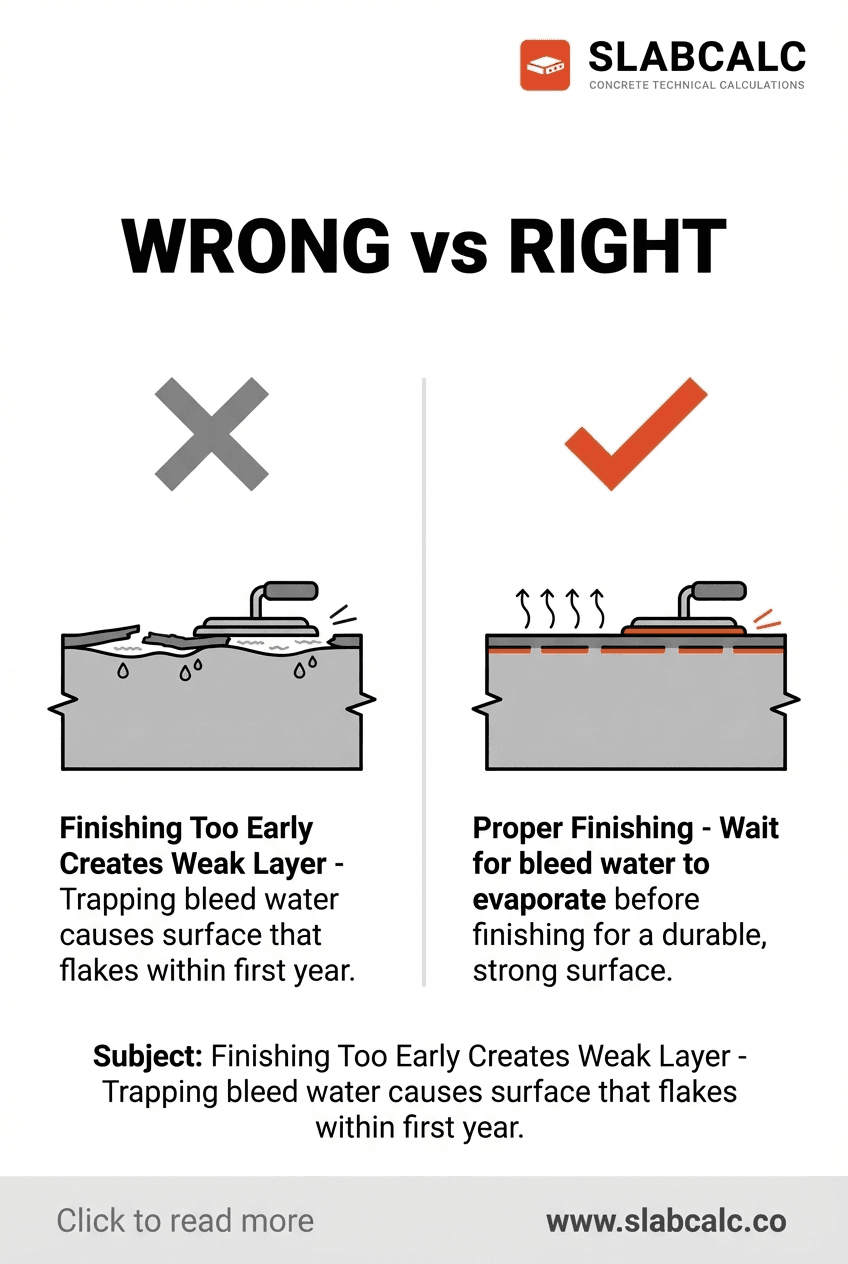
Finishing Too Early Creates Weak Layer
The Worst Case: Surface Flaking Within 12 Months
You finish a concrete slab perfectly on a Saturday morning. By next spring, the top 1/8 inch is peeling away in chips across 30% of the surface. This isn't cosmetic damage—it's a structural weak point that spreads quickly once it starts. The culprit? You sealed bleed water into the surface by finishing 2 hours too early. That trapped moisture creates a fragile, non-bonded layer that concrete traffic and freeze-thaw cycles destroy.
Why Bleed Water Matters More Than You Think
Concrete isn't solid when it's first placed. Water rises to the surface as the concrete sets—this is bleed water. If you start finishing before this water escapes, your trowel pushes it back down, trapping it in a thin weak zone just below the surface. That zone never hardens properly because it's oversaturated. Finishing too early essentially creates a delaminated layer that flakes and peels within months.
The timeline varies by temperature and mix design. In 50°F weather, bleed water can take 4–6 hours to fully rise. In 80°F heat, it may only take 90 minutes. Rushing the timeline is the most common mistake homeowners make, especially on their first project.
How to Spot the Problem Early
During the pour: If you see standing water pooling on the surface 30 minutes after finishing, you finished too early. The surface should feel firm but not dusty when you press it gently.
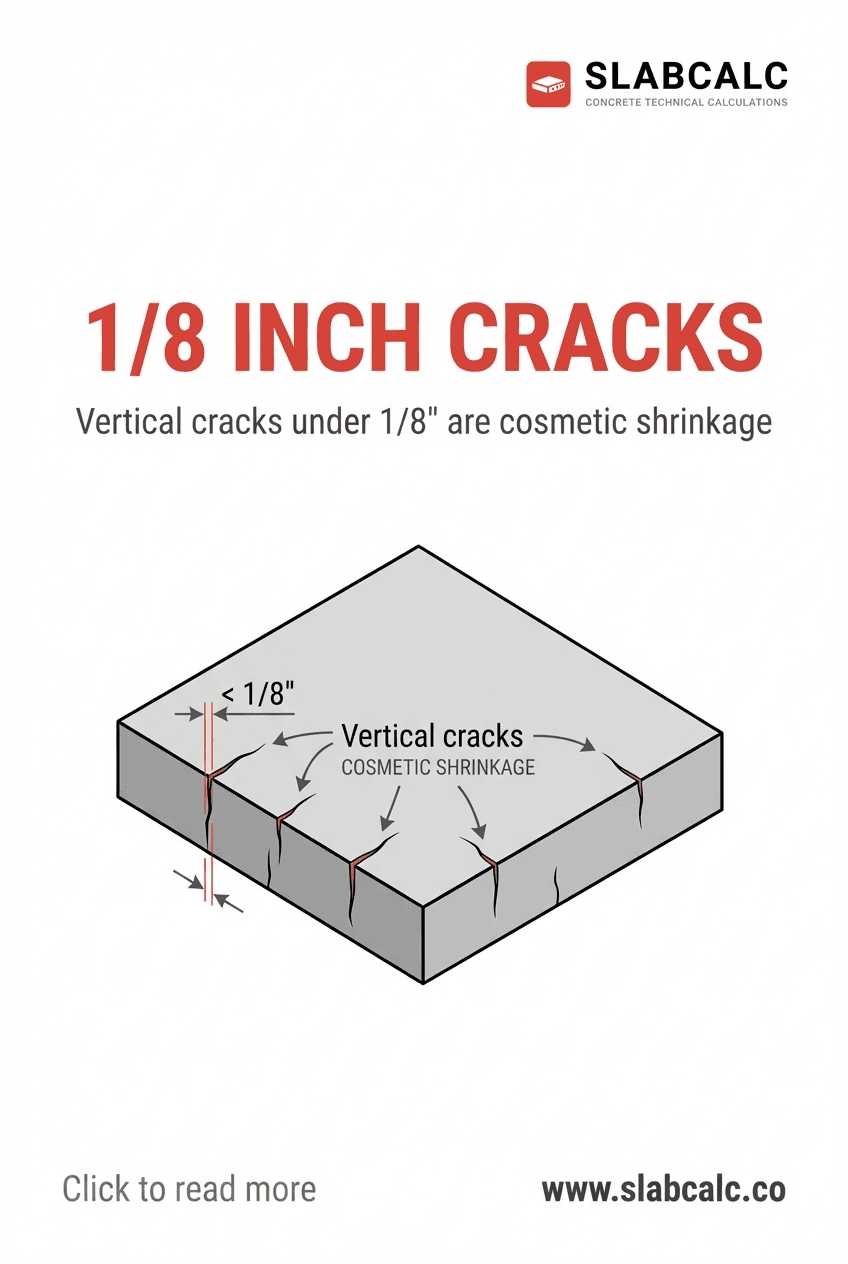
Within 24 hours: Hairline cracks spreading randomly across the surface often indicate trapped moisture, not just shrinkage. These are warning signs.
Within 3–6 months: Small white chalky spots or dust appearing under light traffic suggest the weak layer is already breaking down.
At 12 months: Flaking, spalling, and peeling in high-traffic zones confirm the diagnosis.
Prevention Checklist Before You Start Finishing
- Check bleed water status: Walk the slab and look for standing water. If you see it, wait longer. If the surface is still wet but no pooling exists, you're close.
- Do the touch test: Press your finger into the surface. It should feel firm, not soupy. Your finger shouldn't leave a lasting indent.
- Complete the bull float pass first: This long-handled float is your bleed water early warning system. If it's pushing water ahead of it, bleed water hasn't finished rising. Wait 30–45 minutes and try again.
- Account for temperature: On hot days, check readiness every 20 minutes. On cold days, every 45 minutes.
- Start with light passes: Your first trowel pass should be gentle, just smoothing. Save aggressive finishing for the second or third pass, when the surface is truly firm.
If You've Already Made This Mistake
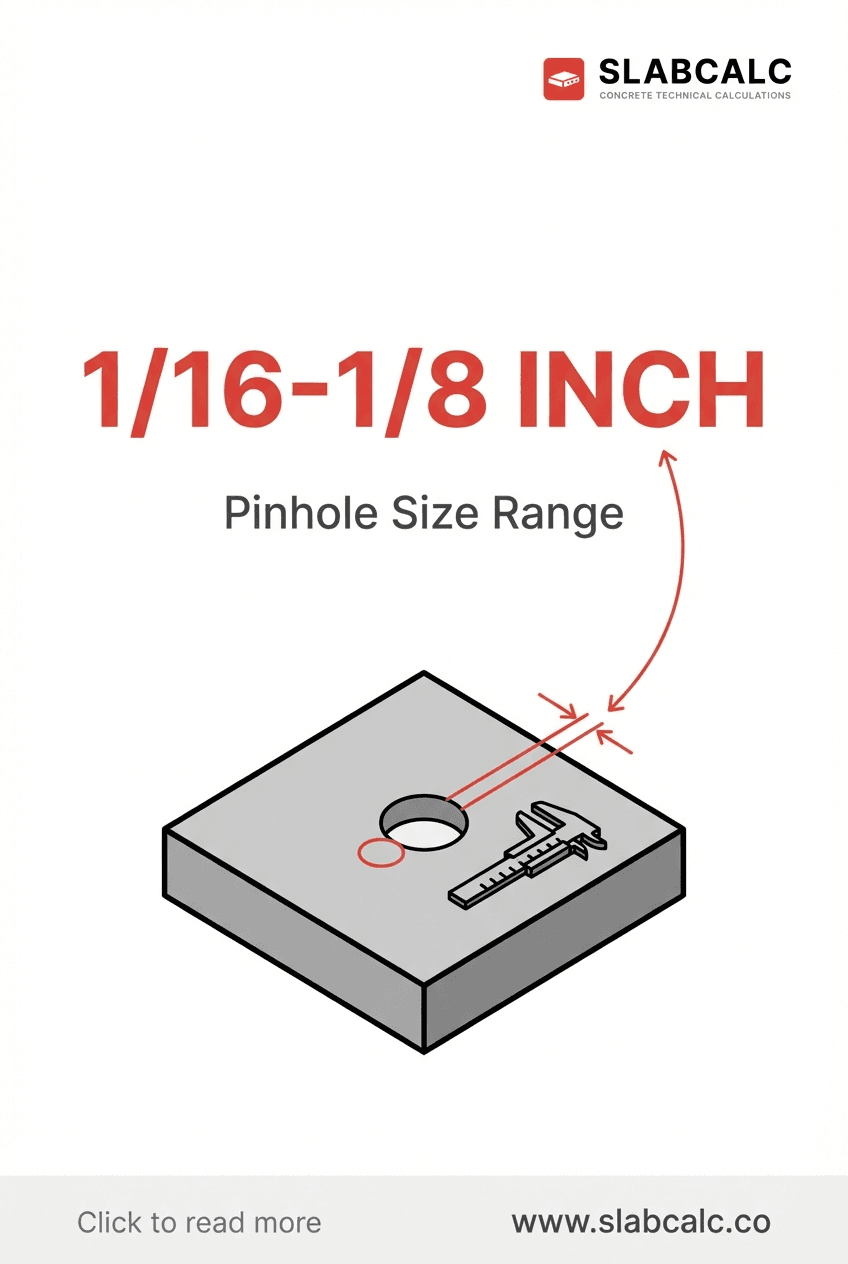
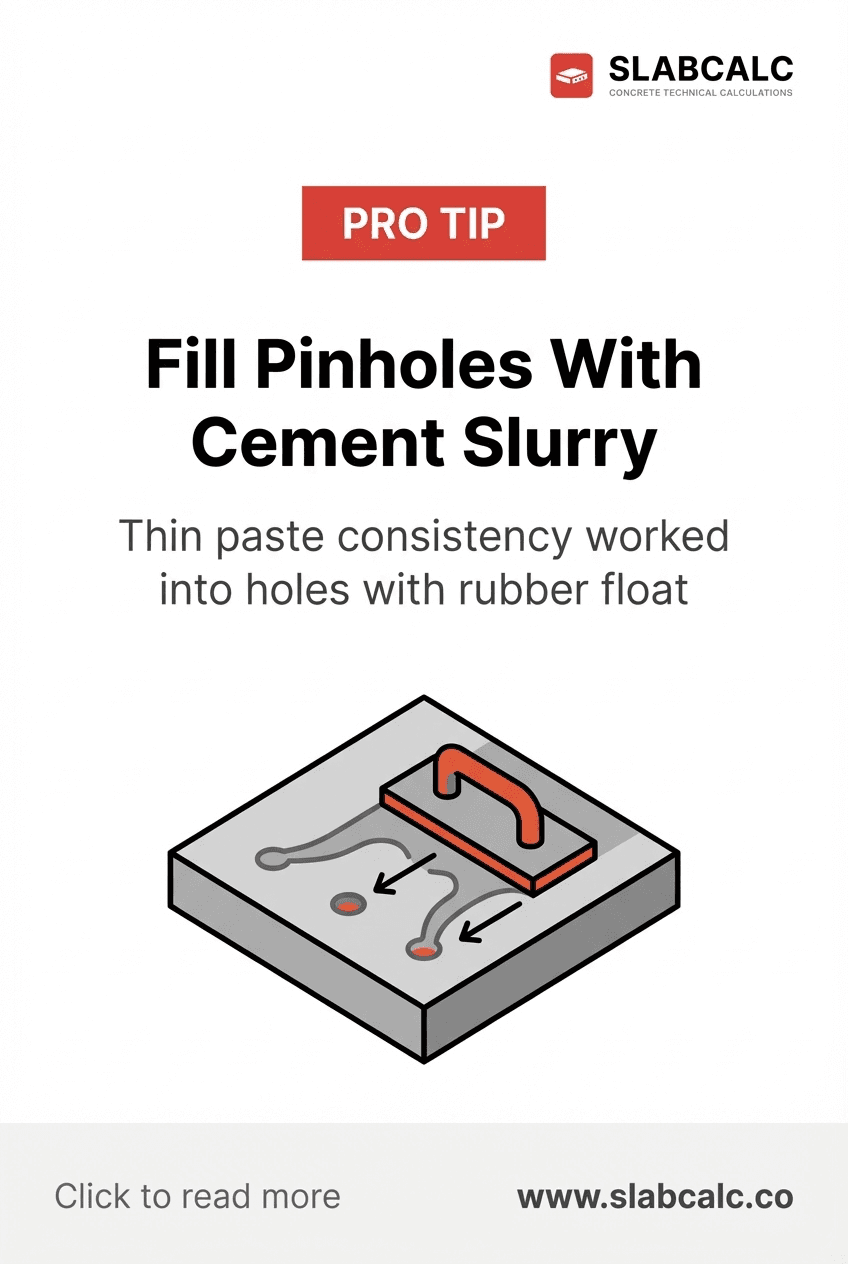
A slurry rub (Portland cement paste worked into the surface) fixes minor pinholes and small voids. For widespread flaking, a thin polymer-modified skim coat at $1–2 per square foot is the most cost-effective repair. Grind and overlay options cost $3–6 per square foot but create a permanently stronger surface.
The best fix is prevention: wait for bleed water to finish its journey. Your concrete will reward you with 30+ years of durability instead of costly repairs in year two.