
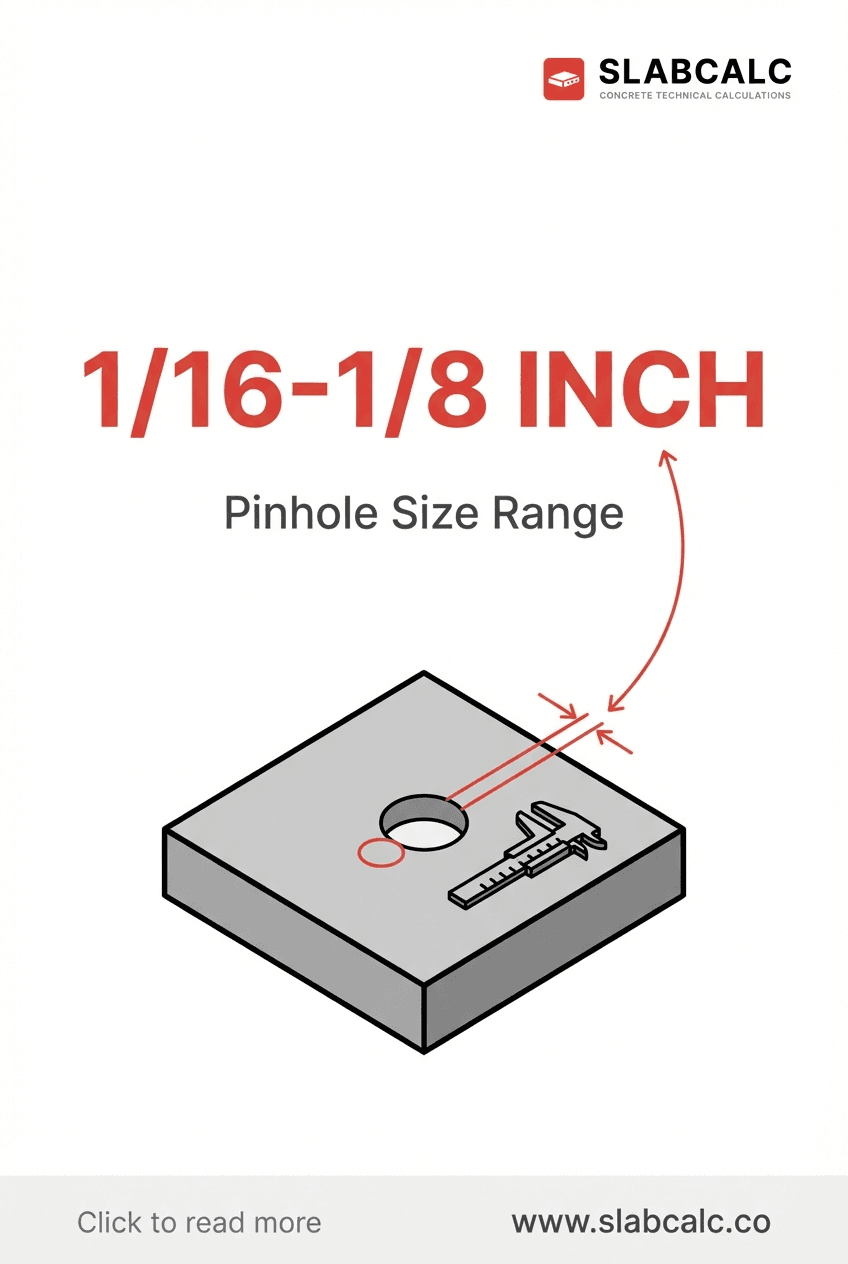
1/16-1/8 INCH
Why This Measurement Matters
1/16 to 1/8 inch defines the critical threshold where concrete surface pinholes stop being cosmetic flaws and become a structural and aesthetic liability. At this size range, pinholes are large enough to trap dirt and moisture permanently but small enough to fill without heavy grinding or overlays. Understanding this exact measurement saves you hundreds of dollars in repair costs and determines which fix you should use.
Pinholes smaller than 1/16 inch are typically left unfilled on standard concrete—they're visible only under close inspection and don't affect durability. Voids larger than 1/8 inch (called bug holes) require different treatment entirely: non-shrink grout instead of simple cement paste. The 1/16-1/8 inch range sits in the "must fix" zone where a slurry rub or thin skim coat becomes the economical choice.
What Causes Pinholes in This Size Range
These voids form when air or water gets trapped at the concrete surface during finishing. The most common culprits are:
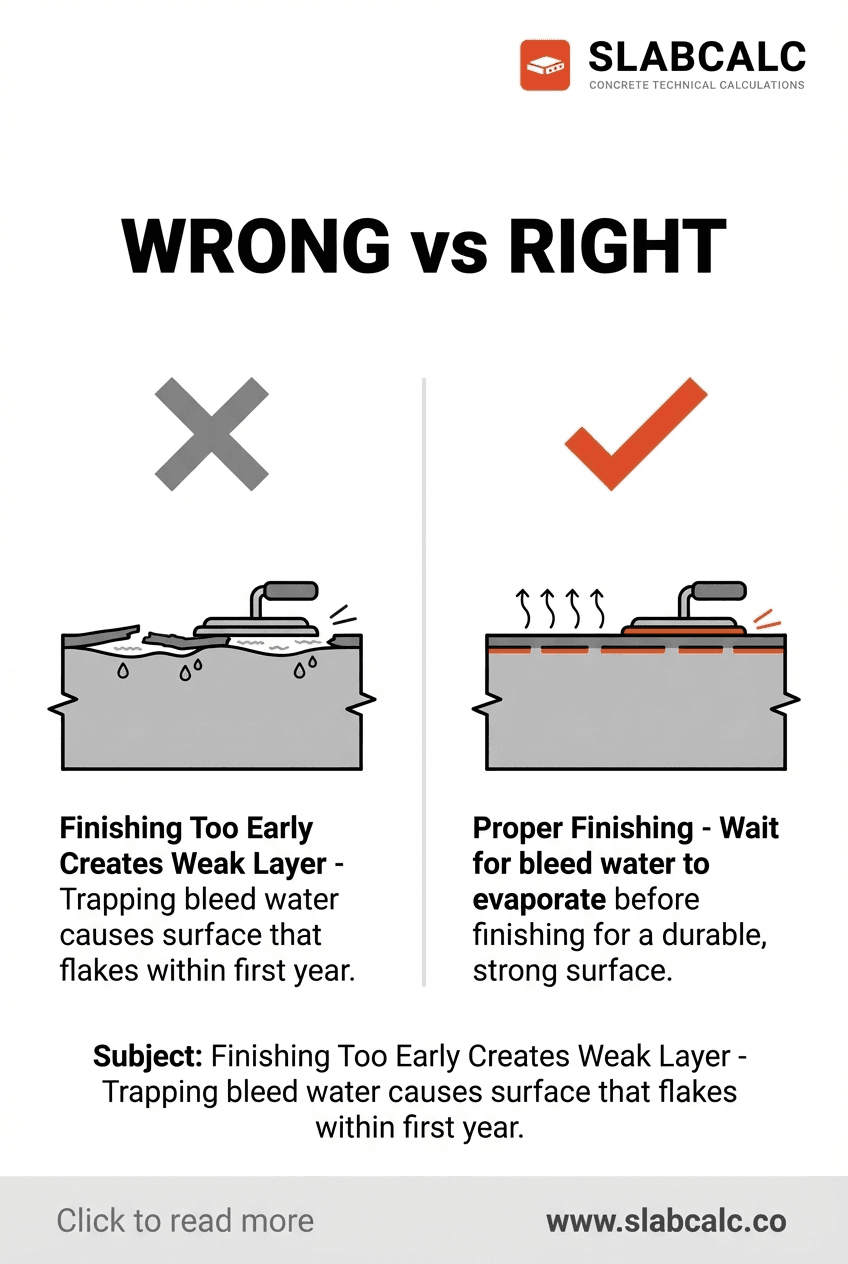
- Finishing too early before bleed water fully rises, which seals bubbles under the surface
- Excessive vibration that brings air to the top without proper troweling to close it
- High-slump concrete (too wet) that generates excessive bleed water and bubble activity
- Skipped or rushed bull float passes that fail to compress and close the surface properly
All of these scenarios create the exact 1/16-1/8 inch void size—too small to blast with water jetting, but too large to ignore on visible surfaces like garage floors, patios, or basement slabs.
The Right Fix for 1/16-1/8 Inch Pinholes
Slurry Rub (Best for scattered pinholes): Mix Portland cement with water to a thin paste consistency. Apply it with a rubber float or damp sponge, working the paste directly into each pinhole. This is industry-standard on architectural concrete and costs almost nothing. Allow 24 hours cure time before foot traffic.
Thin Skim Coat (Best for dense coverage): When pinholes cover 30% or more of the surface, a polymer-modified skim coat (1/16 to 1/8 inch thick) fills everything uniformly. Products like Ardex K-301 or SureCrete SureTex cost $1–2 per square foot for materials. This method also smooths the overall appearance and can be tinted to match your concrete color. Application takes 4–6 hours for a typical garage slab.
When NOT to Use These Methods
If your voids exceed 1/8 inch in diameter, you're dealing with bug holes that need non-shrink grout applied individually. If pinholes cover less than 10% of the surface and are on an unpainted utility slab, leaving them unfilled is acceptable and common.
For finished interior concrete (polished floors, stained slabs), any void in this range requires repair because they'll trap dust and discolor.
Timing and Prevention
The best strategy is prevention during the initial pour. Wait for bleed water to fully rise before troweling, use a proper slump (4–5 inches), and always complete bull float passes before power troweling. These steps virtually eliminate 1/16-1/8 inch pinholes before they occur. If they do appear on your next project, you now know the exact measurement that determines your repair approach and cost.